
Late Victorian Black Beaded Mourning Capelet (Shoulder Cape)
Clothing/Dress/Costume
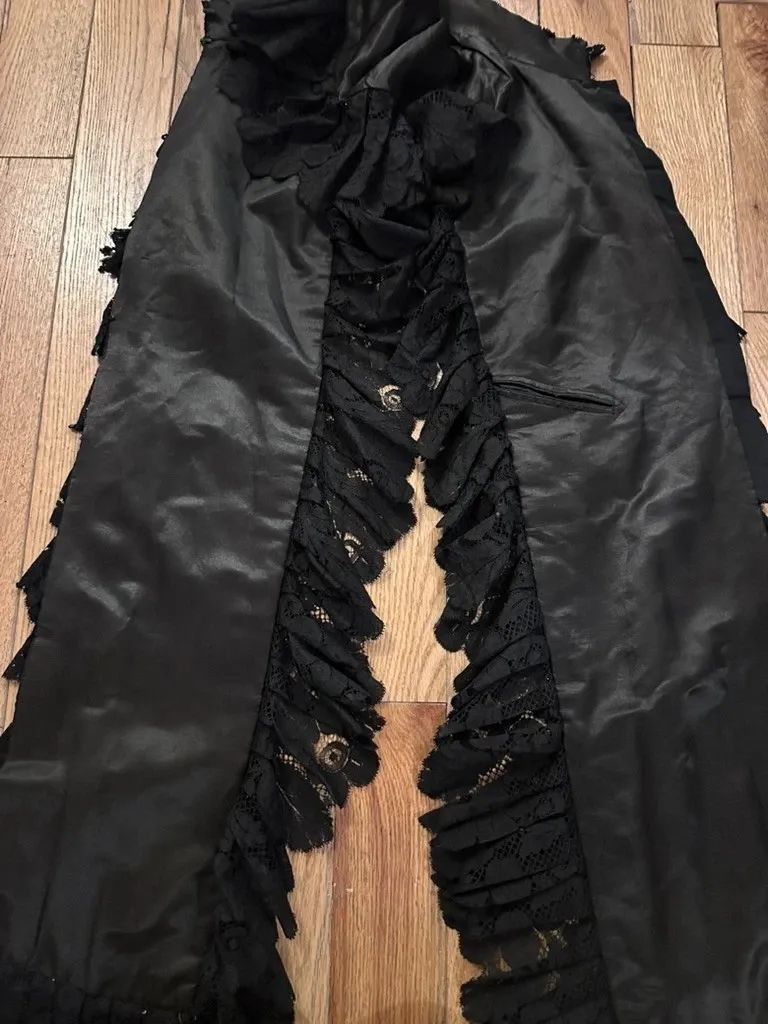
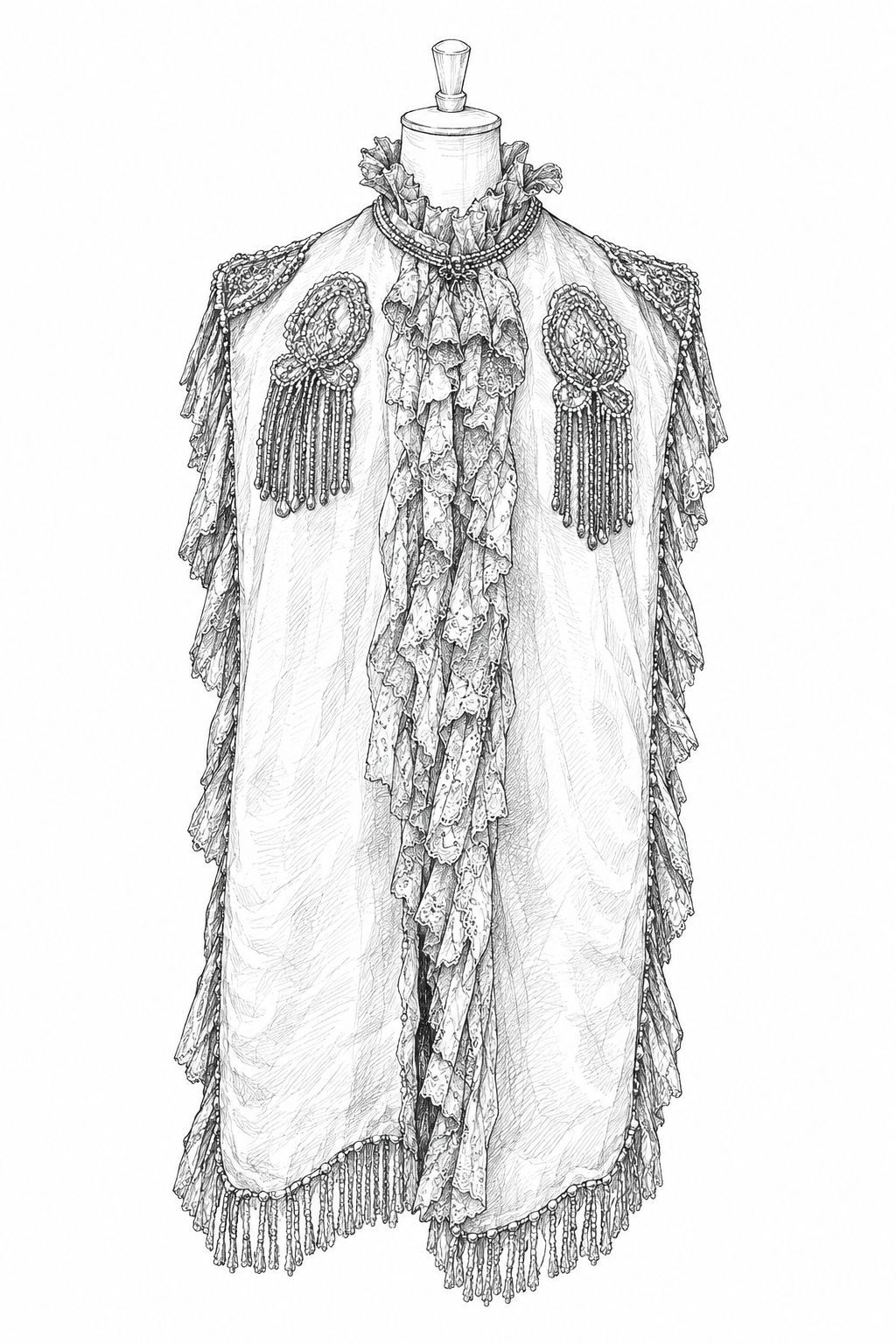
Elegant late Victorian shoulder cape of black silk richly ornamented with jet beadwork, black lace ruffles, beaded fringe, and a standing ruffled collar. Designed to drape over the shoulders while leaving the front open, the capelet would have been worn over a fashionable bodice or dress for formal, evening, or mourning attire.
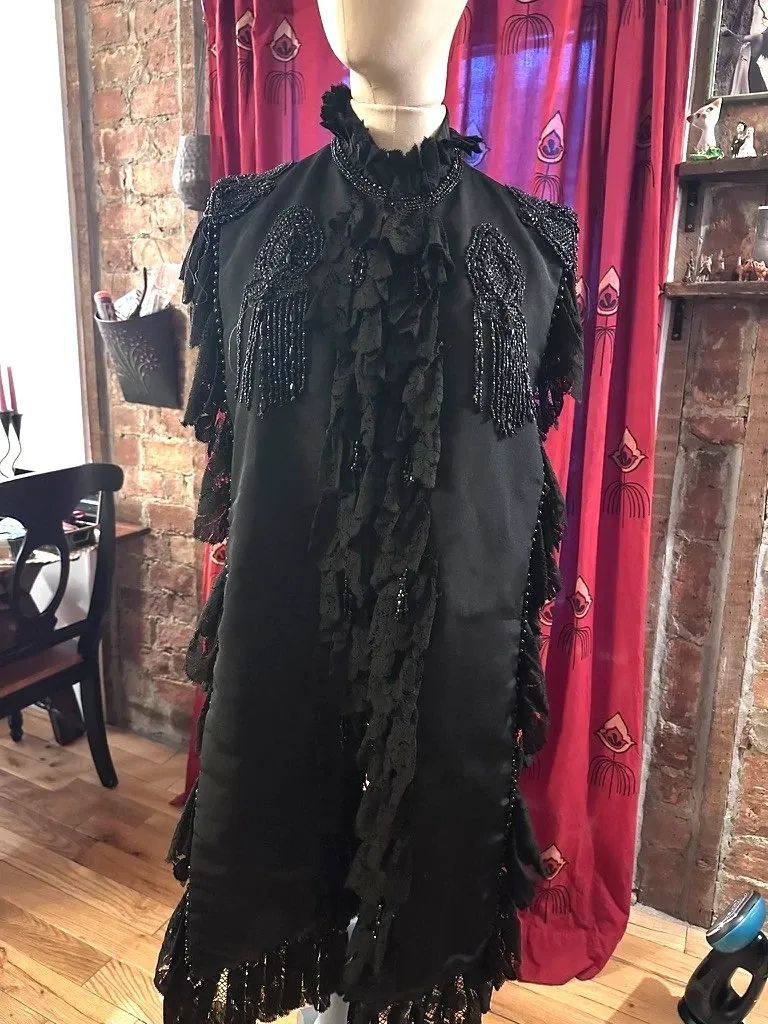 Late Victorian Black Beaded Mourning Capelet (Shoulder Cape)
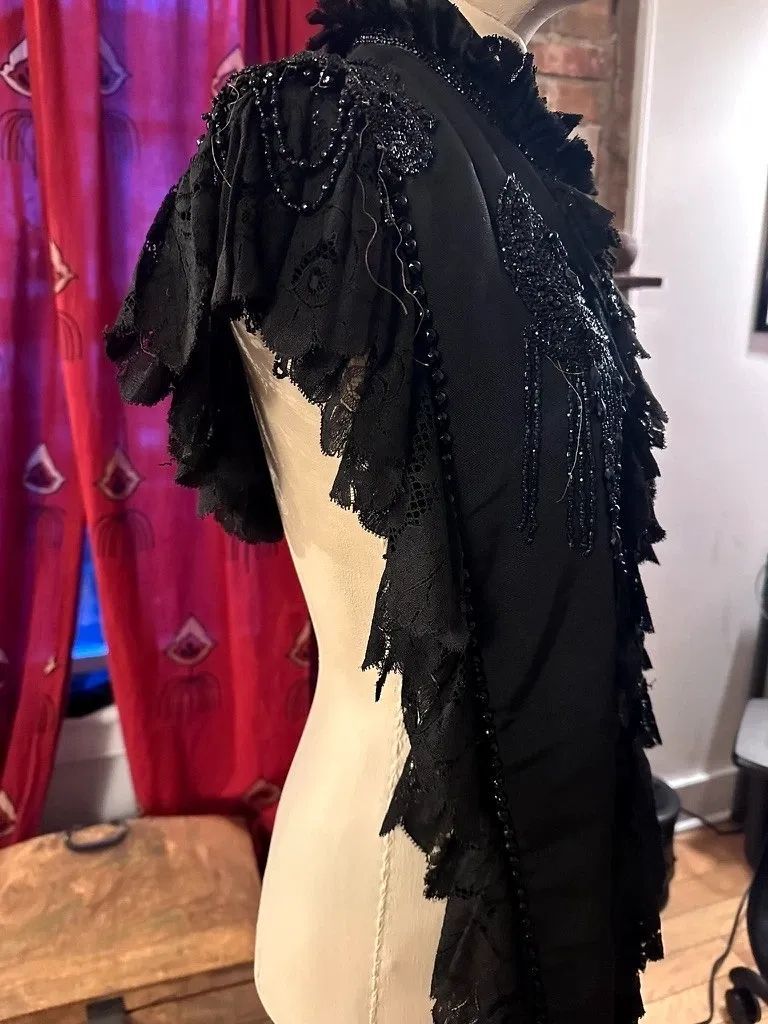 Late Victorian Black Beaded Mourning Capelet (Shoulder Cape) – Image 2
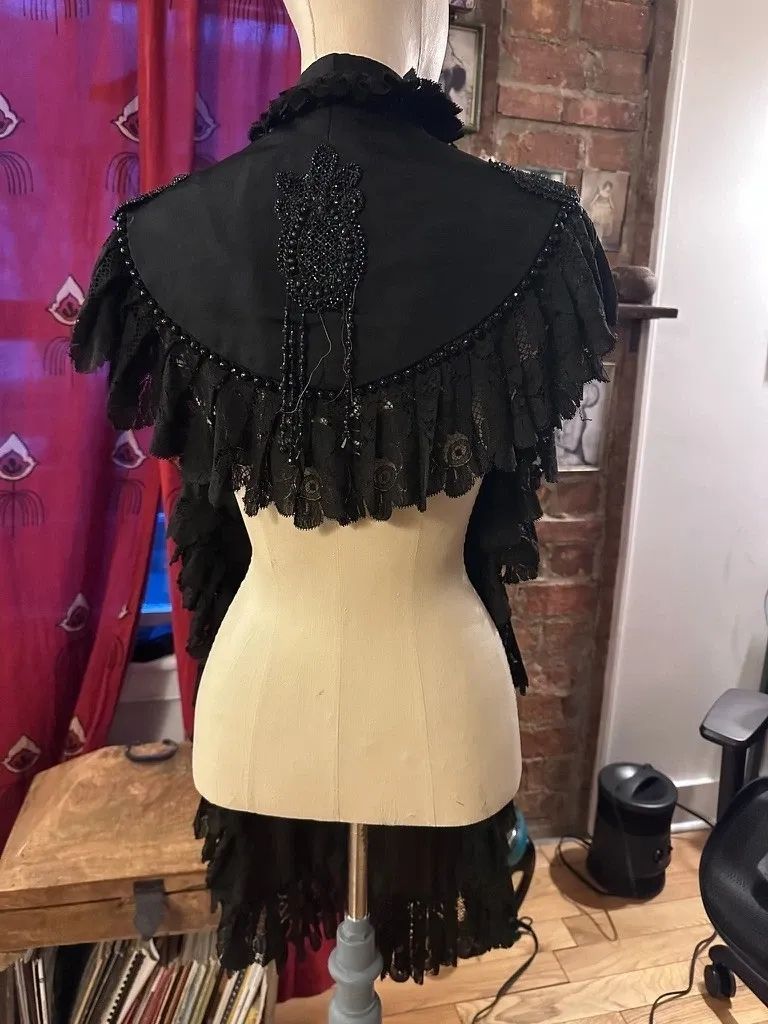 Late Victorian Black Beaded Mourning Capelet (Shoulder Cape) – Image 3
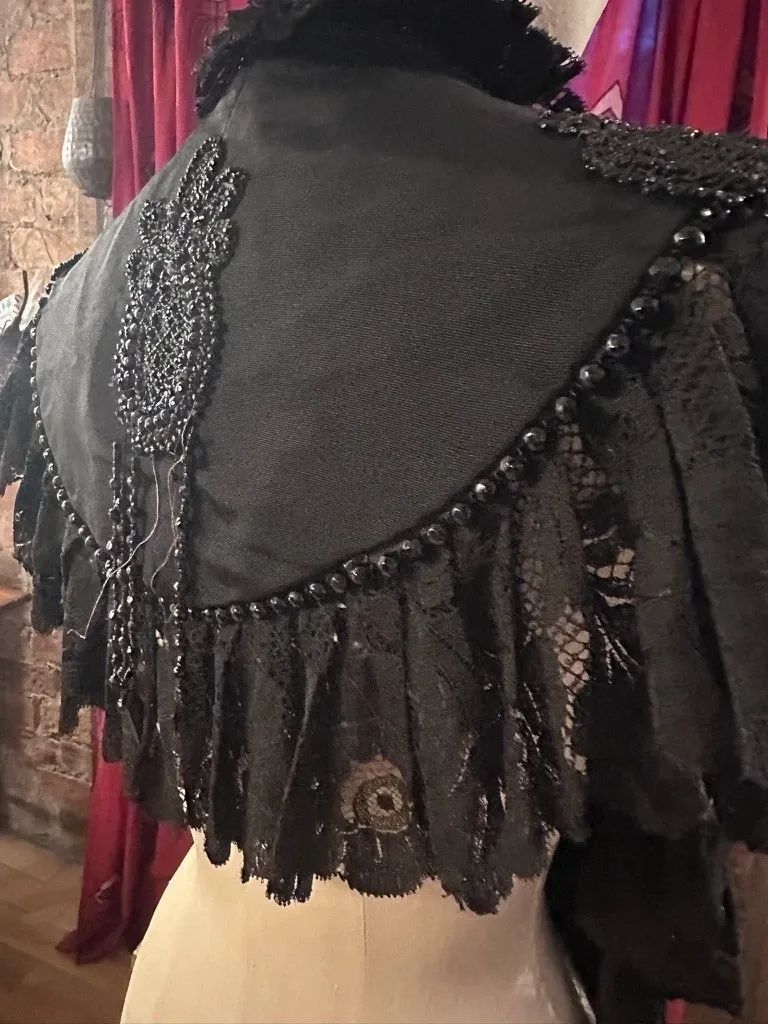 Late Victorian Black Beaded Mourning Capelet (Shoulder Cape) – Image 4
 Late Victorian Black Beaded Mourning Capelet (Shoulder Cape) – Image 5
 Late Victorian Black Beaded Mourning Capelet (Shoulder Cape) – Image 6
 Late Victorian Black Beaded Mourning Capelet (Shoulder Cape) – Image 7
 Late Victorian Black Beaded Mourning Capelet (Shoulder Cape) – Image 8
 Late Victorian Black Beaded Mourning Capelet (Shoulder Cape) – Image 9
RE-CL-2026-0013
Cape
Cape
Female
Silk
Black
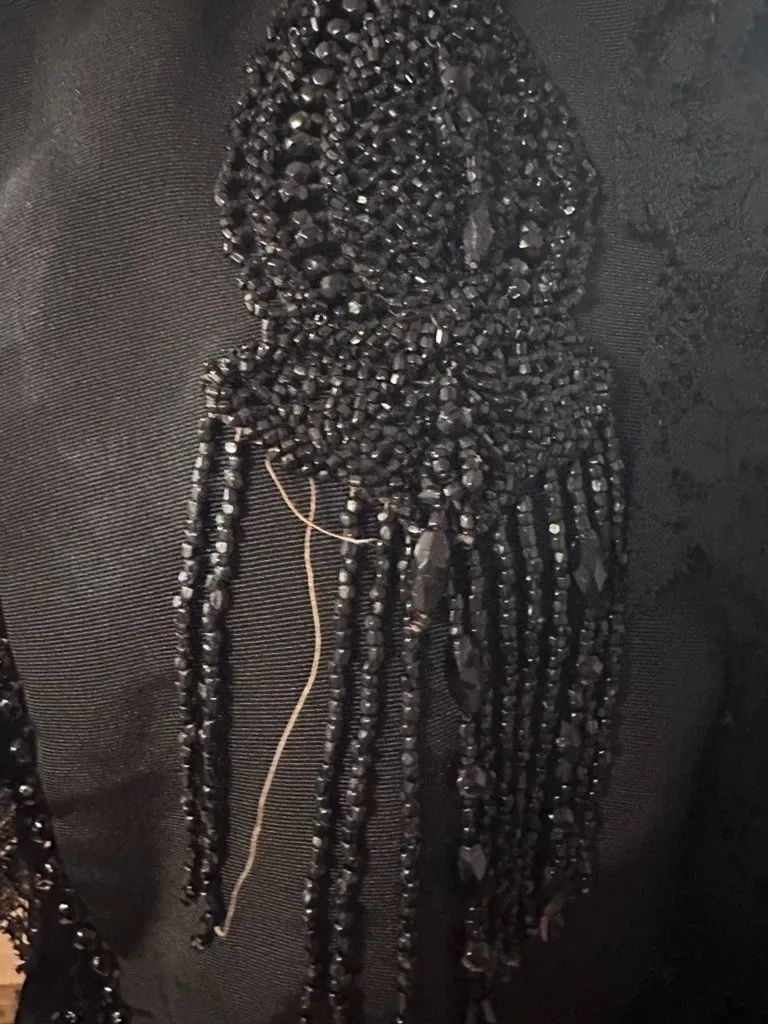
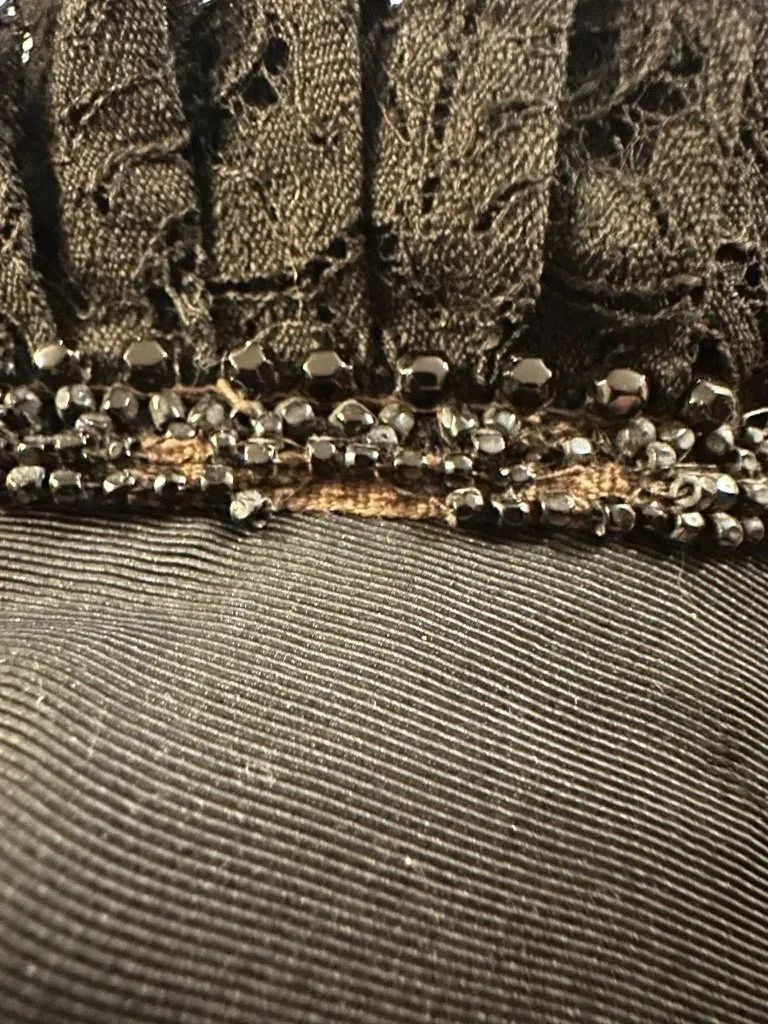
This garment demonstrates many characteristics associated with luxury Victorian mourning and evening accessories. Decorative features include: Extensive hand-applied jet bead embroidery Long beaded fringe pendants Layered lace ruffles Beaded edging around the cape Standing ruffled collar Sculpted shoulder epaulettes The beadwork appears to have been executed separately on appliqué motifs before being sewn onto the silk body—a common technique used by high-end dressmakers because it allowed elaborate decoration without distorting the base fabric. The beads are most likely French jet (black faceted glass) rather than true Whitby jet. By the 1880s and 1890s, French jet was widely used because it provided the same dramatic appearance while being lighter and less expensive. Construction combines machine stitching with extensive hand finishing, especially around the beadwork and lace.
circa 1890 – circa 1893
Western Europe or North America, probably American, British, or French. Such capelets were fashionable accessories worn by middle- and upper-class women over matching dresses. Black examples were especially common as: Mourning attire Reception wear Concert wear Theater wear Formal evening dress Depending upon accompanying garments, this cape could have served both mourning and fashionable purposes.
Very Good
Jul 2, 2026
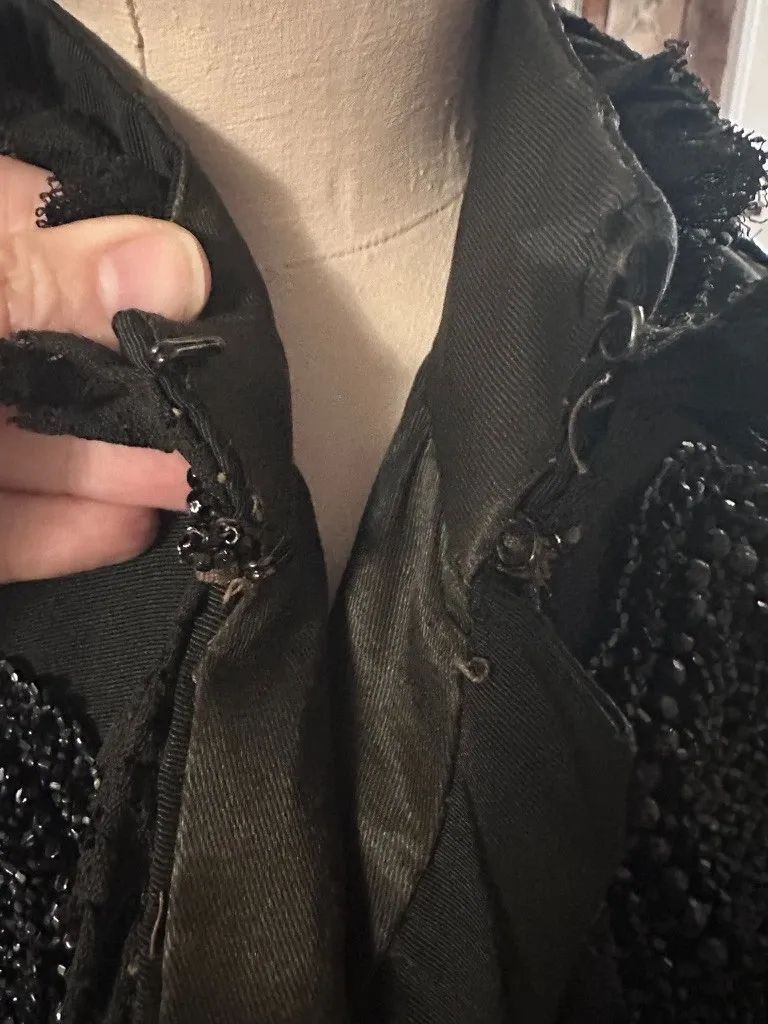
The garment survives in remarkably complete condition considering its age. Condition observations: Original silhouette preserved Nearly all beadwork survives Lace generally intact Minor losses to fringe strands Loose bead threads visible in several areas Small areas of bead loss Some edge fraying to delicate lace Light creasing from storage Silk remains structurally sound with minimal shattering Original hook-and-eye closures survive Interior lining largely intact Unlike many black silk garments of this period, there is little evidence of catastrophic silk shattering, suggesting either unusually high-quality silk or careful preservation.
Historical Note
This capelet represents the height of late Victorian decorative fashion. During the late nineteenth century, detachable shoulder capes became an important element of women’s wardrobes, allowing a single dress to be transformed for formal occasions through the addition of elaborate accessories. The lavish use of jet beadwork reflects one of the defining fashions of the 1880s and 1890s. Following the prolonged mourning of Queen Victoria after the death of Prince Albert, black clothing became both a symbol of mourning and an enduring element of fashionable dress. Even women who were not in mourning often wore richly decorated black garments for evening events because black silk and jet beadwork conveyed sophistication and elegance. Particularly striking are the shoulder appliqués and cascading beaded pendants, which were designed to sparkle under gaslight and early electric lighting. The layered lace ruffles soften the otherwise structured silhouette and create movement as the wearer walked. The surviving hook-and-eye closure, original lining, and exceptional beadwork make this an unusually complete example. The loose threads visible in several bead motifs are typical of nineteenth-century beaded textiles and should be stabilized rather than trimmed. Conservation should focus on supporting the beadwork and minimizing stress on the silk and lace. Overall assessment: This is an excellent museum-quality example of a late Victorian beaded shoulder cape, dating to approximately 1888–1895. Its combination of elaborate French jet beadwork, lace trim, and remarkably intact construction makes it one of the more desirable examples of Victorian dress accessories, with strong appeal to both textile historians and collectors of mourning attire.