
Woman's Black Silk Bodice with Soutache Embroidery
Clothing/Dress/Costume
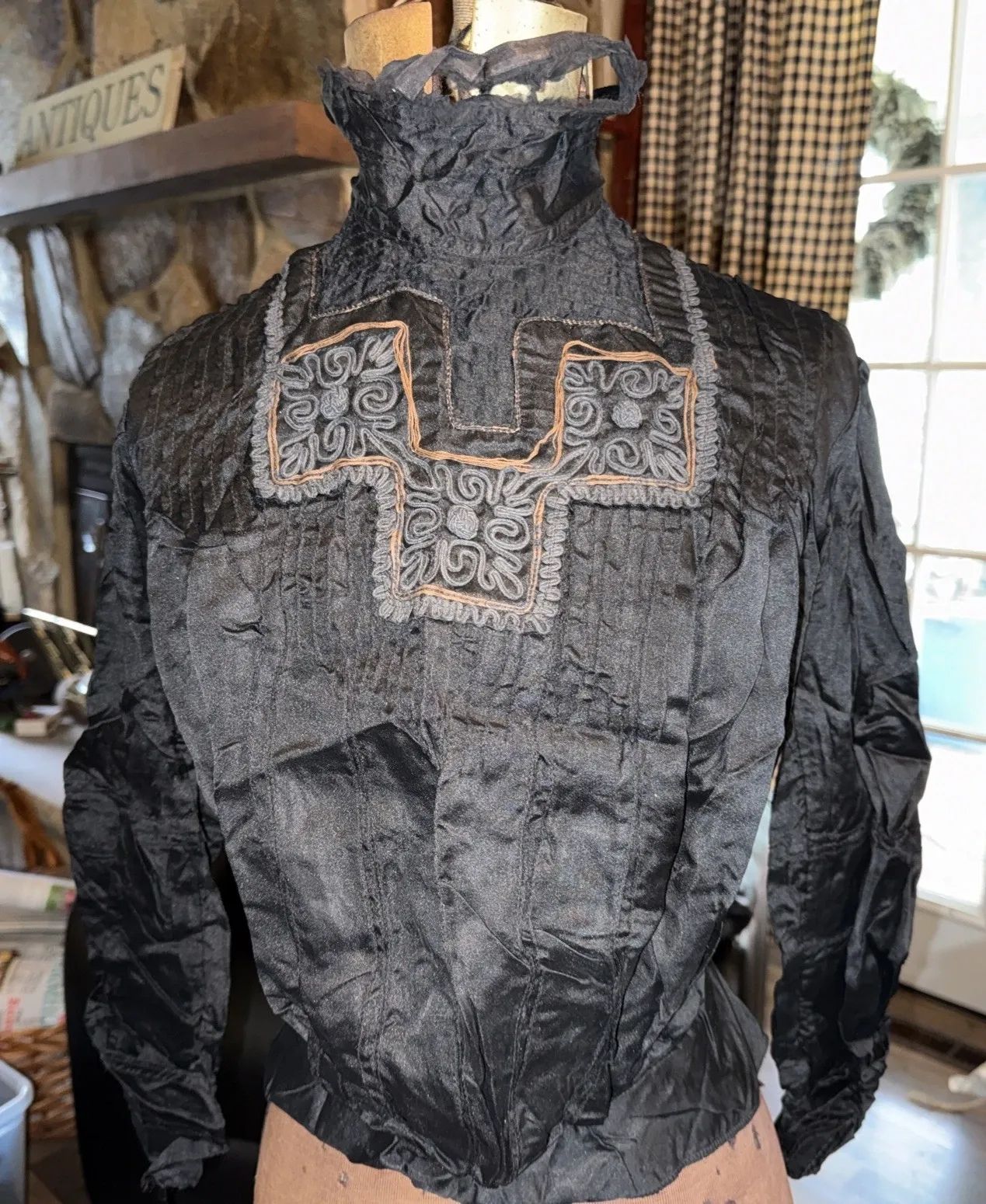
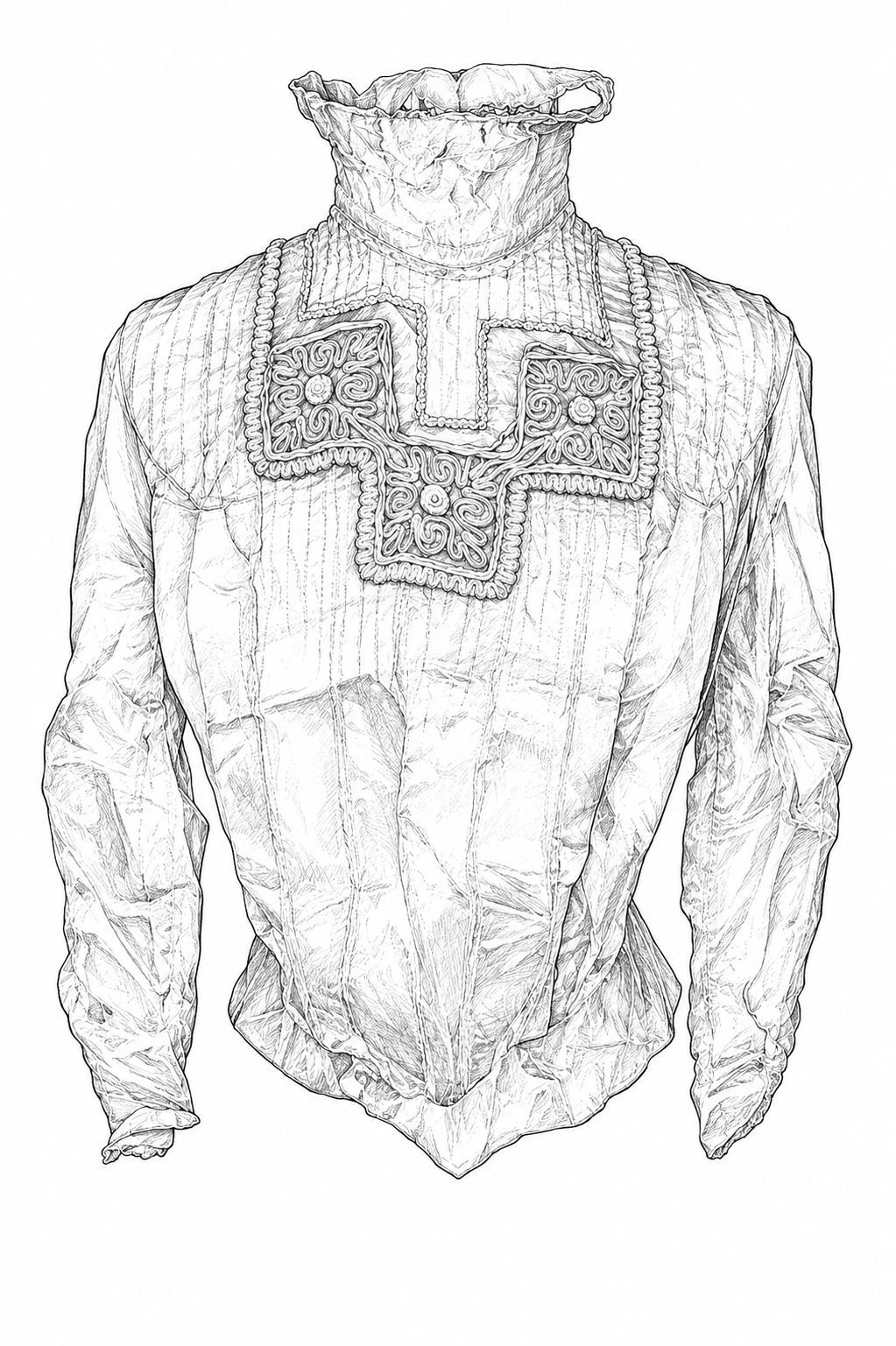
Elegant late Victorian black silk bodice featuring an embroidered soutache yoke, standing collar with gathered chiffon trim, fitted cuirass silhouette, and hand-finished interior construction. Designed for formal afternoon or evening wear, the bodice reflects the refined tailoring and decorative surface embellishment popular during the late 1880s.
 Woman's Black Silk Bodice with Soutache Embroidery
 Woman's Black Silk Bodice with Soutache Embroidery – Image 2
 Woman's Black Silk Bodice with Soutache Embroidery – Image 3
 Woman's Black Silk Bodice with Soutache Embroidery – Image 4
 Woman's Black Silk Bodice with Soutache Embroidery – Image 5
 Woman's Black Silk Bodice with Soutache Embroidery – Image 6
 Woman's Black Silk Bodice with Soutache Embroidery – Image 7
 Woman's Black Silk Bodice with Soutache Embroidery – Image 8
RE-CL-2026-0015
Buttoned Bodice
Bodice
Female
Silk
Cotton
Black
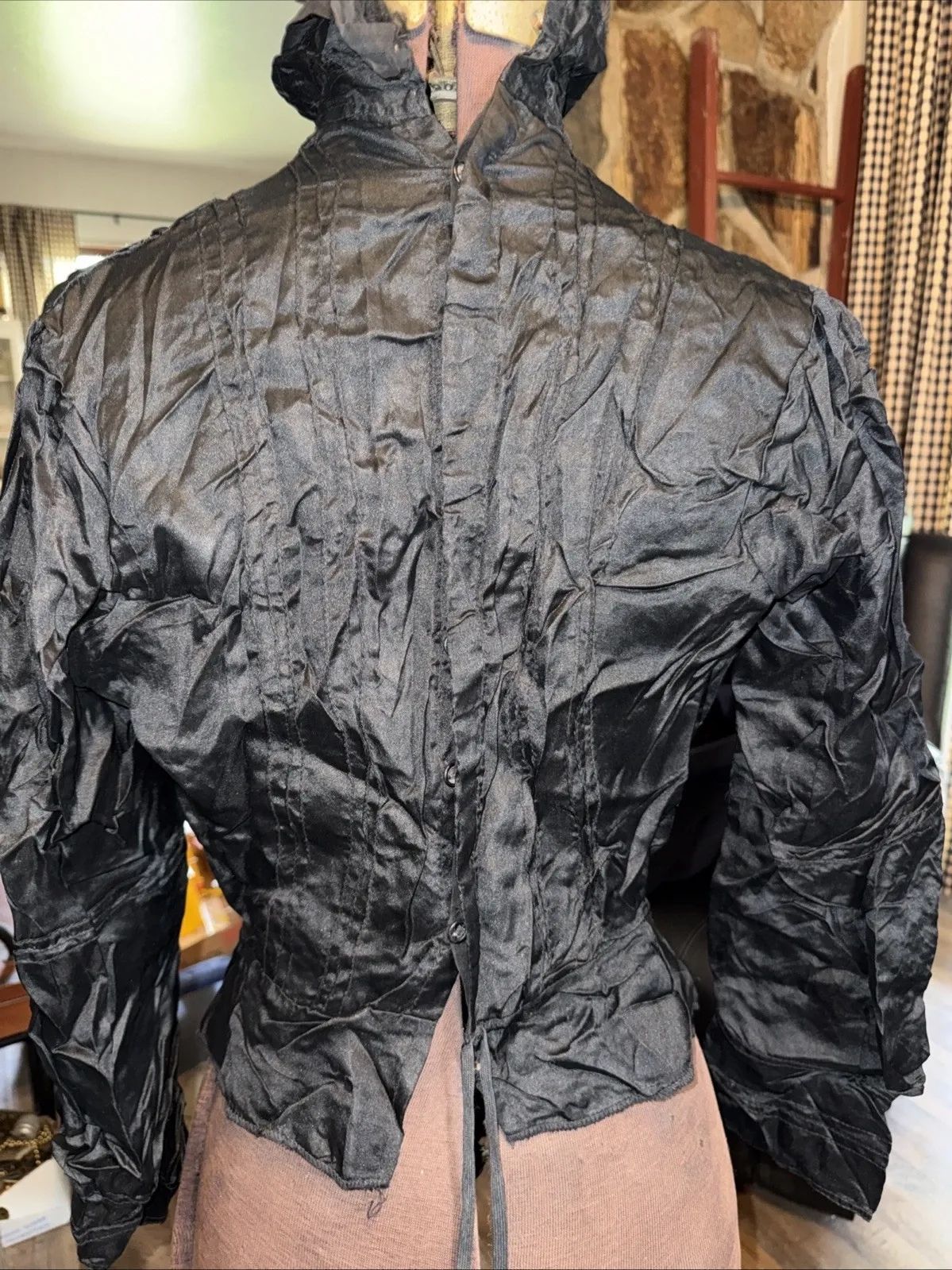
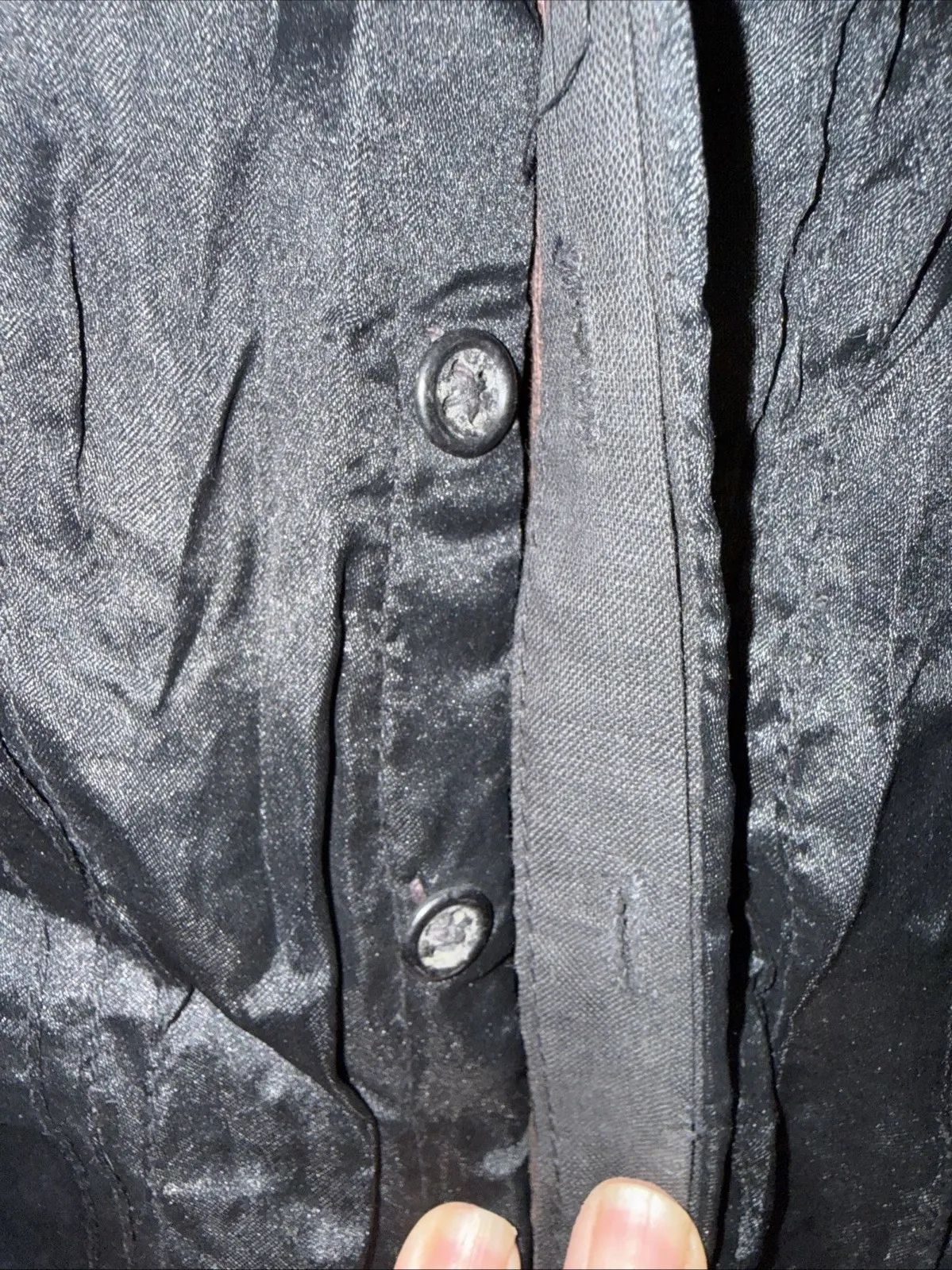
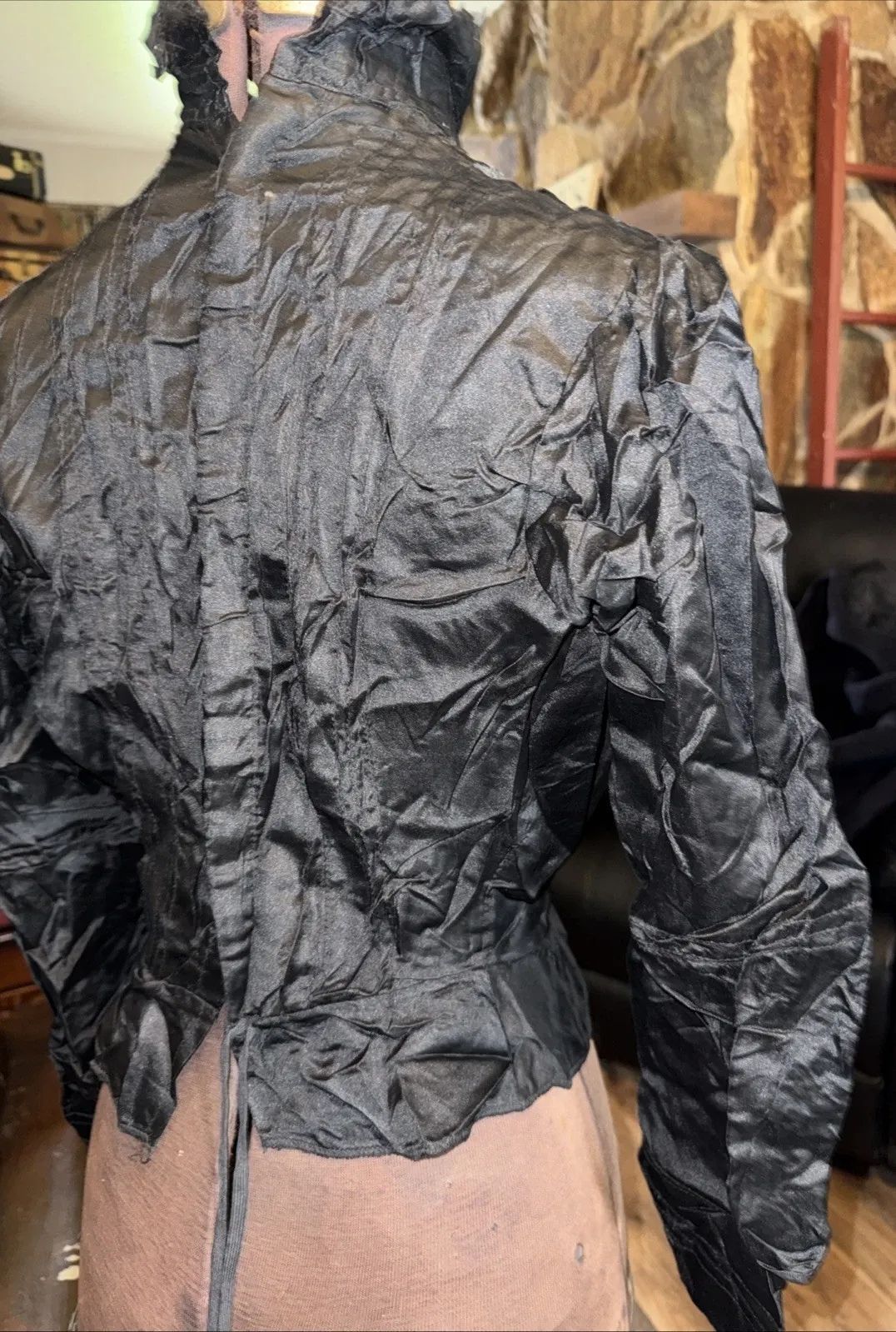
This bodice demonstrates the exceptionally skilled tailoring of the late Victorian period. Decorative features include: Raised soutache braid embroidery Symmetrical embroidered bib or yoke Gathered standing collar Corded shoulder decoration Closely fitted princess seams Moderately full upper sleeves with fitted lower sleeves The soutache decoration consists of narrow silk braid stitched into scrolling floral motifs, a fashionable embellishment during the late 1880s. Construction combines machine stitching for principal seams with extensive hand finishing. Interior seam allowances were individually finished, reflecting high-quality dressmaking rather than mass production. The back closure is concealed beneath a finished placket, preserving the uninterrupted decorative front.
circa 1886 – circa 1890
Victorian
Western Europe or North America, most likely American or British manufacture. This fashionable bodice would have been worn by a middle- or upper-middle-class woman with a matching trained skirt. The elaborate embroidery suggests use for visiting dress, church, receptions, concerts, or other semi-formal daytime occasions rather than ordinary household wear.
Fair
Jul 2, 2026
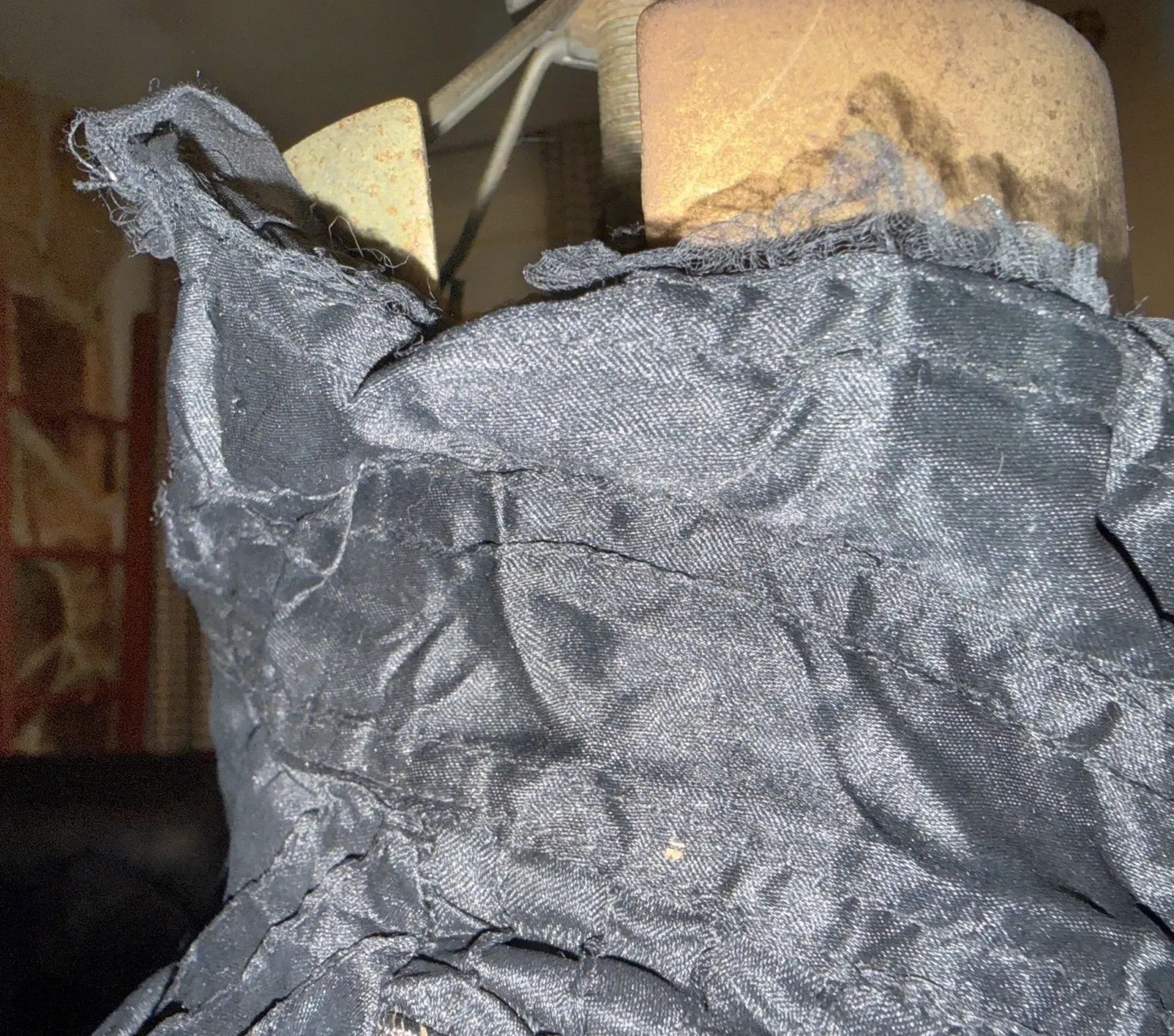
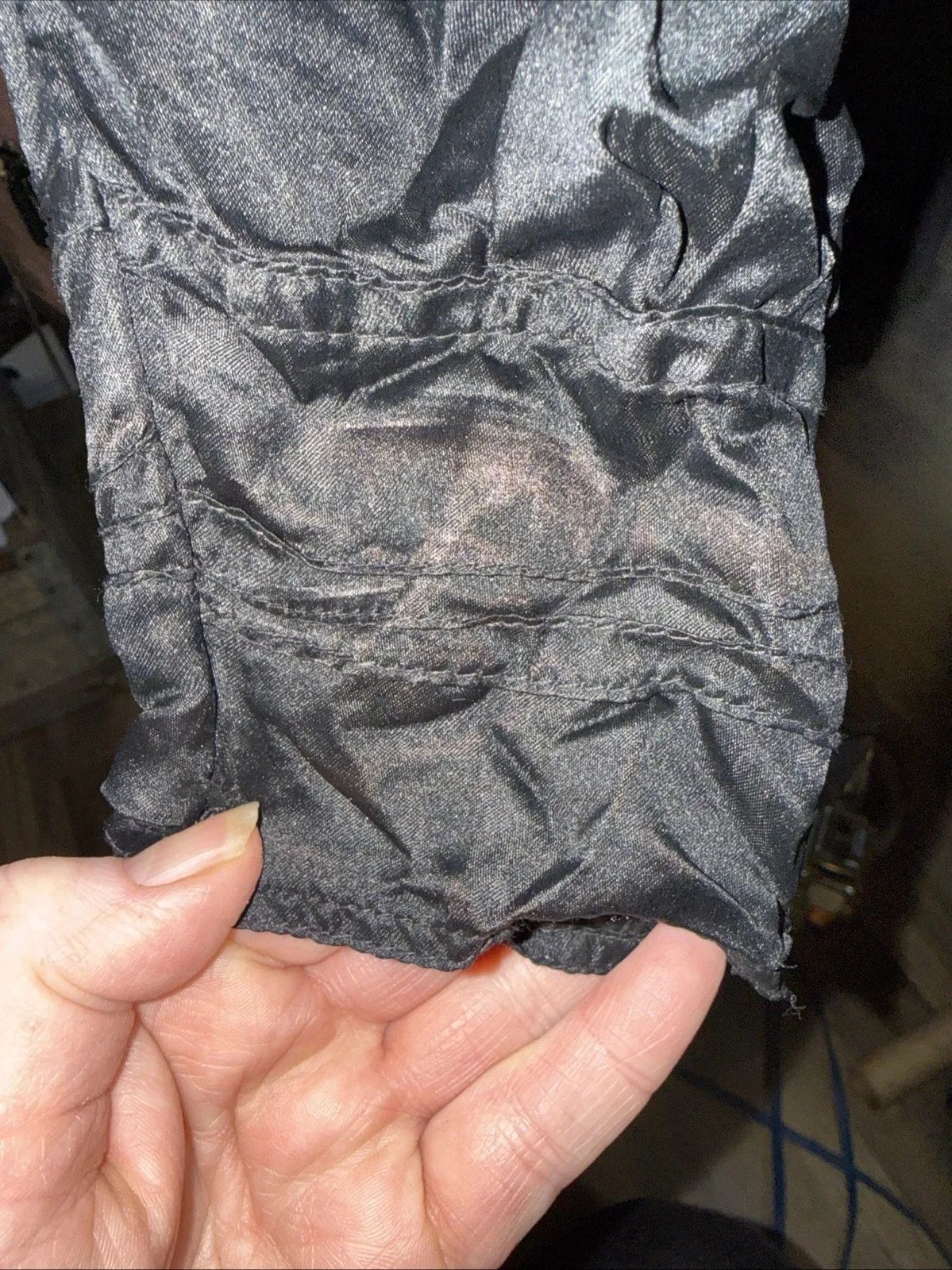
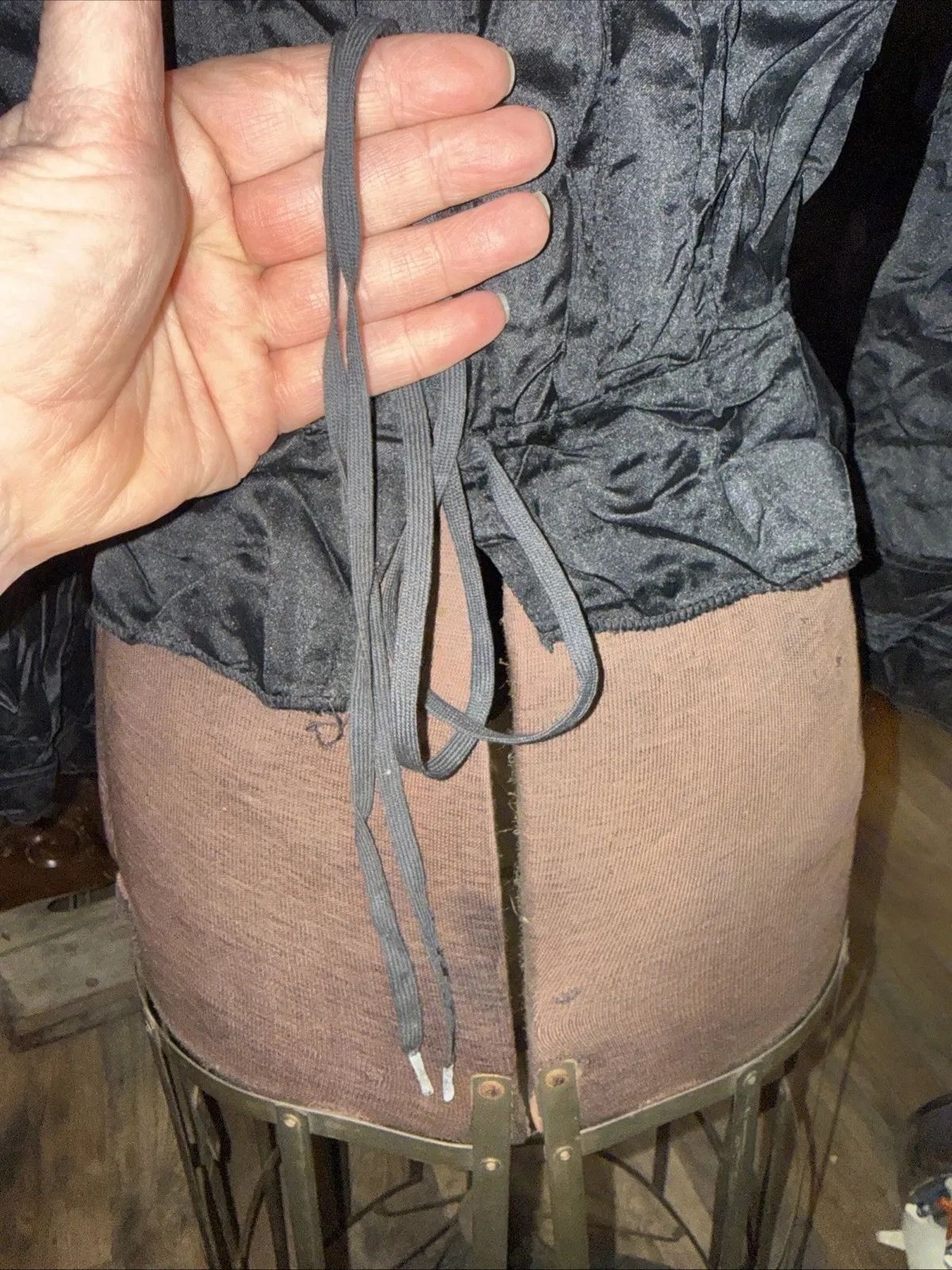
The garment remains structurally displayable but exhibits expected deterioration associated with nineteenth-century black silk. Condition observations include: Original silhouette well preserved Soutache embroidery remarkably intact Collar gauze partially deteriorated Significant silk shattering around neckline Wear along lower edges Minor seam separations Wrinkling from storage Interior silk weakened but largely present Original back fastening system survives Original adjustment ties remain attached Some evidence of historic alterations or repairs The decorative embroidery is in notably better condition than the surrounding silk fabric.
Description
This bodice is an excellent example of the transition from the bustle fashions of the mid-1880s toward the smoother, elongated silhouettes of the early 1890s. Its long pointed waist, fitted back, and high collar reflect changing Victorian tastes that emphasized a tall, slender figure supported by a corset. The embroidered soutache yoke is the garment’s defining decorative element. Soutache embroidery enjoyed great popularity during the late Victorian era because it created richly textured ornament without the expense of hand embroidery. Applied by skilled dressmakers, the narrow silk braid formed elaborate scrolling motifs inspired by Renaissance and Eastern decorative arts. The bodice also illustrates one of the greatest preservation challenges facing textile conservators: black silk deterioration. During the nineteenth century, black silk was commonly “weighted” with metallic salts to deepen its color and improve drape. Although fashionable, the process caused the silk fibers to become brittle over time. The fraying at the collar, lower edge, and stress points is characteristic of this well-documented form of deterioration and should be regarded as normal age-related degradation rather than misuse. The surviving interior ties are particularly noteworthy. These were used to secure the bodice smoothly over a corseted waist, helping maintain the precise fit expected in Victorian dress. Together with the concealed back closure and carefully tailored seams, they demonstrate the high level of craftsmanship invested in what was likely a custom-made or bespoke garment. Overall assessment: This is a well-preserved and aesthetically striking example of a fashionable late Victorian silk bodice from the late 1880s, with decorative soutache work that makes it an especially desirable study piece for collections focusing on nineteenth-century women’s dress.