
17th-Century French Notarial Legal Manuscript
Letter
A multi-page handwritten French legal manuscript from the 1600s written in brown iron gall ink on laid paper, likely documenting a civil agreement or official proceeding.
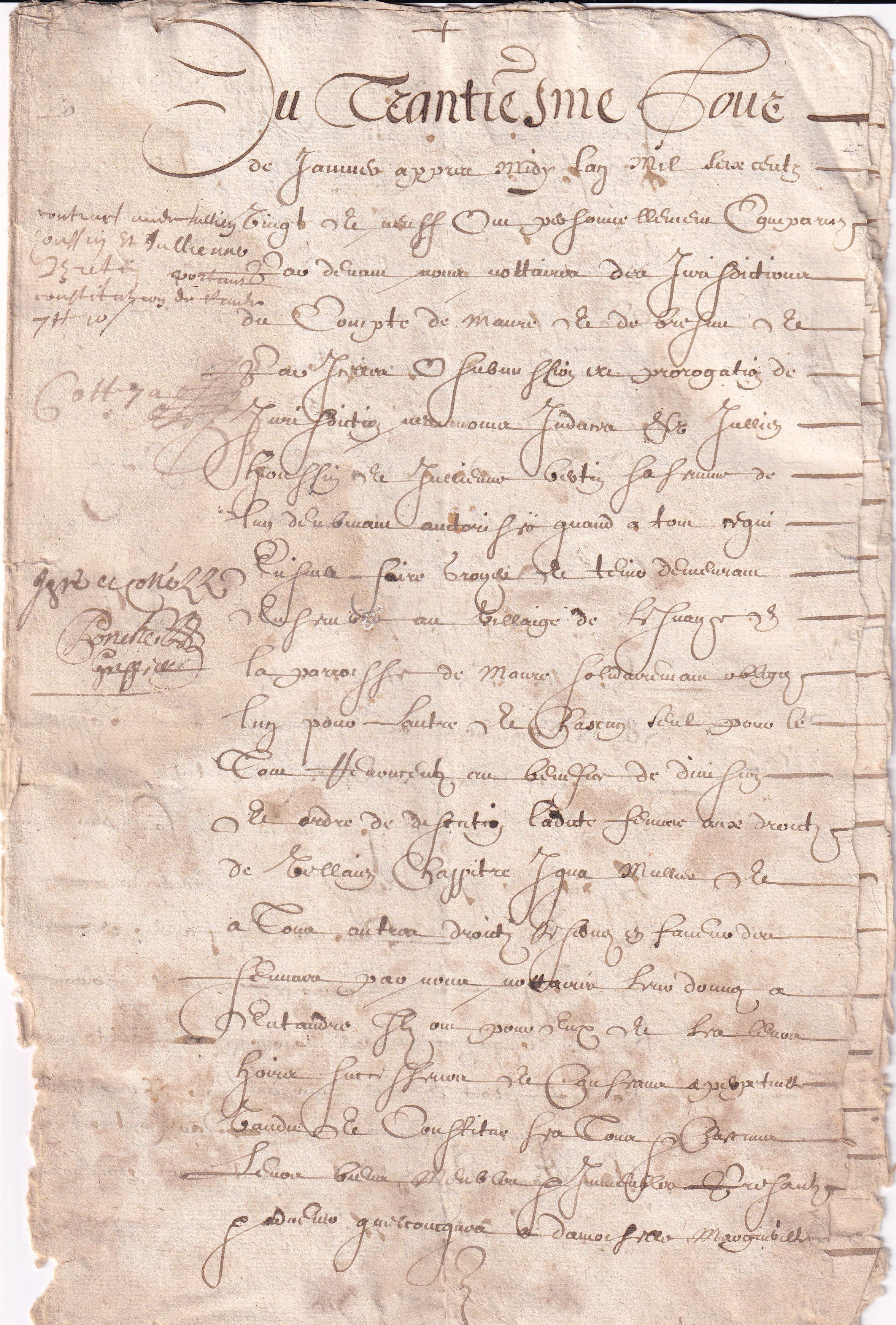
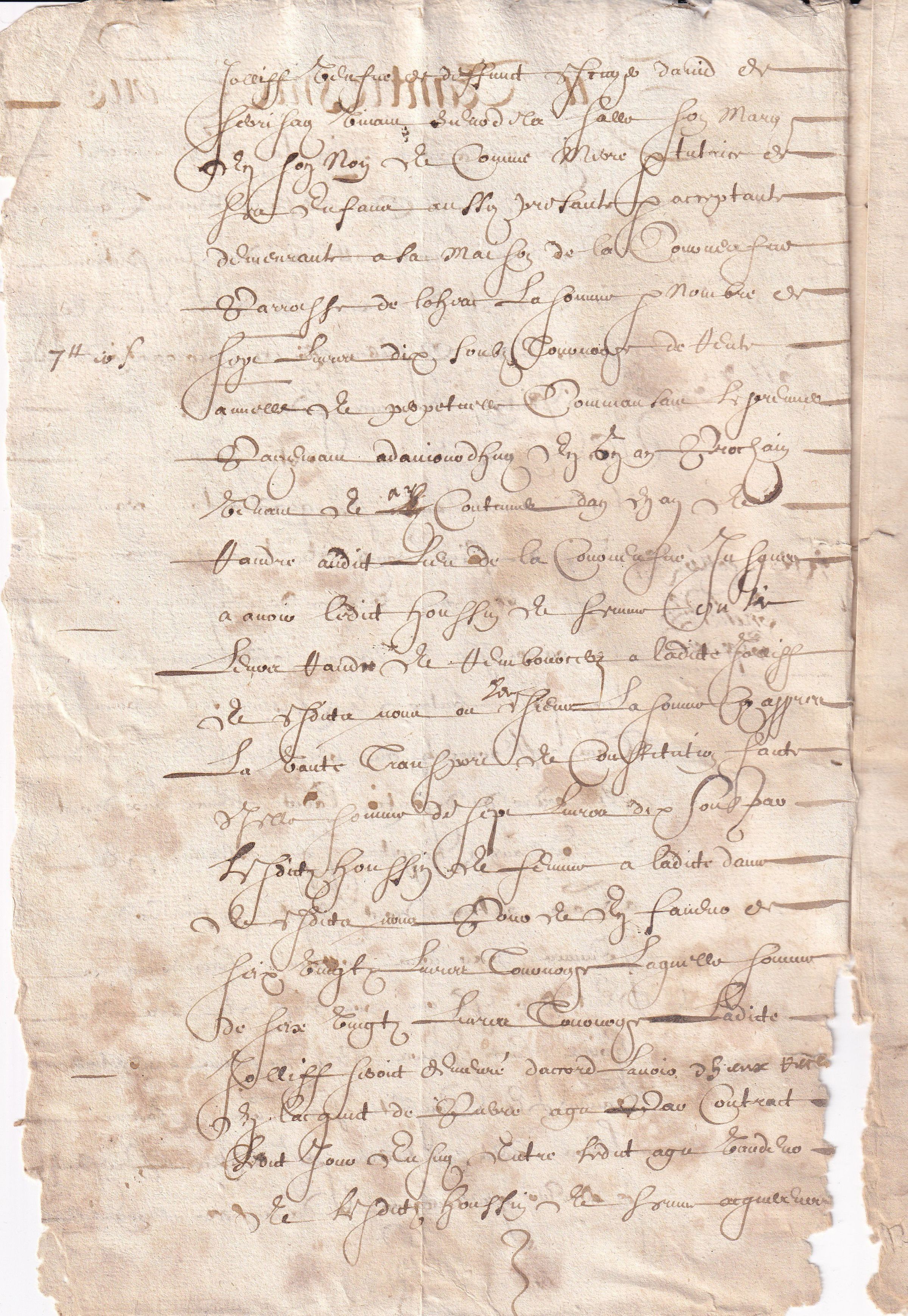
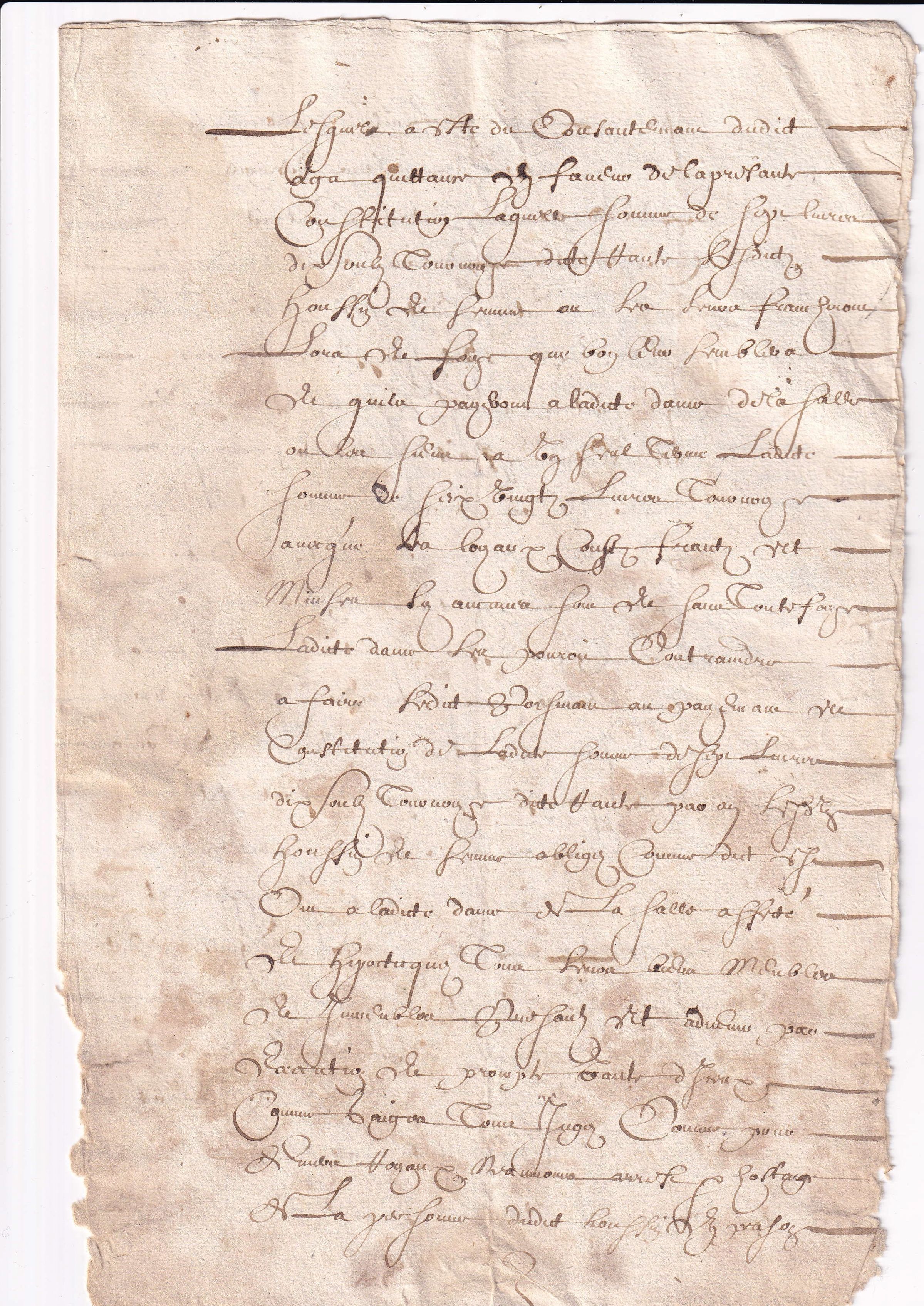
RE-LE-1643-0001
Formal legal record concerning civil or property matters, written by a notary or court clerk.
France
Business & Legal Documents & Letters
1600 – 1699
17th Century
French
Original (Early Modern French – Partial) Du vingtiesme jour de janvier mil six cens [—] pardevant nous [—] notaires du roy furent presens en leurs personnes [—] confessant avoir fait et constitué [—] promettant tenir ferme et stable [—] obligeant leurs biens présents et advenir [—] 🇬🇧 English Translation (Modernized) On the twentieth day of January, sixteen hundred and [—], before us, the King’s notaries, were present in their own persons [—], acknowledging having made and established [—], promising to keep firm and binding [—], pledging their present and future goods [property and assets] [—]. 📝 Notes on Translation • This is formal legal formula language common in French notarial records. • “Obligeant leurs biens présents et advenir” means they are legally pledging all current and future property as guarantee. • Gaps indicate areas requiring deeper paleographic reconstruction.
This manuscript reflects the bureaucratic and legal culture of Early Modern France, where notaries served as essential legal intermediaries in civil society. Such documents recorded contracts, property transfers, inheritances, and financial obligations. The formalized language and repetitive legal formulas illustrate the standardized administrative practices emerging during the consolidation of royal authority. The handwriting style reflects professional scribal training typical of legal clerks of the period.