
Personal Financial Correspondence Letter — France, 3 December 1689
Letter
A handwritten French personal letter discussing financial obligations, repayment concerns, and assurances between correspondents, dated 3 December 1689.
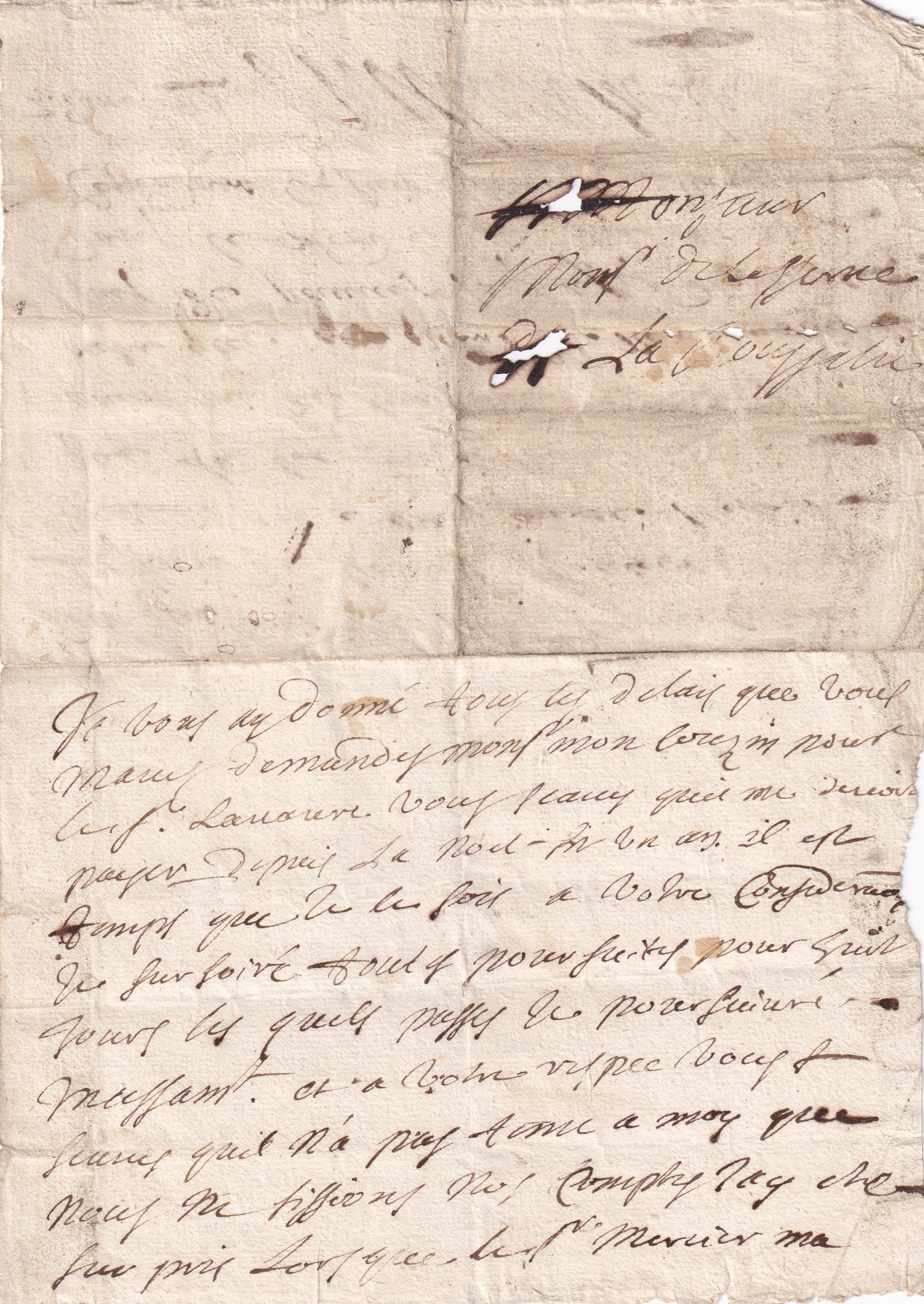
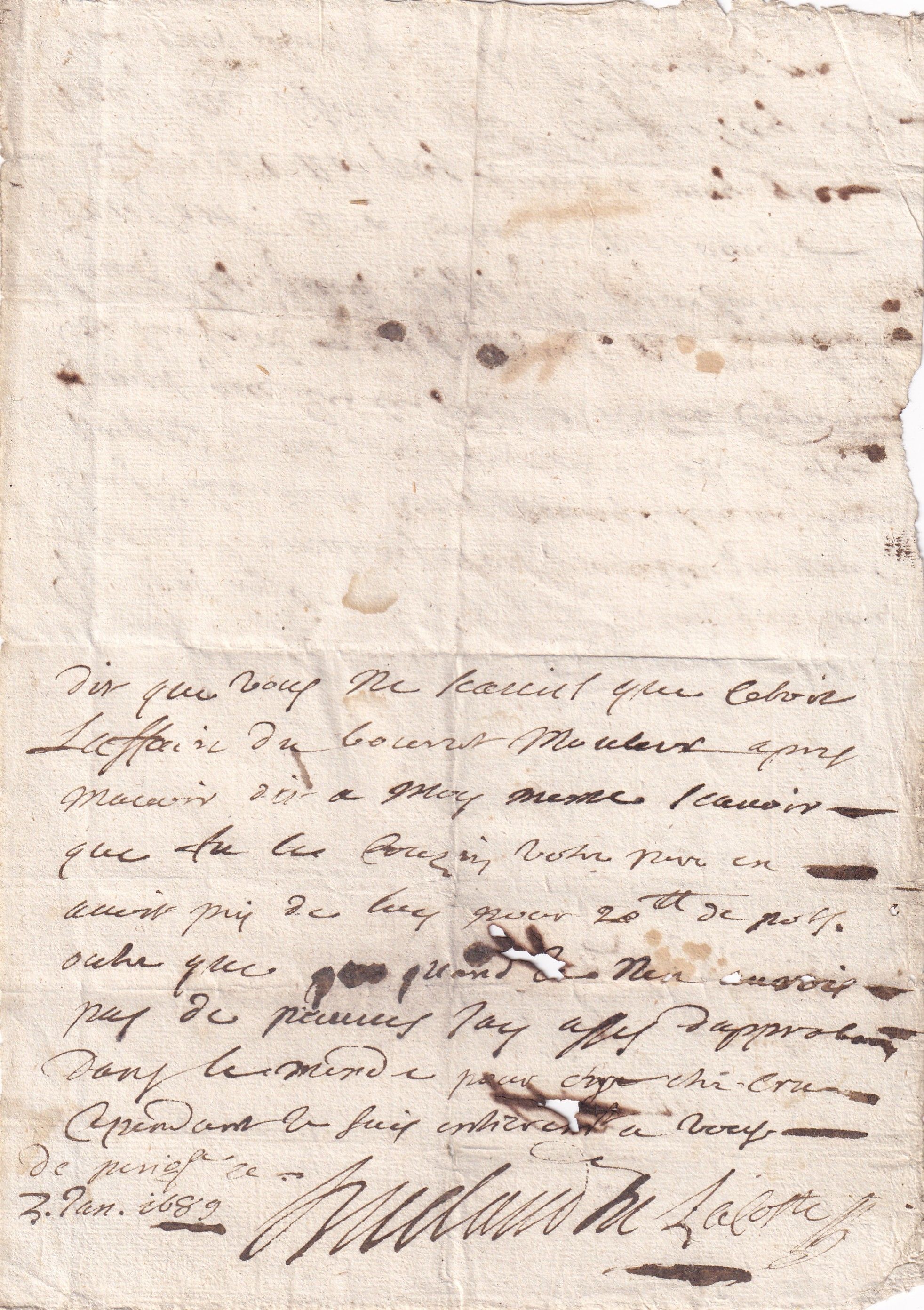
RE-LE-1689-0007
Private correspondence concerning repayment of money, financial responsibility, and personal assurances.
France
Personal Correspondence Letters
Dec 3, 1689
17th Century
French
Transcription (Partial – Original French) Je vous ay donné tous les délais que vous m’avez demandés … … pour payer depuis le mois de mars … … je feray tout mon possible … … je vous prie de me croire … … avec grand respect … … ce 3 décembre 1689 … (Sections abbreviated due to staining and ink loss.) English Translation (Modernized Summary) I have granted you all the time you requested. Payment has been pending since the month of March. I will do everything possible to fulfill the obligation. I ask you to believe me and trust my intentions. With great respect. Written this 3rd day of December, 1689.
This letter reflects the personal dimension of financial relationships in Early Modern France, where private agreements and trust formed the basis of credit systems. Written correspondence allowed individuals to negotiate repayment terms, request patience, and maintain social bonds while addressing financial strain. The deferential language reveals the importance of honor, reputation, and respectful communication in maintaining personal and economic relationships. Such letters illustrate how financial matters were often managed through social networks rather than formal legal institutions.
Description
This manuscript is a personal letter written in France on 3 December 1689 concerning financial obligations and delayed repayment. Unlike formal legal or notarial records, this document reveals the interpersonal nature of early modern economic life, where financial matters were frequently negotiated through private correspondence grounded in mutual trust. The author acknowledges delayed payment and requests continued patience while assuring the recipient of sincere efforts to satisfy the debt. The formal yet personal tone reflects social norms emphasizing honor, respect, and credibility in financial dealings. Such letters provide valuable insight into informal credit systems, social etiquette, and the lived experience of financial strain in pre-modern Europe. They highlight how economic relationships were embedded within personal networks rather than governed exclusively by institutional mechanisms. Written in iron gall ink on laid rag paper, the letter shows fold creases, staining, and minor losses consistent with handling and long-term preservation.