
Royal Court Legal Instrument — Sénéchaussée de Limoges (Dated 22 May 1675)
Letter
An official French judicial document issued by the Royal Sénéchaussée of Limoges recording sworn legal proceedings involving named parties, dated 22 May 1675.
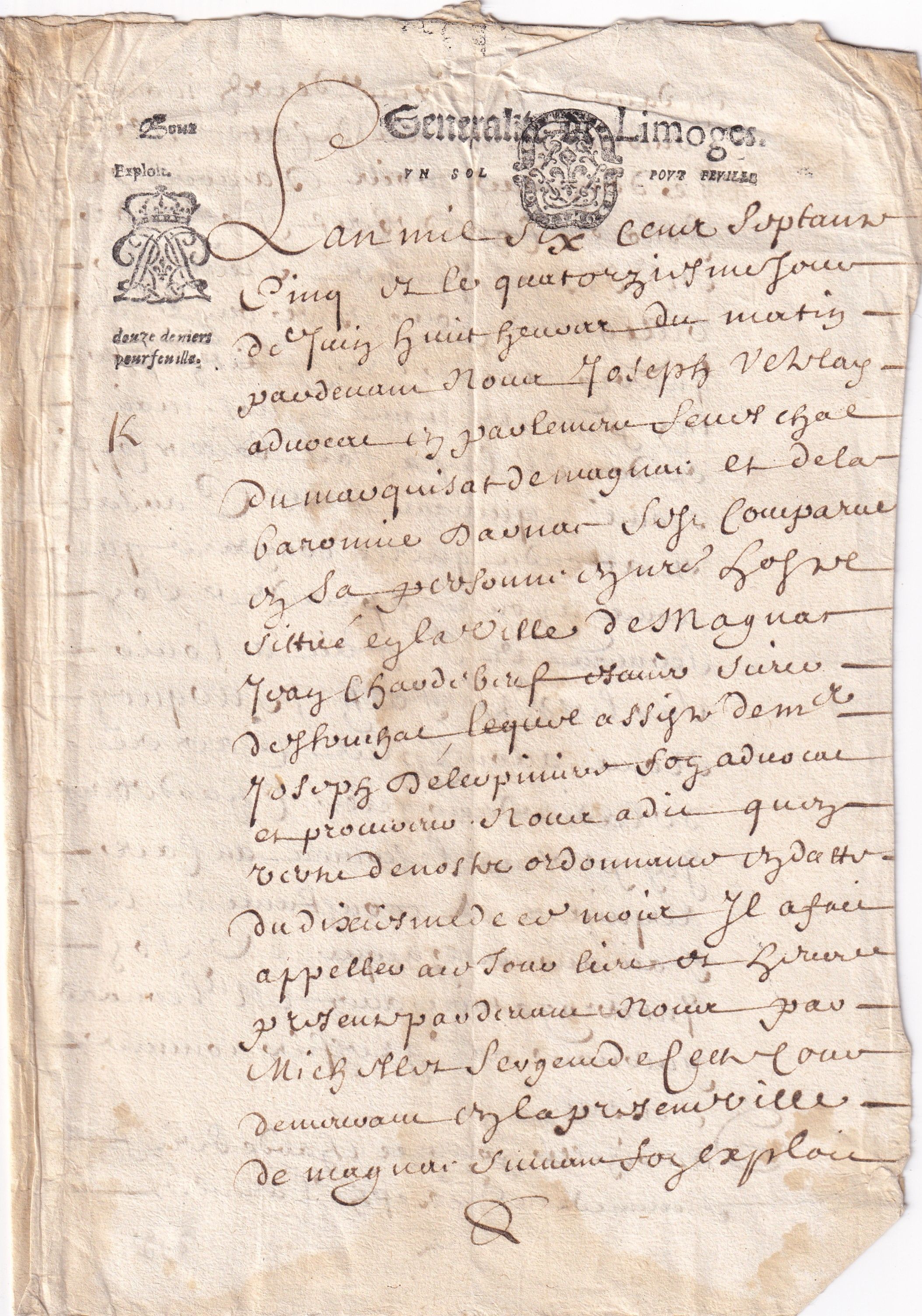
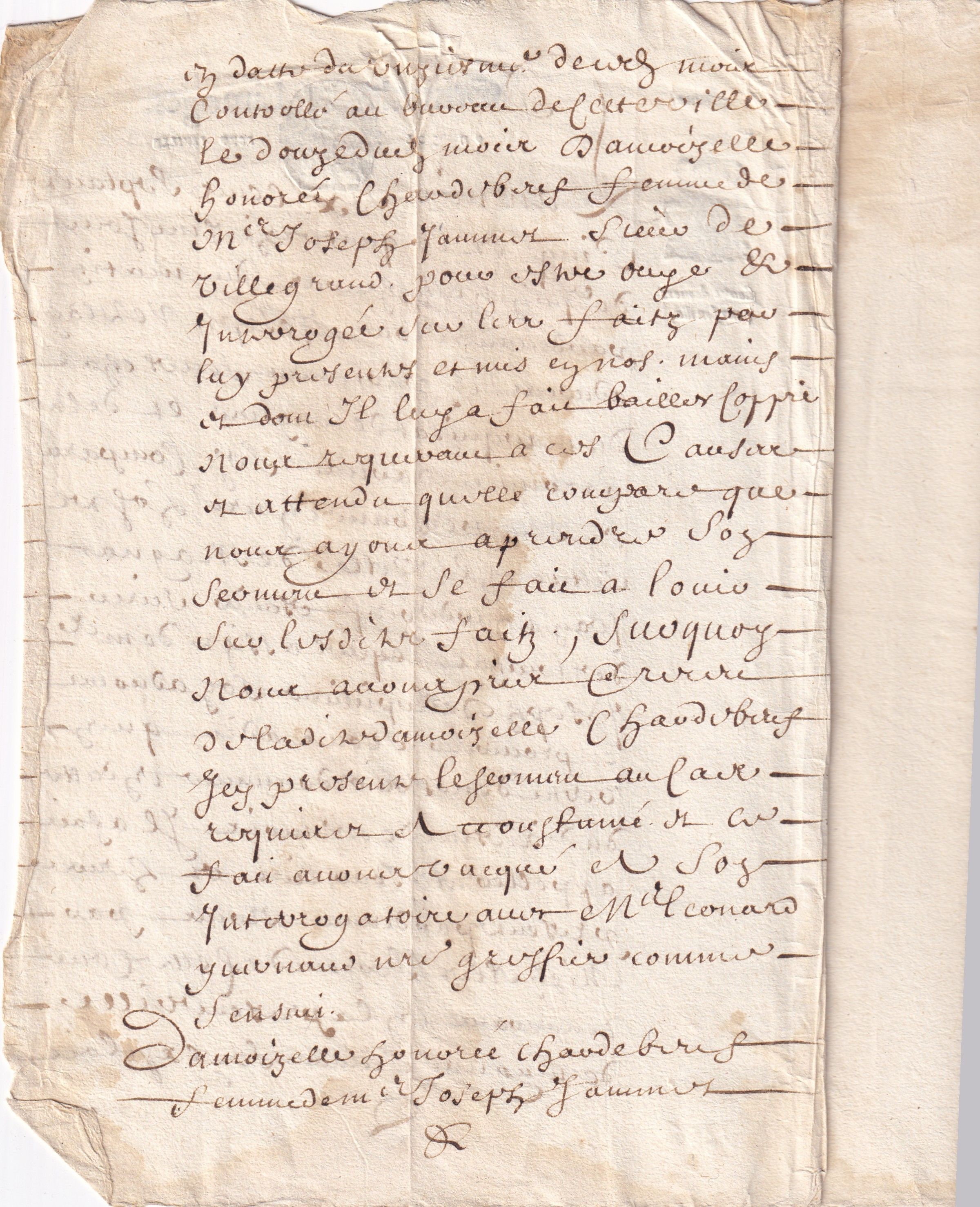
Formal court action documenting sworn testimony and legal proceedings between private parties.
France
Business & Legal Documents
1675
17th Century
Transcription (Partial – Original French) Sénéchaussée de Limoges L’an mil six cens soixante quinze et le vingt deuxiesme jour de may … comparu en sa personne … … interrogé sur les faits par nous … … a dit et déclaré … … a requis acte … … signé … English Translation (Modernized Summary) Royal Court of Limoges In the year one thousand six hundred seventy-five, on the twenty-second day of May, The named individual appeared in person before the court. After being questioned regarding the facts, the individual stated and declared their testimony. A formal record of this statement was requested. Executed and signed before the court authorities.
This document illustrates formal judicial procedure in 17th-century France, where sworn statements and personal appearances formed essential components of court administration. The Sénéchaussée courts functioned as regional arms of royal justice, handling civil disputes, financial matters, property conflicts, and sworn testimony. The document reflects a highly structured legal culture emphasizing personal accountability, oral testimony, and written validation by court clerks. Its formulaic language shows the standardized bureaucratic processes that governed provincial France prior to the Revolution.
Description
This manuscript is a formally dated judicial record issued by the Royal Sénéchaussée of Limoges on 22 May 1675. It documents the personal appearance and sworn testimony of an individual before provincial judicial authorities operating under the French crown. Such documents formed the procedural backbone of Early Modern legal systems, recording witness statements, disputes, and sworn declarations that could influence civil or criminal judgments. The structured language reflects standardized legal formulas used throughout France to ensure procedural consistency. The artifact provides insight into the lived experience of justice in provincial communities, where legal authority depended on in-person testimony and meticulous written recordkeeping. Surviving examples illuminate administrative literacy, judicial hierarchy, and the mechanisms used to legitimize legal actions. Materially, the document is written in iron gall ink on laid rag paper, exhibiting natural age toning, creasing, and edge wear consistent with more than three centuries of preservation.