
Vellum Legal Declaration or Memorandum (Early Modern France)
Letter
A handwritten legal manuscript on vellum containing a formal declaration or memorandum written in early modern French legal script.
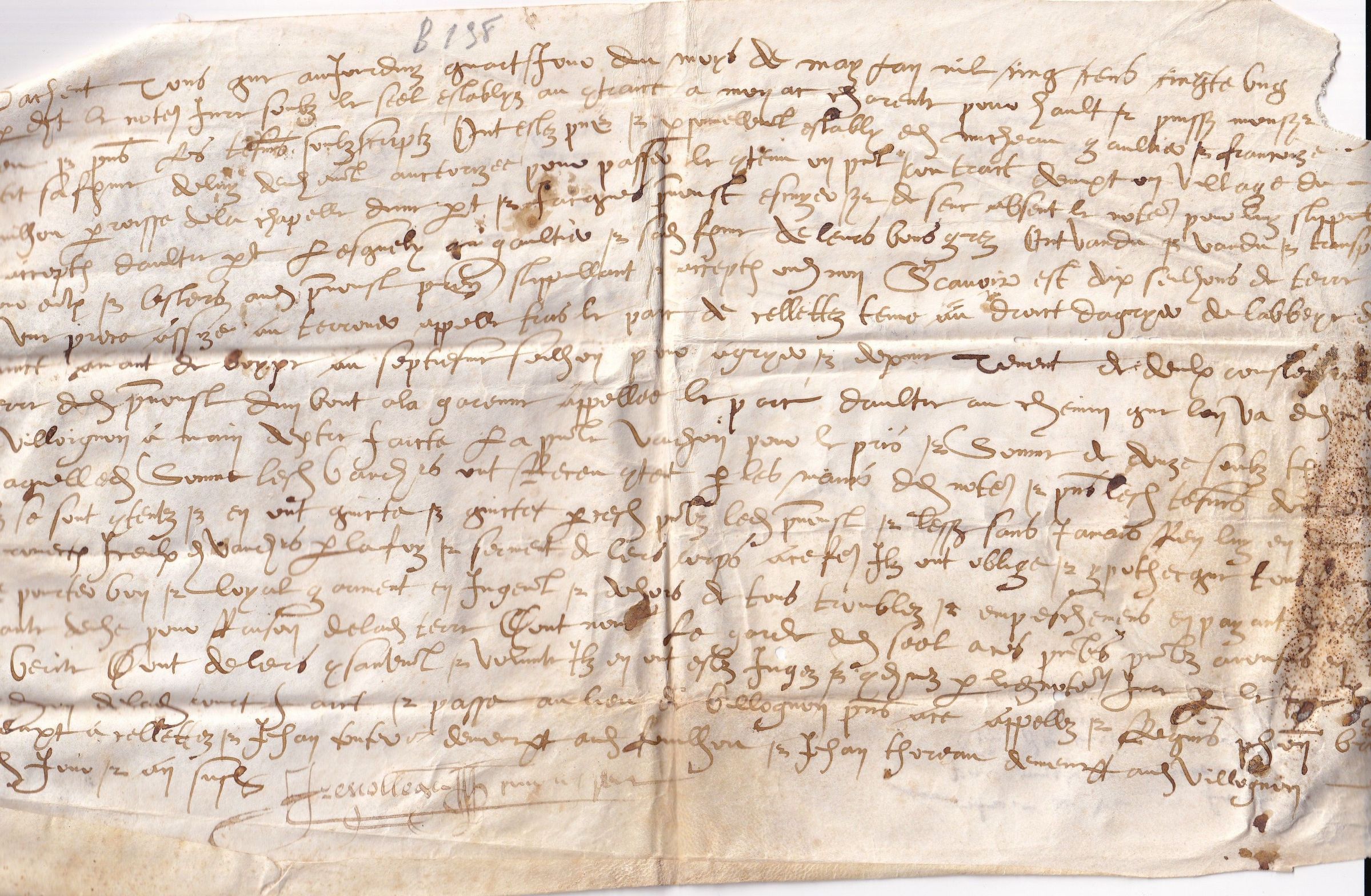
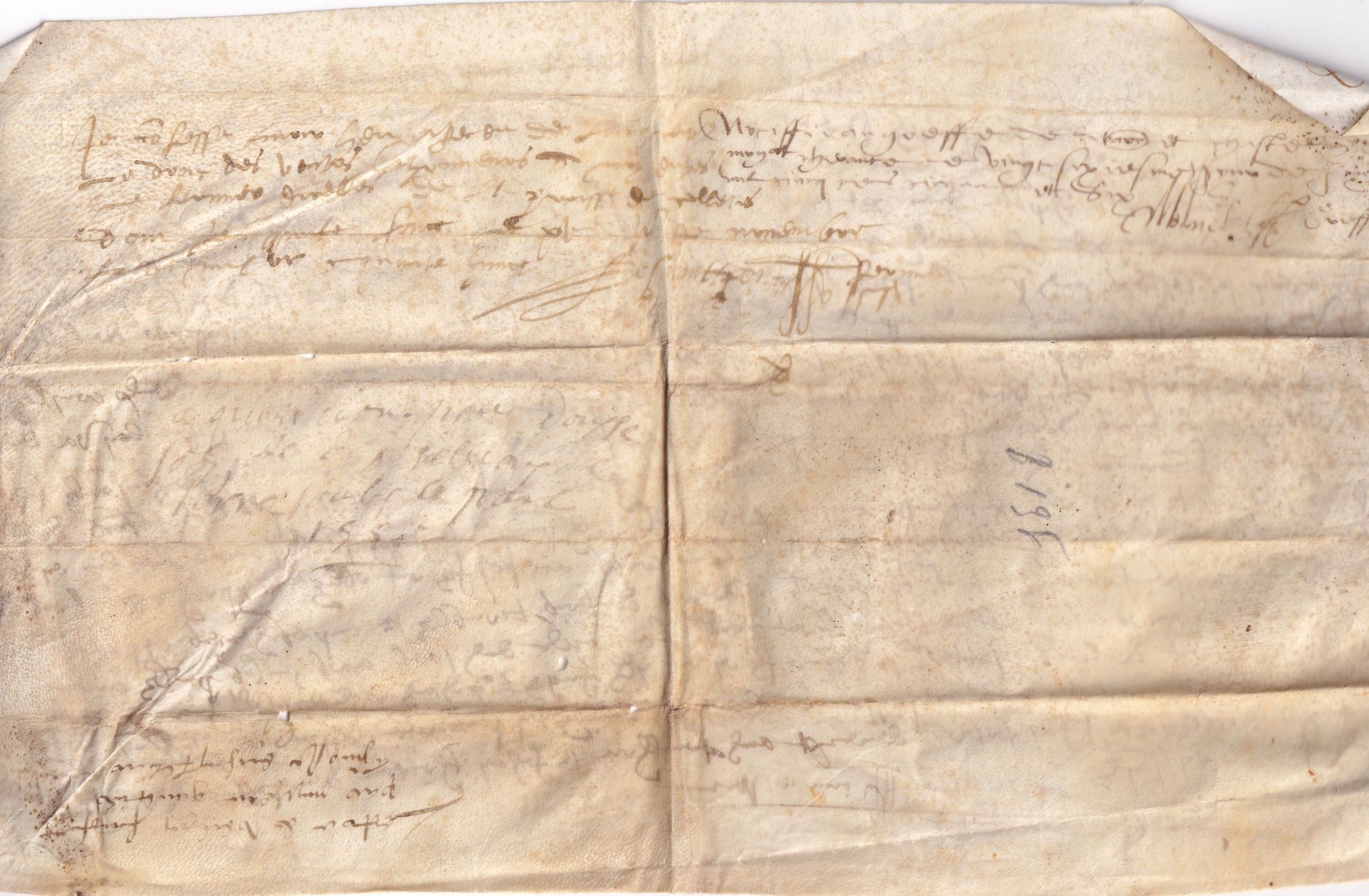
RE-LE-1555-0019
Formal legal statement concerning obligations or claims presented within a judicial or administrative context.
France
Business & Legal Documents
1555
16th Century
Due to the dense early script and fading ink, only fragments can be rendered with confidence: … nous avons donné pouvoir … … pour comparoir et répondre … … suivant les lois et coutumes … … fait et signé … (Substantial portions remain difficult to interpret because of script compression and damage to the vellum.) English Translation (Summary) We have granted authority and power… to appear and respond in the matter… according to the laws and customs… made and signed as formal record.
French
This manuscript exemplifies the documentary culture of early modern France, when vellum was still commonly used for important legal and administrative records. Vellum, produced from treated animal skin, provided a durable writing surface suitable for documents that required long-term preservation. Legal documents of this type often recorded declarations of authority, obligations, or formal responses in judicial disputes. The script style reflects the professional handwriting used by clerks, notaries, and legal officials in the sixteenth century. Such manuscripts played a central role in the functioning of courts and administrative institutions during the period. The transition from vellum to paper gradually occurred during the sixteenth and seventeenth centuries, making surviving vellum documents valuable examples of earlier legal record-keeping practices.
Description
This manuscript legal document written on vellum represents the formal documentary practices of early modern France. Produced using ink on prepared animal skin, the document records a legal declaration or memorandum related to judicial proceedings. The handwriting reflects the distinctive legal script used by professional clerks and notaries during the sixteenth century. Vellum remained a preferred material for important legal and administrative documents because of its durability and resistance to deterioration. Such manuscripts formed the backbone of record-keeping within courts and government offices before the widespread adoption of paper. The document provides insight into the procedural nature of legal disputes and administrative governance in early modern Europe, illustrating the reliance on written declarations and formally recorded testimony within the judicial system.