
French Fiscal Document Fragment with Royal Revenue Stamp
Letter
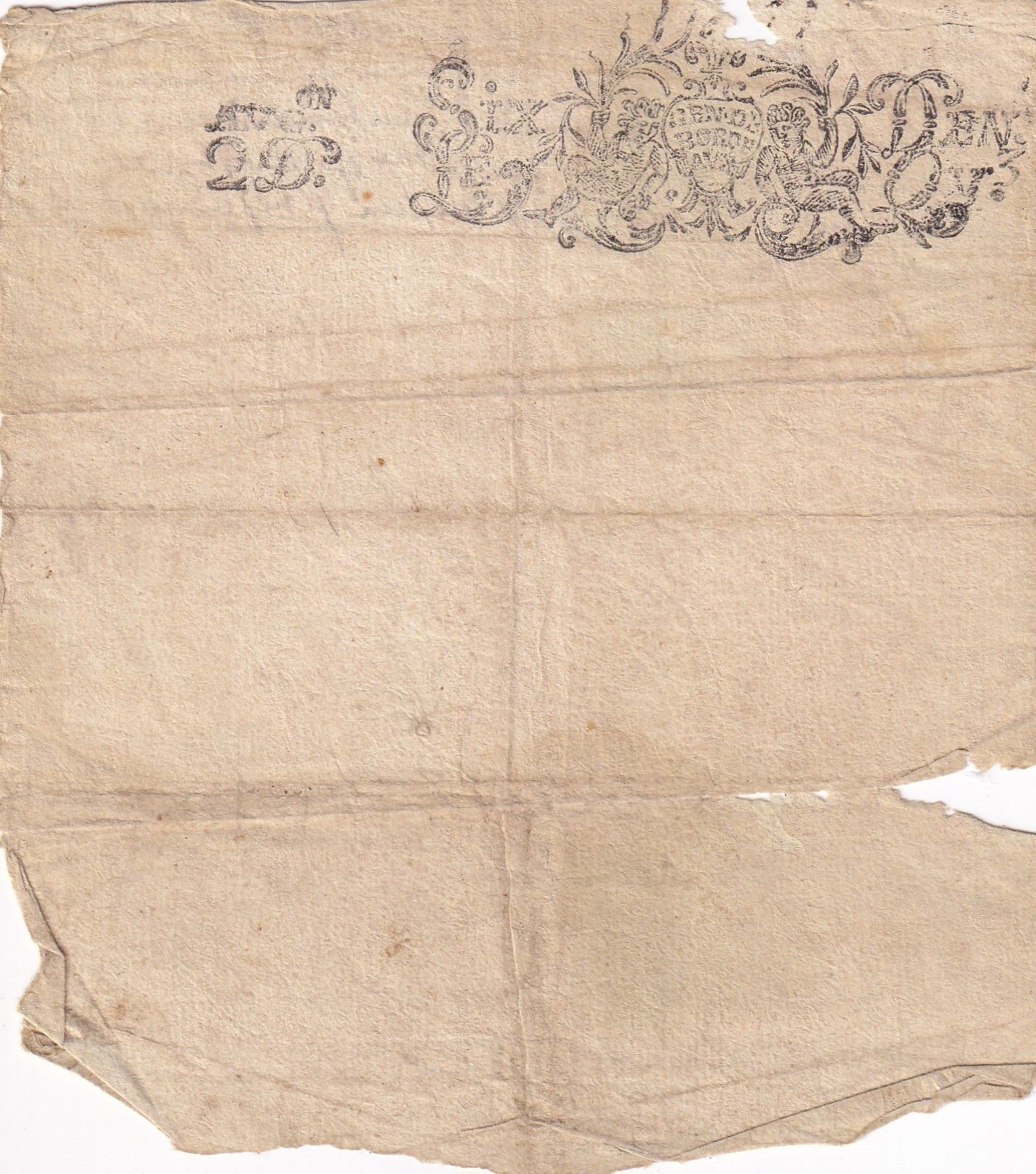
A fragmentary French administrative document bearing an ornate printed fiscal stamp and remnants of handwritten legal or financial text, likely associated with official tax or state revenue records.
RE-LE-1700-0006
Government fiscal administration and revenue documentation.
France
Business & Legal Documents
1750 – 1799
18th Century
French
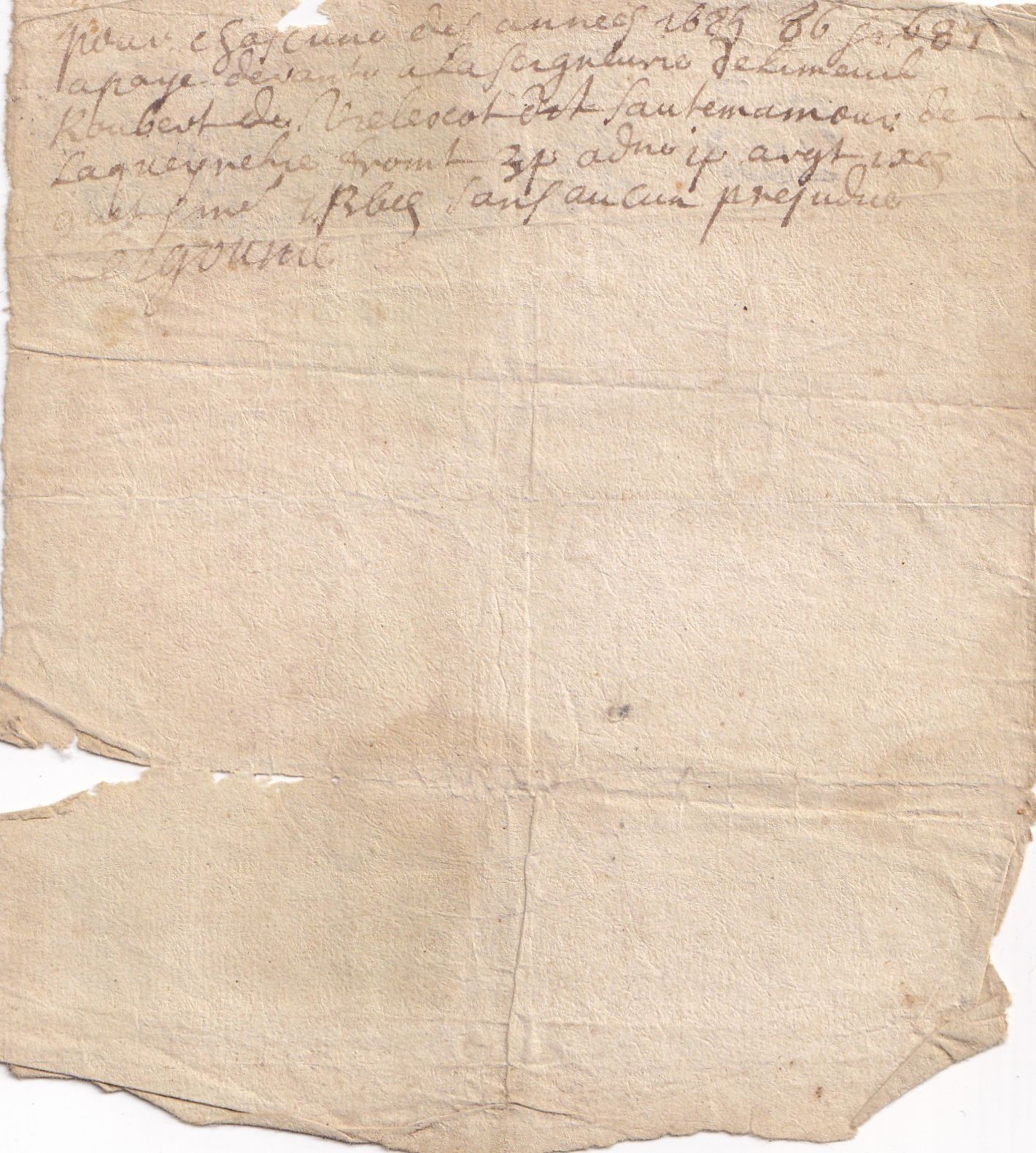
Transcription (Partial – Legible Portion) … signé et fait ce jour … … sans aucun préjudice … (Most text lost due to trimming and wear.) English Translation (Modernized) … signed and executed this day … … without prejudice …
This fragment represents the fiscal bureaucracy of Early Modern France, when government revenue systems relied on printed stamped papers and officially sanctioned forms. Such documents were used to record legal acts, financial agreements, and tax obligations under the authority of the crown. The printed emblem and denomination marks indicate state-issued stamped paper, required for certain legal and administrative acts. This system ensured revenue collection while validating official transactions. Even fragmentary examples illustrate the material culture of governance and the increasing standardization of administrative paperwork.
Description
This fragmentary French administrative document preserves elements of a printed fiscal stamp used on officially sanctioned government papers. Such stamped sheets were integral to the financial infrastructure of Early Modern France, serving both as authentication devices and as instruments of taxation. Legal contracts, court filings, and notarial acts often required stamped paper to be considered valid. The ornate printed emblem reflects the visual language of state authority, while the surviving handwritten lines suggest formal legal phrasing typical of administrative records. Although incomplete, the artifact provides insight into the bureaucratic mechanisms that supported governance, revenue systems, and legal validation prior to modern standardized forms. The laid rag paper shows fold lines, edge losses, and age toning consistent with prolonged handling and archival dispersal.