
Italian Mercantile Letter Concerning Financial Accounts — Marseille, 1700
Letter
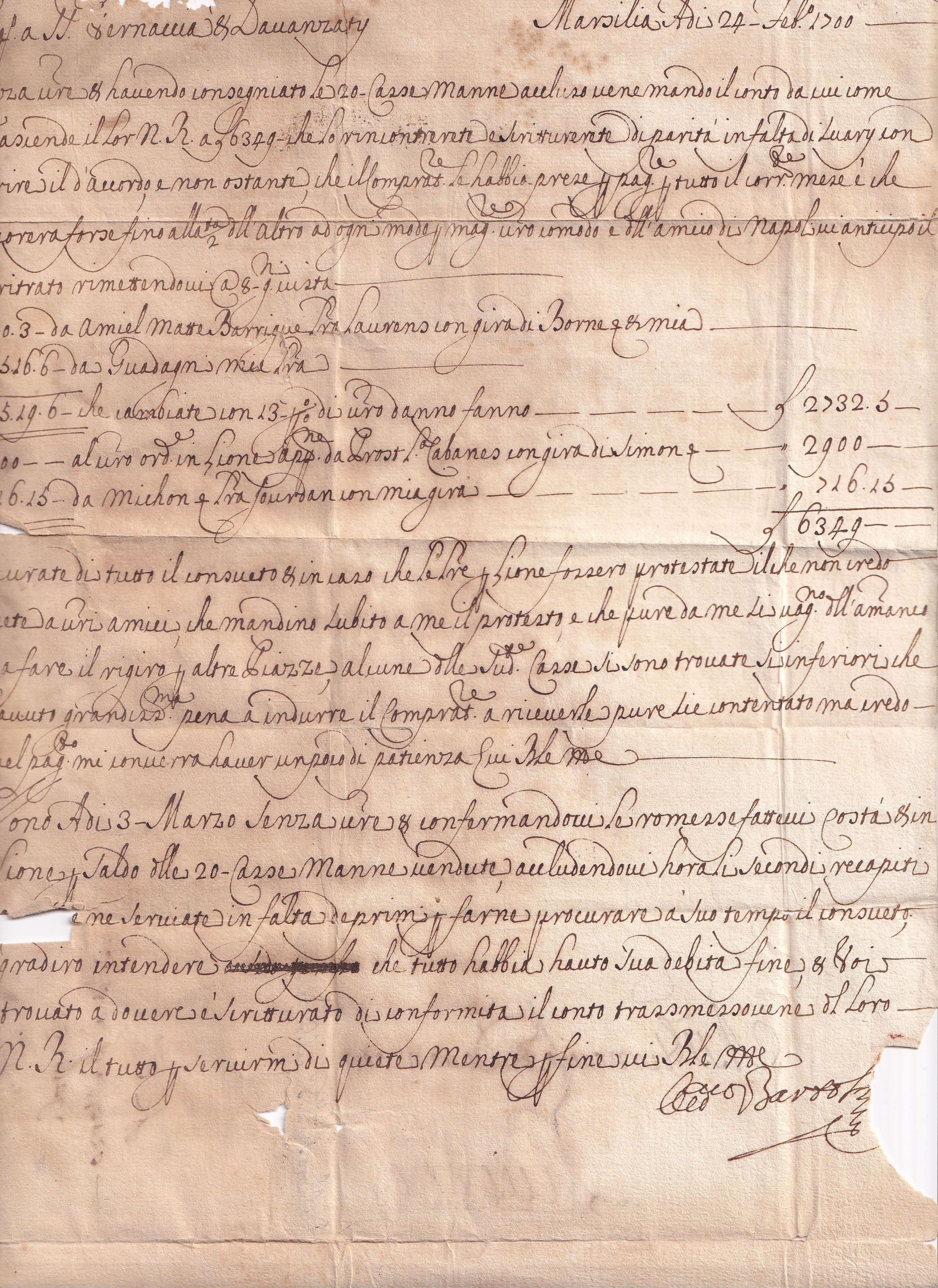
A handwritten Italian commercial letter dated 24 February 1700 concerning financial accounts, trade balances, and merchant obligations, likely related to Mediterranean trade networks.
RE-LE-1700-0005
Commercial financial correspondence discussing accounts, balances owed, and settlement of mercantile obligations.
France
Business & Legal Documents
Feb 24, 1700
18th Century
Transcription (Partial – Original Italian) Marsilia li 24 Febraro 1700 … avvisando … … conto … … somme … … debito … … promesse fatte … … resto debitore … … Monsù … (Sections abbreviated where heavy cursive or damage obscures reading.) English Translation (Modernized Summary) Marseille, 24 February 1700 Notice is given regarding financial accounts. The letter discusses monetary sums owed, outstanding balances, and previously made payment promises. The writer acknowledges remaining debts and refers to commercial obligations requiring settlement. Respectful closing to the recipient.
Italian
This document reflects the vibrant commercial culture of Mediterranean trade networks at the turn of the 18th century. Italian merchants frequently operated in major French port cities such as Marseille, serving as intermediaries in international commerce involving textiles, spices, banking, shipping insurance, and credit exchanges. The letter illustrates the importance of written financial communication in pre-modern business. Merchants relied on correspondence to track debts, confirm obligations, and negotiate payments across long distances. The language reflects formal mercantile etiquette and accounting precision. Such documents are valuable records of early capitalist practices, cross-border trade, and the Italian merchant diaspora active in European port economies.
Description
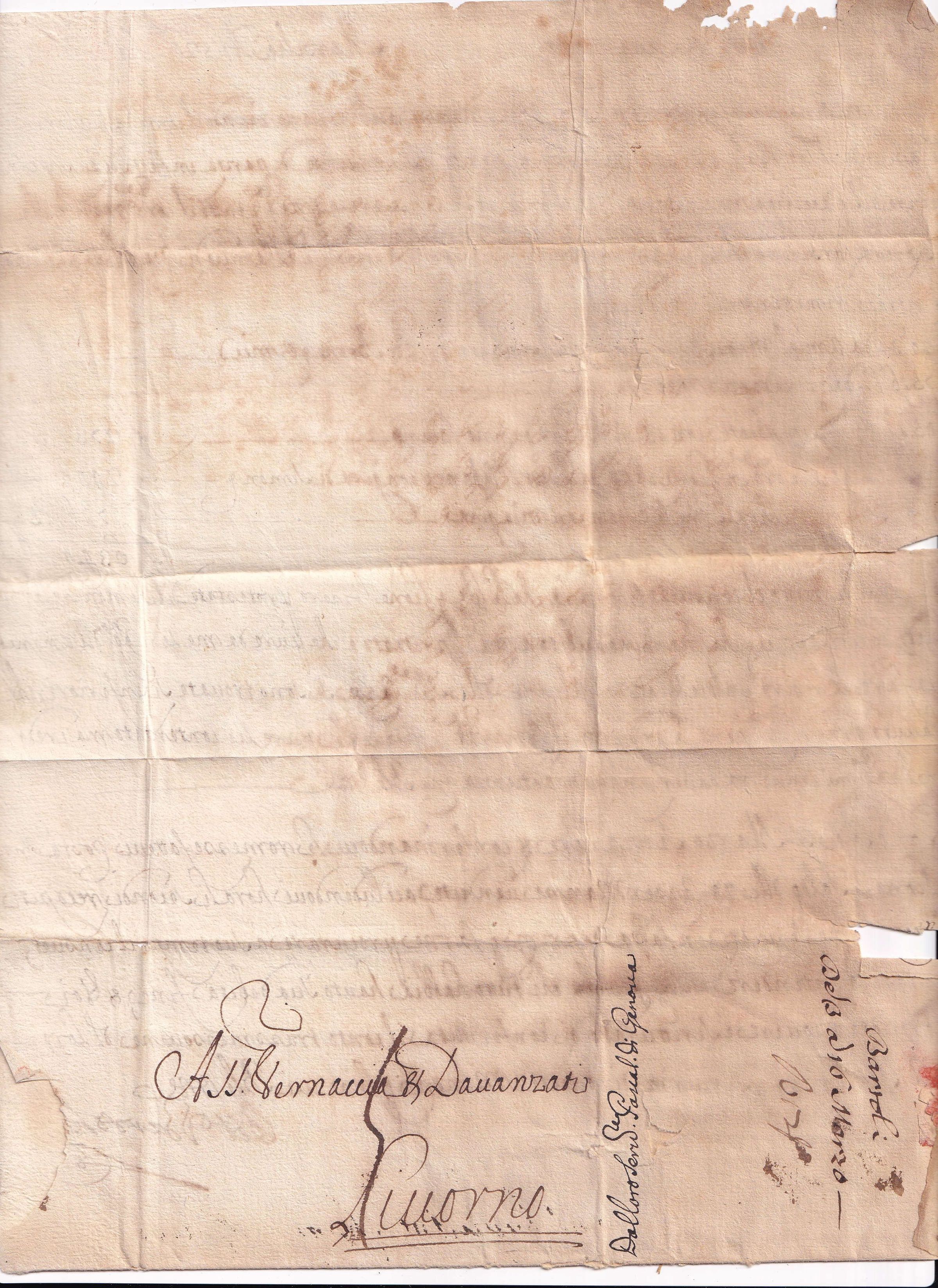
This manuscript is an Italian mercantile letter written in Marseille on 24 February 1700, documenting financial transactions and outstanding commercial obligations. During this period, Marseille served as a critical hub of Mediterranean trade, hosting merchant communities from across Europe, including a significant Italian commercial presence. The letter concerns financial accounting matters such as debts, payment commitments, and reconciliation of balances between business partners. Its formal script and accounting references exemplify the documentary practices that supported long-distance trade prior to modern banking systems. Such correspondence formed the backbone of early modern commercial infrastructure, enabling trust, credit systems, and financial accountability across national boundaries. Surviving examples provide valuable insight into merchant literacy, international trade networks, and the evolution of European financial systems. Materially, the document is written in iron gall ink on laid rag paper and shows age toning, fold lines, and staining consistent with frequent handling and long-term storage.