
Fragmentary Family Letter to Cousins – Schleswig-Holstein Region
Letter
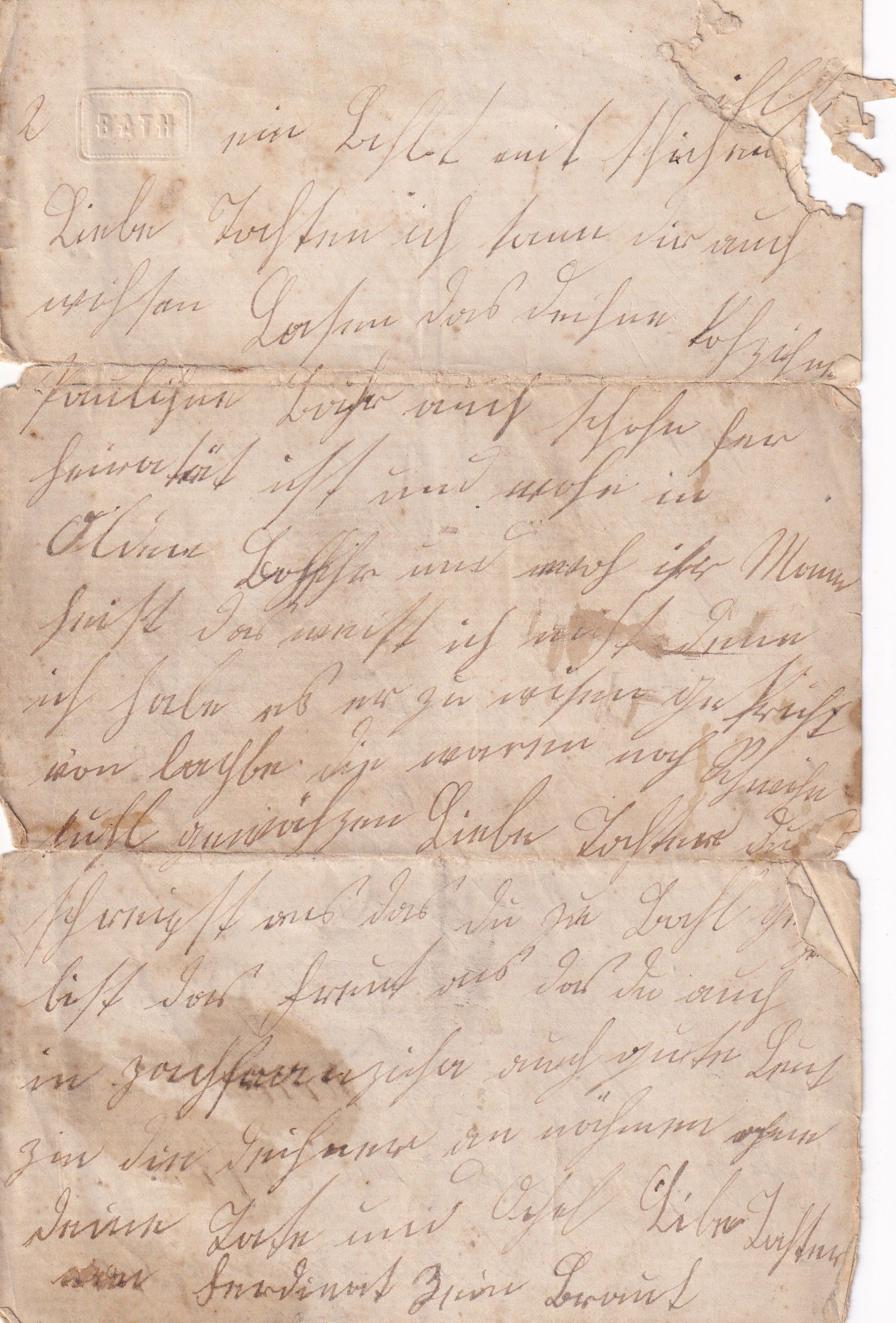
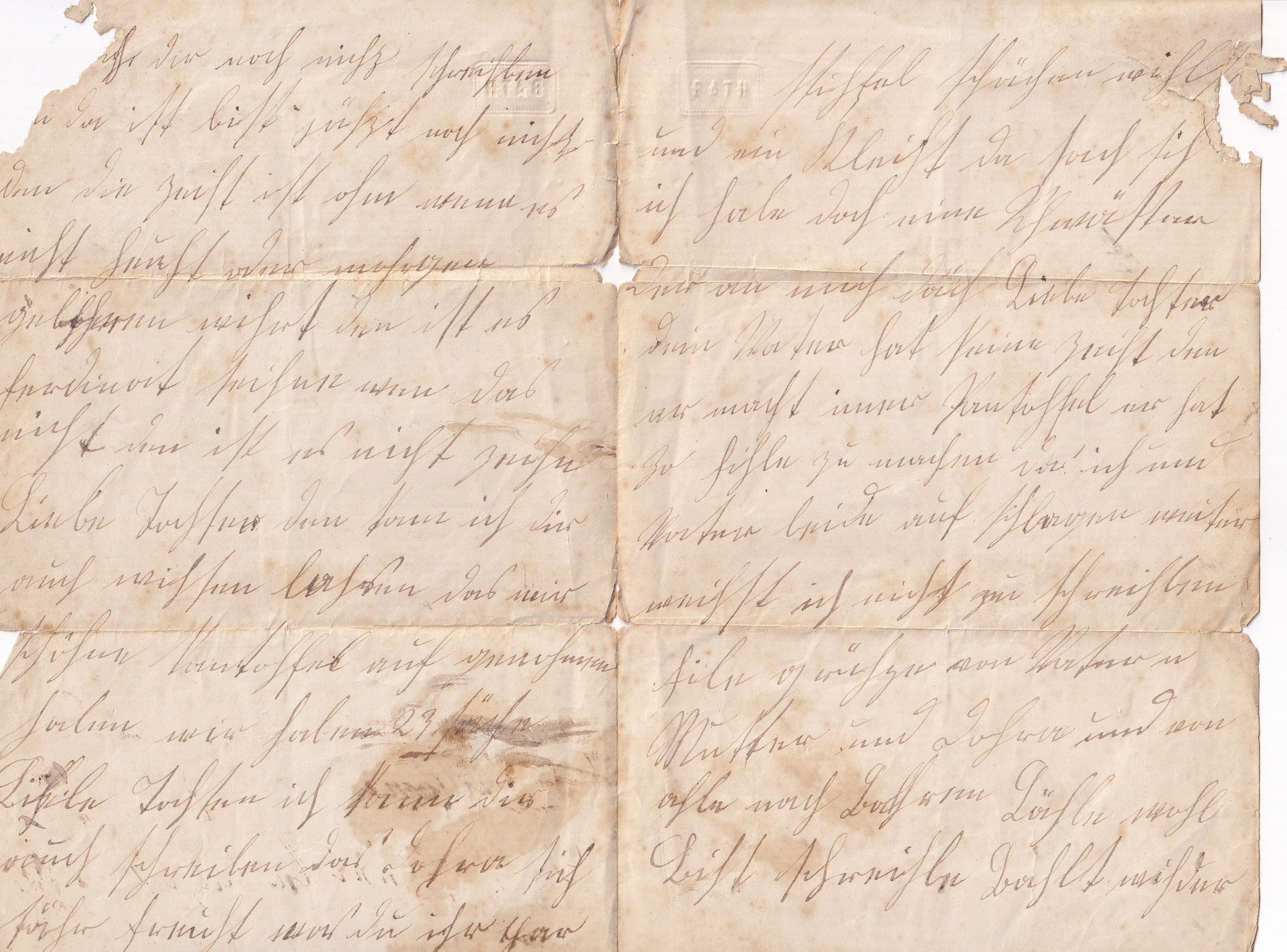
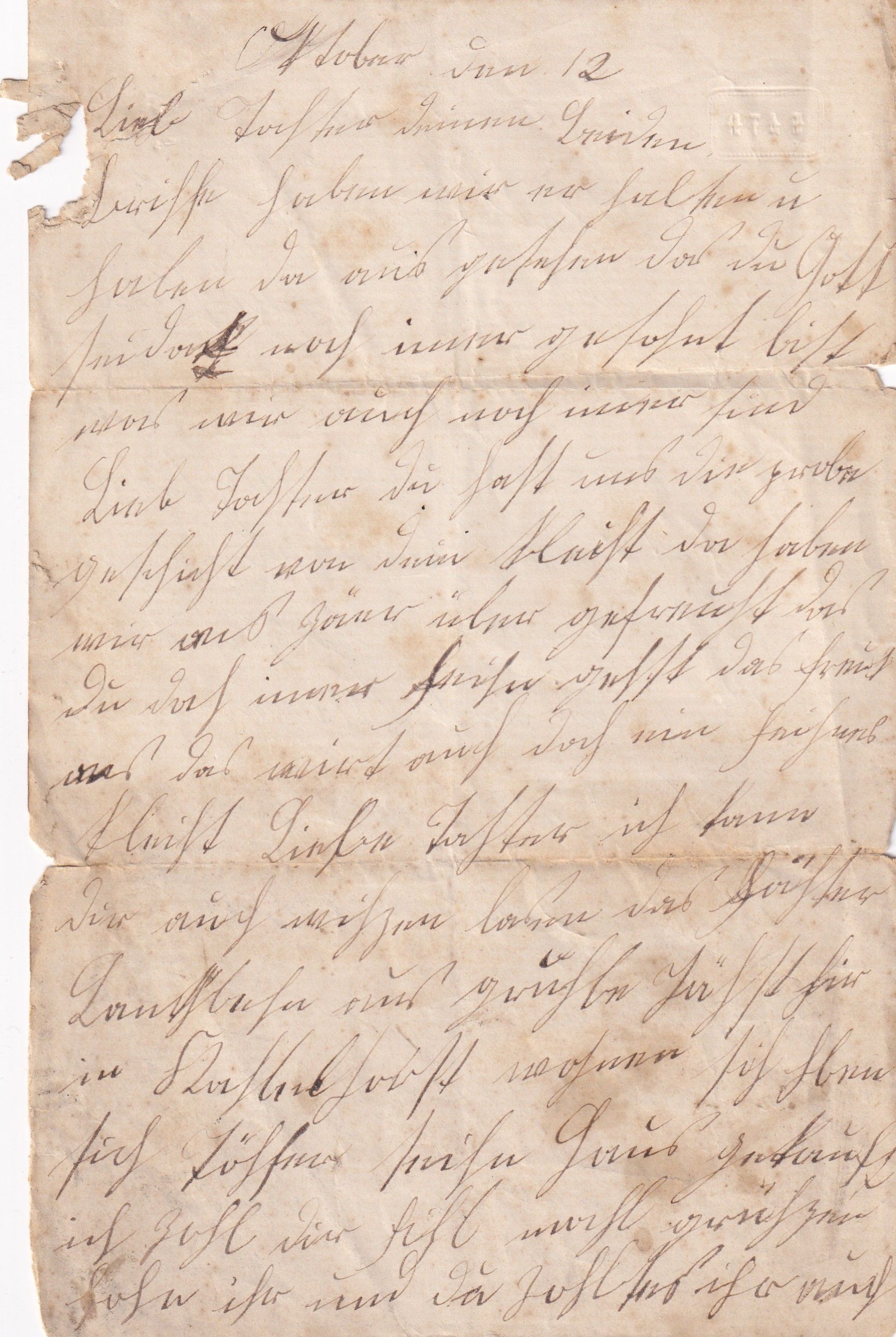
A partially preserved handwritten German family letter written in Kurrent script, addressed to cousins and discussing family matters and daily life. The document survives only in fragments and shows significant physical damage.
RE-LE-1850-0045
Family correspondence and household news
Germany
Europe
Personal Correspondence Letters
1850
19th Century
Partial Transcription (Readable German Sections) Some of the readable portions include: “Liebe Cousinen und Cousins … … wir hoffen euch bald zu sehen … … Grüße an alle Verwandten … … wir wünschen euch Gesundheit … … schreibt uns wieder …”
German
Dear Cousins, We hope that you are well and that everything is going well with you. It would bring us great joy if we could see you again soon. Please give our greetings to all the relatives. We think of you often and hope that you are in good health. Write to us again when you have time so that we may hear how things are with you. With warm greetings, Your relatives (Some sections are missing due to damage.)
Document Material Wove writing paper with iron gall ink
Family letters such as this were essential forms of communication in nineteenth-century Europe. Before telephones became widespread, extended families relied on written correspondence to maintain relationships across towns and regions. Letters commonly exchanged greetings, health updates, and news about household affairs. Even short or fragmentary letters provide insight into the strong kinship ties that structured rural and small-town communities. The emphasis on greetings to relatives and wishes for good health reflects common social etiquette in German family correspondence of the period.
Historical Note
The embossed “BATH” watermark likely refers to paper manufactured in Bath, England, a well-known center for paper production during the nineteenth century. British writing paper was widely exported and used across continental Europe. The handwriting style indicates German Kurrent script, the dominant cursive used in German-speaking regions until the early twentieth century. The references to cousins and extended family suggest the letter was part of a broader network of family correspondence similar to other Schleswig-Holstein letters in this archive.