
Gold Rush Era Letter from Mary A. Dieken to Joseph Dieken – March 18, 1855
Letter
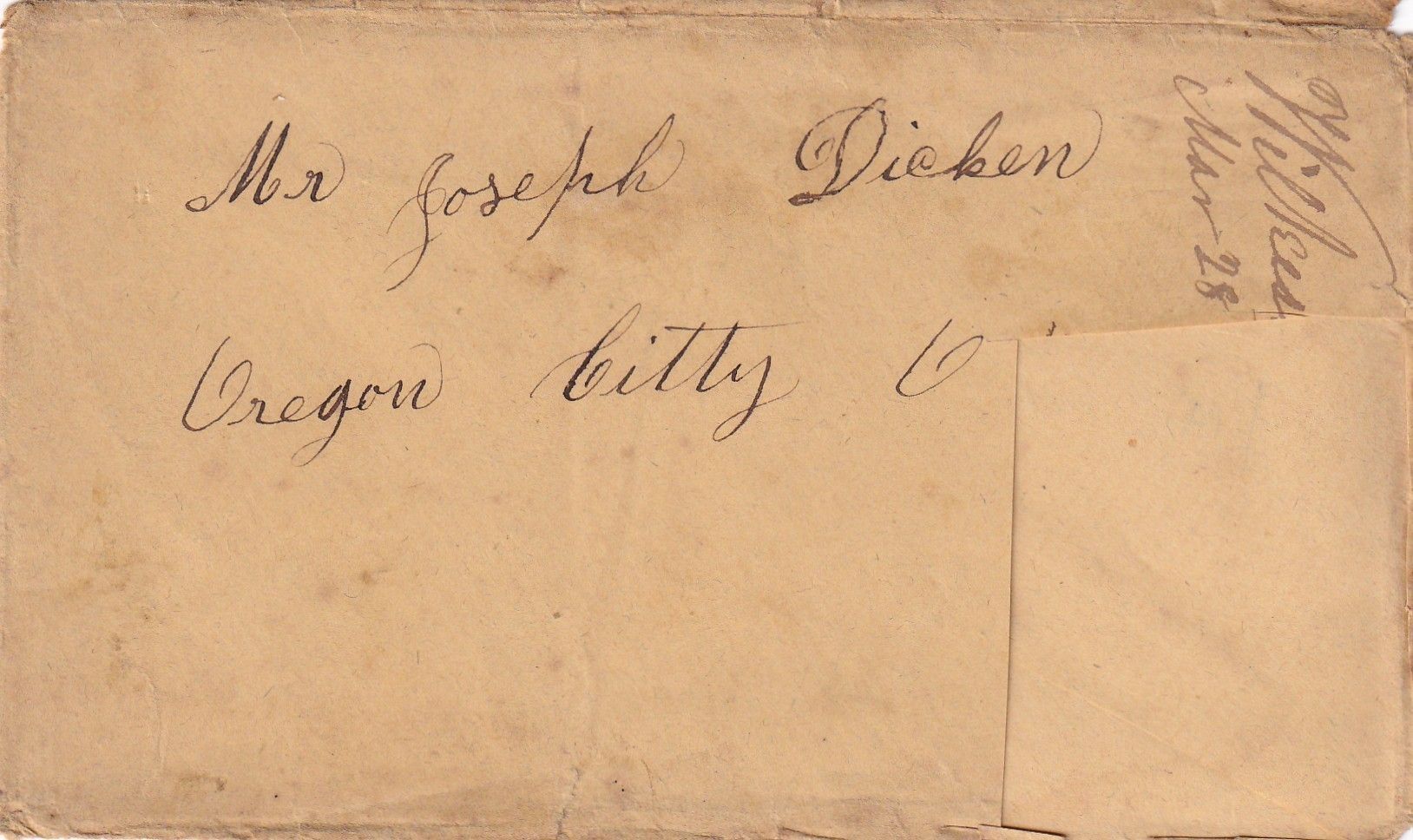
A handwritten family letter dated March 18, 1855 from Mary A. Dieken to her brother Joseph Dieken. The letter describes daily life, church meetings, illness in the community, crop prices, and correspondence with relatives who had moved to Placerville in El Dorado County, California during the Gold Rush.
RE-LE-1855-0047
Family correspondence, community news, illness, church revival meetings, and migration to California during the Gold Rush
California
North America
Personal Correspondence Letters
Mar 18, 1855
19th Century
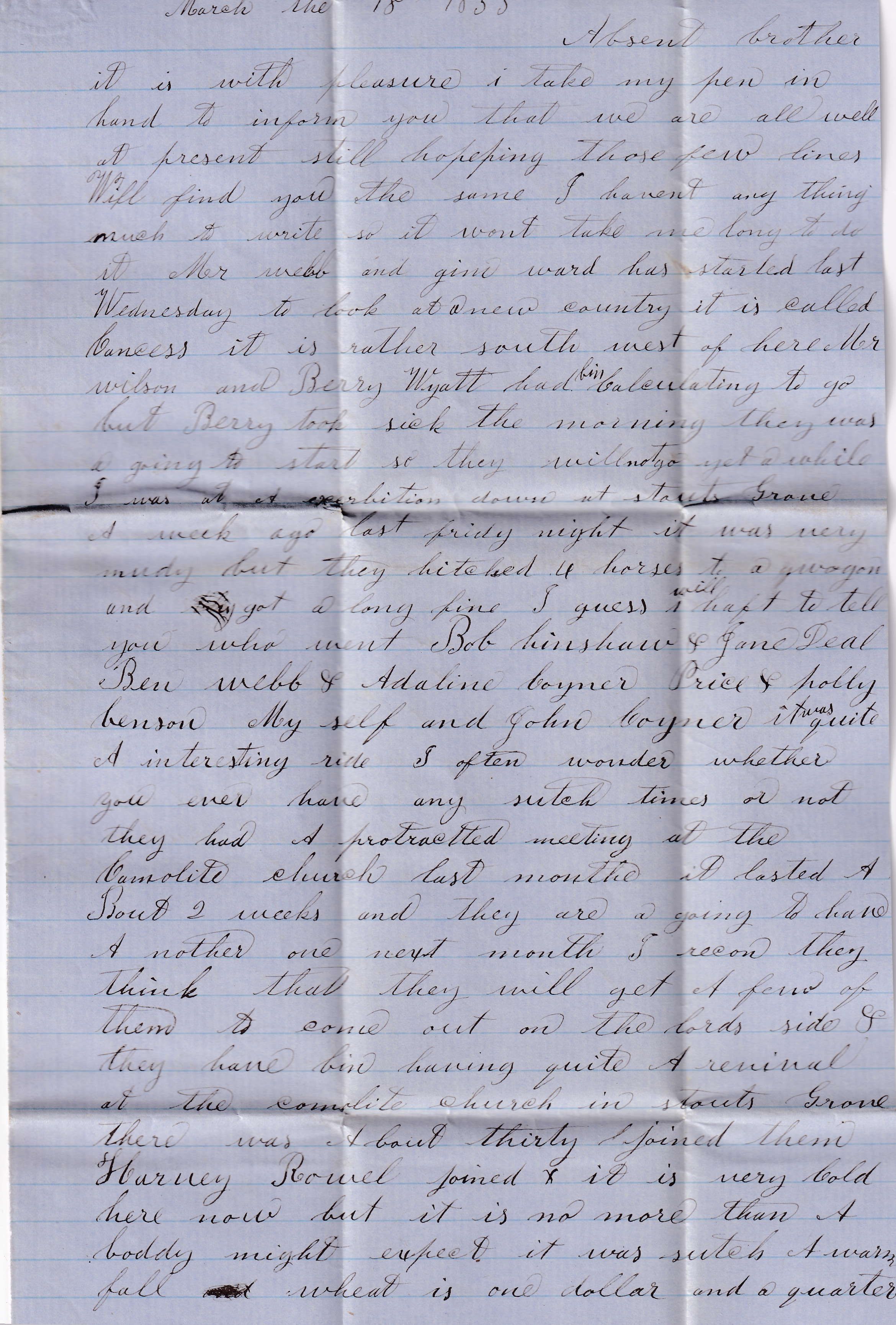
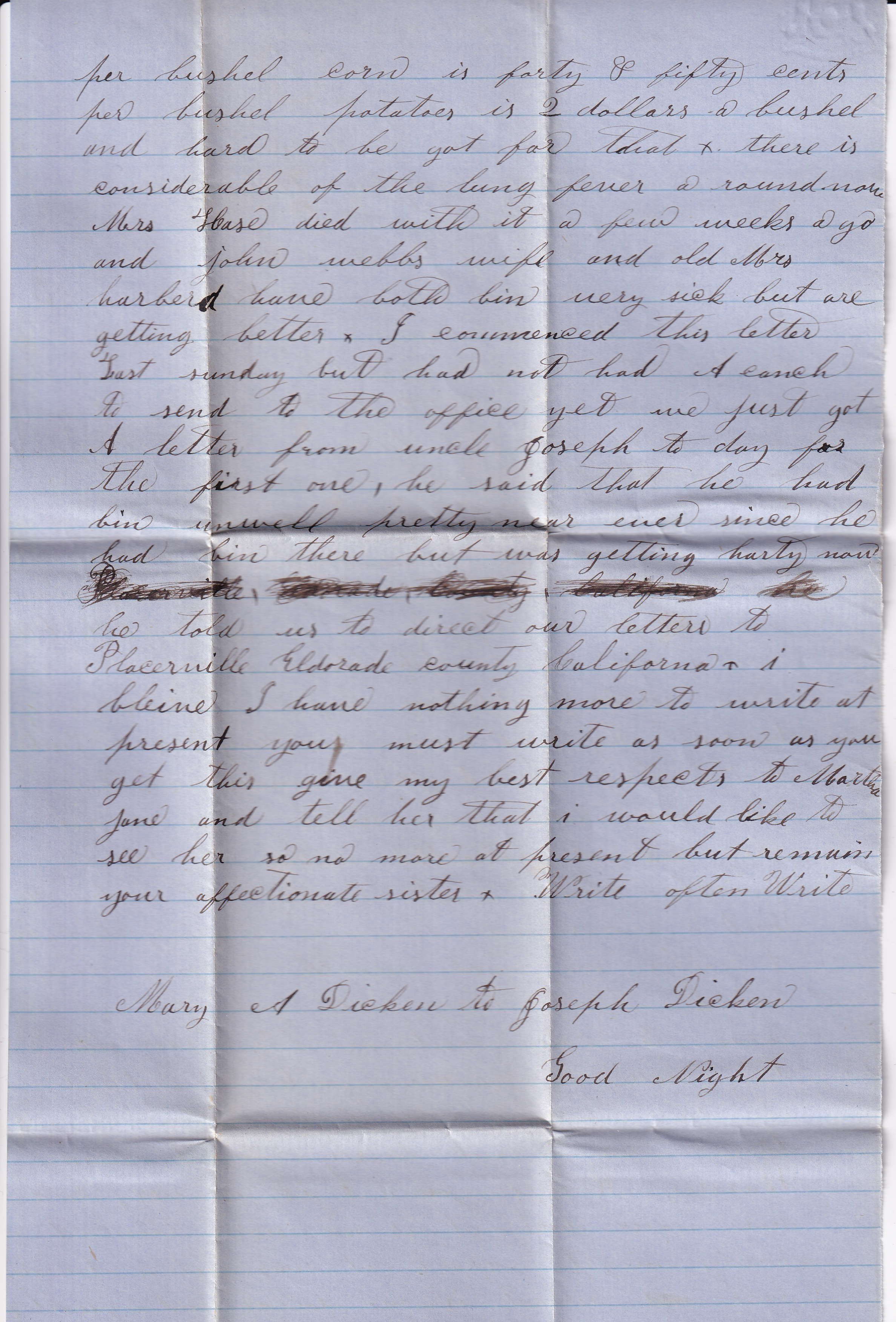
March the 18, 1855 Absent Brother, It is with pleasure I take my pen in hand to inform you that we are all well at present still hoping these few lines will find you the same. I haven’t anything much to write so it won’t take me long to do it. Mr. Webb and girl ward has started last Wednesday to look at a new country. It is called Dances. It is rather southwest of here. Mr. Wilson and Berry Wyatt had been calculating to go but Berry took sick the morning they was going to start so they will not go yet awhile. I was at an exhibition down at Stouts Grove a week ago last Friday night. It was very muddy but they hitched four horses to a wagon and got along fine. I guess you want to know who went: Bob Henshaw, Jane Deal, Ben Webb, Adaline Conner, Rice and Polly Benson, myself and John Conner. It was quite an interesting ride. I often wonder whether you ever have any such times or not. They had a protracted meeting at the Camolite Church last month. It lasted about two weeks and they are going to have another one next month. I reckon they think they will get a few of them to come out on the Lord’s side. They have been having quite a revival at the Camolite Church in Stouts Grove. There was, I believe, thirty joined them. Harvey Rowell joined and it is very cold here now but it is no more than a body might expect. It was such a warm fall. Wheat is one dollar and a quarter per bushel. Corn is forty or fifty cents per bushel. Potatoes is two dollars a bushel and hard to be got. There is considerable of the lung fever around now. Mrs. Head died with it a few weeks ago and John Webb’s wife and old Mrs. Harbert have both been very sick but are getting better. I commenced this letter last Sunday but had not had a chance to send it to the office yet. We just got a letter from Uncle Joseph today for the first one. He said that he had been unwell pretty near ever since he had been there but was getting hearty now. He told us to direct our letters to Placerville, Eldorado County, California. I believe I have nothing more to write at present. You must write as soon as you get this. Give my best respects to Martha Jane and tell her that I would like to see her. So no more at present but remain Your affectionate sister Mary A. Dieken Write often, write.
Handwriting Style / Script Type Mid-19th century American cursive script Handwriting Notes The letter is written in a clear, flowing American cursive hand typical of the mid-1800s. The writing is confident and fairly legible, suggesting the writer was well-educated for the period. Document Material Blue ruled wove writing paper with iron gall ink The letter was folded and mailed without a separate envelope, which was a common mailing method during the mid-19th century.
This letter illustrates the social and religious life of rural American communities during the mid-19th century. Church revivals and “protracted meetings” were common features of Protestant religious culture during this period, often lasting several weeks and attracting large gatherings. The letter also reflects the mobility of American families during the era of westward expansion. References to Placerville in California show the continuing impact of the Gold Rush (beginning in 1848), which drew thousands of migrants from across the United States. Community life revolved around church gatherings, social visits, exhibitions, and shared travel by wagon across muddy rural roads.
Historical Note
Placerville, located in El Dorado County, California, was one of the major towns of the California Gold Rush and was originally known as Hangtown. By 1855 the Gold Rush was still active, and many families maintained correspondence with relatives who had migrated west in search of gold or economic opportunity. The reference to “lung fever” likely refers to pneumonia or tuberculosis, both common causes of death in the 19th century. The letter’s discussion of wheat, corn, and potato prices also provides insight into agricultural economics and food costs in the mid-1850s American frontier.