
Letter Concerning the Care and Education of the Children Wilhelm and Dora
Letter
A detailed German-language letter dated June 16, 1858 discussing the upbringing, education, and financial support of two children, Wilhelm and Dora. The writer outlines responsibilities for their care, schooling, and future prospects.
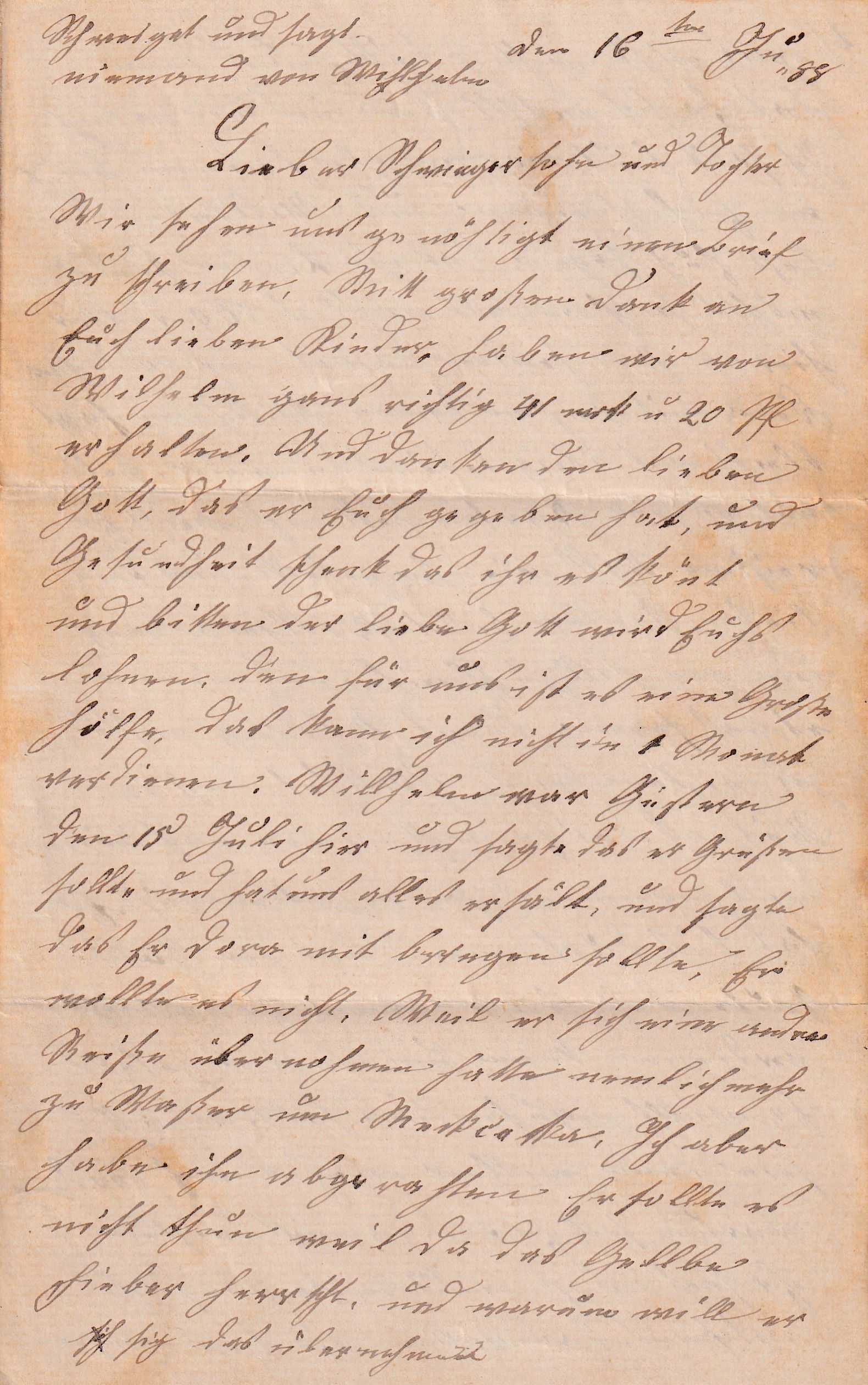
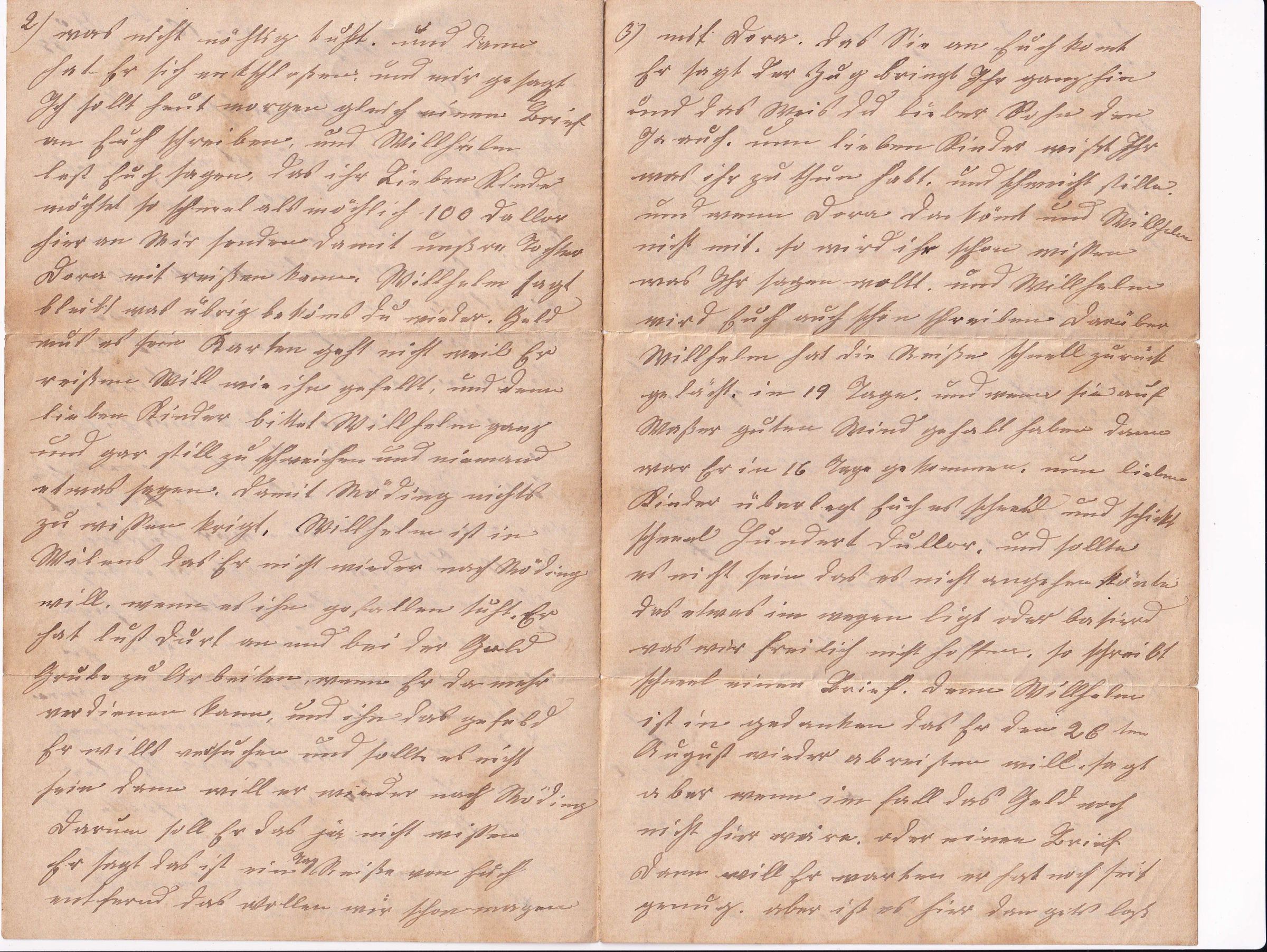
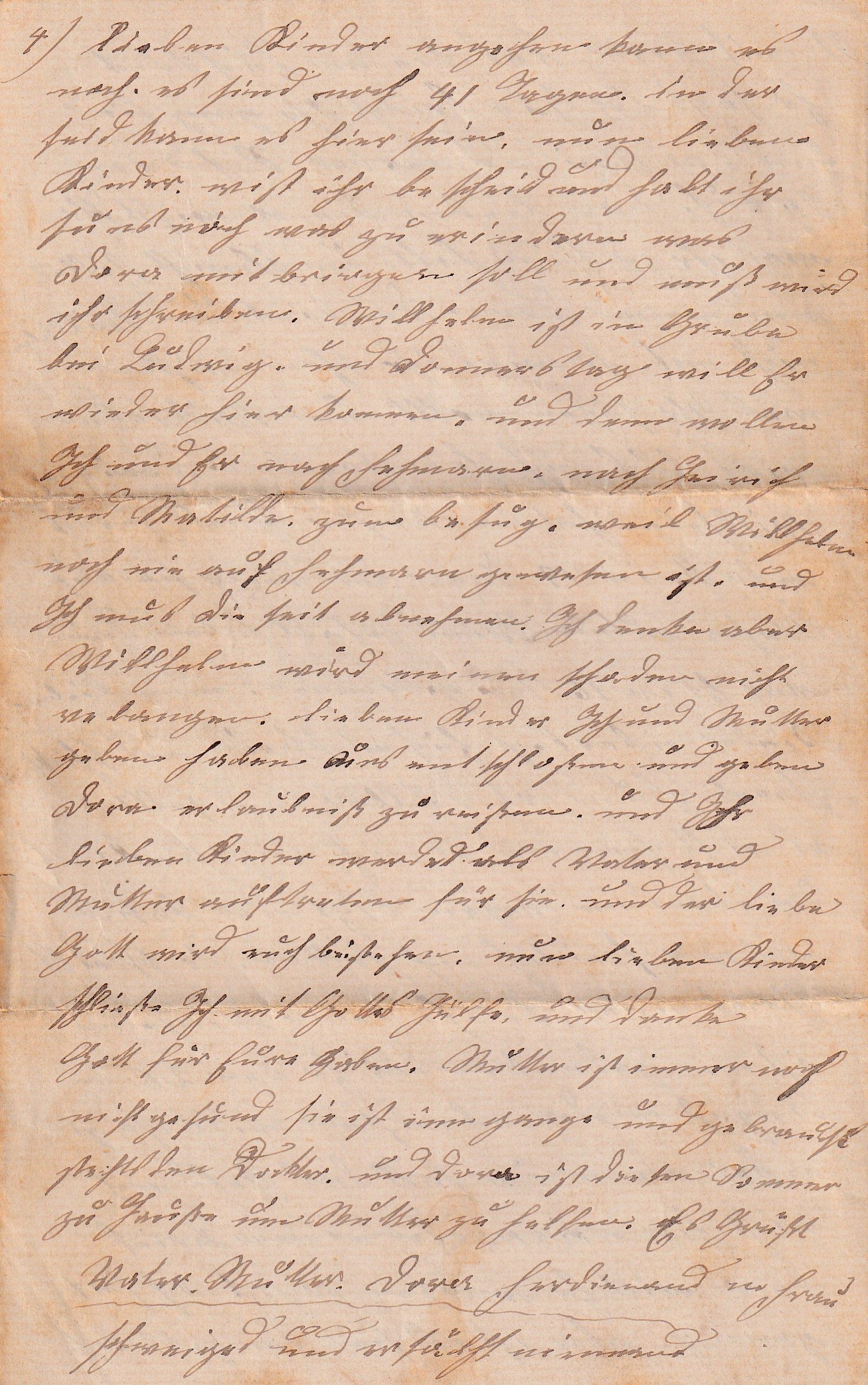
RE-LE-1858-0033
Family responsibilities, child upbringing, education, and financial support.
Germany
Europe
Personal Correspondence Letters
Jun 16, 1858
19th Century
My respected and dear friends, I received your message and your request and must answer you as best as I can. With sincere thanks and cordial greetings I write to you again. Wilhelm is now nearly fourteen years old and Dora is about twenty years old. They must both be considered in regard to their future. You have asked what should be done and what assistance may be given. Wilhelm cannot remain idle and without direction. It is necessary that he learn a proper trade or occupation so that he may support himself. I believe that with diligence and proper instruction he may become capable and respectable. He should be placed where discipline and instruction will guide him. Dora, however, is already of an age where her situation must be considered differently. She must be prepared for service or respectable employment. A young woman cannot remain without position or household. Care must therefore be taken to secure a suitable arrangement. You have asked what assistance I can provide. I cannot promise large sums, yet I will contribute what I can so that the children may not be left entirely without support. It is written that one hundred dollars may be provided if necessary for Wilhelm’s instruction or training. Wilhelm should learn with honest effort and diligence, and not be idle or careless. Without work and discipline a young man cannot prosper. If he applies himself properly, he may still make something of his life. Dora should be guided with care and moral instruction. She must learn proper conduct and the duties expected of a respectable young woman. If she finds good placement in service, this will provide her with security and reputation. You mention also the matter of their upbringing and the responsibility of those who now care for them. It is not easy to guide young people, yet firmness and kindness together will accomplish much. I trust that with God’s help matters will improve and that the children may grow into honest and capable people. For this reason I offer what help I can, though it may be modest. I believe that Wilhelm must continue to be guided properly. If Wilhelm is placed in a proper position, then perhaps he may become something useful. But if he remains without direction, then the matter will only become more difficult. It is therefore best that he begin with something practical and that he learn diligence and order. It would not be good for him to wander without purpose. For a young man this is especially dangerous, and therefore it is necessary that someone take proper care and oversight of him. If he learns a trade or occupation, then in time he may support himself honestly. That is my sincere hope. Otherwise he will remain dependent upon others, and this would not be good for him. You must also consider that the costs of raising and educating him cannot continue forever. Assistance may be given for a time, but eventually he must stand on his own. Therefore I believe it would be best if Wilhelm were placed somewhere where he must work and where he will receive proper instruction. Only through discipline will he become reliable. It would also be advisable that you write again soon so that these matters may be settled properly. Without clear decisions things will remain uncertain and the boy will gain nothing from delay. Wilhelm must be guided and encouraged, but also required to show obedience and effort. Only then will he become a respectable man. I hope that through careful arrangement and God’s help everything may yet turn out well. May the children grow in good character and industry. I remain hopeful that with proper guidance Wilhelm will still find his way and become a good and honorable man. With sincere greetings and respect, (your faithful servant)
German
This letter reflects mid-19th-century European attitudes toward family responsibility, youth education, and social expectations. Young men were typically expected to learn a trade or apprenticeship in order to become financially independent, while young women were often placed in domestic service or household employment. The letter shows how extended family or guardians frequently shared responsibility for arranging the education and employment of children. Moral instruction, discipline, and industriousness were considered essential virtues for social respectability during this period.
Historical Note
During the mid-1800s, apprenticeship systems and domestic service were among the most common career paths available to working- and middle-class youth in German-speaking regions. Letters like this often served as practical discussions between relatives about guardianship responsibilities, financial contributions, and decisions regarding schooling or work placements. The mention of monetary support for education reflects the growing importance of vocational training during the industrializing 19th century. Handwritten German family letter dated June 16, 1858 discussing the upbringing and future prospects of two young individuals named Wilhelm and Dora. Written in brown ink on folded paper, the document addresses concerns about education, employment, and financial assistance for the children as they approach adulthood. The writer emphasizes the importance of discipline, vocational training, and moral guidance in shaping their futures. Letters of this type illustrate the role of extended family networks in determining educational and occupational paths during the mid-19th century. The document provides insight into the social expectations placed upon young men and women during the Victorian era, particularly the importance of apprenticeship for boys and domestic service for young women.