
Letter from Fehmarn, Germany to Sister-in-law and Brother
Letter
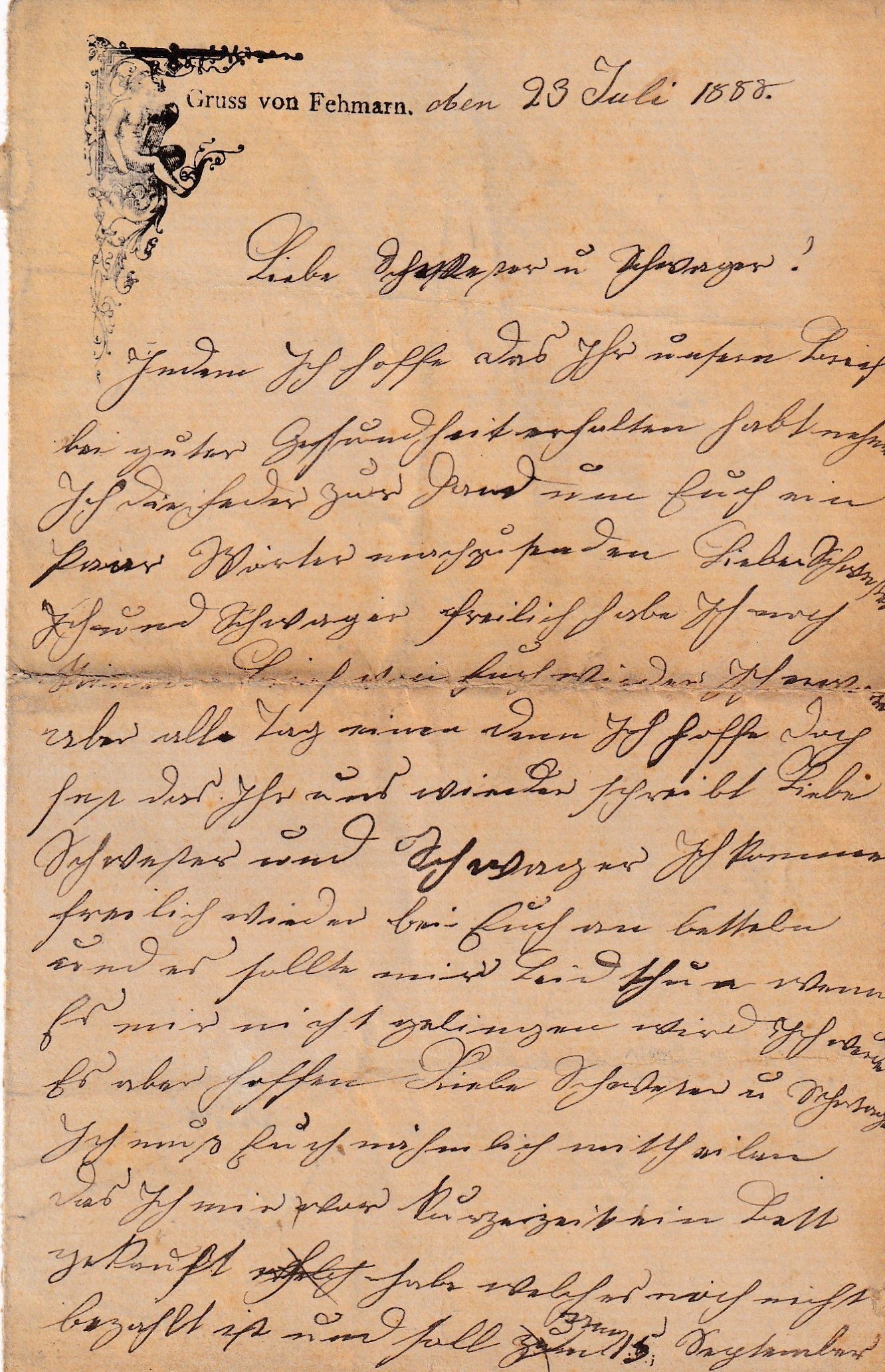
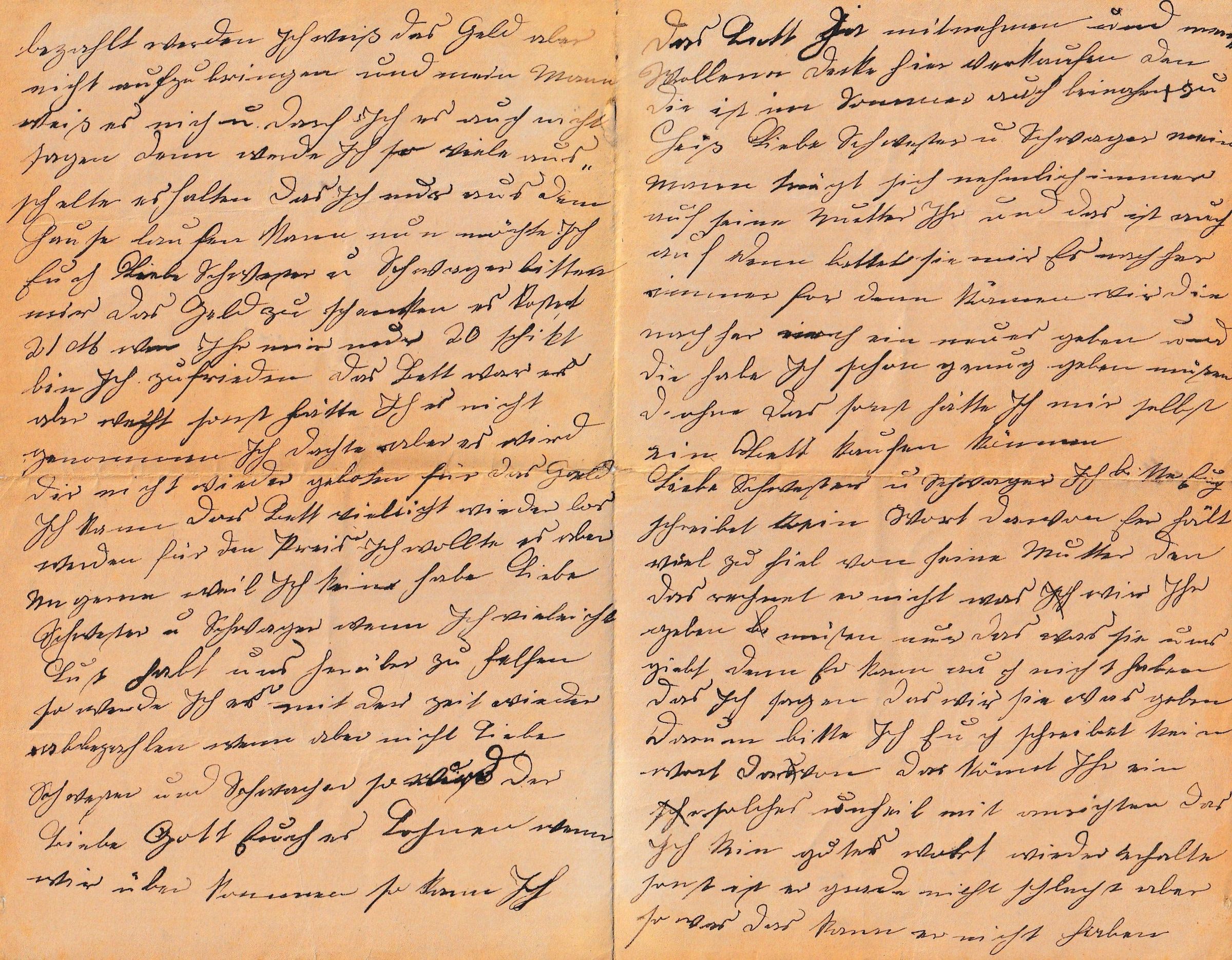
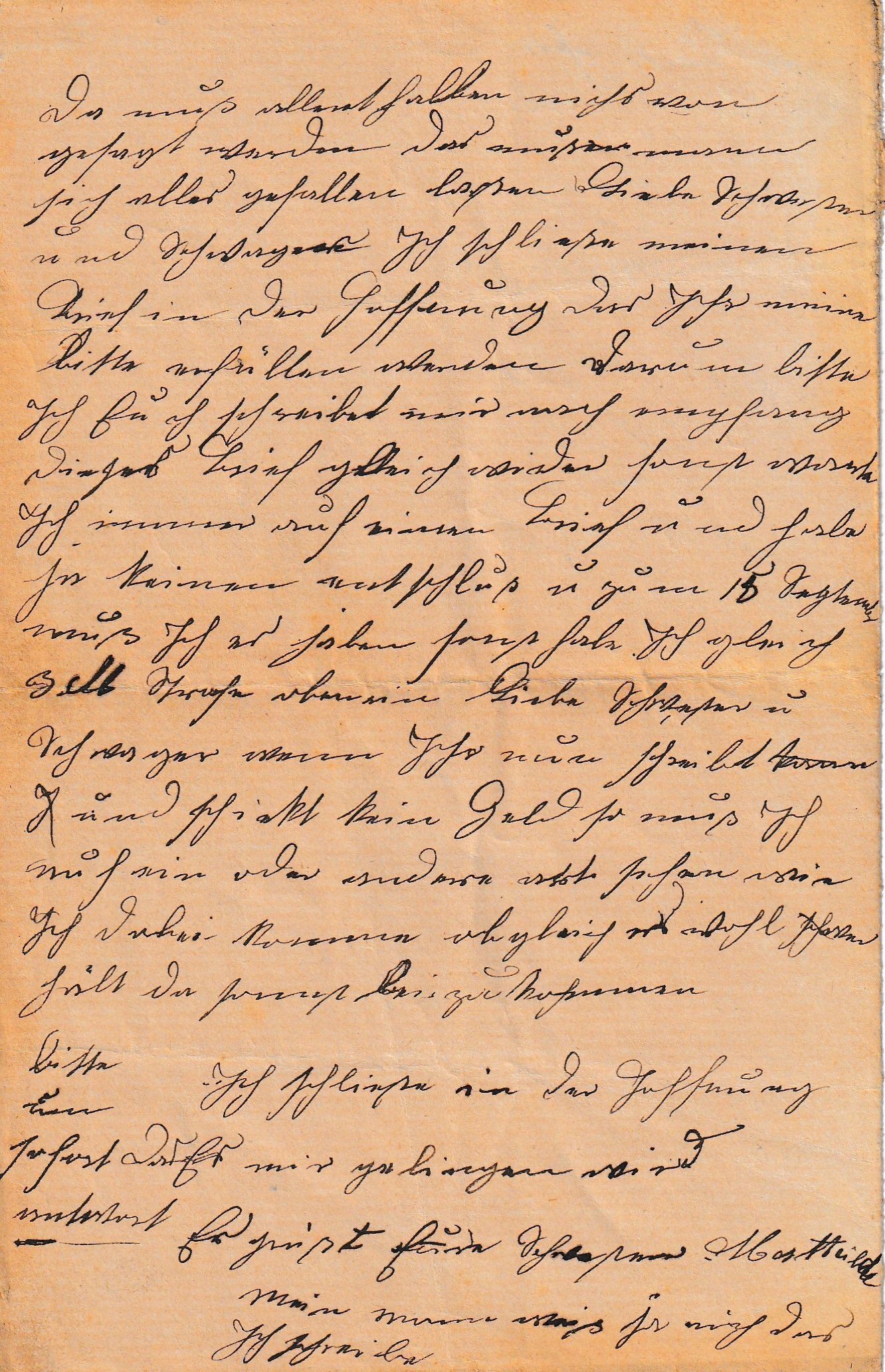
A personal family letter written in Fehmarn, Germany in 1858 to a brother and sister-in-law. The writer discusses family matters, health, faith, and everyday life, expressing longing to see relatives again and offering affectionate greetings.
RE-LE-1858-0032
Family correspondence concerning health, family life, religious faith, and expressions of affection between relatives living apart.
Personal Correspondence Letters
Jul 23, 1858
19th Century
Dear sister-in-law and brother! Today I must finally write you a few lines to inform you how things are with us here. First of all I thank God that we are still in good health, and I hope that this letter will also find you in the same blessing. We have often thought of you and wished that we might hear from you again, for it has been a long time since we received news. It would give us great joy to know how things stand with you and how life is going. Here everything continues much as before. The days pass with work and care, and we must place our trust in God that He will guide and protect us in all things. Often we speak of you and remember earlier times, and it would be such a great happiness if we could once again see each other face to face. But the distance is great and travel is difficult. Still we hope that the dear Lord will allow it someday, and until then we remain united in thought and prayer. Please write to us soon and tell us how you are, and whether everything is well with you. Give our greetings to all who remember us. May God keep you in His protection and grant you health and peace. With heartfelt greetings and love, Your faithful sister Johanne Martha
Family letters in 19th-century Europe often emphasized: expressions of religious faith concern for health and well-being reflections on distance and separation reaffirmations of family loyalty and affection These letters served as emotional and social ties across geographic distances at a time when travel was slow and expensive. The language of the letter reflects a strong Lutheran cultural background, common in northern Germany during this period, with references to trust in God and divine protection.
Historical Note
This handwritten letter, dated 23 July 1858, was written on the Baltic island of Fehmarn in Schleswig-Holstein, Germany, and addressed to a brother and sister-in-law. The sheet bears a decorative printed heading reading “Gruss von Fehmarn” (“Greetings from Fehmarn”), accompanied by a small ornamental vignette in the upper margin. Such embellished letterheads were occasionally used in the mid-19th century to personalize correspondence and to highlight the sender’s place of origin. The letter is written in German Kurrent script, the traditional cursive handwriting used in German-speaking regions from the early modern period through the 19th century. The flowing, angular letterforms characteristic of Kurrent were widely taught in schools and remained the dominant handwriting system until the early 20th century. For modern readers unfamiliar with the script, these letters can be difficult to decipher, making surviving examples valuable documents of historical literacy practices. In the text, the writer offers affectionate greetings, expresses gratitude for the family’s good health, and reflects on the emotional distance created by separation from relatives. The letter conveys common themes found in 19th-century family correspondence: concern for loved ones’ well-being, references to religious faith and trust in God, and hopes for future reunion despite the challenges of travel and communication. The writer asks the recipients to send news of their own circumstances and sends greetings to other members of the extended family. During the mid-19th century, Fehmarn was a largely rural island community whose inhabitants relied primarily on agriculture and fishing. Letters such as this served as essential connections between family members who had moved elsewhere for work or marriage. Before the widespread adoption of telegraphy and later telephone communication, handwritten correspondence was the principal means of maintaining relationships across distance. The document survives as a folded letter sheet with visible mailing folds and light age toning typical of mid-19th-century paper. Its careful handwriting, personal tone, and regional decorative header together provide a vivid example of everyday communication in northern Germany during the 1850s, illustrating how family networks were sustained through written correspondence in an era when travel was slow and separation often prolonged.