
Mother Louie Letter Reflecting on Loss, Family Gatherings, and Social Life
Letter
A deeply personal letter written by “Mother Louie” to her children in September 1895, reflecting on family separation, widowhood, social gatherings, and daily life among relatives and acquaintances.
RE-LE-1895-0052
Family reflection, mourning, and social life
New England
United States
Personal Correspondence Letters
Sep 11, 1895
Victorian
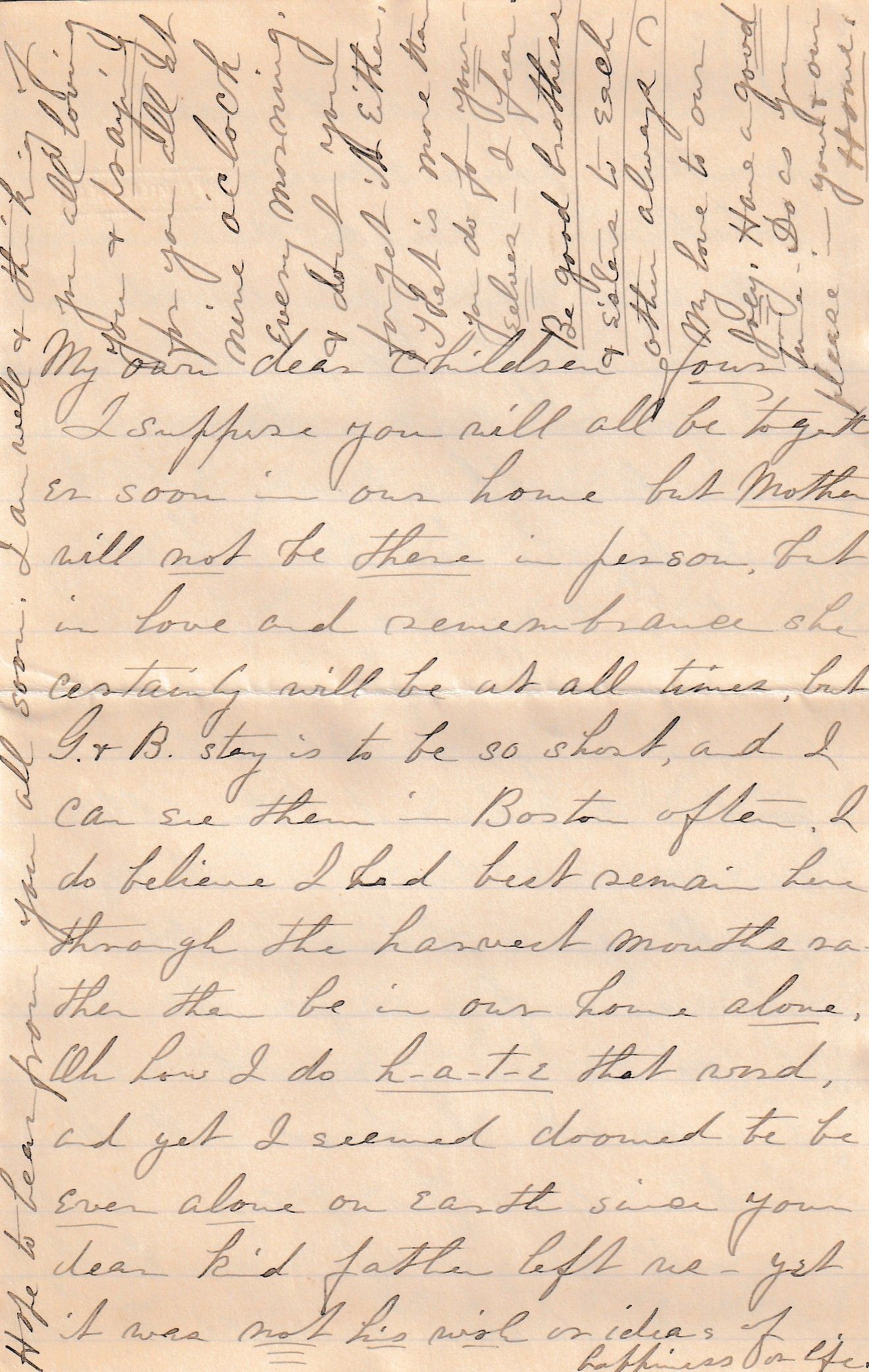
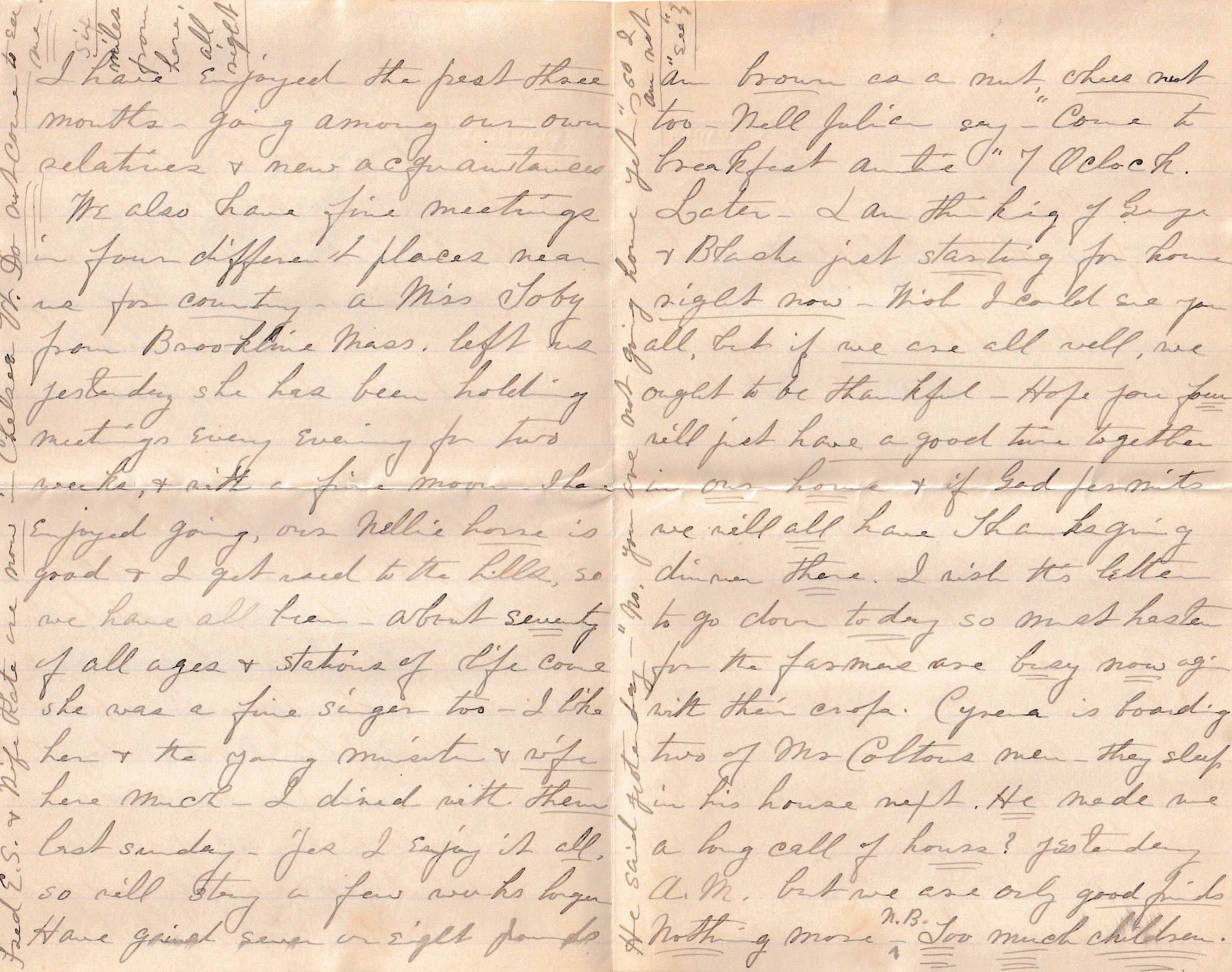
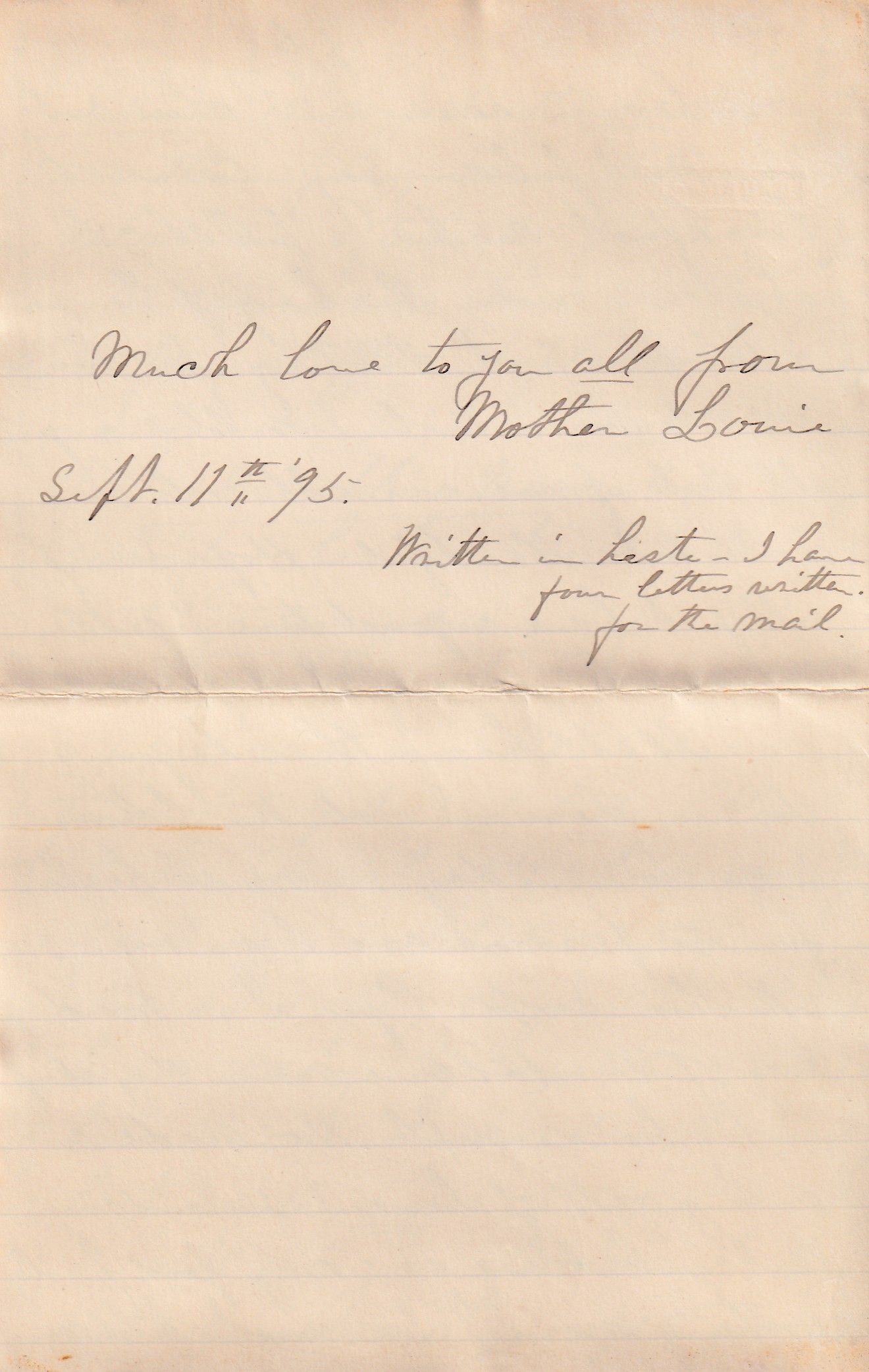
(Modernized, readable transcription; minor unclear words reconstructed where necessary) Dear Children, I suppose you will all be together soon in our home, but Mother will not be there in person, but in love and remembrance she certainly will be at all times. But G. B.’s stay is to be so short, and I can see them in Boston often. I do believe I had best remain here through the harvest months rather than be in our home alone. Oh, how I do hate that word — and yet I seemed doomed to be ever alone on Earth since your dear kind father left me — yet it was not his will or ideas of happiness for me. I have enjoyed the past three months, going among our own relatives and new acquaintances. We also have fine meetings in four different places near us in the country. A Miss Tobey from Brookline, Mass., left us yesterday. She has been holding meetings every evening for two weeks, and with a fine manner she has enjoyed going. Our Nellie horse is good and I get used to the hills, so we have all been about. People of all ages and stations of life come. She was a fine singer too. I like her and the young minister and wife here much. I dined with them last Sunday — yes I enjoy it all so well — but a few weeks longer I must have quiet scenes in sight for the present. I am brown as a nut — cheeks not too — Nellie, Julia say — come to breakfast at 7 o’clock. Later — I am thinking of you and Blanche just starting for home right now. Wish I could see you all, but if we are all well, we ought to be thankful. Hope you four will just have a good time together in our home, and if God permits, we will all have Thanksgiving dinner there. I wish this letter to go down today, so must hasten, for the farmers are busy now again with the crops. Cyrena is boarding two of Mrs. Colton’s men — they sleep in his house next. He made me a long call of hours yesterday A.M., but we are only good friends — nothing more. How it pours down outdoors — this rain will take all the frost out of the ground. Love to Blanche, hope she is well now. Much love to you all, from Mother Louie Postscript: Sept. 11th ’95 Written in haste — I have four letters written for the mail.
English
Late Victorian cursive, Spencerian-based personal hand — expressive, moderately formal script with occasional emphatic flourishes (e.g., underlining, spacing for emphasis), reflecting emotional tone Document Material Wove paper (machine-made), likely late 19th-century lined stationery — faint ruling lines visible; consistent texture indicates mass-produced paper rather than earlier rag-laid sheets
This letter offers a rich insight into the emotional and social world of a late Victorian widow. It reflects the importance of family cohesion despite physical separation and highlights the experience of widowhood as both isolating and socially managed through visits, community gatherings, and religious meetings. The writer participates actively in social and religious life, illustrating the role of community networks in providing emotional support. References to farming cycles, hospitality (boarding workers), and travel between towns show the blend of rural and semi-urban life during this period.
Historical Note
Dated 1895, this letter reflects late 19th-century American life in a period of relative stability but ongoing social transformation. The mention of itinerant religious meetings and visiting speakers (such as Miss Tobey) aligns with revivalist and community-based religious culture common in rural New England. The reference to boarding laborers reflects agricultural practices where households supplemented income by hosting workers. The letter also reflects broader Victorian attitudes toward grief, duty, and resilience following the death of a spouse.