
Fragments of German Family Correspondence and Mailing Envelope
Letter
A group of torn manuscript fragments from German-language letters along with a partially preserved mailing envelope addressed from Germany to San Francisco, California.
 Fragments of German Family Correspondence and Mailing Envelope
 Fragments of German Family Correspondence and Mailing Envelope – Image 2
 Fragments of German Family Correspondence and Mailing Envelope – Image 3
 Fragments of German Family Correspondence and Mailing Envelope – Image 4
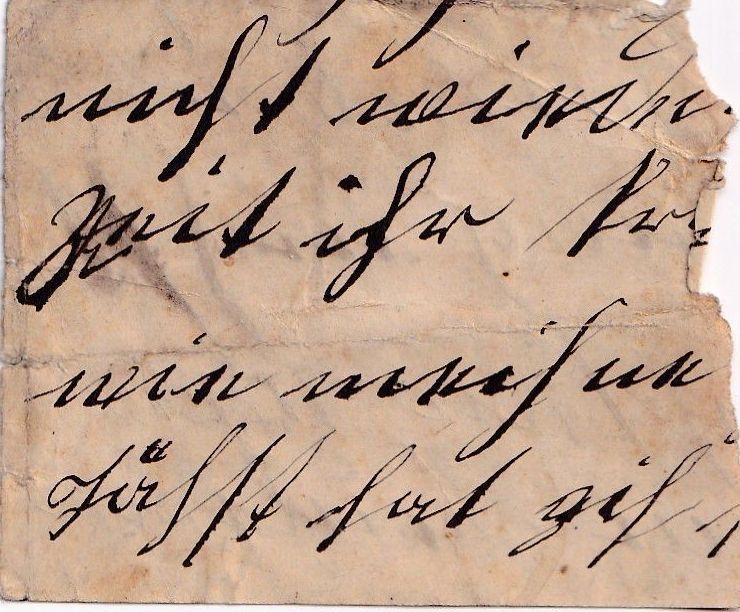 Fragments of German Family Correspondence and Mailing Envelope – Image 5
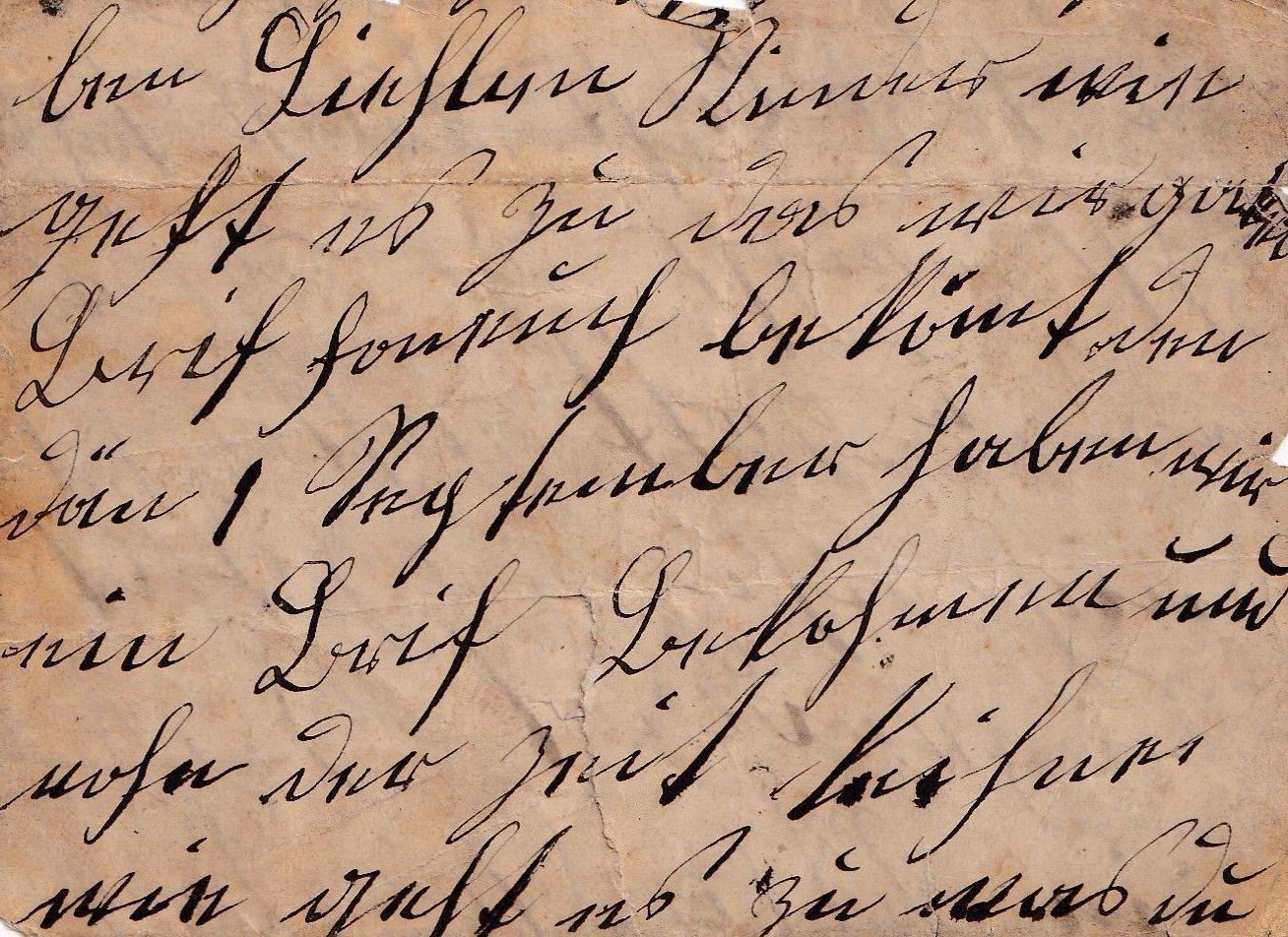 Fragments of German Family Correspondence and Mailing Envelope – Image 6
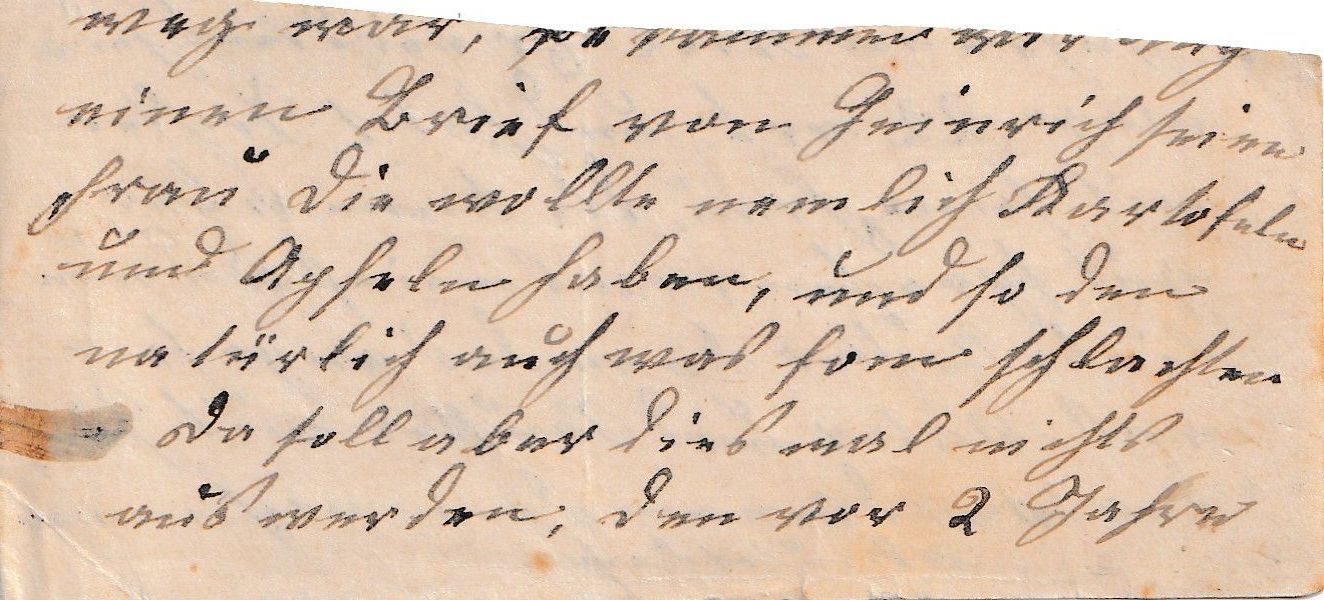 Fragments of German Family Correspondence and Mailing Envelope – Image 7
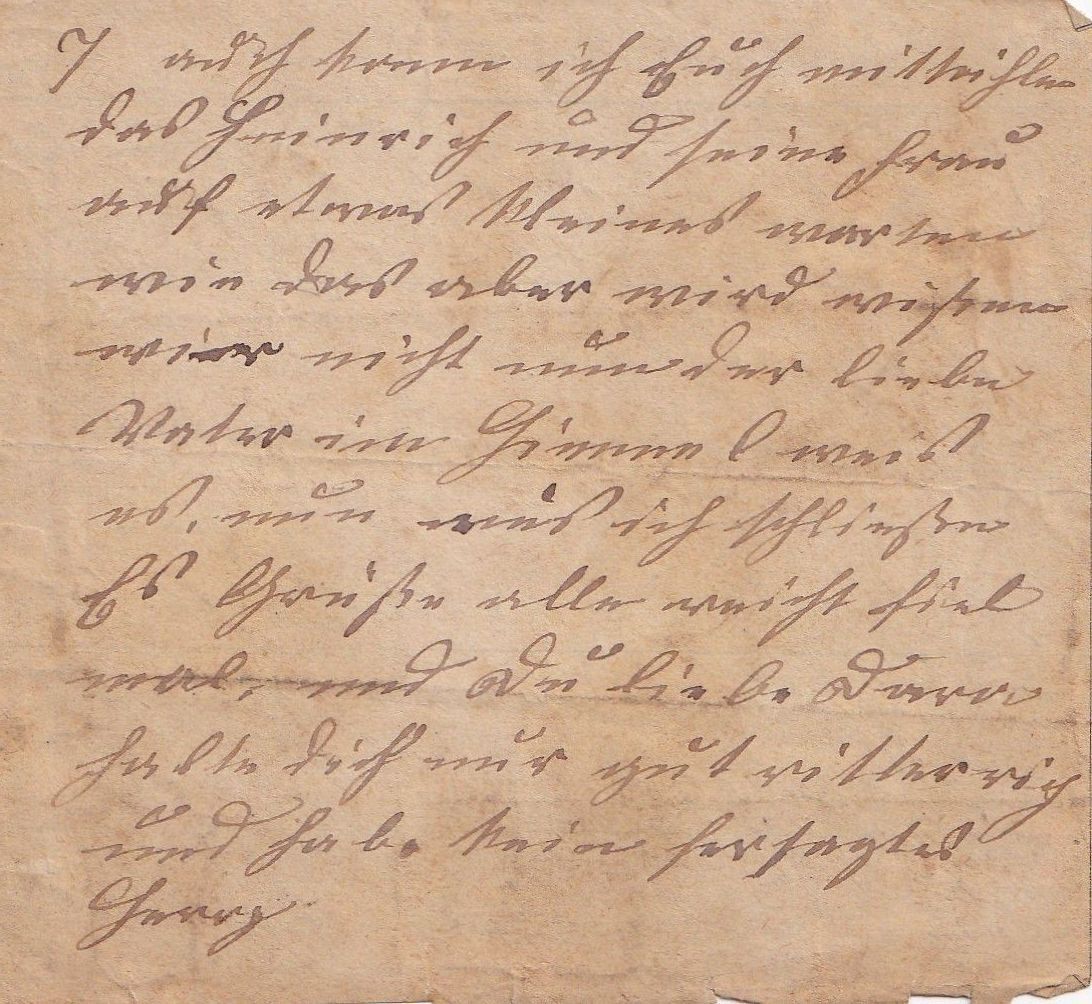 Fragments of German Family Correspondence and Mailing Envelope – Image 8
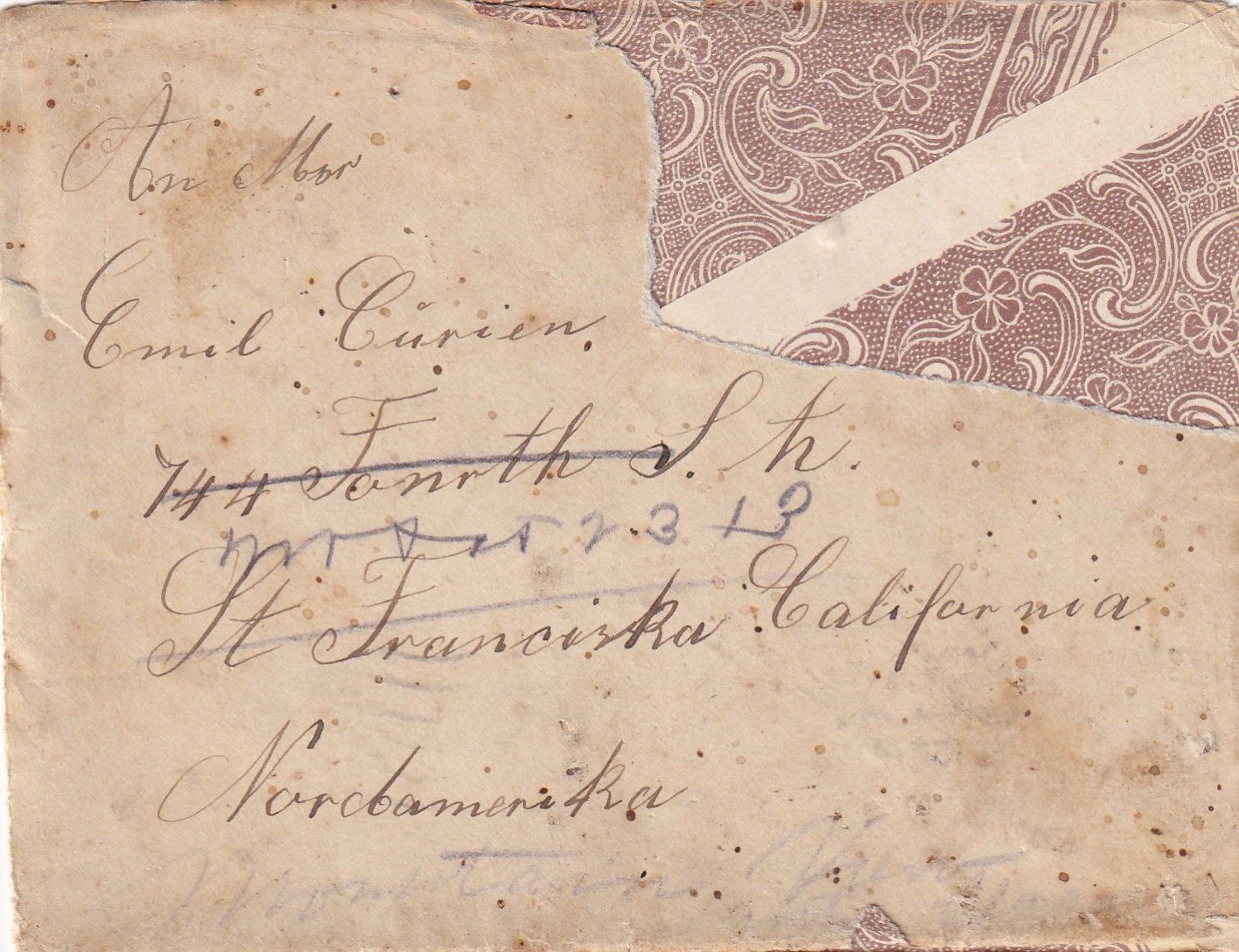 Fragments of German Family Correspondence and Mailing Envelope – Image 9
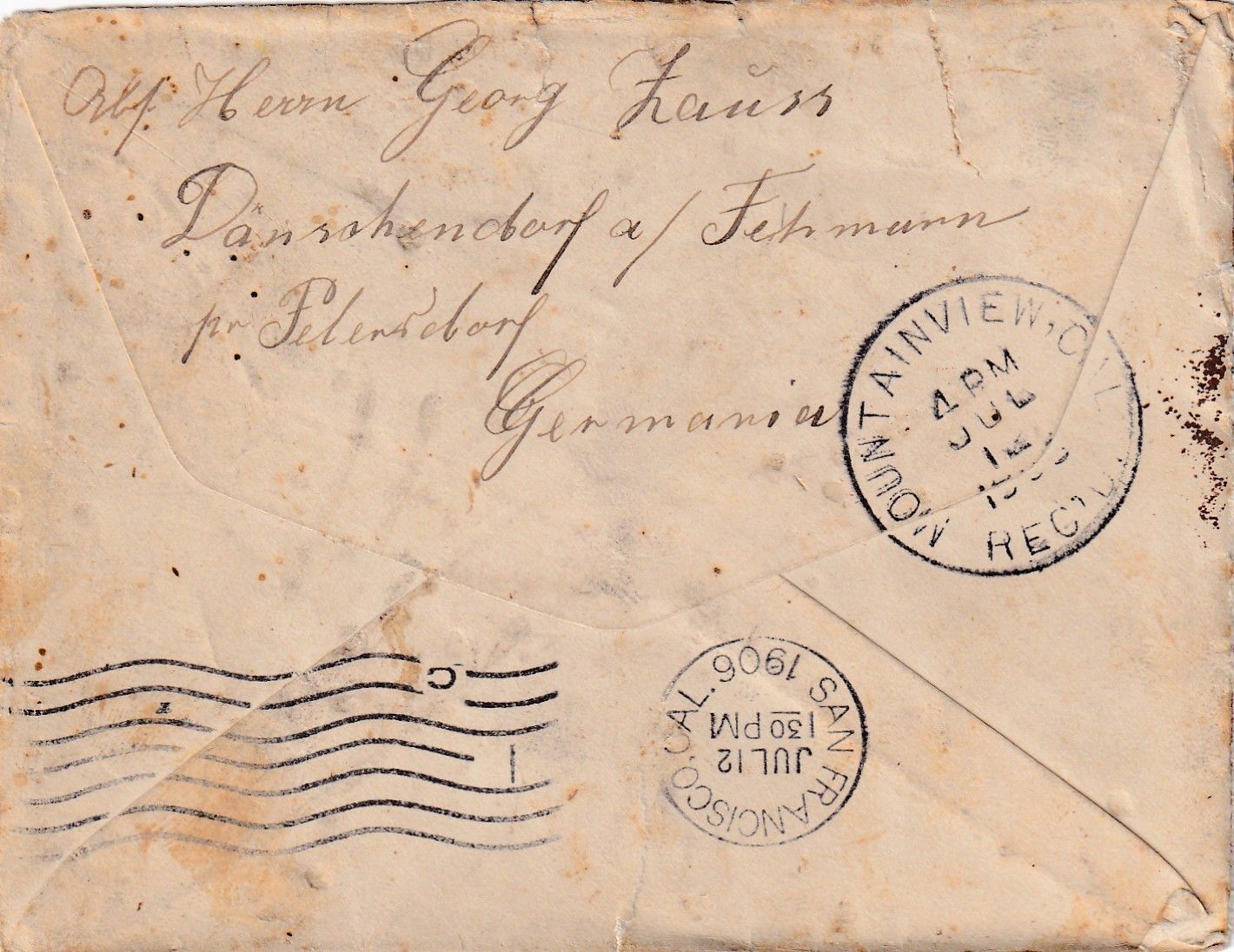 Fragments of German Family Correspondence and Mailing Envelope – Image 10
RE-LE-1906-0037
Family correspondence and postal communication.
Germany
Europe
Personal Correspondence Letters
Jul 12, 1906
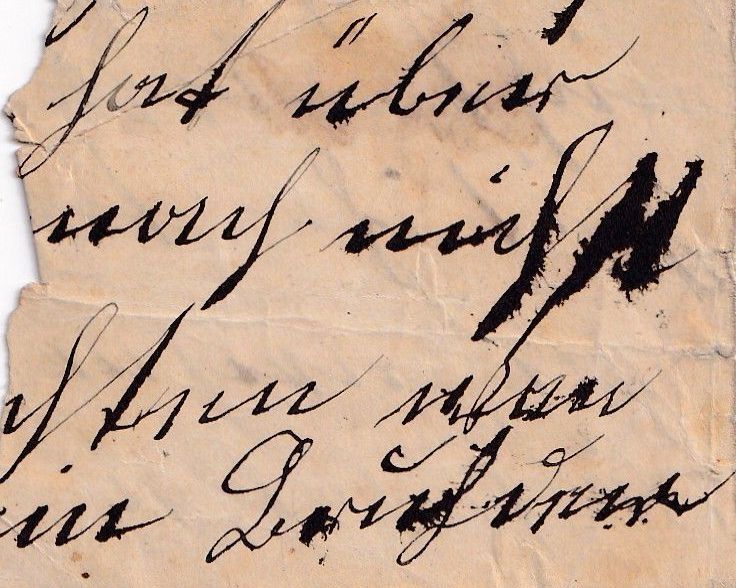
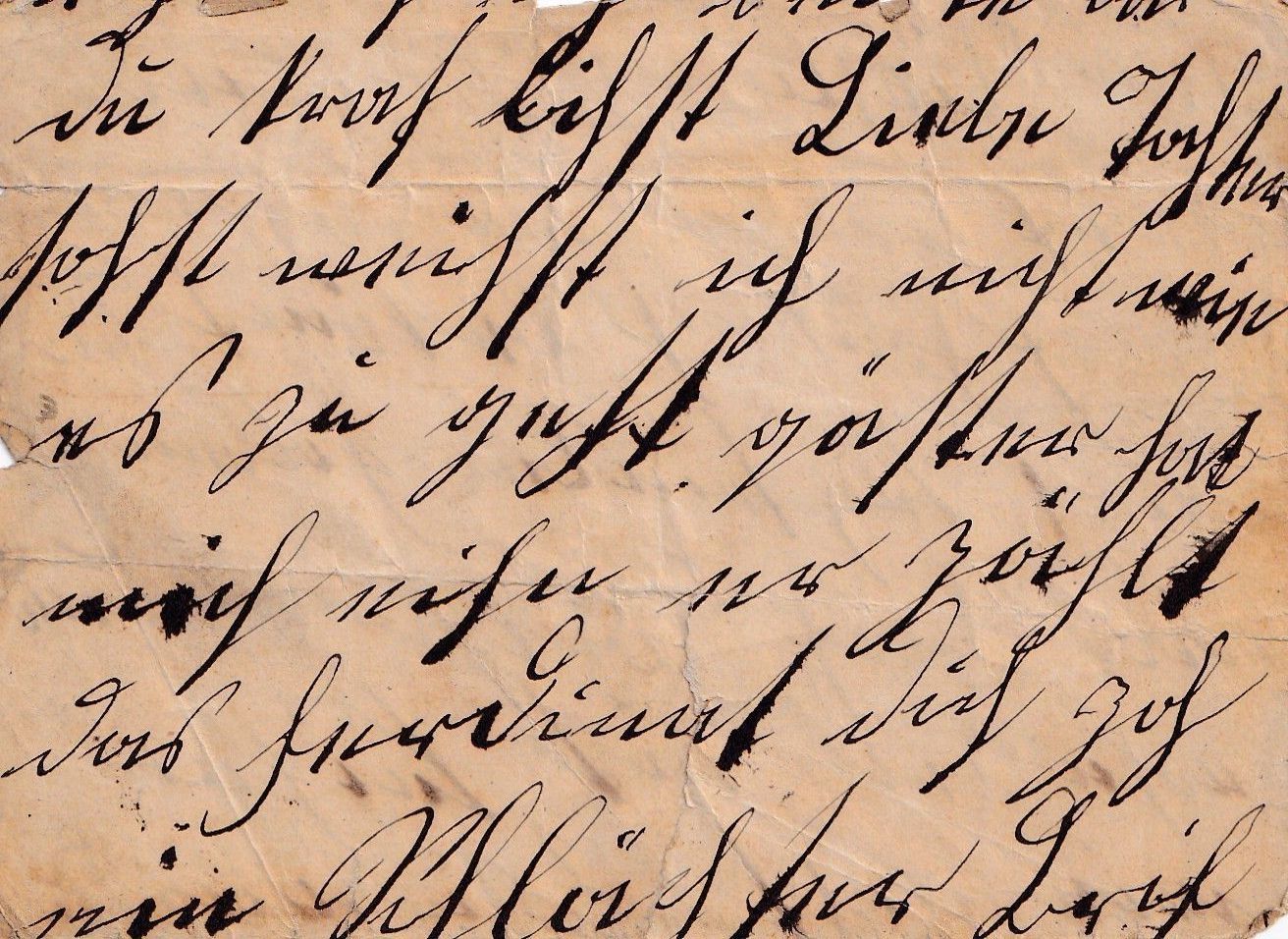
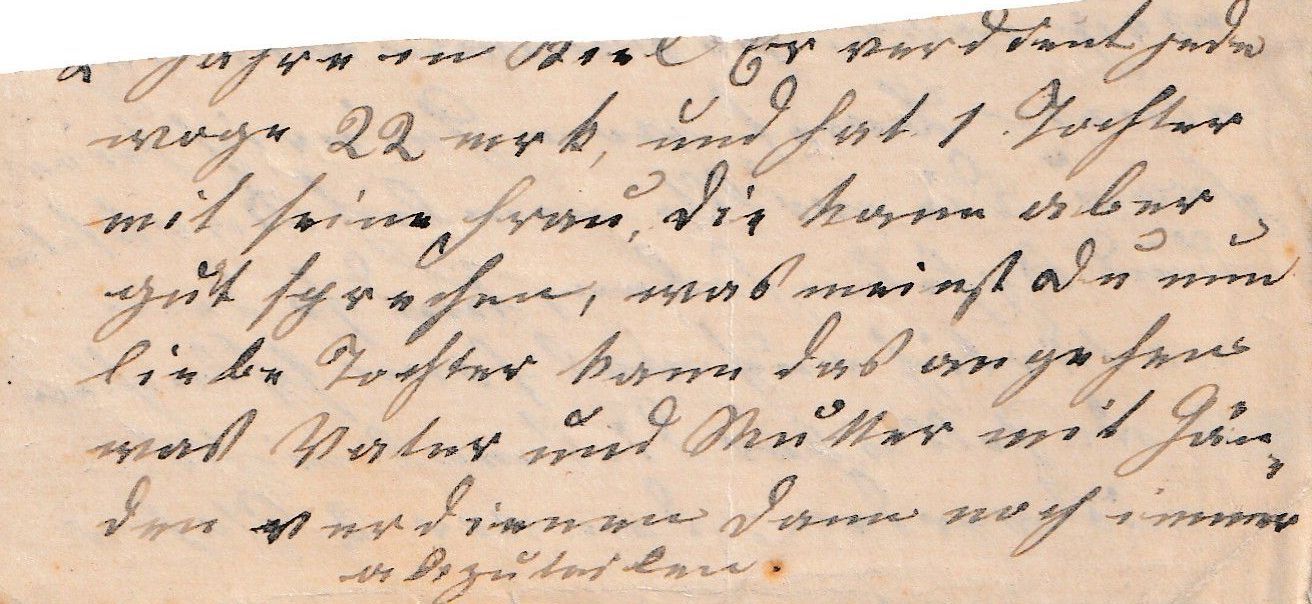
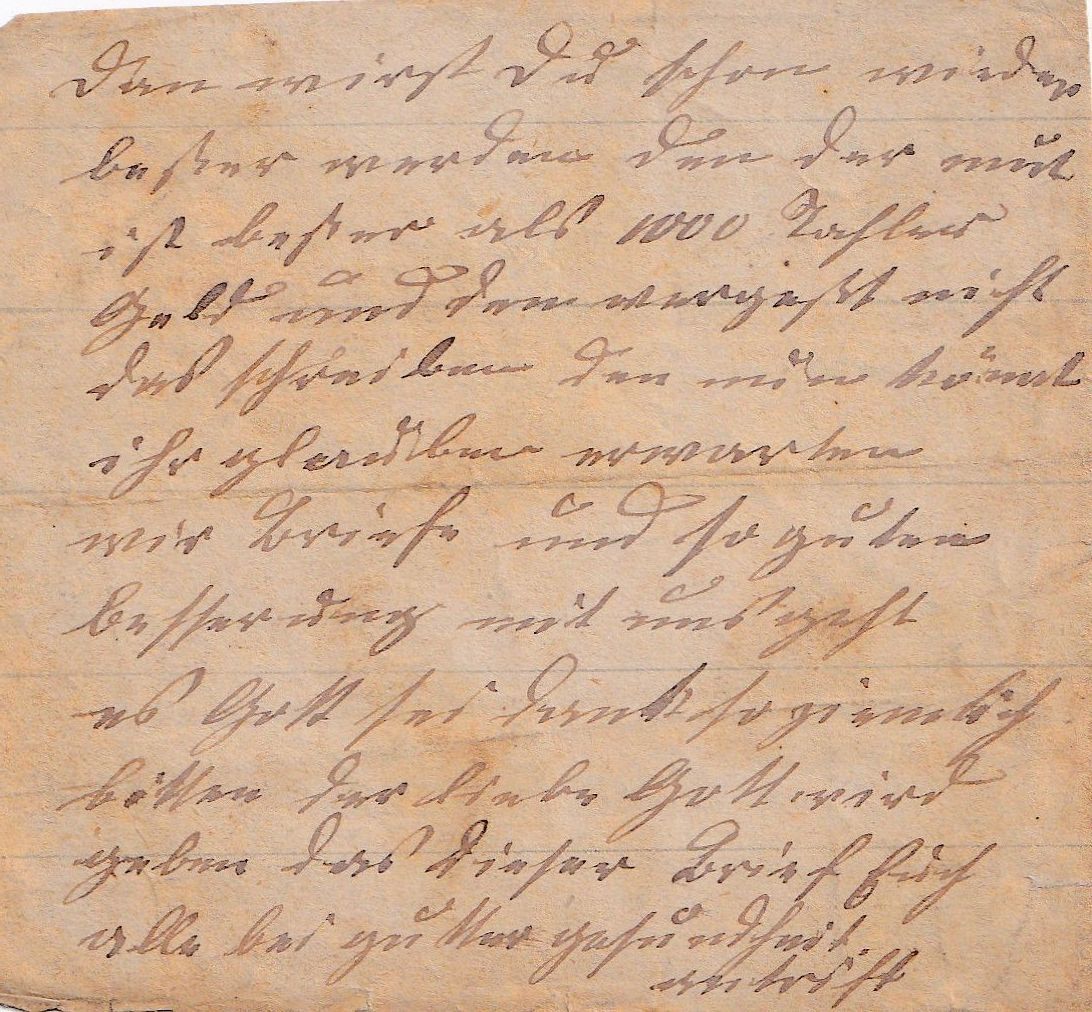
ENVELOPE TRANSCRIPTION Front of Envelope An Herrn Emil Curien 14th North St. San Francisco, California Nordamerika Reverse Address Abs: Herrn Georg Klaus Därschenhof a/ Fehrmann pr. Seelenfeld Germania (exact spelling uncertain due to handwriting damage) Postal Marks San Francisco Jul 12 1906 4 PM Mountain View, Cal. Jul 13 Received ENVELOPE TRANSLATION To Mr. Emil Curien 14 North Street San Francisco, California North America From Mr. Georg Klaus [Därschenhof near Fehrmann] near Seelenfeld Germany FRAGMENT TRANSCRIPTIONS Because the fragments are incomplete, the transcription is partial and uncertain sections are marked. Fragment 1 German transcription „… das Geld … … wohl auf … … Liebe Freunde …“ Translation “… the money … … probably on … … dear friends …” Fragment 2 German transcription „… so daß Gott der Herr … wohl gnädig ist …“ Translation “… so that God the Lord … is surely gracious …” Fragment 3 German transcription „… morgen 22 Mark und heute 1 Gulden mit seinem Sohn …“ Translation “… tomorrow 22 marks and today 1 gulden with his son …” Fragment 4 German transcription „Dann muß der Hafen wieder besser werden denn das muß ich liefern wohl 1000 Taschen Geld …“ Translation “Then the harbor must become better again, because I must deliver about one thousand units of money…” (likely referring to business or shipping) Fragment 5 German transcription „… mit wie viel Freude ich … … wohl machen dürfte …“ Translation “… with how much joy I … might be able to accomplish it …” Fragment 6 German transcription „… von Lieben Freunden die ich wohl noch einmal sehen werde …“ Translation “… from dear friends whom I will perhaps see again someday …”
German
Letters like this illustrate the transatlantic communication networks of immigrant families in the late 19th and early 20th centuries. German immigrants maintained regular correspondence with relatives in Europe, often discussing: • family health • financial support • migration plans • business conditions • shipping or trade matters Postal systems by the early 1900s allowed letters to travel between Germany and the United States in 10–20 days, making such communication relatively frequent.
Historical Note
This collection of manuscript fragments represents remnants of German-language correspondence exchanged between Europe and the United States in the early twentieth century. Written in German Kurrent script, the surviving fragments contain references to family members, financial matters, and religious expressions typical of personal letters of the period. The accompanying envelope, postmarked July 12, 1906 in San Francisco, California, provides important historical context, linking the correspondence to transatlantic immigrant communication networks. Such letters were an essential means by which families separated by migration maintained social, emotional, and economic ties across continents. San Francisco 1906 context The date July 1906 is historically significant. San Francisco had just experienced the Great San Francisco Earthquake (April 18, 1906). European families frequently wrote letters asking whether relatives had survived and whether the city was rebuilding. Some of the language in the fragments referencing money, shipping, and conditions could relate to this situation.