
20 – 1.13.24 – Correspondence from “Hope” (“Doodle”) to Mr. Jesse Redyard (Arkansas)
Letter
A playful and structured early letter from a young woman signing as “Hope” (later “Doodle”), sent from Haleyville, Alabama to Jesse Redyard in Arkansas, expressing affection, humor, and early courtship sentiments—including a humorous leap-year marriage proposal.
 20 – 1.13.24 – Correspondence from “Hope” (“Doodle”) to Mr. Jesse Redyard (Arkansas)
 20 – 1.13.24 – Correspondence from “Hope” (“Doodle”) to Mr. Jesse Redyard (Arkansas) – Image 2
 20 – 1.13.24 – Correspondence from “Hope” (“Doodle”) to Mr. Jesse Redyard (Arkansas) – Image 3
 20 – 1.13.24 – Correspondence from “Hope” (“Doodle”) to Mr. Jesse Redyard (Arkansas) – Image 4
RE-LE-COLLHE-0054
Courtship correspondence; romantic expression; student or young adult writing culture
Arkansas
North America
Love & Courtship
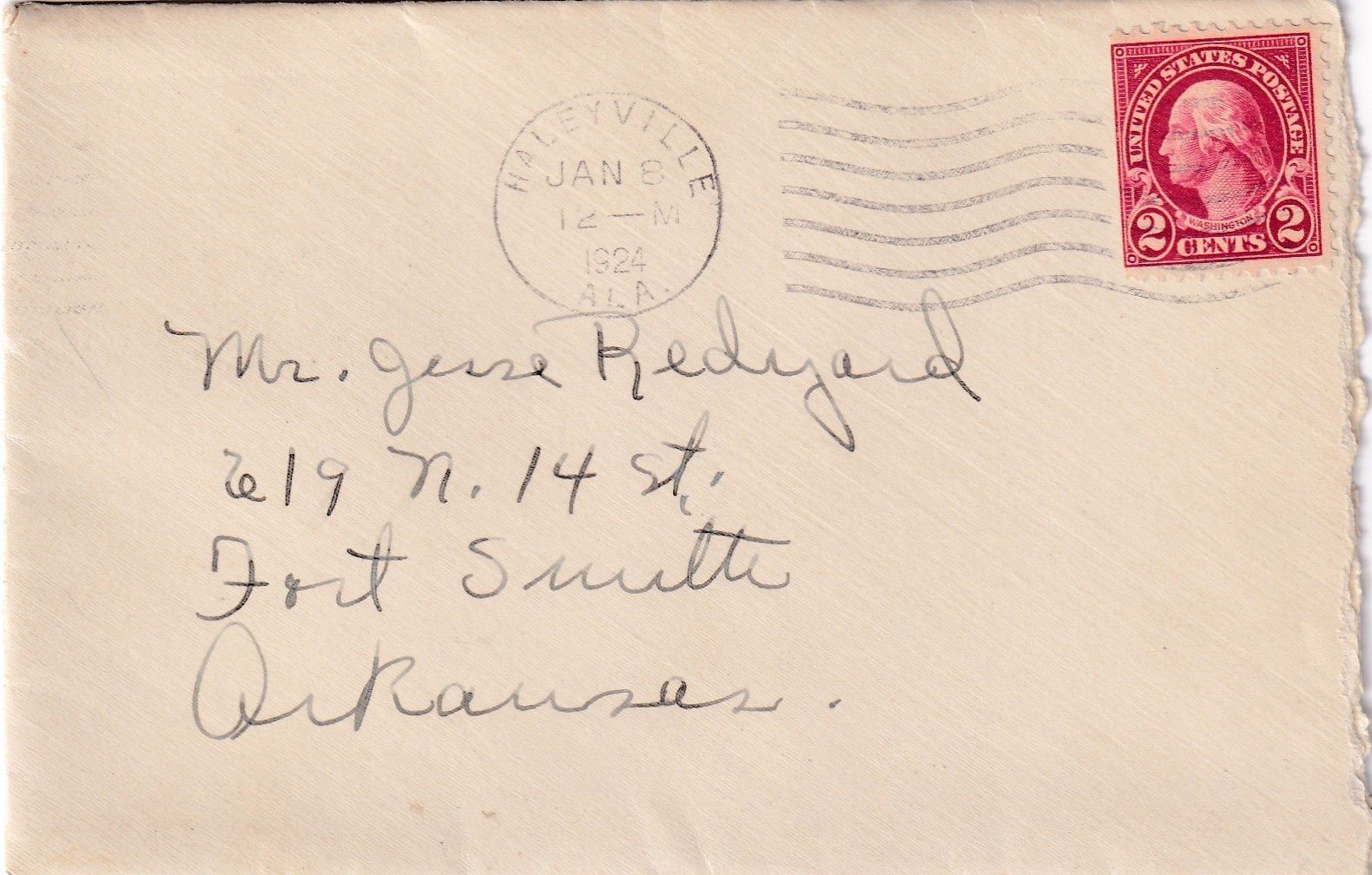
Jan 8, 1924
20th Century
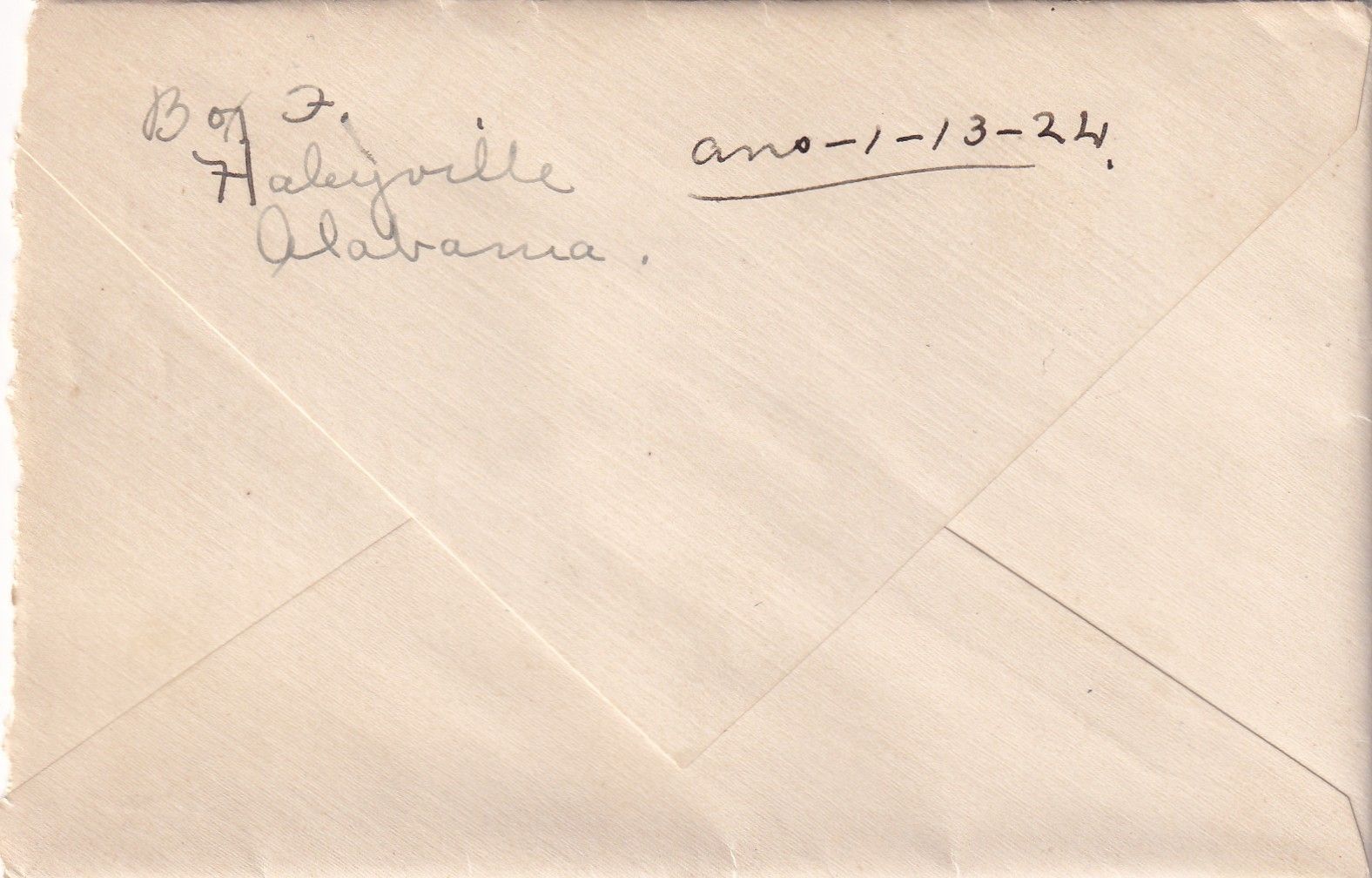
Haleyville, Alabama January 8, 1924 (likely partial or earlier marking—slight inconsistency between written and postal date; common in reused envelopes or delayed posting) Time: 12 M (noon)
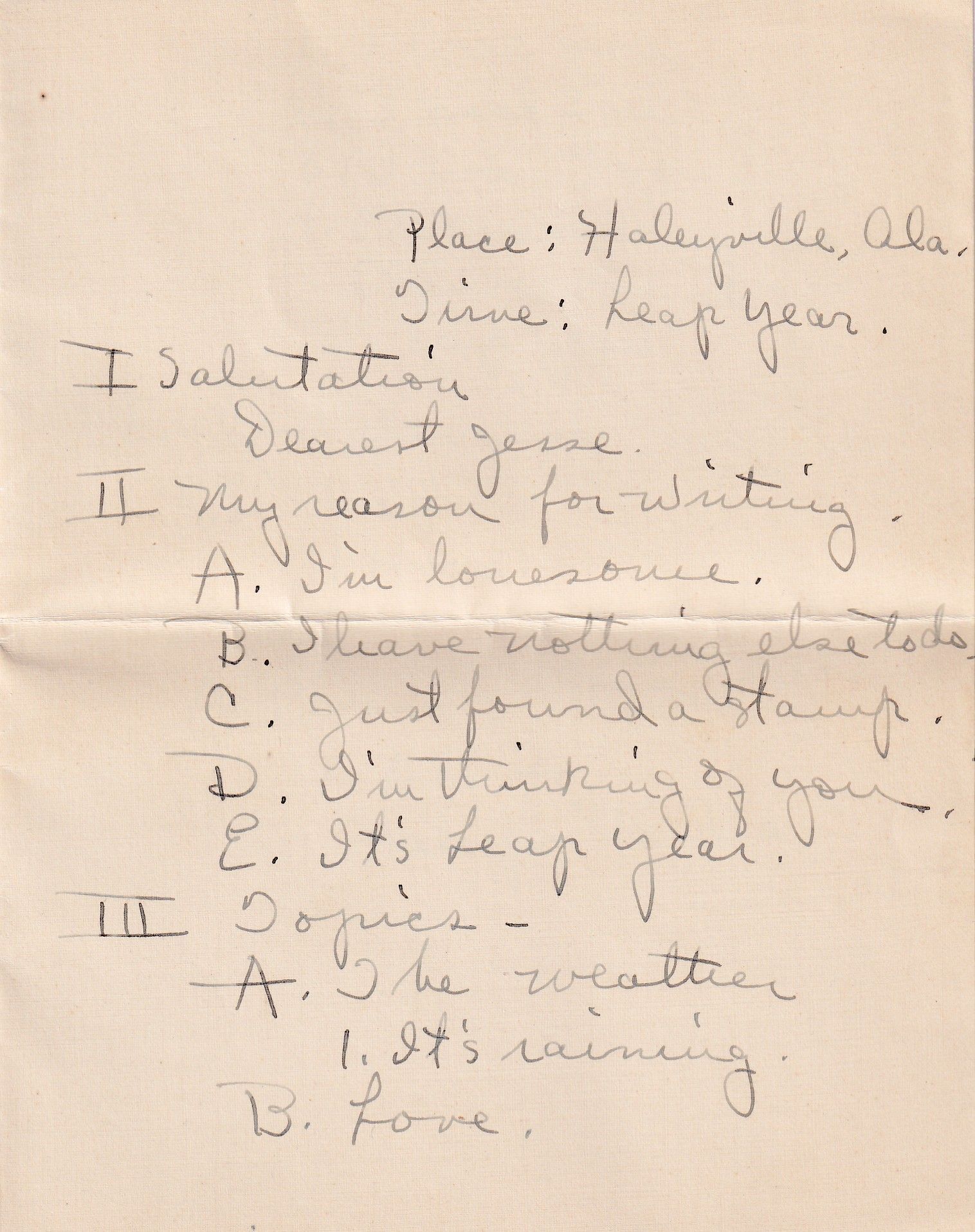
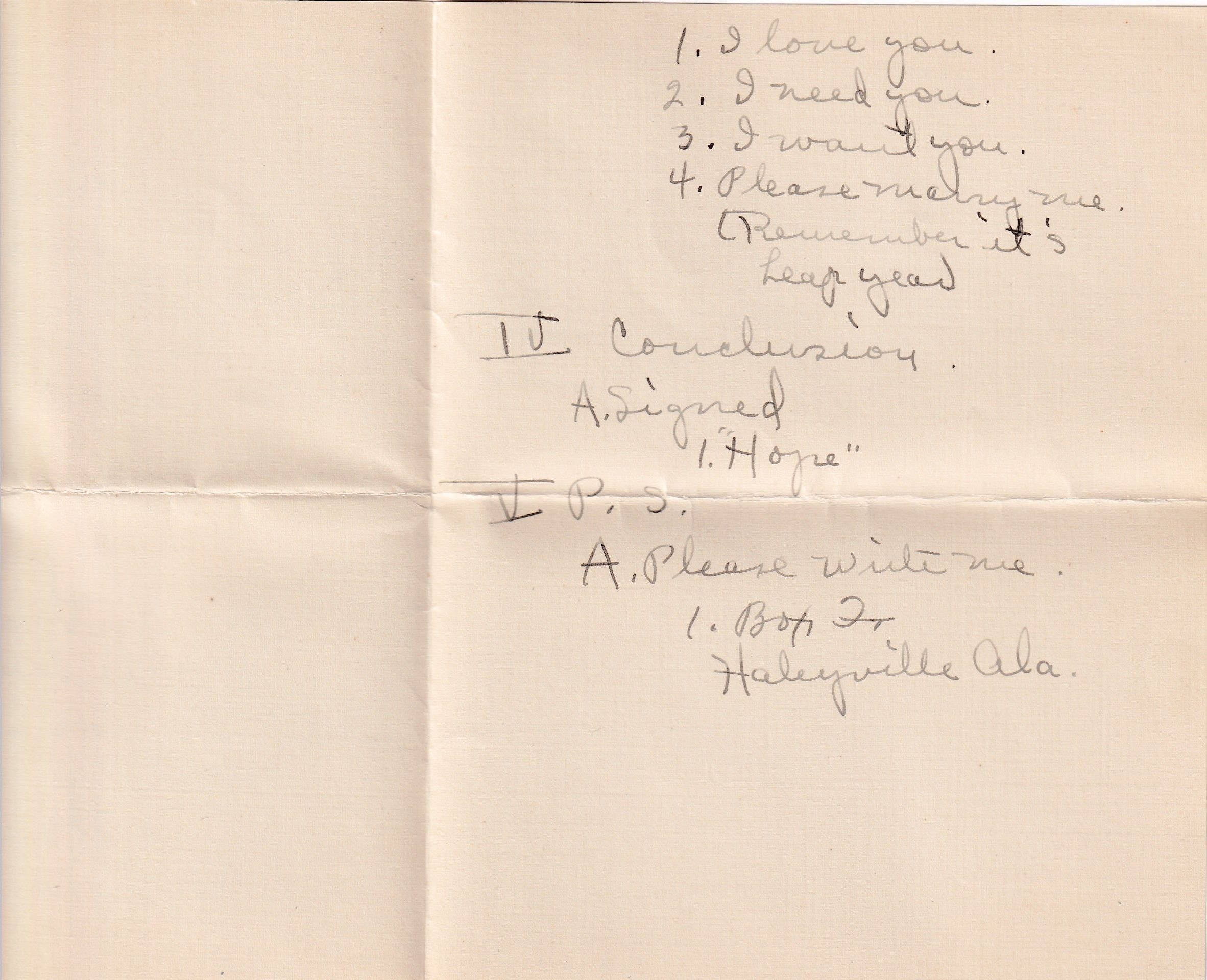
[Page 1] Place: Haleyville, Ala. Time: Leap Year I Salutation Dearest Jesse. II My reason for writing: A. I’m lonesome. B. I have nothing else to do. C. Just found a stamp. D. I’m thinking of you. E. It’s leap year. III Topics – A. The weather It’s raining. Love. [Page 2] I love you. I need you. I want you. Please marry me. (Remember it’s leap year) IV Conclusion A. Signed “Hope” V P.S. A. Please write me. Box 7 Haleyville Ala.
English
This letter is a wonderful example of playful, semi-formal romantic correspondence among young adults in the early 20th century, with several notable features: Structured composition: The outline format (Roman numerals, bullet points) reflects school-based writing conventions, suggesting the writer is likely educated, possibly a student or teacher. Leap Year tradition: The reference to leap year is culturally significant—women were socially permitted (even encouraged humorously) to propose marriage during leap years. Tone: The letter blends humor with genuine affection, signaling an early-stage but emotionally engaged courtship. Self-awareness: The writer openly acknowledges her reasons (“lonesome,” “found a stamp”), showing a conversational, modern voice uncommon in more formal earlier correspondence.
Historical Note
Leap Year Proposal Tradition: In Anglo-American culture, leap years (like 1924) carried the tradition that women could propose marriage—often referenced jokingly in letters and social exchanges. Women’s Literacy & Education: The structured format suggests exposure to formal schooling, reflecting increased educational opportunities for women in the early 20th century. Postal Culture: The casual tone combined with quick mailing reflects frequent, informal letter writing, typical of young couples separated by distance Use of a simple return address (“Box 7”) indicates a small-town or rural postal system