
29 – 12-24-25 Christmas Gift Letter Expressing Deepening Romantic Attachment
Letter
An emotionally expressive letter written after Christmas in which the writer thanks the recipient for a gift, emphasizing how deeply it affected her and revealing a strong desire for his presence, signaling a clear progression in their romantic relationship.
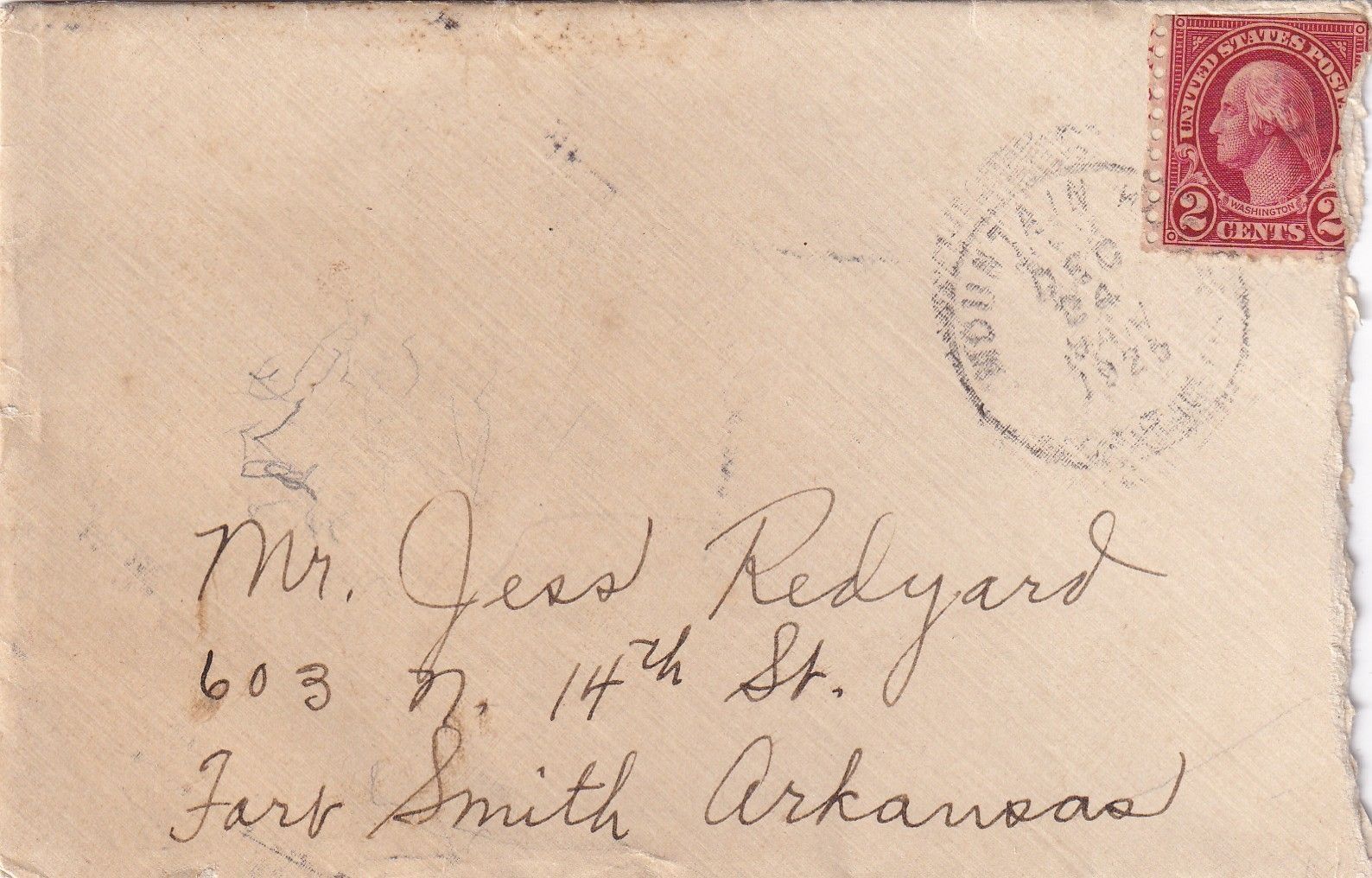
RE-LE-COLLHE-0054
Romantic correspondence; gift exchange; emotional attachment; courtship development
Alabama
Arkansas
United States
North America
Love & Courtship
Dec 24, 1923
20th Century
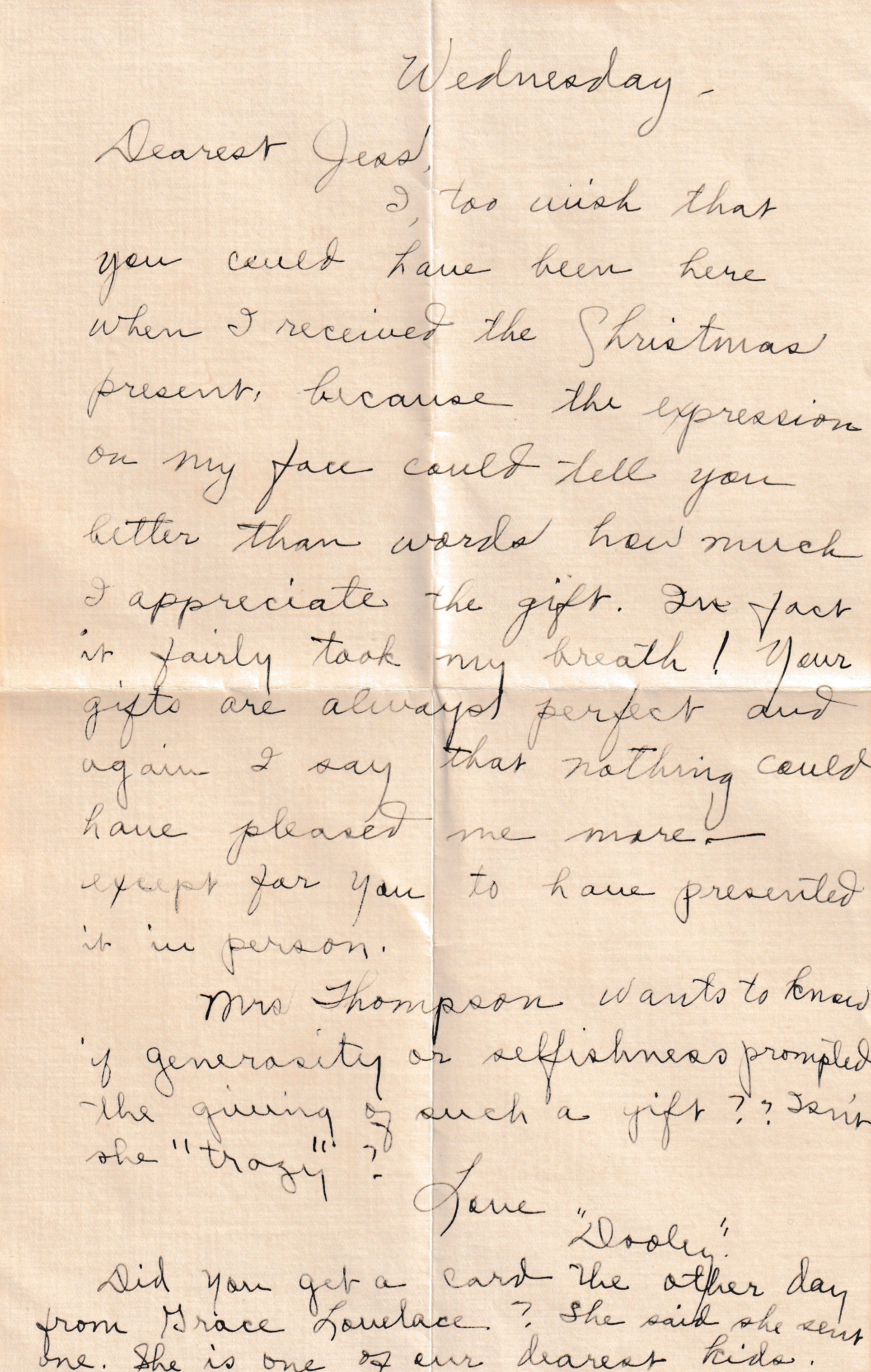
Wednesday Dearest Jess, I too wish that you could have been here when I received the Christmas presents, because the expression on my face could tell you better than words how much I appreciate the gift. In fact it fairly took my breath! Your gifts are always perfect and again I say that nothing could have pleased me more—except for you to have presented it in person. Mrs. Thompson wants to know “if generosity or selfishness prompted the giving of such a gift??” Isn’t she “trashy”? Love, “Dooley” Did you get a card the other day from Grace Lovelace? She said she sent one. She is one of our dearest kids.
English
This letter reflects several important cultural and social dynamics of the early 1920s: Gift-giving in courtship: Material gifts served as key emotional and symbolic gestures, often strengthening romantic bonds across distance. Female emotional expression: The writer demonstrates increasing openness, reflecting shifting norms for women in the post–World War I era. Social commentary: The reference to Mrs. Thompson suggests awareness of community scrutiny and gossip surrounding relationships. Peer networks: Mentions of friends (Grace Lovelace) highlight the social circles that often influenced or observed romantic relationships.
Description
Written shortly before Christmas in 1923, this letter conveys heartfelt gratitude for a gift and reveals a deepening emotional connection between the writer and recipient. The author’s candid expression—that nothing could have pleased her more except his presence—marks a significant moment in their courtship. The letter also reflects the social dynamics of small-town life, where relationships were often observed and discussed within the community.