
Elderly Woman
Photograph
RE-PH-2026-0043
Cabinet Card
Unknown
Elderly
Victorian
Hats
Glasses
1855 – 1865
Victorian
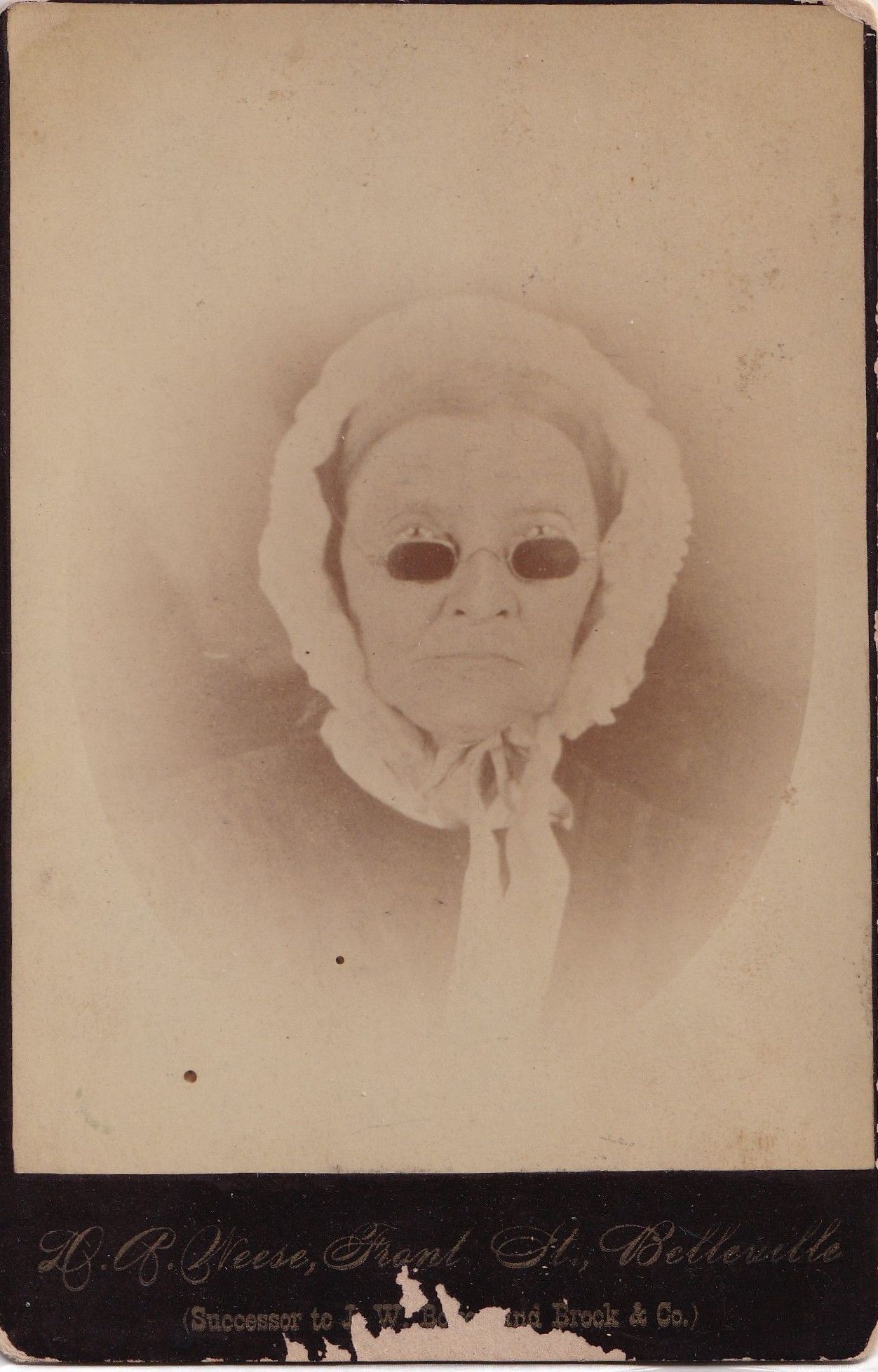
Clothing & Visual Details: Light-colored bonnet or cap framing the face Round, dark eyeglasses, possibly tinted or early corrective lenses Plain, modest clothing consistent with mid-19th-century women’s dress Facial features suggest advanced age, reinforcing the gravitas of the portrait
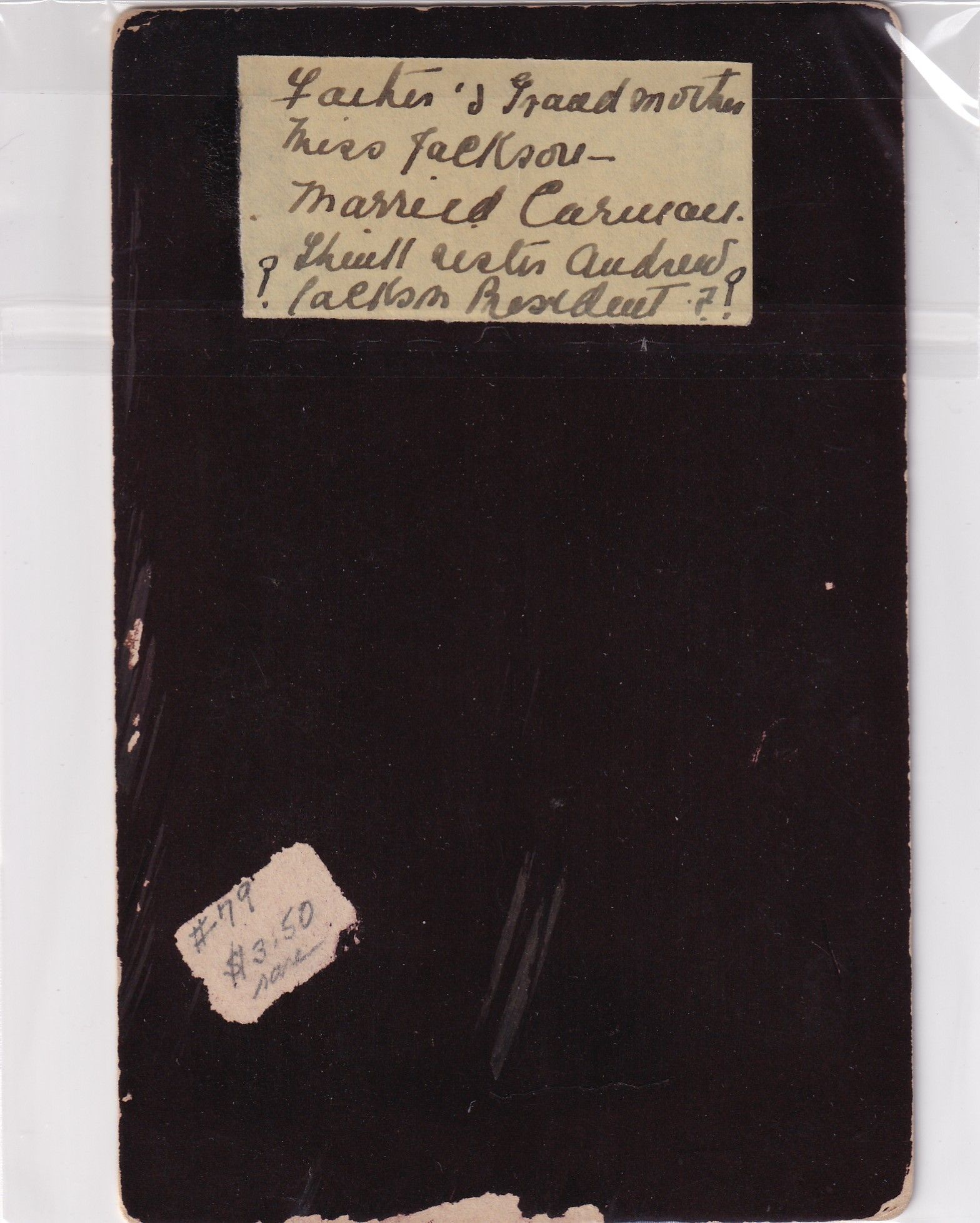
Handwritten Annotation (Reverse): A later handwritten label reads (transcribed as written): “Falkin’s grandmother nee Jackson — married Carver. ? kin with Andrew Jackson Jackson President?!”
Good
Feb 6, 2026
Moderate to heavy overall fading and tonal softness Surface spotting and small losses visible in the image area Edge wear and losses to the backing material Handwritten label intact but aged Image remains legible and visually striking despite wear
Description
This portrait depicts an elderly woman photographed during the mid-nineteenth century, her face framed by a bonnet and accentuated by round eyeglasses. Rendered on glass using the collodion process, the image possesses the soft tonal qualities and intimate presence characteristic of ambrotypes, a popular photographic format in the United States from the 1850s through the early 1860s. Portraits of older women from this period are comparatively rare, as photography more often favored younger sitters or commemorative family groupings. The inclusion of eyeglasses further distinguishes this image, offering a rare visual record of aging, vision, and everyday material culture in early photographic practice. A handwritten label affixed to the reverse attributes the sitter to a family lineage and speculates on a possible connection to President Andrew Jackson. While such annotations provide valuable insight into how later generations interpreted and valued historic photographs, they remain unverified and must be understood as personal or familial memory rather than documentary proof. Despite surface wear and later alterations to its presentation, this ambrotype remains a compelling artifact of nineteenth-century portraiture—one that preserves not only a likeness, but also layers of memory, speculation, and historical curiosity accrued over time.