
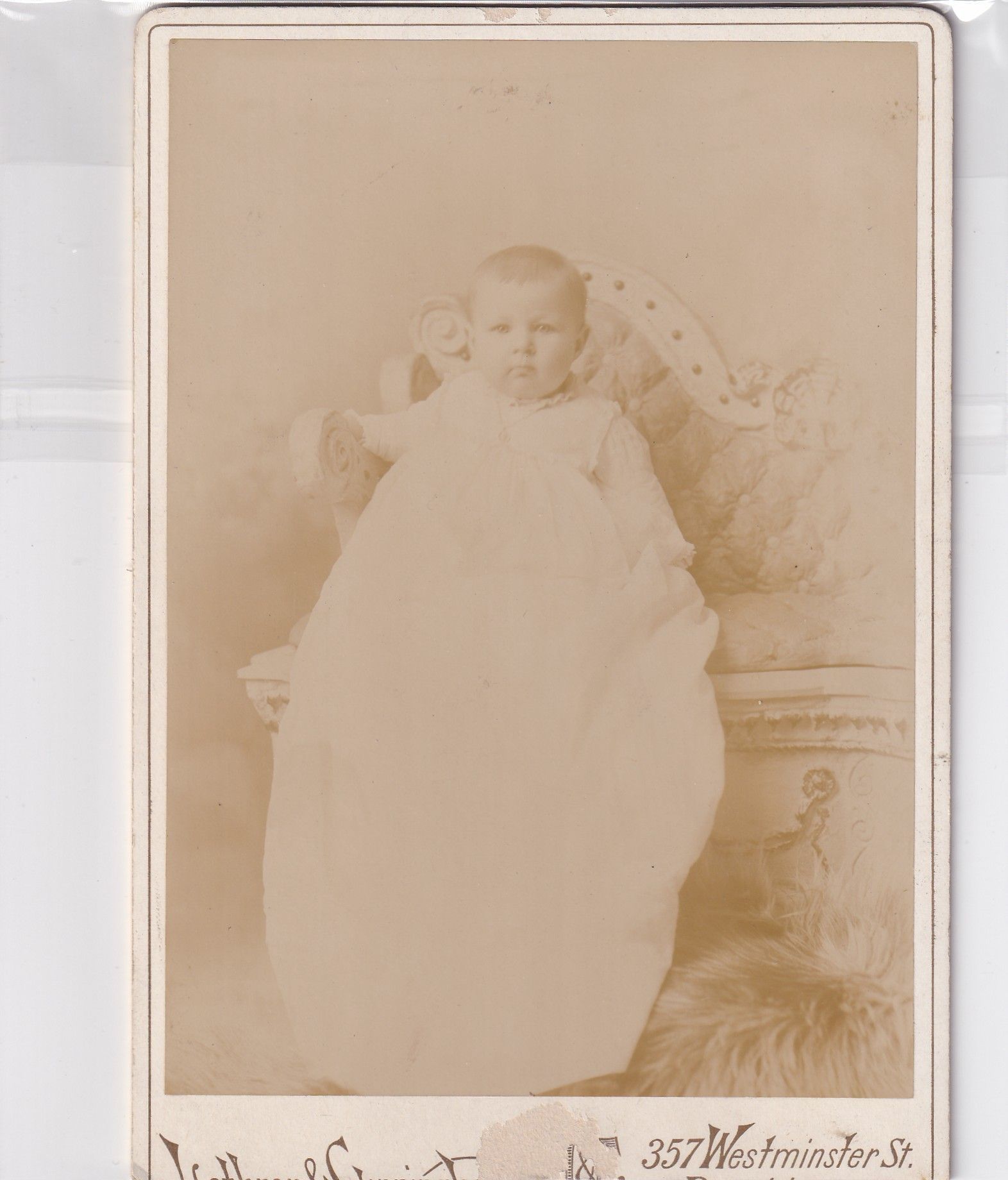
Infant in Long Christening Gown on Ornate Settee — Lothrop & Cunningham Studio Portrait
Photograph
Formal studio portrait of an infant seated on an ornate upholstered settee wearing a long christening gown.
RE-PH-2026-0107
Albumen Print
baby
christening
Victorian
Lothrop & Cunningham
circa 1885 – circa 1895
Victorian
Rhode Island
North America
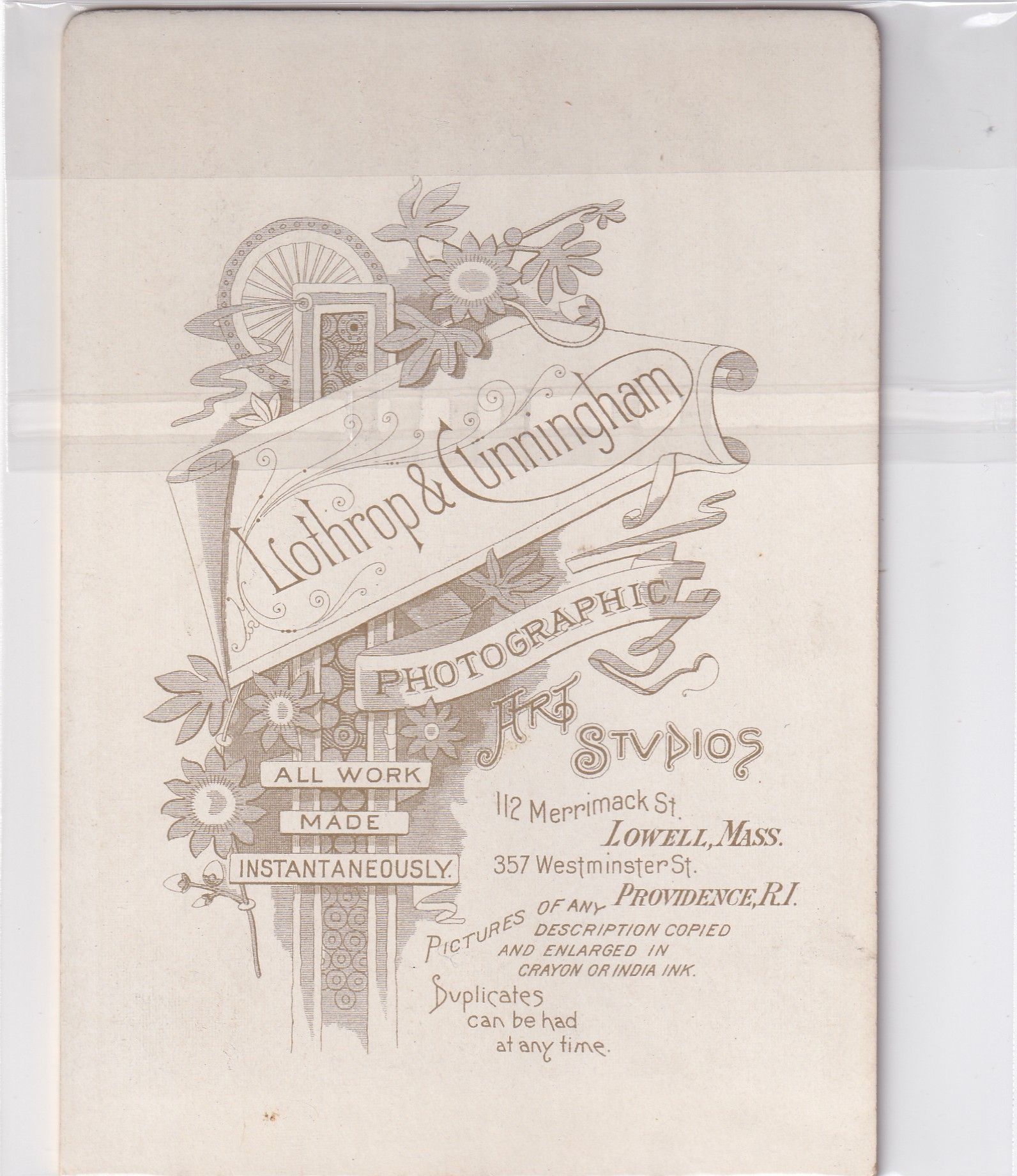
Lothrop & Cunningham operated multi-city studios in two important New England industrial centers. Lowell, Massachusetts was a major textile manufacturing hub with a dense working- and middle-class population, while Providence, Rhode Island was a thriving port and industrial city. Multi-location studios were typically successful operations serving large regional markets. Their advertising emphasized speed (“instantaneously”) and artistic services such as enlargement and crayon portrait enhancements — hallmarks of competitive late-Victorian photography businesses. Ornate backmarks like this were designed to project professionalism and artistic prestige.
American; late 19th-century infant portraiture reflecting Victorian ceremonial dress traditions and formal studio presentation.
Backmark / Imprint Details Elaborate illustrated studio advertisement featuring floral motifs, banners, and typography. Text includes: “Lothrop & Cunningham Photographic Art Studios” “All Work Made Instantaneously” “Pictures of any description copied and enlarged in crayon or India ink” “Duplicates can be had at any time” Locations listed: Lowell, Mass. and Providence, R.I.
Fair
Mar 8, 2026
• Moderate fading typical of albumen process • Light surface abrasions • Minor mount discoloration • Slight contrast loss • Backmark remains clear and legible
Historical Note
Infant portraiture became increasingly popular in the late nineteenth century as photography became more affordable. Long white gowns were traditionally used for christenings and formal presentations, symbolizing purity and family prosperity. Studio furniture was often highly decorative to create a sense of refinement and permanence. Cabinet cards allowed families to distribute portraits among relatives and compile them into albums documenting childhood milestones.