
Infant Portrait
Photograph
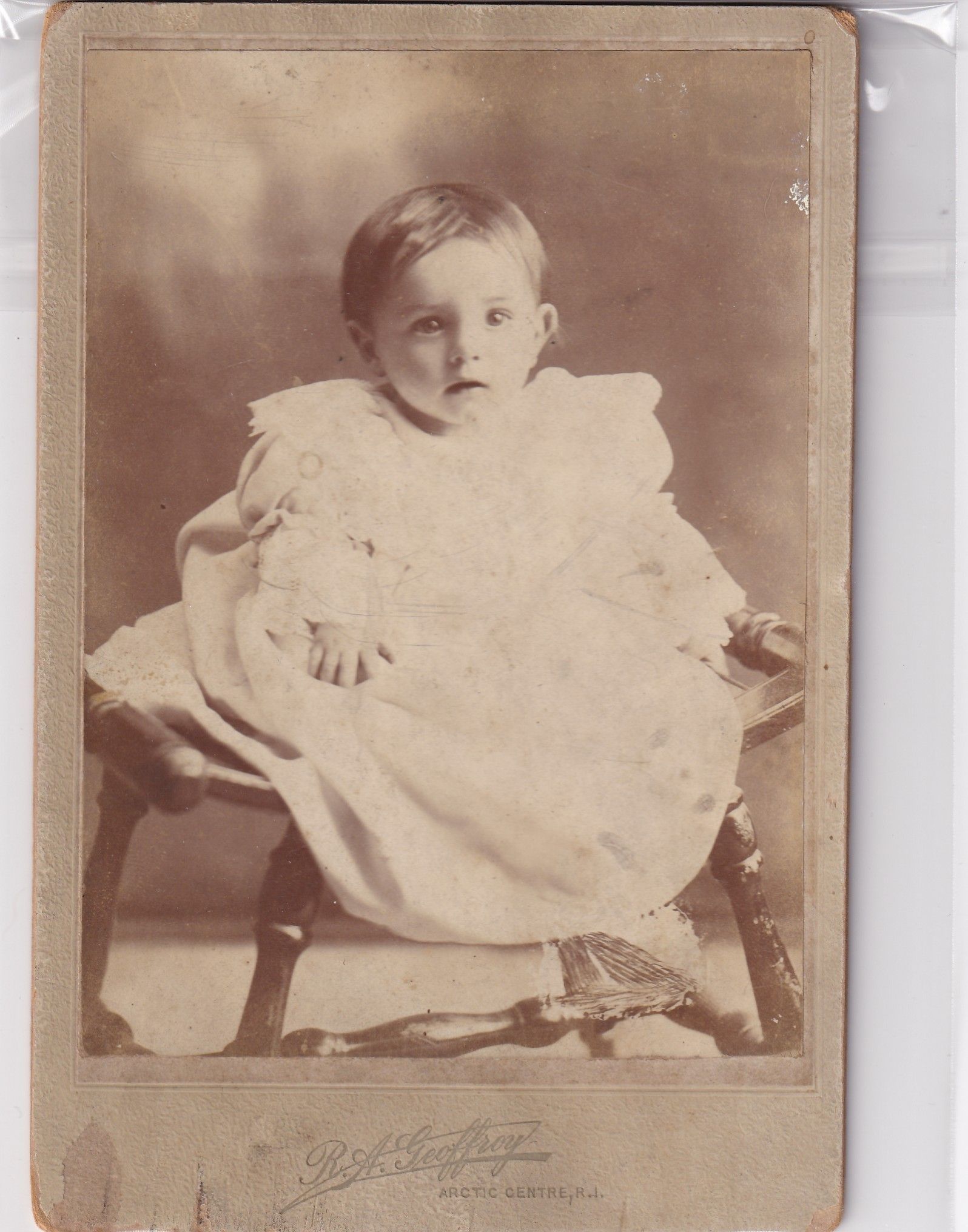
This is a classic late Victorian cabinet card infant portrait produced in a professional studio setting of an infant.
RE-PH-2026-0073
Cabinet Card
Infant
Victorian
baby
B.A. Gifford Studio
circa 1890 – circa 1898
Victorian
Rhode Island
North America
B. A. Gifford Studio Arctic Centre, Rhode Island B. A. Gifford operated in Arctic Centre, Rhode Island, a mill village area within Warwick. This region was part of New England’s industrial textile belt. Studios like Gifford’s primarily served: Working-class mill families Skilled tradespeople Local middle-class families Immigrant populations establishing roots in the region Infant portraits were commonly commissioned to mark: Survival past infancy (important in high mortality era) Family lineage documentation Milestone events such as christening or birthdays Photographic characteristics: Warm sepia tone typical of albumen printing Slight tonal fading and gentle contrast Soft vignette fading at lower image edge Mount style: Cream mount with subtle border embossing Script studio imprint Cabinet card format still dominant before gelatin silver overtook albumen Clothing and styling: Infant wearing long white dress typical of Victorian infant wear Gender-neutral infant garment (standard before breeching age) Loose, voluminous construction allowing infant movement and growth
The infant is dressed in a traditional late Victorian infant gown featuring: Lightweight white cotton or fine linen Loose body construction Soft gathered shoulders Extended skirt length covering legs Likely hand-finished hems and seams This style served multiple purposes: Practical garment adaptable to infant growth Easy diaper access Neutral presentation for both male and female infants Symbolic expression of innocence and purity This style remained standard from approximately 1855 through 1900.
Good
Feb 15, 2026
Moderate surface wear Albumen fading typical for age Mount discoloration Minor staining and spotting Edge wear on mount
Description
Studio portrait of an infant seated on a small bench, dressed in a traditional long white gown typical of late Victorian childhood. Such portraits served as important family records during a period when infant mortality remained high and photographic portraiture had become widely accessible.