
Man Studio Portrait
Photograph
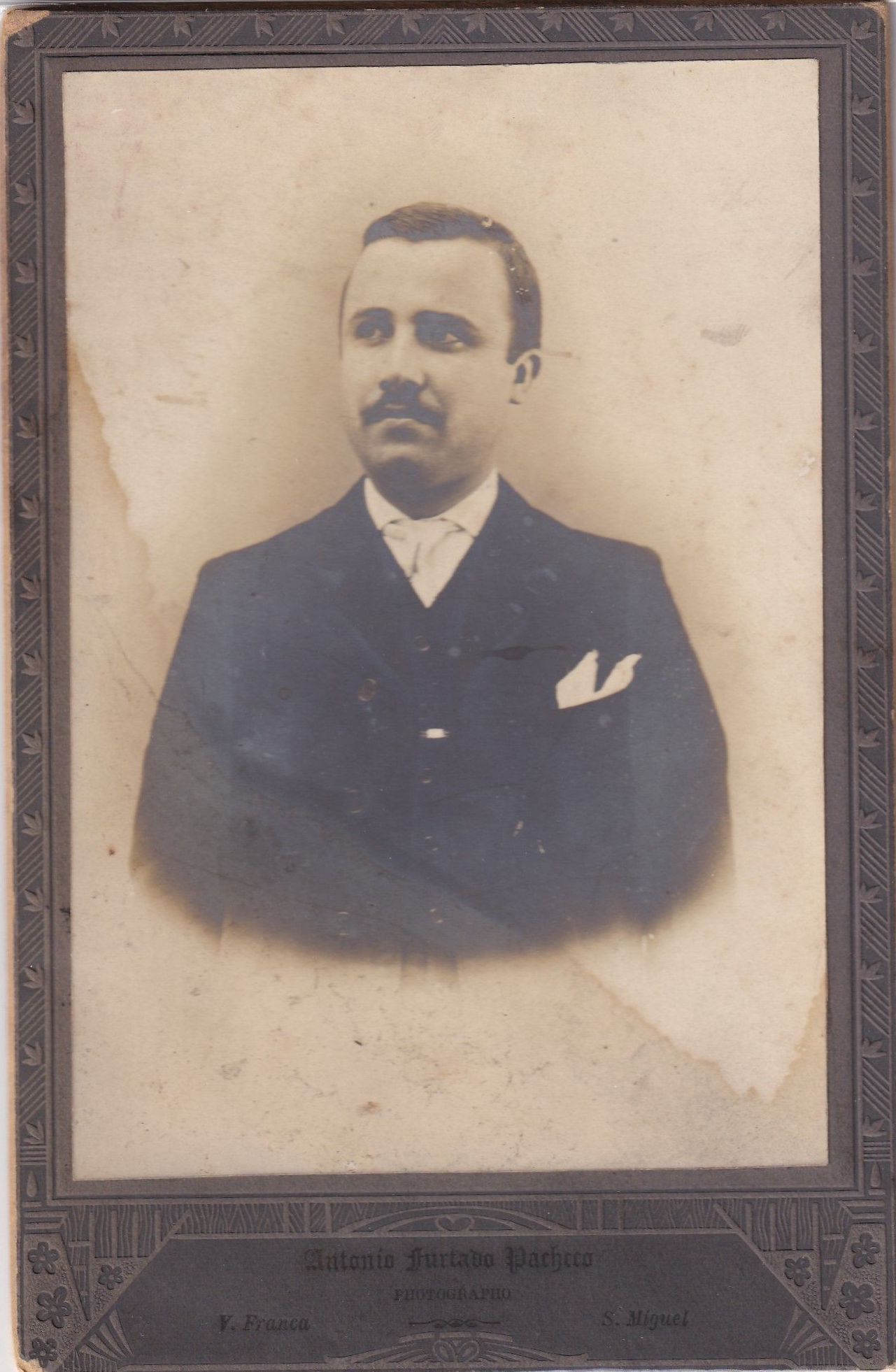
Formal studio portrait of an adult man shown from the waist up, facing slightly to his left. The sitter gazes off-camera with a composed, thoughtful expression, his posture upright and controlled.
RE-PH-2026-0051
Cabinet Card
Portugal
man
1900’s
1890’s
Antonio Hurtado Pacheco
circa 1895 – circa 1905
Victorian
Portugal
Photographer / Studio: Antonio Hurtado Pacheco Photógrafo Locations listed on mount: V. Franca and S. Miguel (Azores, Portugal) Clothing & Visual Details: Dark three-piece suit with jacket and waistcoat High-collared white shirt with neatly arranged tie or cravat Prominent, well-groomed mustache White pocket square tucked into the breast pocket, adding a note of refinement Hair worn short and neatly combed, consistent with turn-of-the-century men’s fashion Pose & Composition: The sitter’s three-quarter pose and averted gaze lend the portrait a dignified, contemplative quality. The soft vignette around the figure draws attention to the face while allowing the dark suit to recede gently into the background. Background / Studio Setting: Plain studio backdrop with subtle tonal variation. The simplicity of the setting emphasizes the sitter’s features and attire rather than theatrical props. Mount & Design Notes: The mount features an ornate, geometric and floral border typical of late 19th–early 20th century cabinet cards. The photographer’s name and locations are printed prominently at the bottom, indicating a professional studio with multiple regional ties.
Description
This cabinet card portrait depicts an elegantly dressed man photographed at the turn of the twentieth century by António Hurtado Pacheco, a professional photographer active in the Azores. Presented in three-quarter profile, the sitter wears a dark tailored suit accented by a crisp white pocket square and a neatly groomed mustache, projecting confidence, respectability, and social standing. The restrained studio setting and soft vignette reflect prevailing photographic aesthetics of the period, in which simplicity and controlled lighting were used to emphasize character and refinement. Such portraits were often commissioned to mark personal achievement or to serve as lasting representations of identity within family and community networks. The mount’s printed locations—Vila Franca and São Miguel—situate the photograph firmly within the cultural landscape of the Azores, highlighting the reach of professional photography beyond major urban centers. Despite visible signs of age, the image remains a compelling example of late nineteenth-century portraiture, preserving both individual presence and regional photographic practice at the threshold of the modern era.