
Mother with Two Children
Photograph
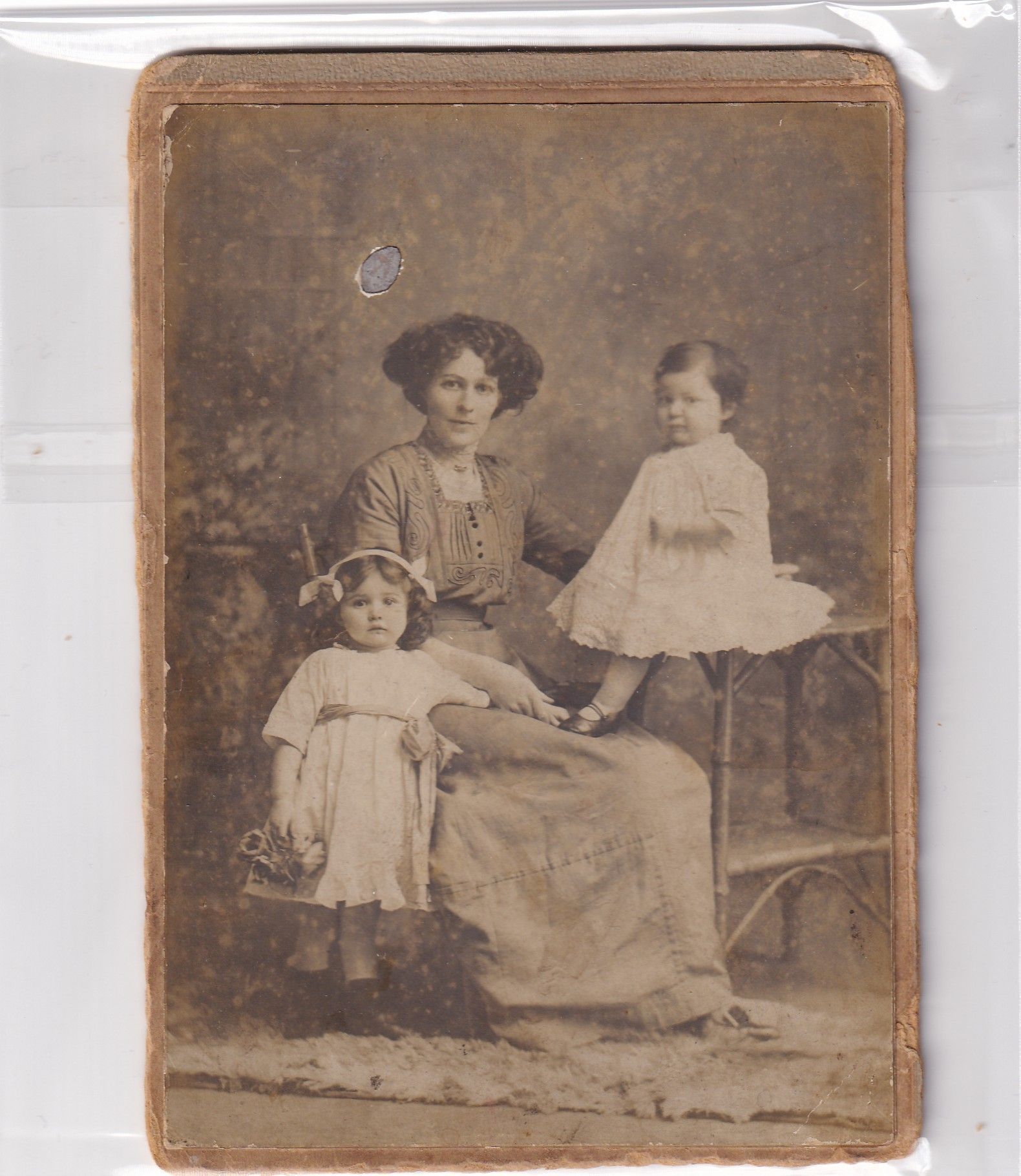
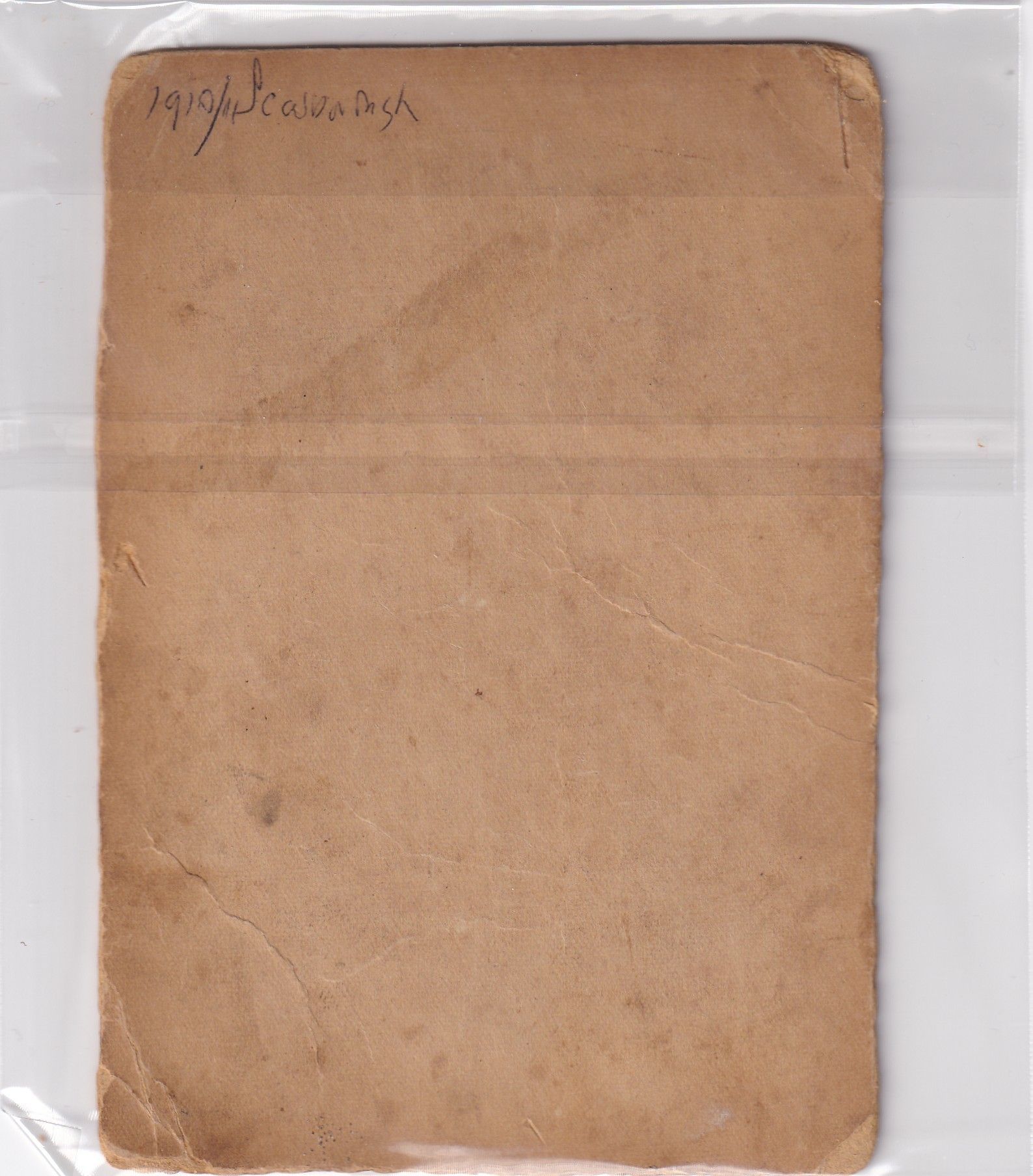
Sepia-toned photograph mounted on plain brown card stock. Reverse bears handwritten inscription: “1910 / Scavanak” (Handwriting suggests possible surname; spelling should be verified under magnification.) Image depicts a seated woman with two young children arranged in a formal studio setting with painted backdrop and textured floor covering.
RE-PH-2026-0067
Cabinet Card
Woman
child
boy
girl
family
Unknown
1910
Edwardian
Unknown
👩 Mother’s Hair Full, softly waved pompadour-style arrangement Volume at sides Distinct Edwardian “Gibson Girl” influence 👗 Mother’s Dress High neckline Decorative embroidery or soutache-style trim Fitted bodice Long skirt These details are strongly consistent with 1908–1912 fashion. 👶 Children’s Clothing Left child: Short white dress with sash Large bow in hair Holding floral bouquet or small accessory Right child: White infant/toddler dress Lace or eyelet hem Early leather strap shoes Both garments align well with 1910-era children’s dress, emphasizing innocence and lightness.
This is almost certainly a formal maternal portrait. The arrangement suggests: Seated mother as central stabilizing figure One child standing independently One child positioned on small pedestal or stool The composition reflects early 20th-century ideals of: Motherhood as moral anchor Domestic virtue Structured but affectionate family identity This is a transitional image — no longer stiff Victorian rigidity, but still formally composed.
“1910 / Scavanak”
Fair
Feb 14, 2026
Significant mount wear Corner abrasion Surface staining Small puncture in upper print area Reverse stress creasing
Description
This intimate 1910 portrait presents a seated mother with her two young children, dressed in light garments characteristic of the Edwardian era. The mother’s softly waved pompadour hairstyle and embroidered bodice reflect contemporary fashion, while the children’s white dresses embody early twentieth-century ideals of innocence and domestic virtue. The handwritten date on the reverse anchors the image firmly in its historical moment.