
Portrait of Agnes A. McArthur, Age 5 Years
Photograph
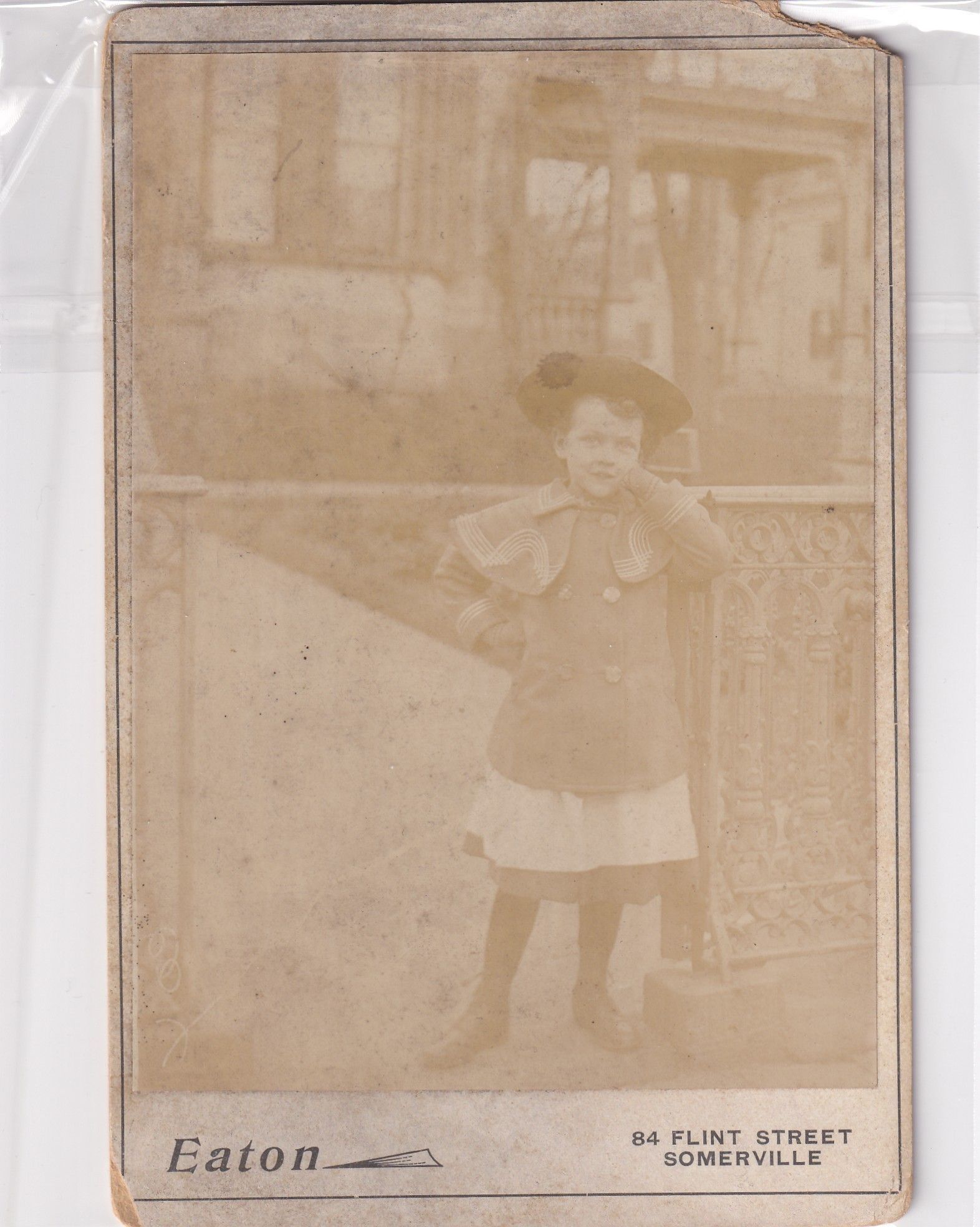
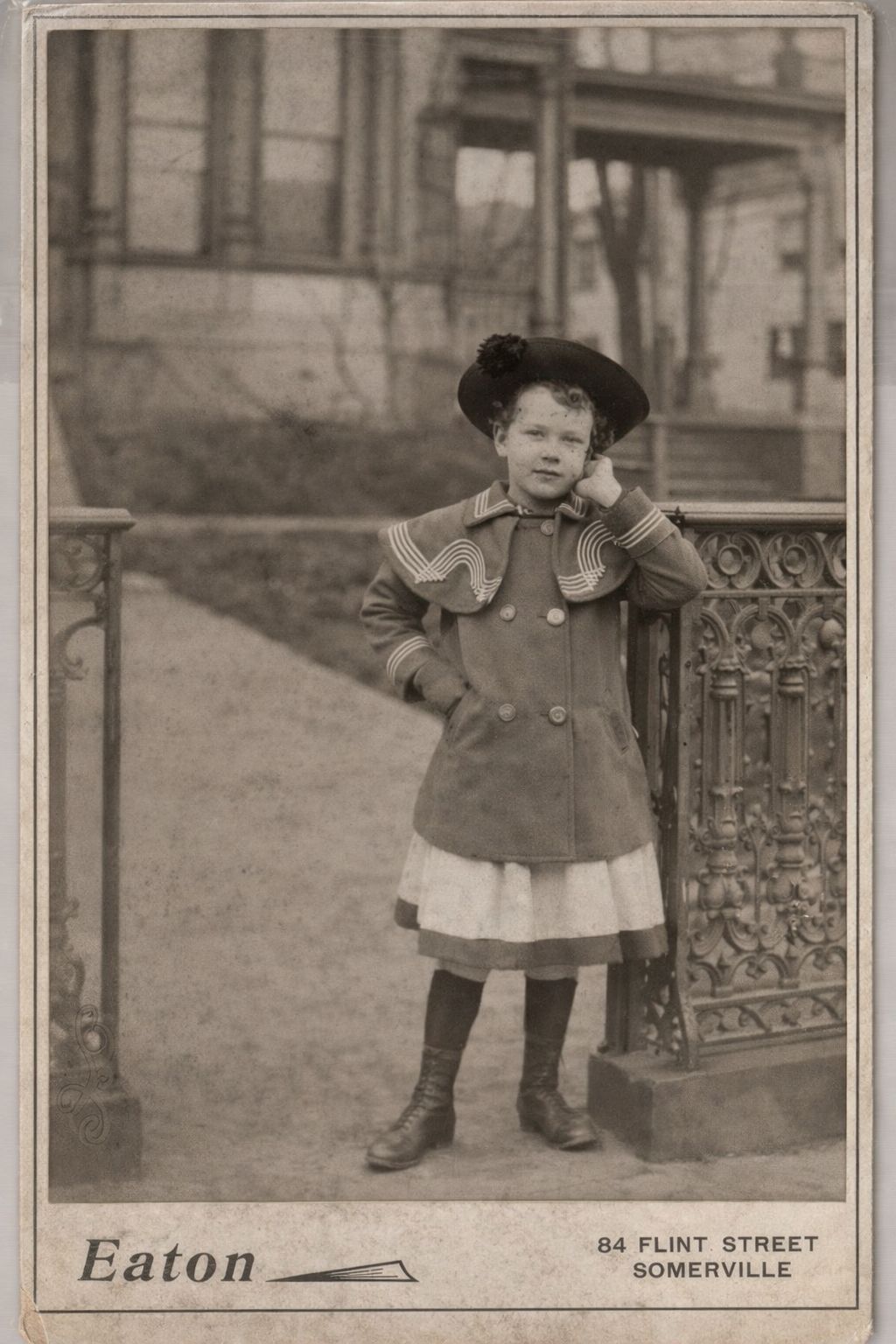
Formal outdoor portrait of a young girl identified as Agnes A. McArthur, age five, standing beside decorative iron railing and residential building, wearing fashionable late Victorian children’s coat and hat.
RE-PH-2026-0075
Cabinet Card
Victorian
Outdoor
Hats
girl
Eaton
1893
Victorian
Massachusetts
North America
Photographer Eaton 84 Flint Street, Somerville, Massachusetts, United States The photographer identified simply as Eaton operated at 84 Flint Street in Somerville, Massachusetts, likely active during the late 1880s through early 1900s. Somerville, adjacent to Boston, was a rapidly growing suburban municipality during this period, populated by: Skilled tradespeople Middle-class families Immigrants and second-generation Americans Professionals commuting to Boston By the 1890s, Somerville had become an established residential suburb, and local photography studios such as Eaton served neighborhood families documenting milestones such as childhood, marriage, and family lineage. Unlike purely studio-bound portraiture, this photograph appears to incorporate an outdoor setting or outdoor-simulating environment, reflecting increasing photographic flexibility during the late 19th century. Description of Photo Subjects Subject: Young Caucasian girl, approximately five years old, identified as Agnes A. McArthur Clothing She wears fashionable late Victorian outerwear including: Structured wool coat with decorative sailor-style collar Large prominent buttons Matching hat with decorative element Dark stockings Leather boots Light-colored dress visible beneath coat This ensemble reflects: Middle-class or skilled working-class family status Contemporary fashion trends of the early 1890s Careful presentation for formal portrait documentation Pose and Expression The child stands beside an ornate iron railing, one arm bent in a casual but composed posture. Her stance suggests a controlled but slightly natural pose, reflecting evolving portrait styles of the 1890s. Her expression is serious but less rigid than earlier Victorian portraiture, indicating gradual stylistic shifts toward more relaxed photographic representation.
This photograph represents late Victorian suburban American childhood portraiture during a period of expanding photographic accessibility. Key cultural elements represented: Named childhood documentation The identification of Agnes by name and exact age reflects increasing importance placed on documenting individual identity and personal family history. Suburban expansion Somerville was part of Boston’s expanding suburban network. Families there increasingly participated in photographic documentation as part of middle-class cultural practice. Fashion and social identity Children’s clothing during this period mirrored adult fashion in miniature form. Structured coats and hats conveyed: Respectability Social stability Cultural participation in Victorian norms Technological transition period This photograph falls within the transition from strictly studio-based albumen prints toward more flexible photographic techniques and outdoor portraiture.
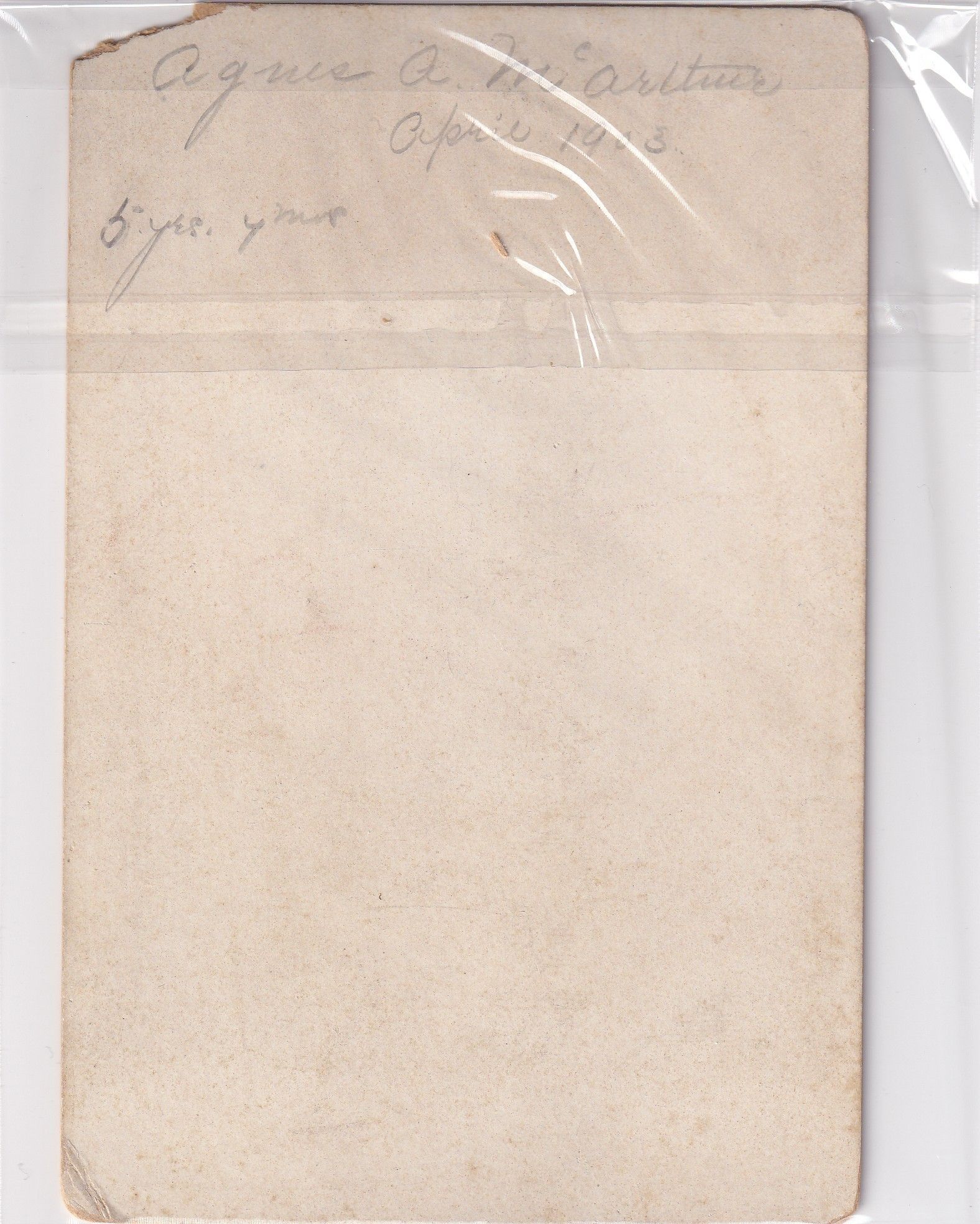
Reverse (handwritten inscription): “Agnes A. McArthur Aged 5 yrs. Aprile 14 ’93” Likely intended as: April 14, 1893 The spelling “Aprile” reflects period handwriting variation or phonetic spelling.
Feb 15, 2026
Moderate overall fading Loss of contrast typical of albumen prints Edge wear and corner damage, especially upper right and lower left corners Surface abrasions Minor mount staining and discoloration Mount remains structurally stable Handwritten inscription remains clear and legible. Image content remains identifiable.
Description
This cabinet card portrait, produced by photographer Eaton of Somerville, Massachusetts, on April 14, 1893, depicts Agnes A. McArthur at the age of five years. The child stands beside a decorative iron railing in what appears to be an outdoor or outdoor-simulated environment, wearing a structured wool coat with sailor-style collar, matching hat, stockings, and leather boots characteristic of late Victorian children’s fashion. The formal yet slightly relaxed pose reflects evolving photographic practices of the early 1890s, when improvements in photographic technology allowed greater flexibility in portrait composition. The precise handwritten identification on the reverse provides rare and valuable documentation of the subject’s identity and age, transforming the photograph from a general portrait into a specific historical record. Produced during a period of rapid suburban growth in Somerville, the image represents middle-class family participation in the cultural practice of photographic self-documentation. Cabinet card portraits such as this served as enduring personal artifacts preserving family memory, social identity, and childhood during the late nineteenth century.