
Portrait of Infant — Addressed to Keanna D. Bowen, Washington, D.C.
Photograph
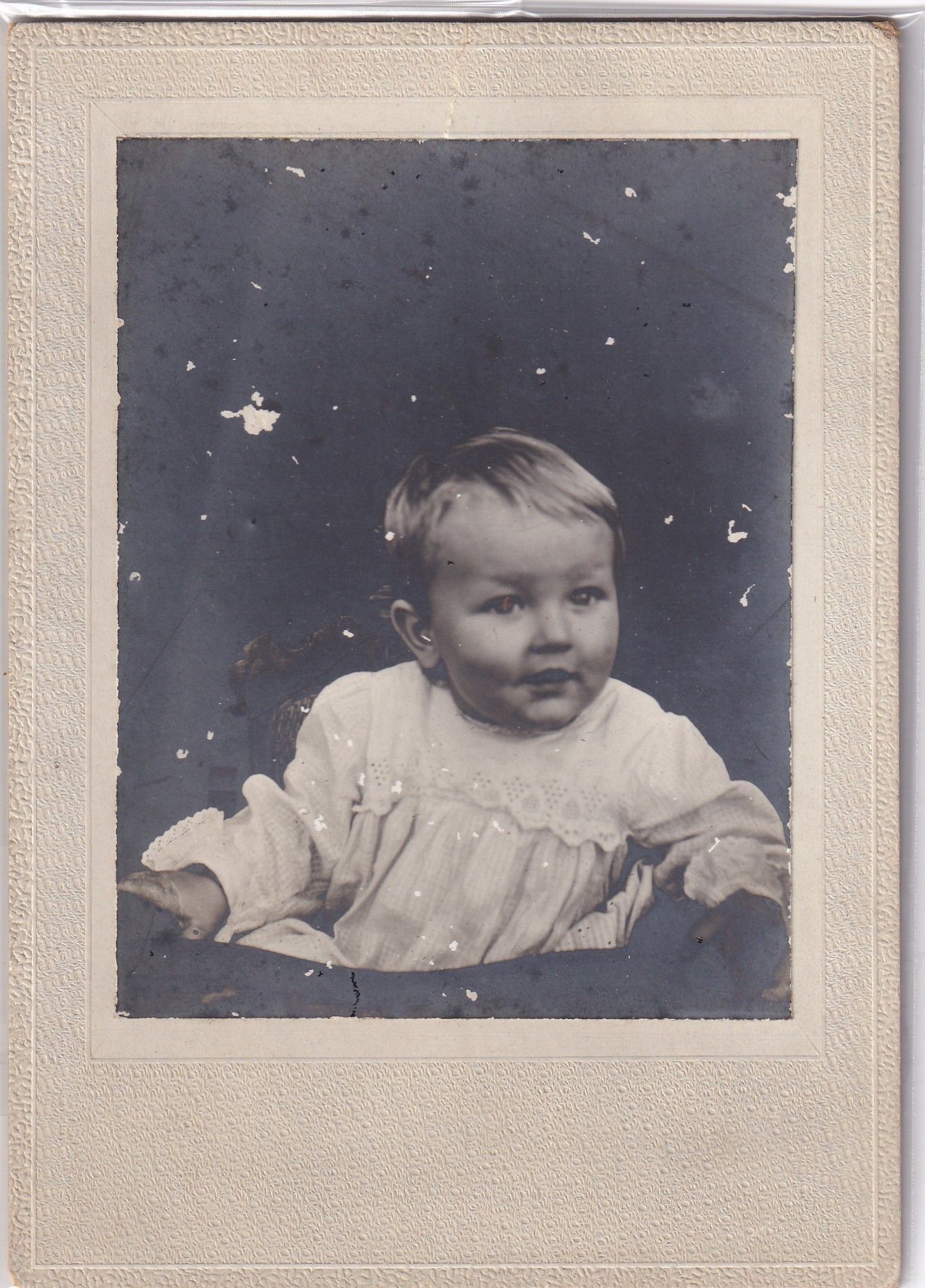
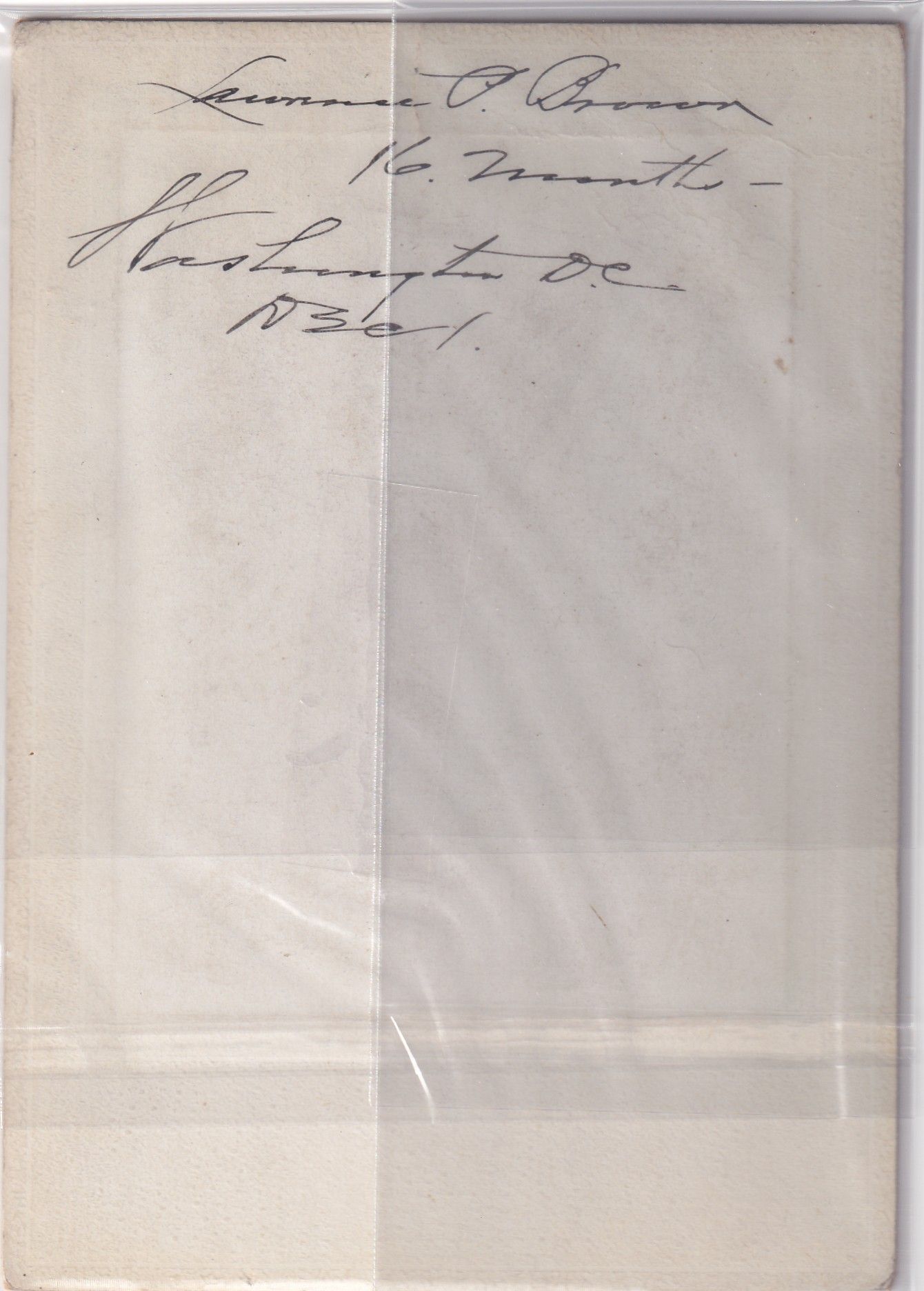
Studio portrait of a seated infant wearing a lace-trimmed gown, mounted on a textured studio card. The reverse contains a handwritten inscription addressed to Keanna D. Bowen at 16 Ninth Street, Washington, D.C., suggesting the photograph was sent as a family keepsake.
RE-PH-2026-0089
Gelatin Print – silver bromide
baby
Unknown
circa 1905 – circa 1915
Studio Location Unknown However, the inscription suggests a connection to Washington, D.C. The photograph depicts an infant approximately 8–14 months old seated in a studio chair partially concealed by drapery. Visible features include: Short parted hair Round cheeks typical of early infancy Lace-trimmed infant gown Decorative eyelet embroidery across the chest Long sleeves with gathered cuffs The child appears slightly turned toward the right side of the frame, with one arm resting along the draped posing surface. Infants were often supported by hidden posing devices or assistants to stabilize them during the exposure. Several features of the infant garment suggest an early twentieth-century date. Dating indicators include: Loose infant gown with decorative lace yoke Eyelet embroidery, popular in Edwardian children’s clothing Gathered sleeves with cuffs Soft portrait lighting typical of early gelatin silver studio prints These characteristics suggest a date roughly between 1905 and 1915.
Portraits of infants were a common feature of early twentieth-century family photography. Such images often commemorated a child’s first year and were frequently distributed to extended family members as keepsakes. Infant clothing of the Edwardian period remained strongly influenced by Victorian traditions. Babies were typically dressed in long, loose gowns designed both for comfort and practicality. Lace, eyelet embroidery, and soft cotton fabrics were common decorative elements. Mounted portrait photographs like this one were often mailed or gifted to relatives. The inscription on the reverse indicates that the image was likely sent to a family member living in Washington, D.C., reflecting the widespread practice of exchanging photographic portraits among relatives during the period.
“Keanna D. Bowen 16 Ninth Washington D.C. D.B.C.”
Very Good
Mar 3, 2026
Light silvering and tonal aging typical of gelatin prints Minor wear to mount edges Slight mount discoloration Print surface appears stable
Description
This studio portrait depicts two young girls photographed at Alamo Studio in San Antonio, Texas, likely between 1918 and 1925. The children stand closely together before a dark background, their heads inclined slightly toward one another in a pose suggesting familiarity and affection. Both girls wear bobbed hairstyles with straight bangs, a fashion that became popular for children in the years following World War I. Their simple light-colored dresses reflect the practical and less ornamented clothing styles that characterized children’s fashion in the early 1920s. One of the girls wears round wire spectacles and a small heart-shaped pendant necklace. The photograph was produced using the gelatin silver bromide process, the dominant photographic printing method used by commercial portrait studios in the early twentieth century. Mounted on a decorative card bearing the studio imprint “Alamo Studio, San Antonio, Tex.,” the image represents a typical example of early twentieth-century American studio portraiture. Such portraits served as important family mementos, capturing the appearance and personalities of children during a period when photography had become increasingly accessible to middle-class families.