
Portrait of Two Young Girls Seated on Wicker Studio Chair with Fur Throw
Photograph
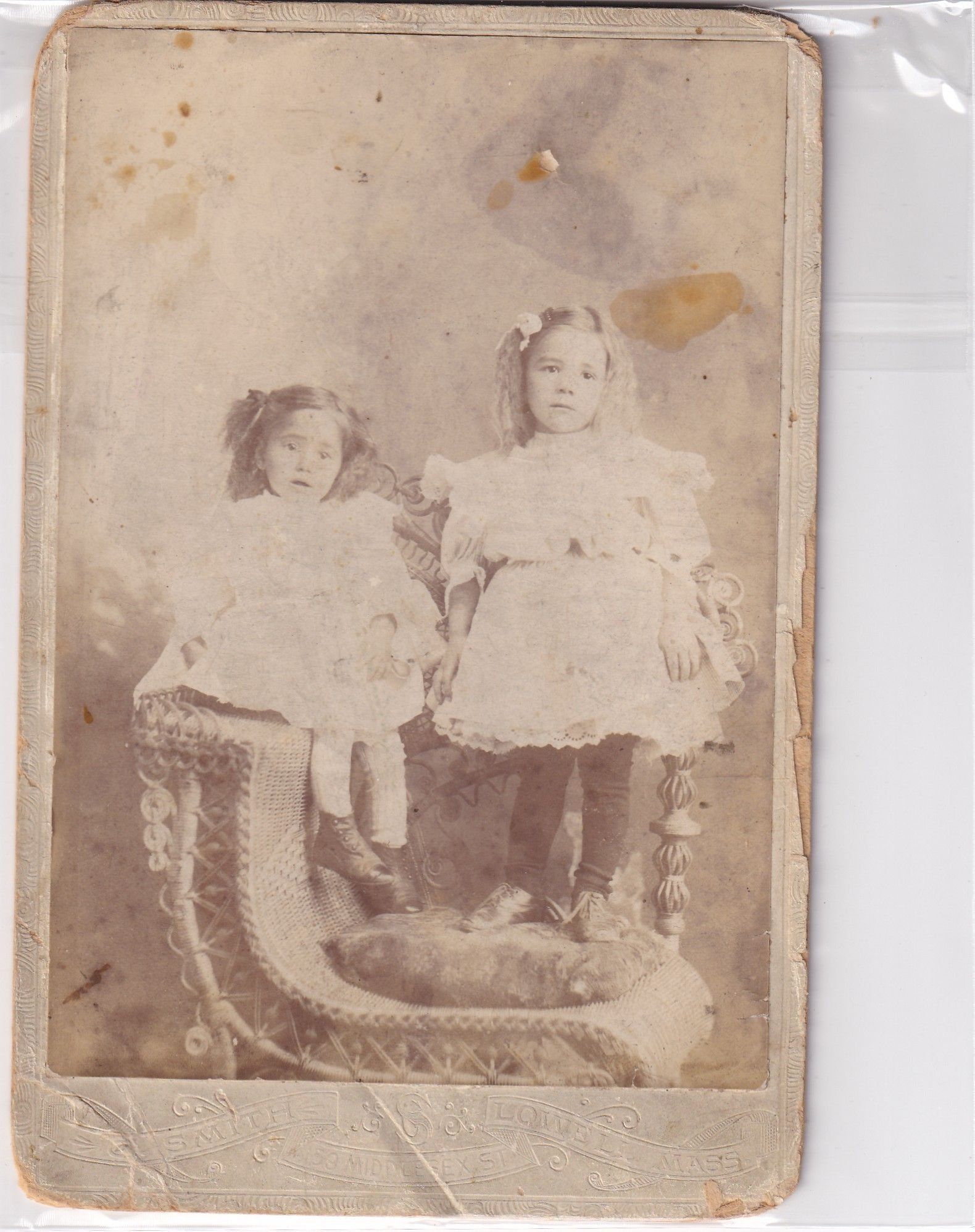
Studio portrait of two young sisters posed on an ornate wicker chair with decorative fur throw, wearing elaborate lace dresses typical of late Victorian childhood portraiture.
RE-PH-2026-0074
Cabinet Card
girl
child
Victorian
Smith & Lowney
circa 1885 – circa 1900
Victorian
Massachusetts
North America
Photographer Smith & Lowney Place Lowell, Massachusetts, United States Studio address printed: 98 Middlesex Street, Lowell, Mass. Smith & Lowney operated a professional photographic studio in Lowell, Massachusetts during the late 19th century, likely active between approximately 1885–1900. Lowell was one of America’s major industrial textile centers, and photography studios flourished there serving: Middle-class mill managers Skilled industrial workers Immigrant families seeking social permanence Established New England families documenting lineage The presence of a mounted cabinet portrait from this studio suggests a family of moderate financial stability, as cabinet cards represented a modest but meaningful investment. The elaborate studio props and embossed mount indicate a well-equipped and professionally managed establishment. Description of Photo Subjects Two young Caucasian girls, approximately: Left child: approx. age 3–5 Right child: approx. age 5–7 They appear to be siblings. Clothing Both wear highly formal childhood dresses featuring: White or cream cotton or muslin Extensive lace trimming Layered skirts Decorative bodices High necklines Additional details include: Dark stockings Buttoned leather boots Carefully styled hair with bows or ribbons These garments represent formal portrait attire rather than everyday wear. Pose and Studio Props The girls are seated and standing on an elaborate wicker studio chair featuring: Decorative woven structure Curved arm supports Raised seat A fur throw or pelt is placed on the seat beneath their feet, a common Victorian photographic prop used to: Add texture Convey domestic warmth Enhance visual richness Their expressions are serious and restrained, consistent with period expectations of stillness during exposure.
This photograph represents late Victorian American childhood portraiture during a period when photography had become: Widely accessible to the middle class A primary method of family documentation A tool for establishing social identity and permanence Important contextual elements include: Childhood as a Cultural Ideal By the 1880s–1890s, childhood was increasingly viewed as: A protected and sentimental phase of life Worth documenting visually Associated with innocence and refinement Formal portraits served as lasting records of family lineage. Industrial New England Setting Lowell, Massachusetts, was one of the most important textile manufacturing cities in America. Families in Lowell often used portrait photography to: Preserve family identity amid industrial modernity Document social advancement Maintain family continuity
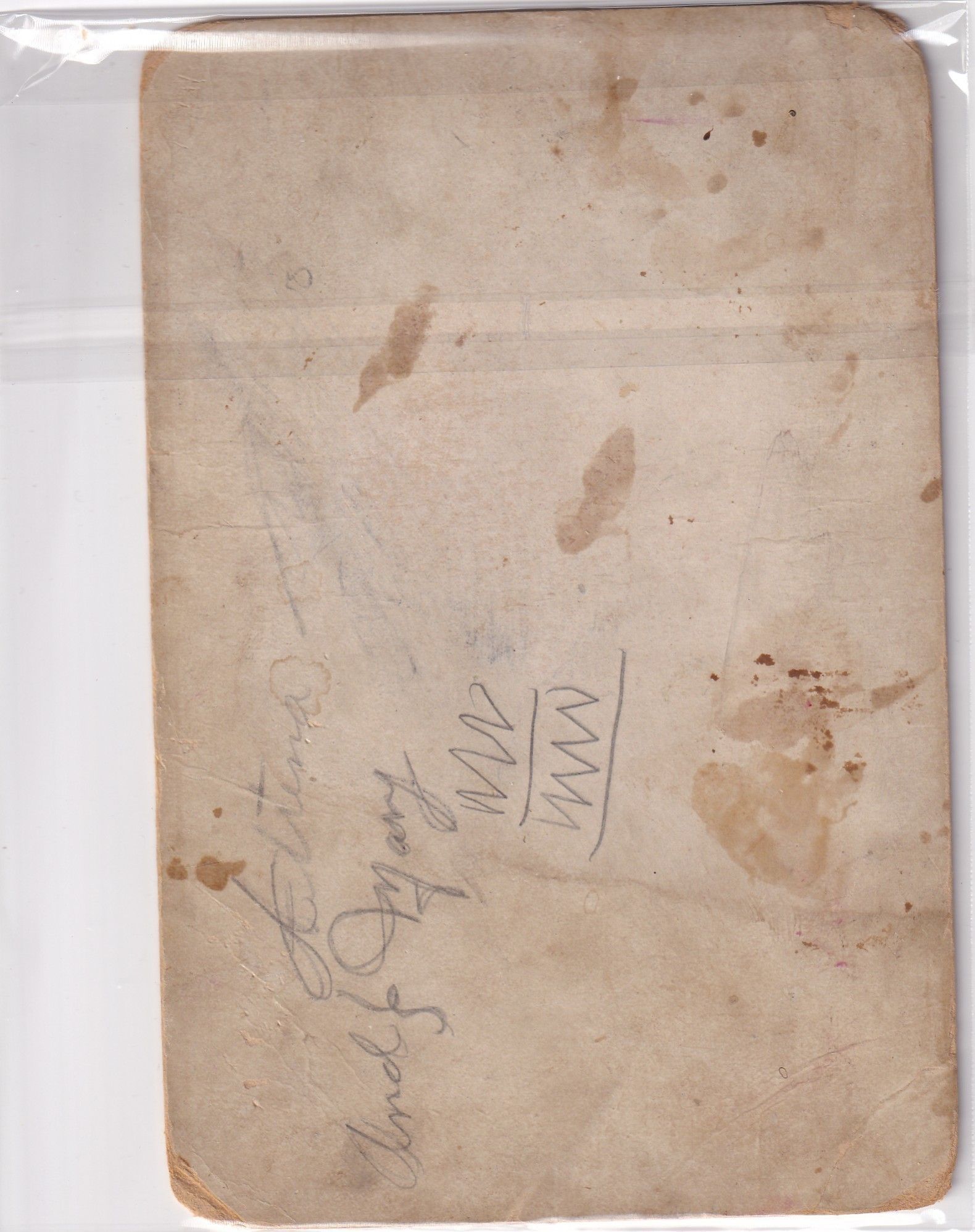
Reverse Handwritten pencil inscriptions appear, including: Childlike writing exercises or marks Possible name inscription, difficult to fully decipher due to fading and abrasion Several graphite strokes resembling early handwriting practice These marks were likely added years later by a child owner of the photograph, possibly one of the subjects.
Fair
Feb 15, 2026
Significant fading of image contrast Generalized albumen silver image degradation Foxing and staining throughout mount and image Edge wear and abrasion Minor mount creasing Corner rounding and compression Surface discoloration from age and environmental exposure
Description
This cabinet card portrait, produced by the Lowell, Massachusetts studio of Smith & Lowney circa 1888–1895, depicts two young sisters posed formally upon an ornate wicker studio chair adorned with a fur throw. The children wear elaborately constructed lace dresses, stockings, and leather boots typical of late Victorian childhood formal portraiture. Their solemn expressions and careful posture reflect the cultural expectations of stillness and dignity required by photographic exposure limitations of the era. The embossed studio mount identifies Smith & Lowney, a professional photographic establishment serving Lowell’s industrial and middle-class population during the late nineteenth century. The use of decorative studio furnishings and refined clothing indicates the family’s participation in the emerging middle-class tradition of photographic self-documentation. Cabinet card portraits such as this served as both personal mementos and social artifacts, preserving family identity during a period of rapid industrial and social transformation in New England. The photograph remains an important visual record of Victorian childhood, domestic identity, and regional photographic practice.