
Portrait of Young Woman with Spectacles and Lace Collar
Photograph
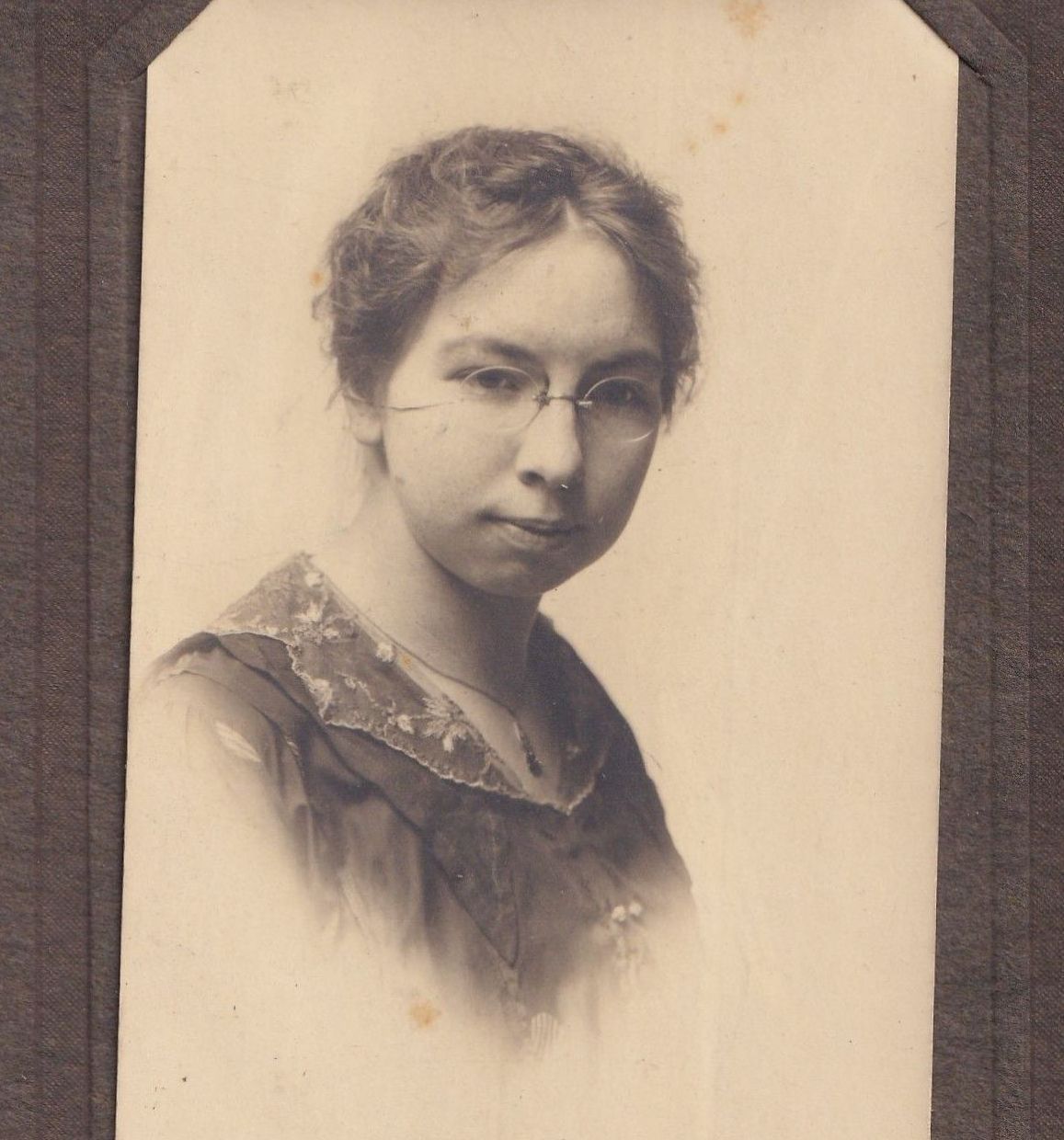
Studio portrait of a young woman wearing wire-rim spectacles and a lace-trimmed bodice, mounted in a beveled dark mat.
RE-PH-2026-0082
Late Victorian
Woman
Glasses
Unknown
circa 1898 – circa 1908
Victorian
The high lace collar, softly structured blouse front, and gently waved hairstyle suggest the transitional period between late Victorian and early Edwardian fashion. The small oval wire spectacles are characteristic of educated or professional women at the turn of the century. The mount style—dark textured board with beveled window—also aligns with early 20th-century presentation formats.
This portrait reflects the growing visibility of educated middle-class women in the late 19th and early 20th centuries. The presence of spectacles is especially significant; eyeglasses for women during this period were often associated with literacy, clerical work, teaching, or academic study. Her clothing suggests respectable middle-class status rather than high fashion. The modest bodice with lace inset and structured neckline aligns with the “Gibson Girl” era, though her styling is subdued and practical rather than overtly fashionable. This period marks expanding roles for women in education and professional spheres, particularly in urban American and British contexts. Studio portraiture remained an important ritual of identity and respectability.
Very Good
Feb 17, 2026
Minor spotting to photographic surface consistent with age. Slight foxing and small discoloration marks visible. Mount edges show light wear. Overall structurally stable.
Description
This softly rendered studio portrait captures a young woman in three-quarter bust view against a neutral background. She wears small wire-rim spectacles that delicately frame her eyes — a detail that immediately distinguishes the image from more conventional turn-of-the-century female portraiture. Her blouse features a lace-trimmed inset panel at the neckline, rising into a modest collar that reflects the fashion transition between the structured high collars of the 1890s and the slightly softened Edwardian silhouette of the early 1900s. The fabric appears lightweight, possibly cotton lawn or fine muslin, with applied lace embellishment. Her hairstyle is parted and softly waved, drawn back from the face in a manner consistent with the early Edwardian aesthetic. The absence of heavy jewelry or elaborate ornamentation suggests a portrait intended to convey refinement, intellect, and composure rather than display of wealth. The photograph is mounted within a dark, textured, beveled mat — a popular presentation style of the period that added visual depth and formality. The subdued tonal range and gentle focus contribute to the contemplative character of the image. Spectacles in women’s portraiture of this era remain comparatively uncommon and lend the photograph particular documentary interest. Such portraits often reflect women engaged in education, clerical professions, or literary pursuits during a period of significant social transition.