
Two Wome in Hats Outdoors
Photograph
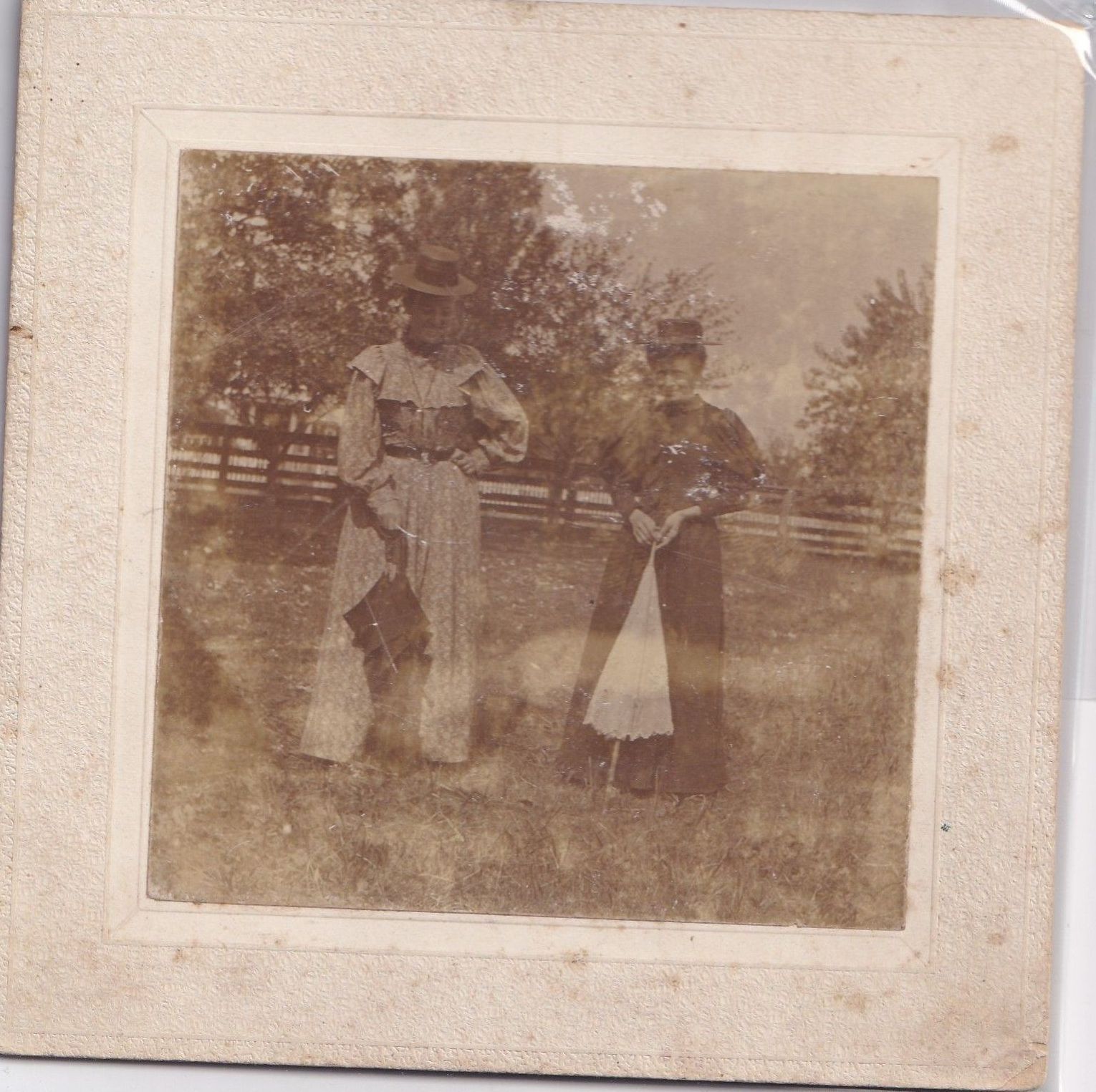
Outdoor portrait of two women posed side by side near a wooden fence, photographed in a rural or garden setting. The image is currently oriented upside down relative to correct viewing. When rotated properly, the women appear standing or seated close together, framed by trees and open landscape behind them.
RE-PH-2026-0044
Albumen Print
Women
Hats
Outdoor
Late Victorian
1880’s
1900’s
Parasol
1885 – 1900
Victorian
Both women wear long dresses with full skirts typical of the late Victorian period One figure appears to hold a closed parasol or umbrella, a common accessory for outdoor portraits Bodices are structured, with layered fabric and modest necklines Hair is styled up, consistent with adult women’s fashion of the period The parasol and outdoor setting suggest a deliberately staged but informal photograph compared to studio portraits
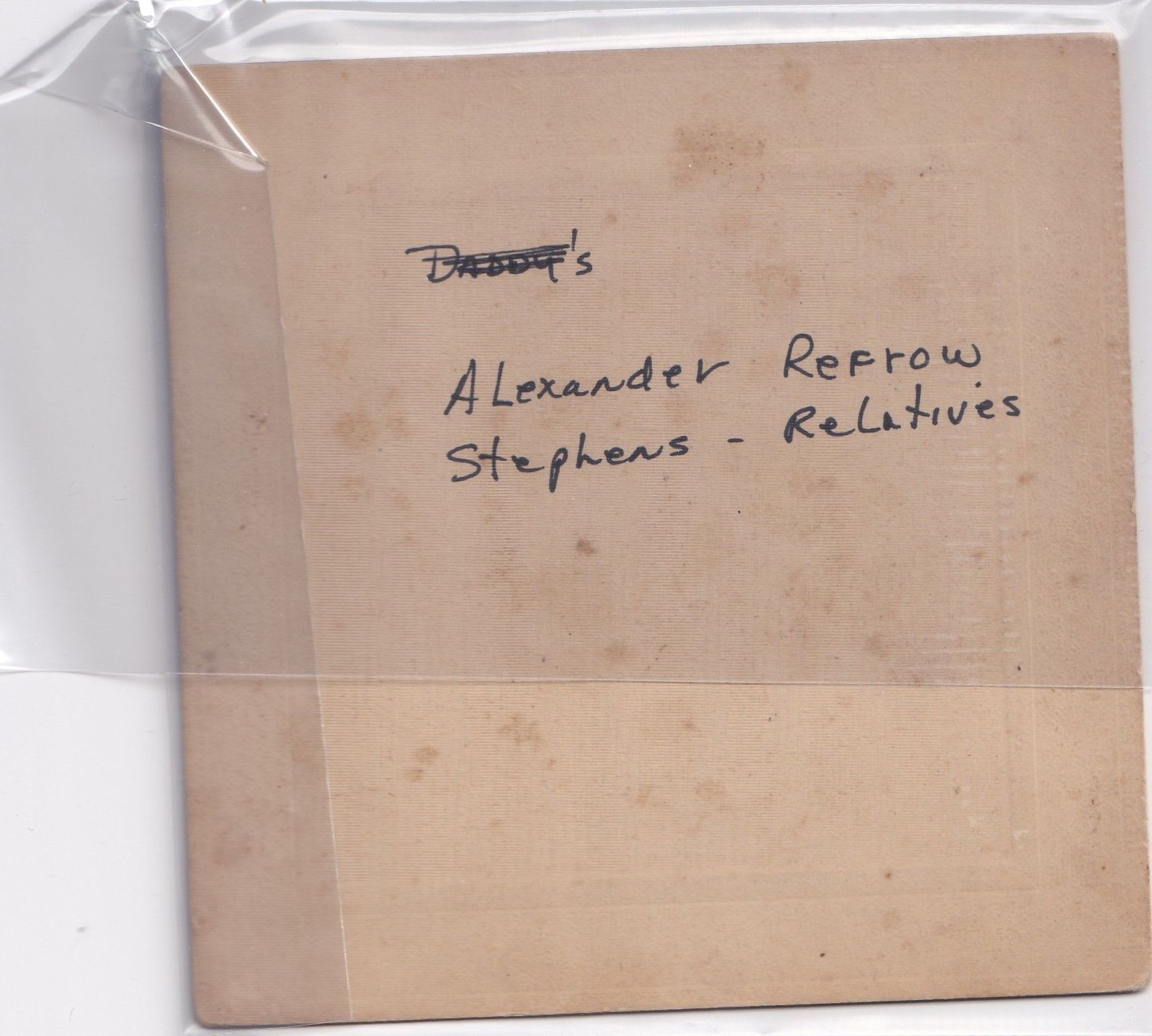
Handwritten Annotation (Reverse): Handwritten pencil inscription reads (as written, inverted on the back): “Alexander Repro Stephens – Relatives”
Fair
Feb 6, 2026
Heavy surface wear, scratching, and overall fading Loss of contrast, particularly in the central image area Mount exhibits spotting, discoloration, and soft corners Creasing visible on the backing board Image remains readable but significantly compromised by age and handling
Description
This late nineteenth-century photograph depicts two women posed together in an outdoor setting, framed by trees and a wooden fence that situate the image within a rural or garden landscape. One woman holds a closed parasol, an accessory that signals both propriety and leisure, while their long dresses and structured bodices reflect prevailing fashions of the late Victorian era. Unlike the rigid formality of studio portraiture, this image conveys a quieter, more informal intimacy. The choice to photograph the sitters outdoors suggests a desire to capture not only likeness but atmosphere—an association with nature, domestic space, and everyday life. Their physical closeness implies familiarity, possibly familial, reinforced by a later handwritten note on the reverse identifying the figures as “relatives.” Such annotations, while valuable as evidence of how photographs were remembered and reused by later generations, remain speculative without corroborating records. Despite significant surface wear and fading, the photograph endures as a compelling example of vernacular photography, preserving a moment of shared presence and social identity at the close of the nineteenth century.