
Young Man in Suit and Tie — Formal Studio Portrait
Photograph
Formal studio head-and-shoulders portrait of a young man wearing a dark suit and striped tie.
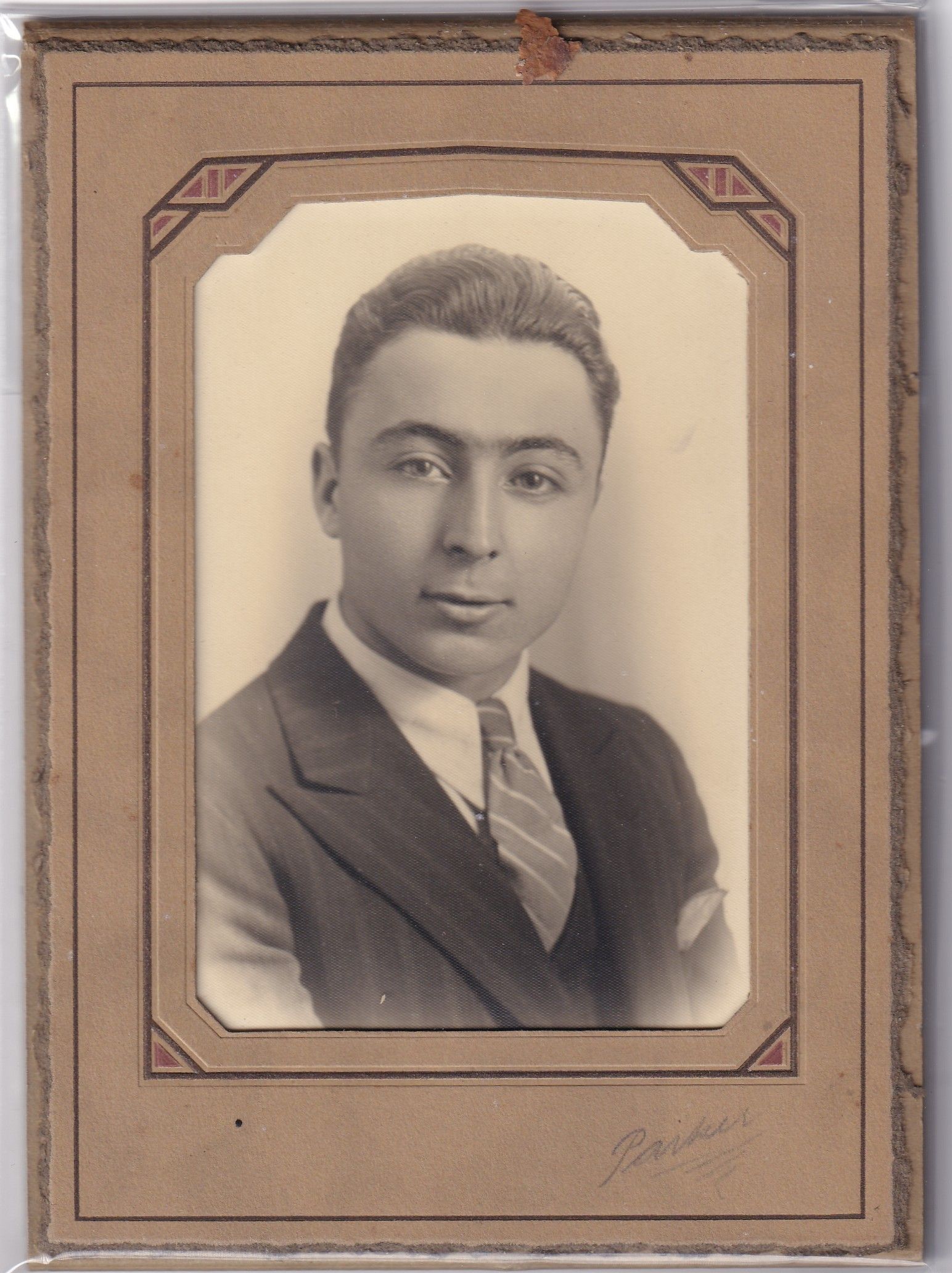
RE-PH-2026-0094
Gelatin Print – silver bromide
man
1920’s
1930’s
Unknown
circa 1928 – circa 1938
20th Century
While the studio is unidentified, the portrait’s refined lighting, careful retouching, and stylish Art Deco mount indicate a professional commercial studio operating during the late interwar period. Portraits of this type were commonly commissioned to mark milestones such as graduation, first employment, engagement announcements, or military service records. The Art Deco graphic elements suggest an urban or prosperous regional studio serving middle-class clients seeking modern, fashionable presentation. Such mounts were especially popular in the late 1920s and 1930s as photographic presentation shifted toward sleeker, design-forward aesthetics.
American; early 20th-century urban middle-class portraiture reflecting rising professional identity and modern masculine fashion of the interwar period. This portrait reflects the growing cultural importance of professional identity and personal presentation during the interwar period. Men’s fashion emphasized structure and refinement, projecting stability and ambition during a time marked by economic fluctuation between the Roaring Twenties and the Great Depression. Studio portraiture remained an important social ritual, providing families with tangible records of adulthood, success, and respectability.
Very Good
Mar 8, 2026
• Mount shows edge wear and surface abrasion • Minor foxing and discoloration along borders • Small loss at upper mount edge • Print remains strong with good contrast • Slight silvering in darker areas
Historical Note
This formal studio portrait from the interwar era depicts a young man presented in fashionable contemporary attire, emphasizing professionalism and modern masculine style. His tailored three-piece suit, striped necktie, and groomed coiffure reflect evolving standards of respectability and self-presentation in early twentieth-century America. The photograph’s geometric Art Deco mount mirrors broader design trends that embraced symmetry and stylized ornamentation. Such portraits served as visual markers of adulthood, career advancement, and family pride during a transformative period in American social history.