
Bodice (Evening or Visiting Bodice)
Clothing/Dress/Costume
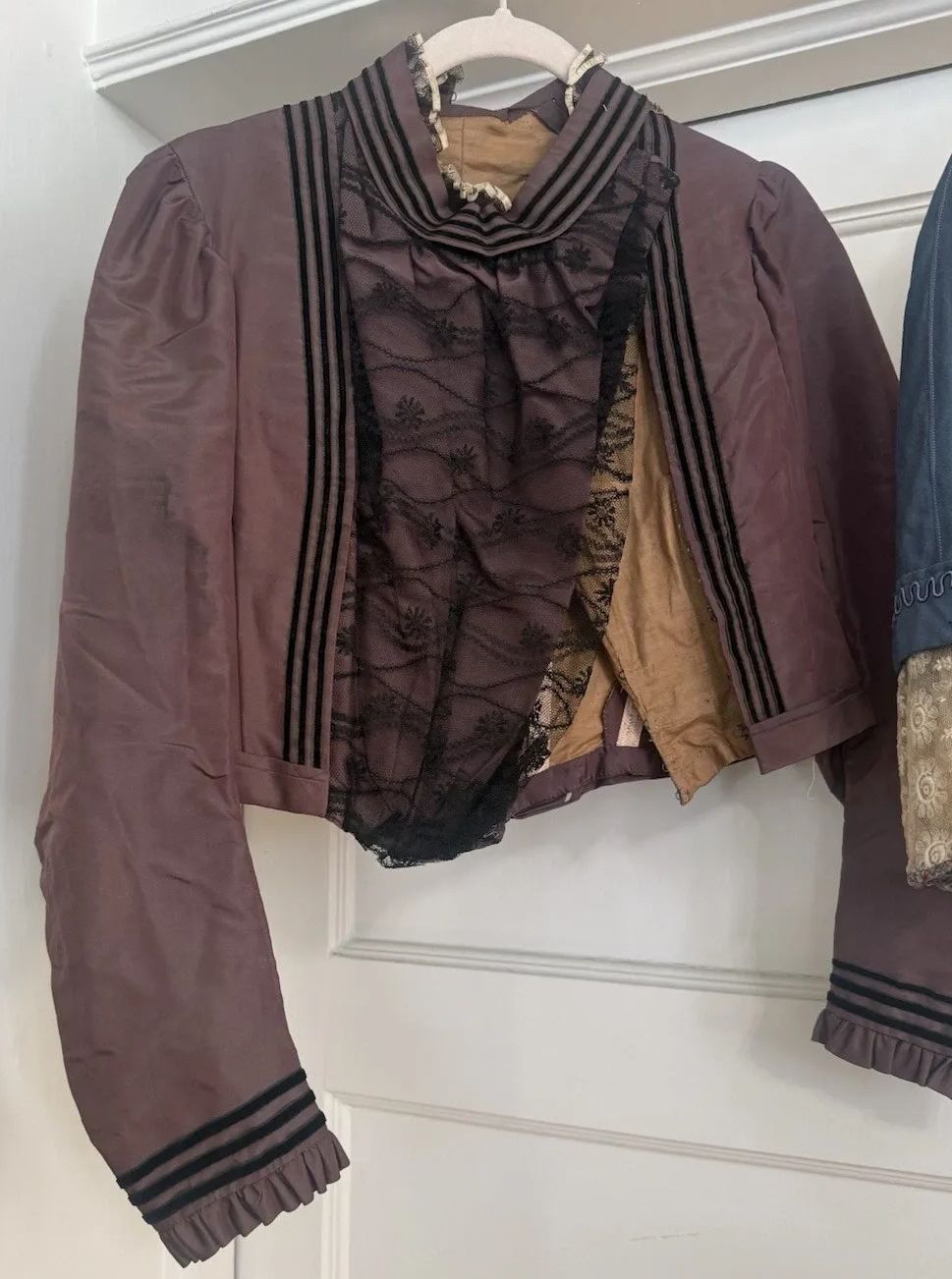
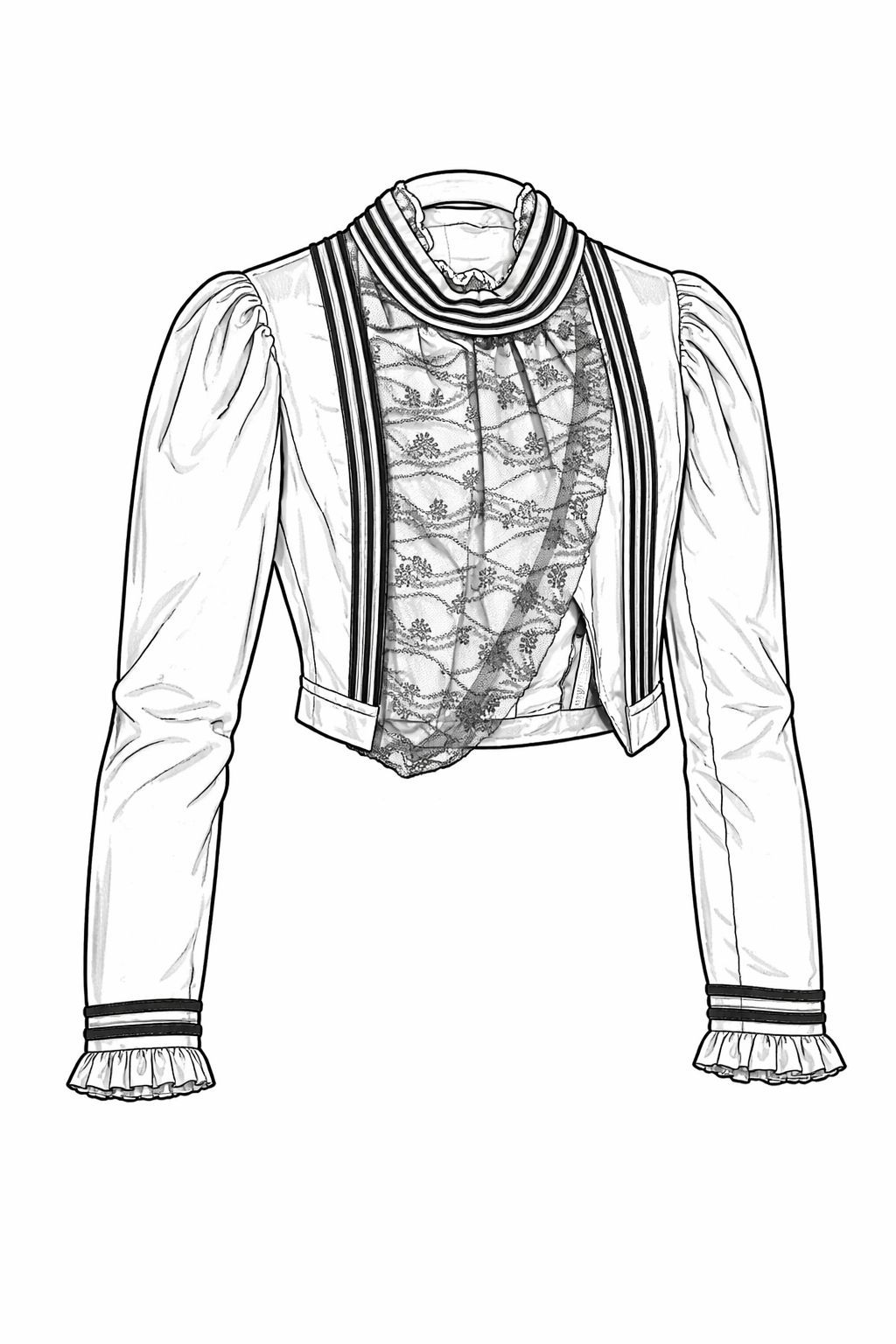
This tailored bodice exemplifies the refined yet transitional silhouette of the late Victorian and early Edwardian period. Constructed of mauve-plum silk taffeta, the garment features a fitted waist and softly gathered sleeves set into the shoulder, creating the characteristic fullness fashionable around the turn of the twentieth century. The sleeves taper toward the wrist and are finished with narrow applied velvet ribbon bands and a modest pleated cuff.

RE-CL-2026-0009
Bodice
1900’s
Late Victorian
Early Edwardian
Bodice
Female
Silk
Taffeta
Cotton
Maroon
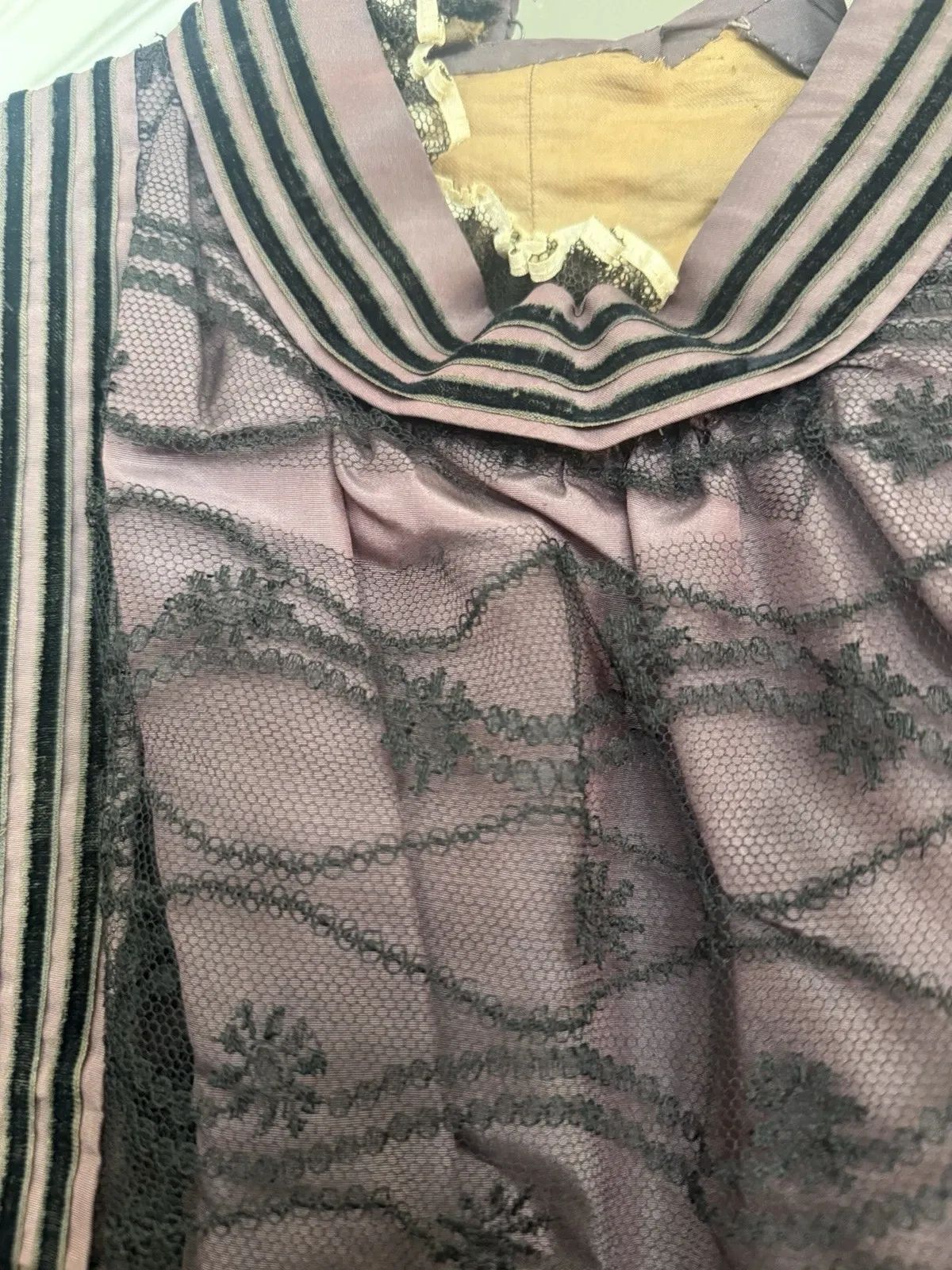
Construction Notes The bodice is constructed in multiple shaped panels, likely including side-front and side-back seams to achieve the closely fitted waist typical of the period. Seams appear to be machine-stitched, with hand finishing visible at interior edges and neckline. The lining is of glazed cotton, a tightly woven, slightly polished cotton commonly used in bodice interiors for structural support and durability. The lining likely contains narrow seam allowances pressed open and possibly finished with hand overcasting. The front closure is presumed to be center-front hook-and-eye fastenings (not visible but consistent with period construction). No boning channels are visible externally; however, light boning may be present within interior seams to maintain front rigidity and prevent wrinkling over a corseted torso. Velvet ribbon trim is applied by machine stitching along its edges. The lace panel is either flat-applied to a silk foundation or inset between front panels, functioning decoratively rather than structurally. Materials & Textile Characteristics Silk taffeta (outer fabric): Crisp hand, light sheen, and fine rib structure; typical of late 19th-century dress silks. The fabric exhibits signs of age-related stress and minor surface abrasion. Silk velvet ribbon: Narrow-width velvet bands applied decoratively. The matte pile contrasts with the sheen of the taffeta. Machine-made lace: Likely cotton, given the density and uniformity of the net ground. The pattern suggests commercially produced lace widely available circa 1890–1905. Glazed cotton lining: Provides structural stability and was commonly used in bodices that required firm shaping.
1898 – 1905
Victorian
Europe
American or European
Good
Feb 12, 2026
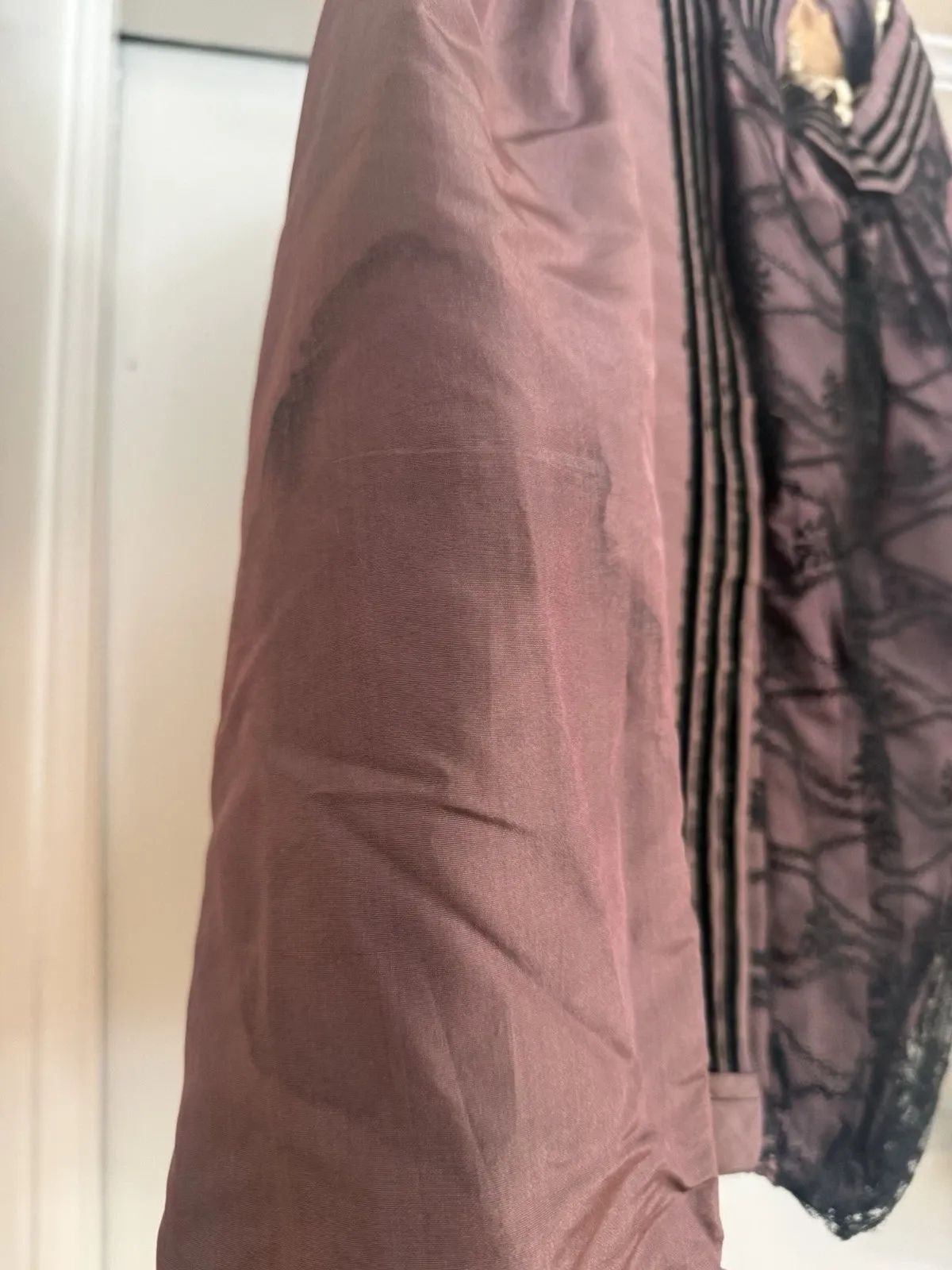
Visible moisture staining and discoloration appear on one sleeve, likely from historic storage conditions. The silk shows minor strain at stress points and some wrinkling from long-term hanging. The lining shows typical age toning. Silk taffeta of this era is prone to degradation, and careful storage (flat, acid-free support, minimal light exposure) is recommended.
Description
The center front is ornamented with a vertically inset panel of black machine-made lace applied over a matching silk ground. The lace features repeating festooned garlands and small stylized floral motifs in horizontal swags. Parallel vertical bands of black silk velvet ribbon frame this panel, emphasizing the elongated torso and corseted waist. A shallow sailor-style collar or capelet collar extends across the shoulders and is trimmed in graduated rows of applied velvet ribbon, visually echoing the front’s vertical lines. The long sleeves are set into the armscye with slight gathering at the sleeve head. Each cuff terminates in applied velvet ribbon bands and a narrow pleated taffeta frill, adding textural contrast and movement at the wrist. This bodice was likely part of a two-piece ensemble worn with a matching gored skirt. Its refined yet restrained decorative scheme—linear velvet trim, sheer lace inset, and muted coloration—suggests use as a visiting or afternoon bodice suitable for social calls or small gatherings. The interplay of matte and sheen, opacity and transparency, demonstrates the sophisticated textile layering fashionable at the turn of the twentieth century.