
Edwardian Sheer Silk Lingerie Dress
Clothing/Dress/Costume
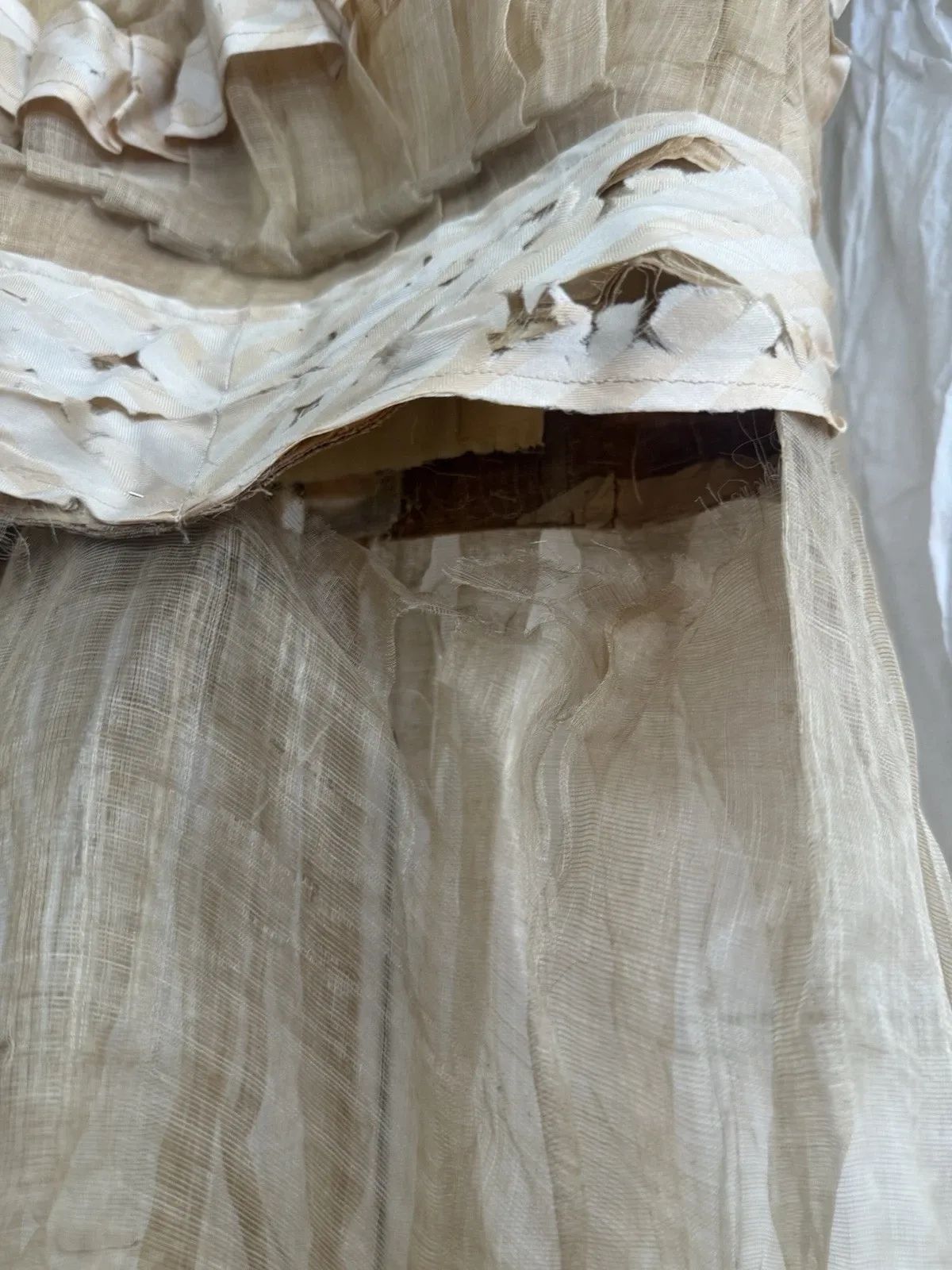
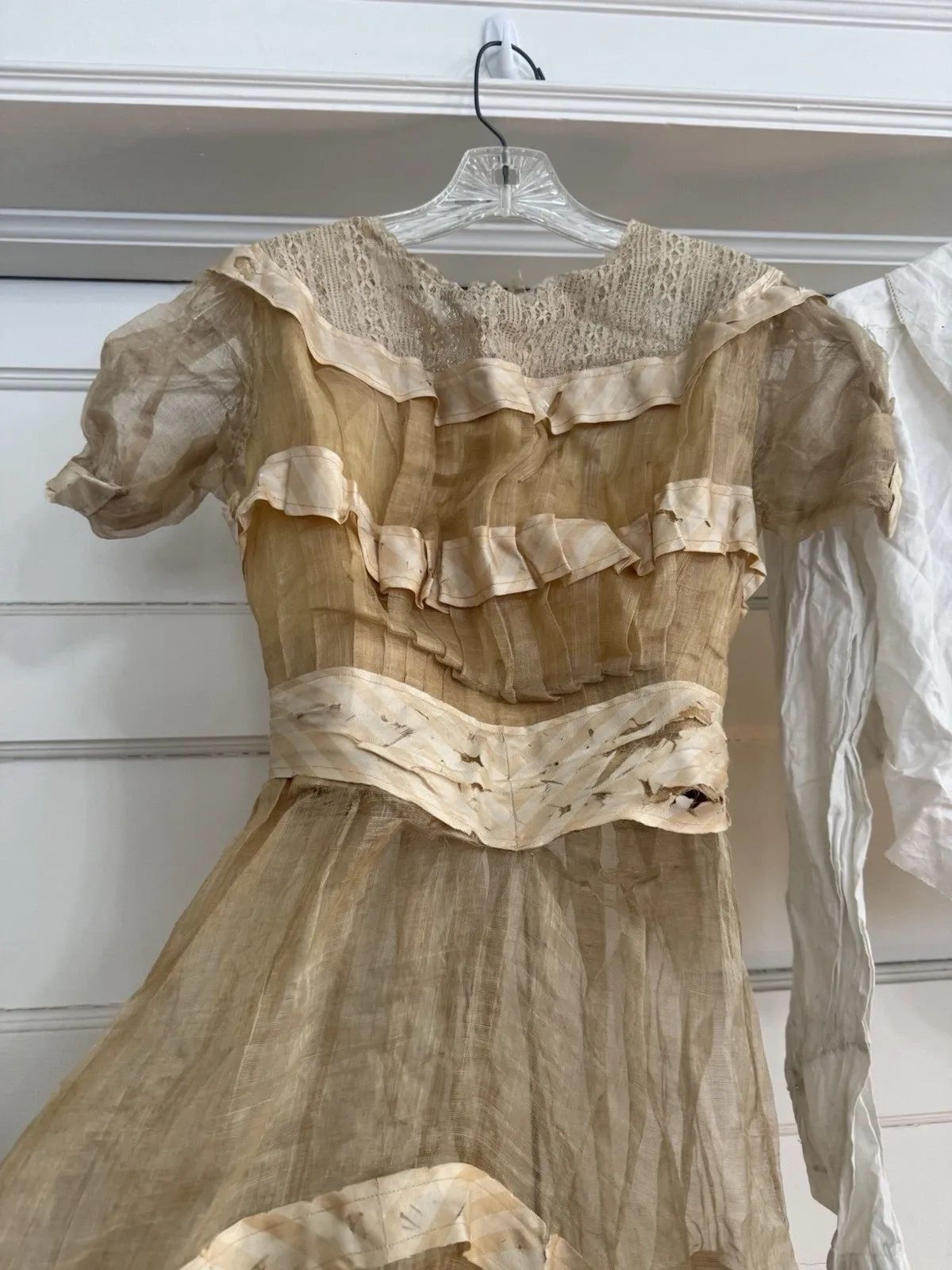
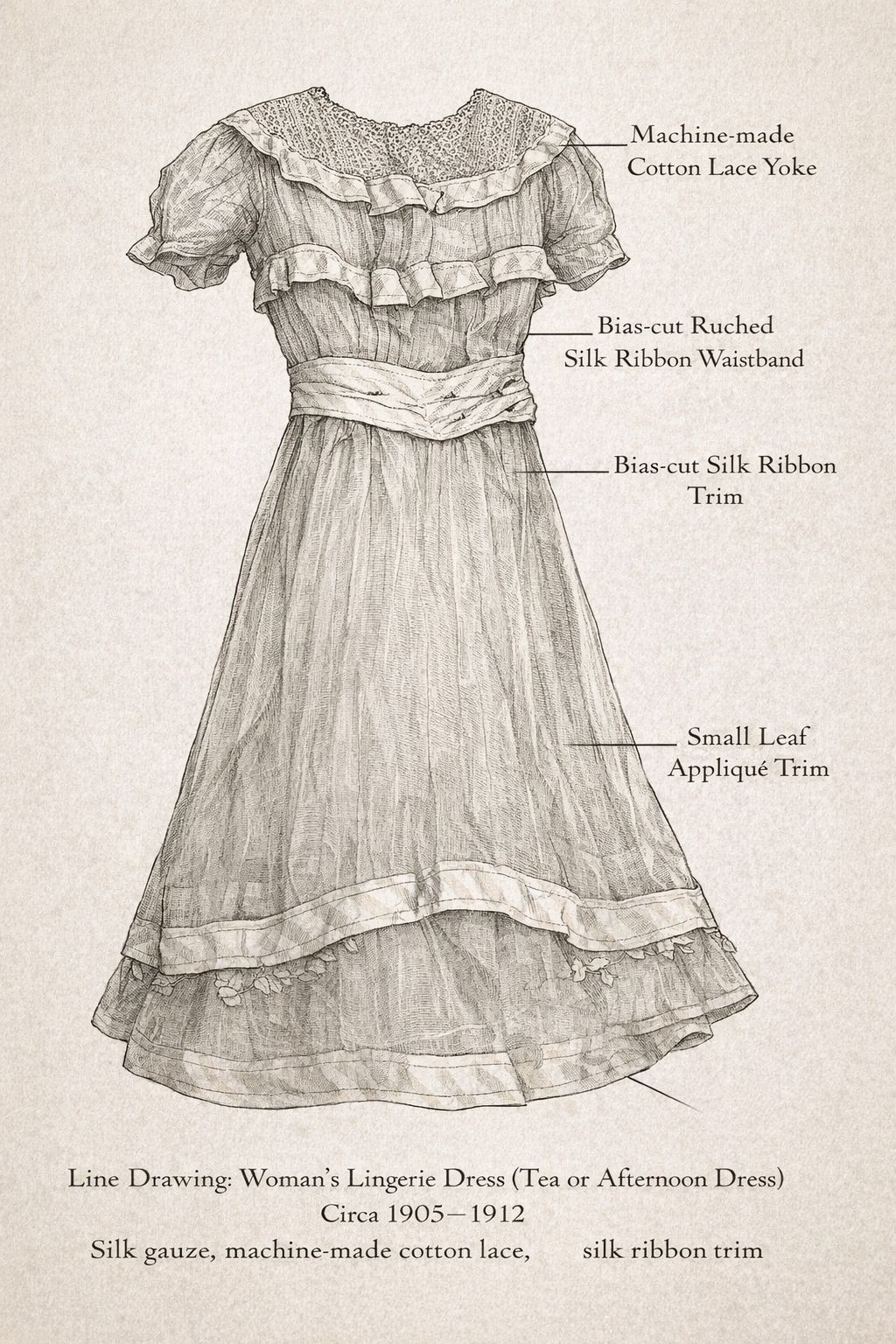
A sheer, pale ivory silk gauze lingerie dress composed of a fitted bodice and lightly flared skirt, constructed for wear over a corseted foundation. The bodice features a broad lace yoke panel across the shoulders and upper chest, executed in machine-made cotton lace typical of the early twentieth century. Short, softly gathered sleeves of transparent silk terminate above the elbow. Horizontal bands of bias-cut silk ribbon trim articulate the bodice and waist, forming a structured visual emphasis at the midsection. A wide ribbon waistband encircles the waist, originally providing both decorative contrast and structural reinforcement. The skirt falls in a gentle A-line, maintaining the vertical softness characteristic of the Edwardian silhouette. Decorative applied trim in the form of small leaf-like elements appears along the lower skirt band, further emphasizing the garment’s light, romantic aesthetic. The interior reveals a fitted cotton waistband, confirming proper period construction and intended wear over supportive undergarments.
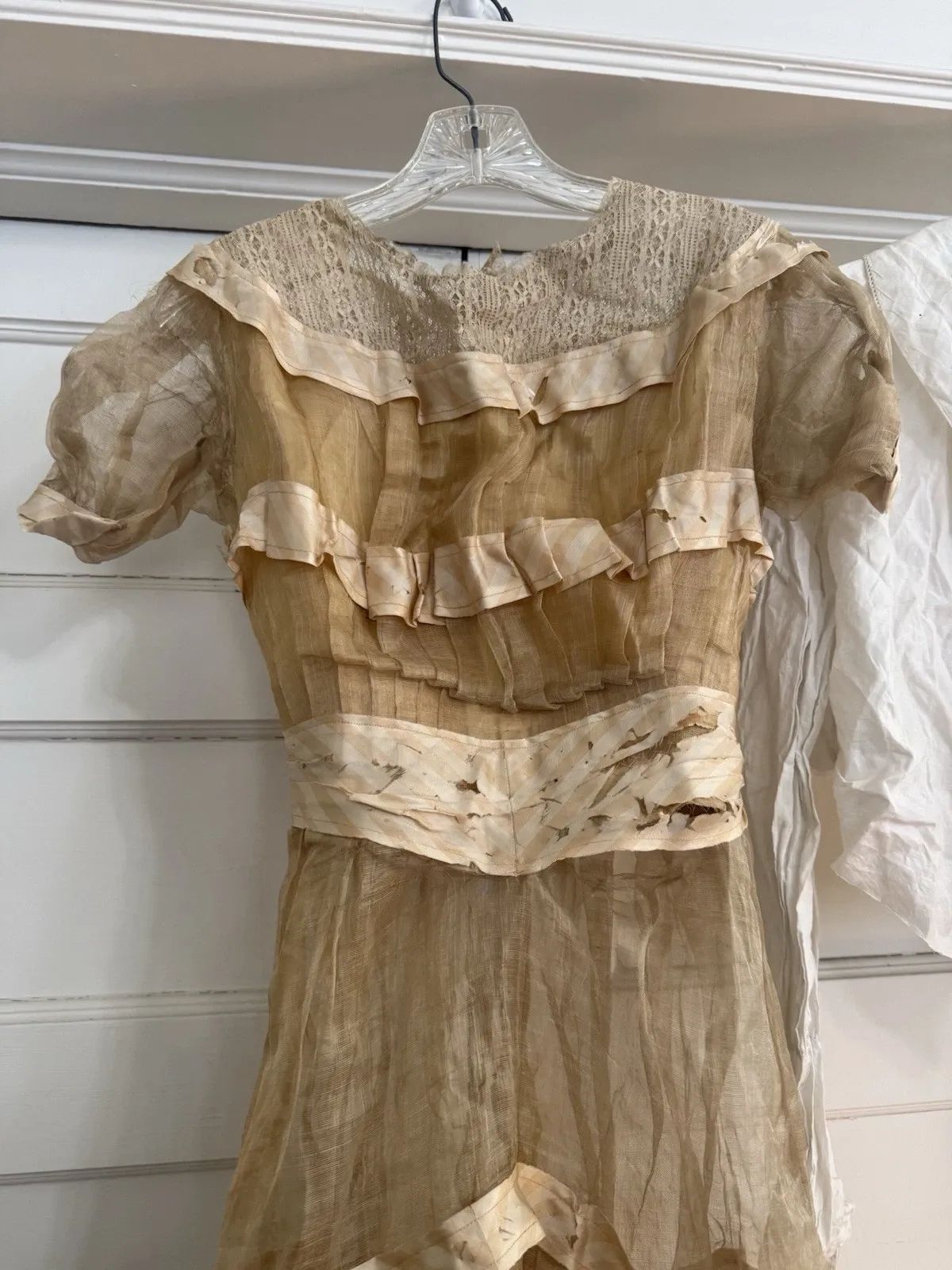 Edwardian Sheer Silk Lingerie Dress
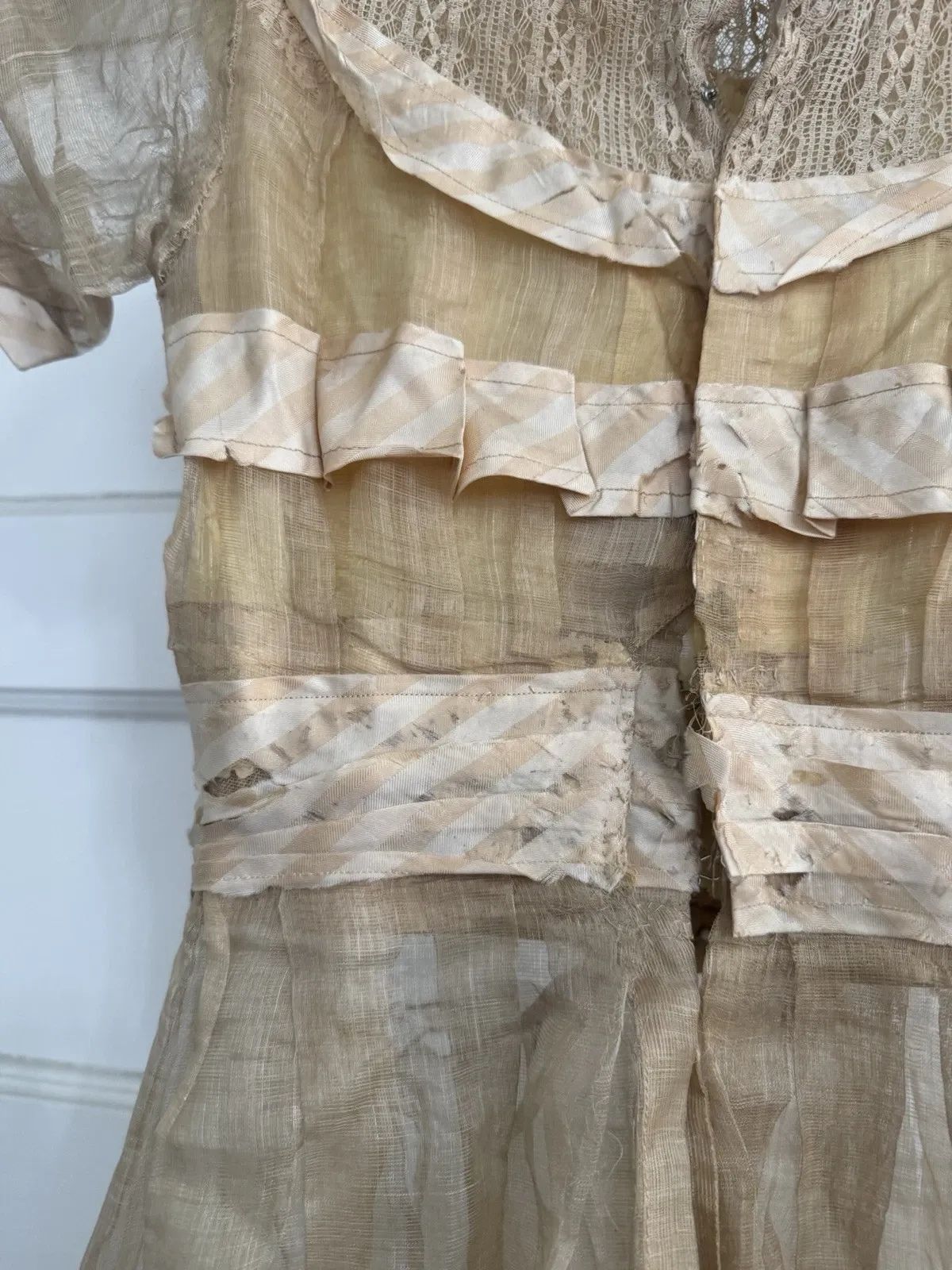 Edwardian Sheer Silk Lingerie Dress – Image 2
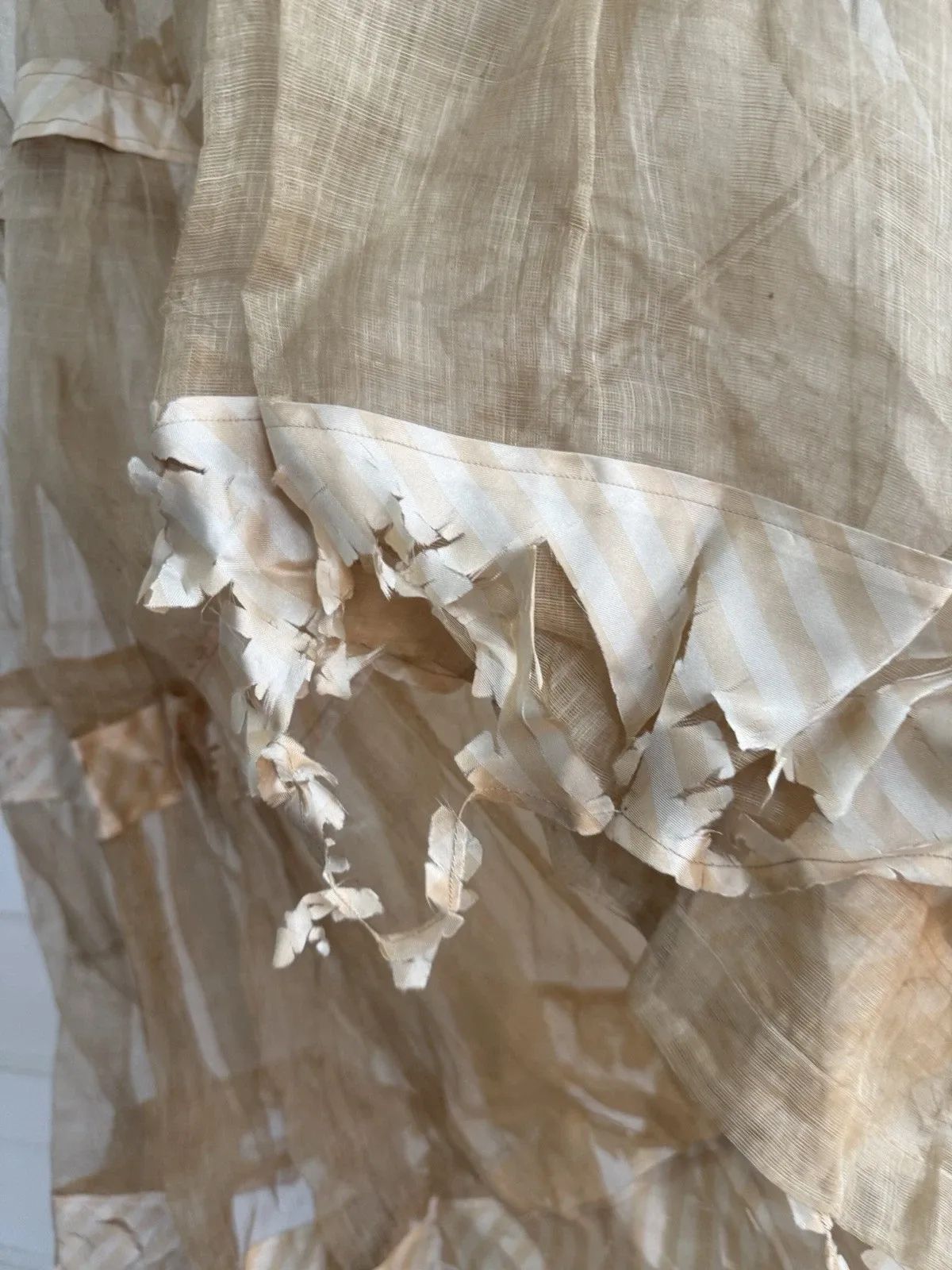 Edwardian Sheer Silk Lingerie Dress – Image 3
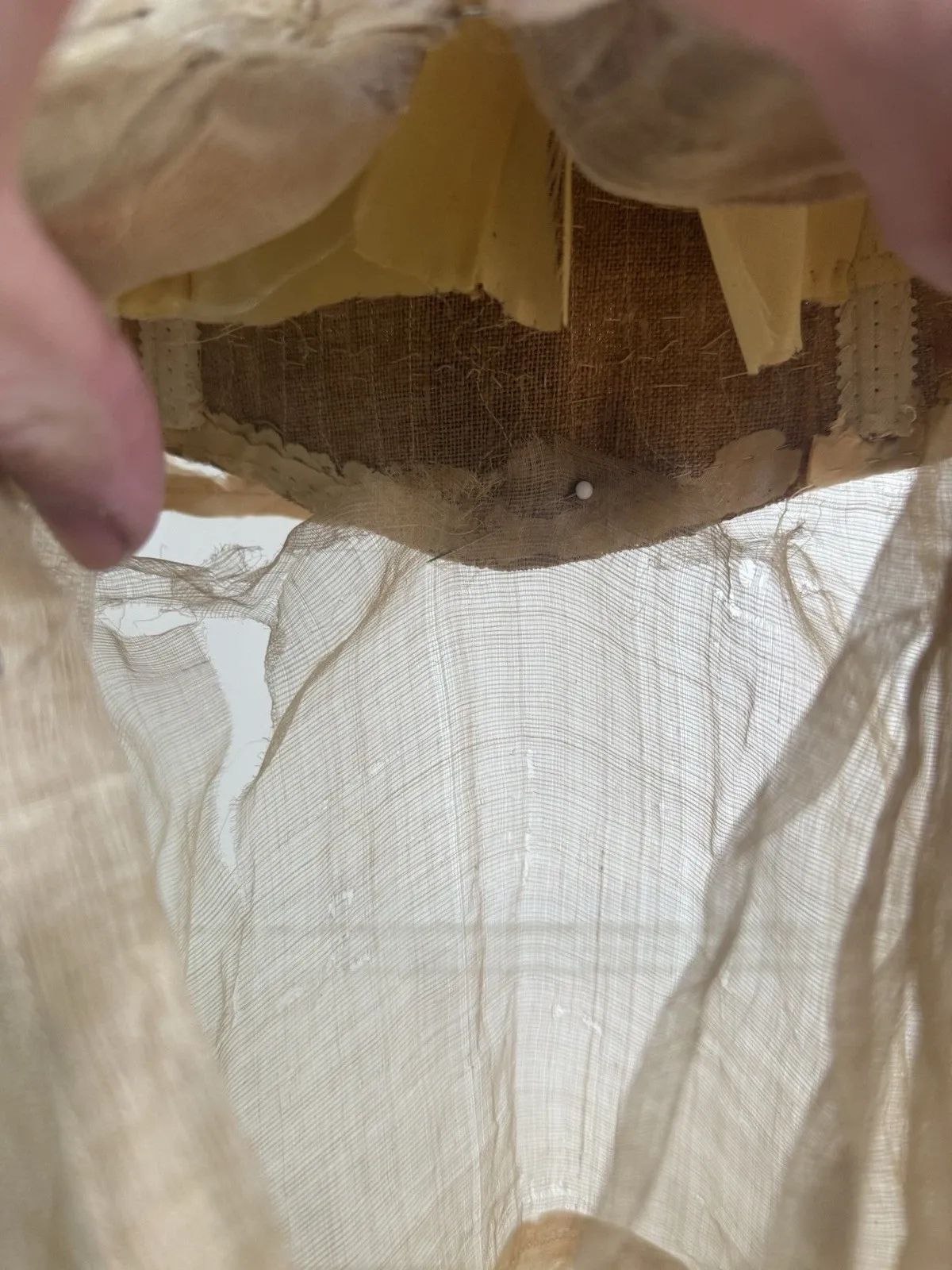 Edwardian Sheer Silk Lingerie Dress – Image 4
 Edwardian Sheer Silk Lingerie Dress – Image 5
 Edwardian Sheer Silk Lingerie Dress – Image 6
 Edwardian Sheer Silk Lingerie Dress – Image 7
 Edwardian Sheer Silk Lingerie Dress – Image 8
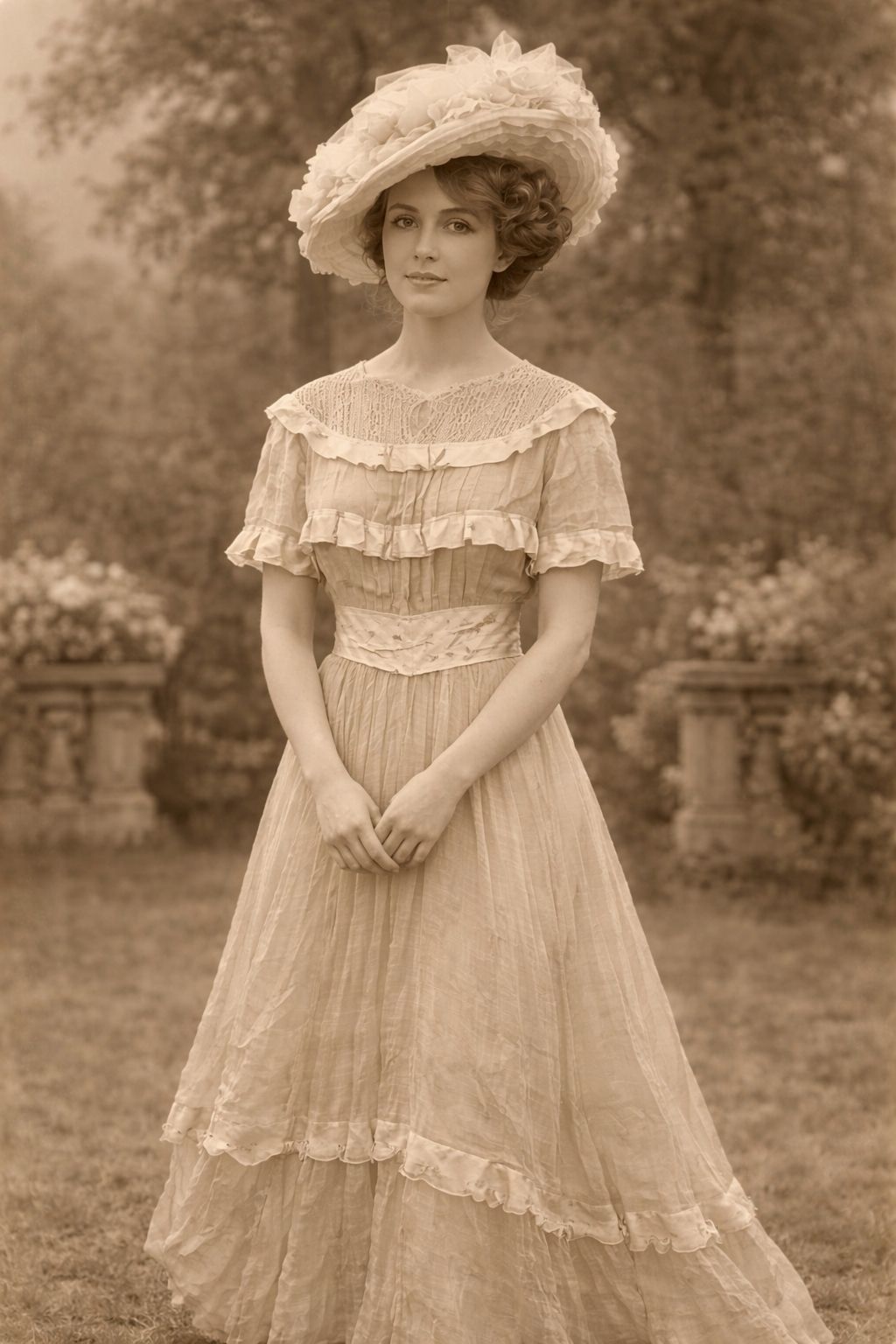 Edwardian Sheer Silk Lingerie Dress – Image 9
RE-CL-2026-0010
Dress
Early Edwardian
1900’s
Dress
Female
Silk
Cotton
Cotton
White
Brown
Materials Silk gauze (outer layer), cotton machine lace (yoke), silk ribbon/faille trim, interior cotton waistband Techniques Machine stitching; applied lace insertion; bias-cut ribbon trim; gathered and pleated construction Construction Analysis The silk gauze outer layer is finely woven and semi-transparent. Ribbon trim is cut on the bias, visible in the diagonal weave orientation. Machine stitching indicates early twentieth-century industrial garment production. Interior cotton waistband provides structural integrity and weight distribution. Lace appears to be machine-made cotton, consistent with mass-produced Edwardian trims. The garment was likely commercially produced rather than entirely home-sewn, though finishing techniques suggest careful assembly
1905 – 1912
Edwardian
Europe
American or Western European
Poor
Feb 12, 2026
The garment exhibits extensive silk shattering, particularly in the ribbon trim and bodice panels. The silk fibers have undergone oxidation and structural degradation typical of early twentieth-century weighted silk. Condition issues include: Significant fiber fragmentation Ribbon disintegration Structural weakening at seams Loss of tensile strength in primary textile areas The garment is no longer wearable and should not be displayed under tension.
Historical Note
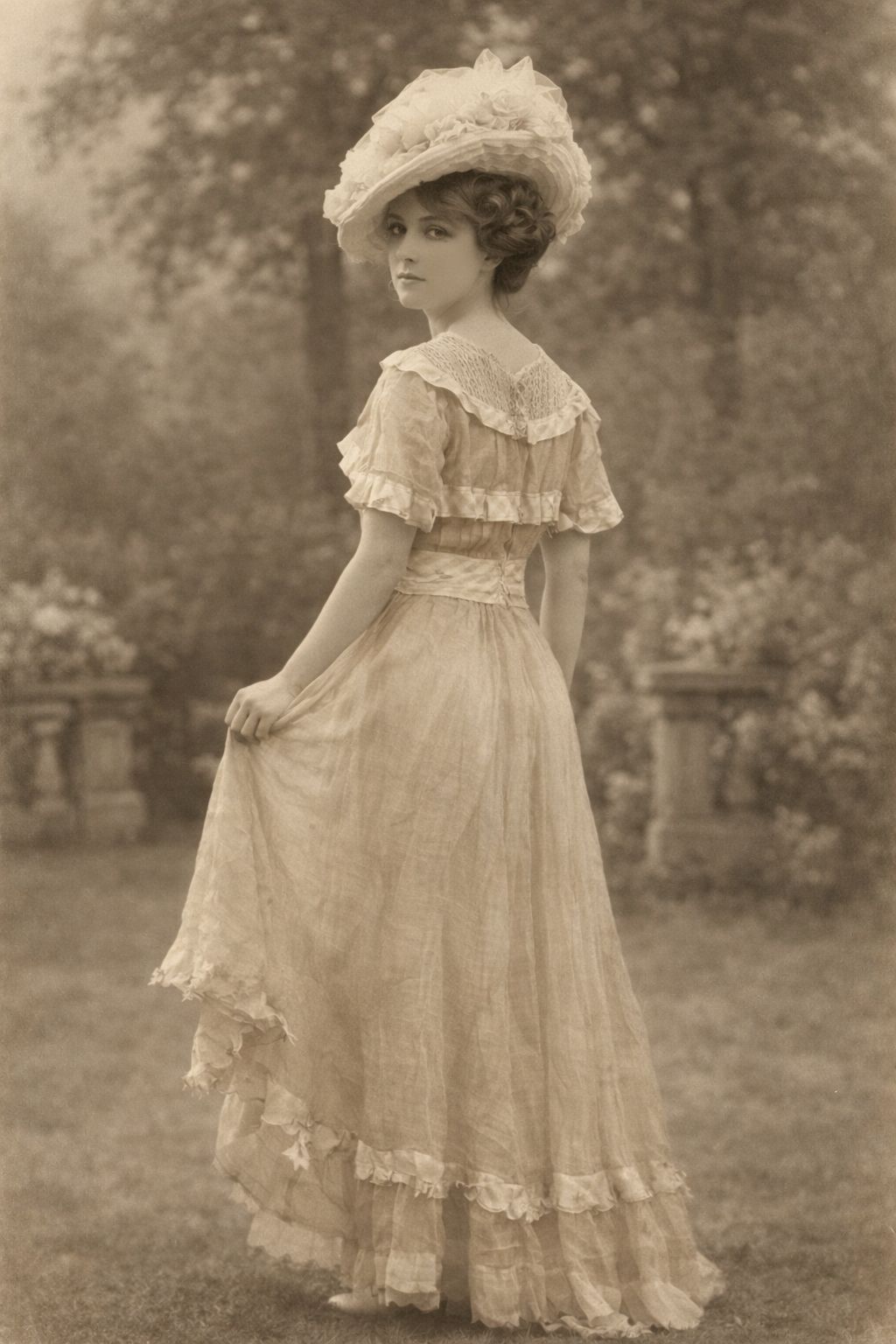
This garment represents the Edwardian “lingerie dress,” a style popular from approximately 1900 through the early 1910s. Such dresses were constructed from lightweight, often sheer textiles including silk gauze, voile, lawn, and fine cotton, and were designed to convey delicacy, refinement, and modern femininity. The lingerie dress was typically worn for: Afternoon social call Garden parties Summer promenades Informal domestic entertaining These garments relied on structured underpinnings—most notably the S-curve corset—to achieve the fashionable silhouette of the period. The softened waistline and lightly flared skirt reflect the transition away from rigid Victorian tailoring toward the ethereal aesthetic associated with the Belle Époque. The combination of lace yoke and sheer silk was emblematic of early twentieth-century taste, merging modest coverage with visual transparency. Despite advanced deterioration, this dress remains a valuable study piece illustrating: Edwardian feminine dress construction The popularity of sheer textiles in early 20th century fashion The fragility of weighted silk fabrics Transitional design aesthetics between Victorian rigidity and pre–World War I softness It serves as an important artifact of everyday gentility during the Belle Époque and offers insight into both textile technology and social customs of the period.