
Edwardian White Cotton Shirtwaist Blouse
Clothing/Dress/Costume
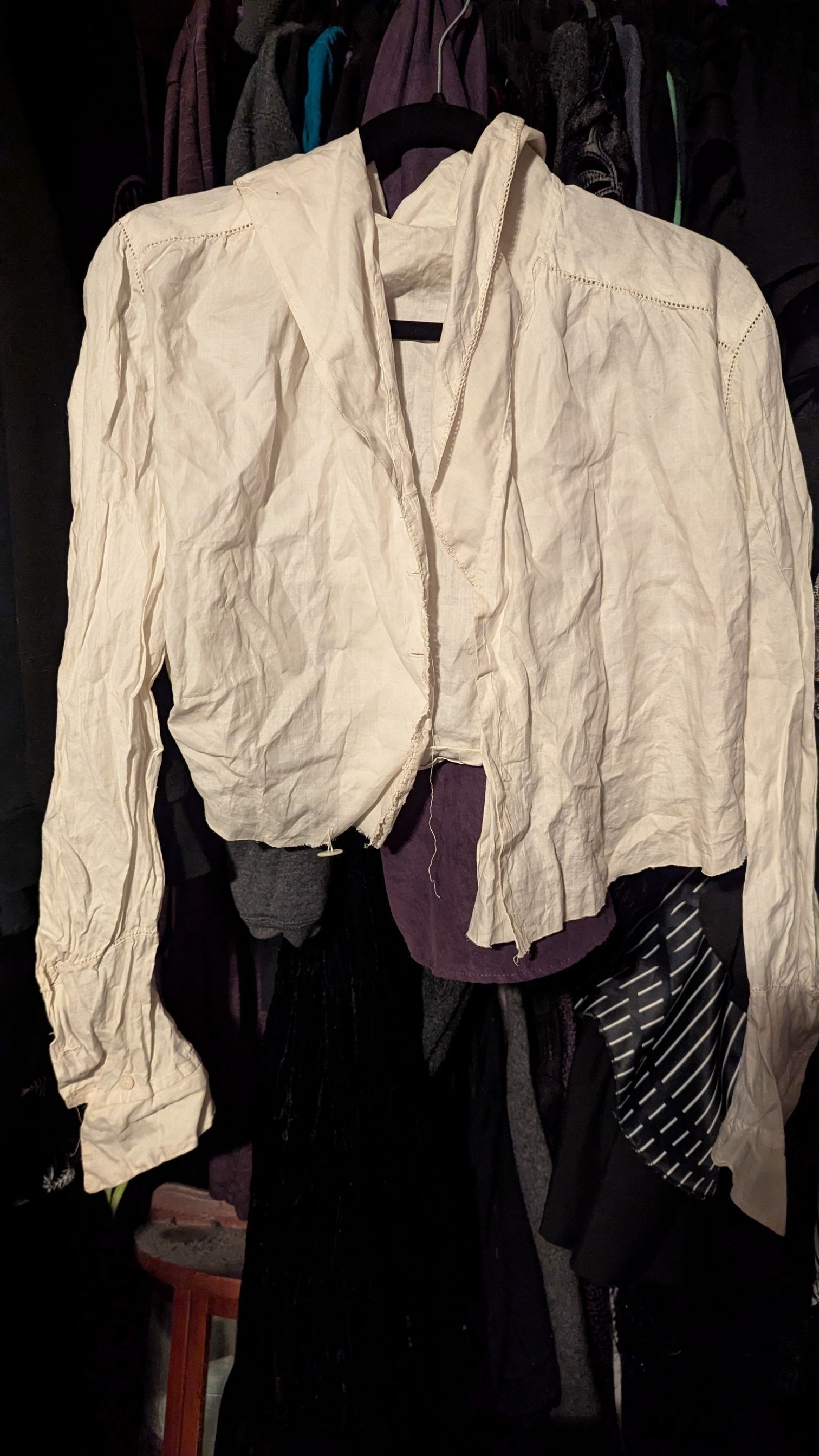
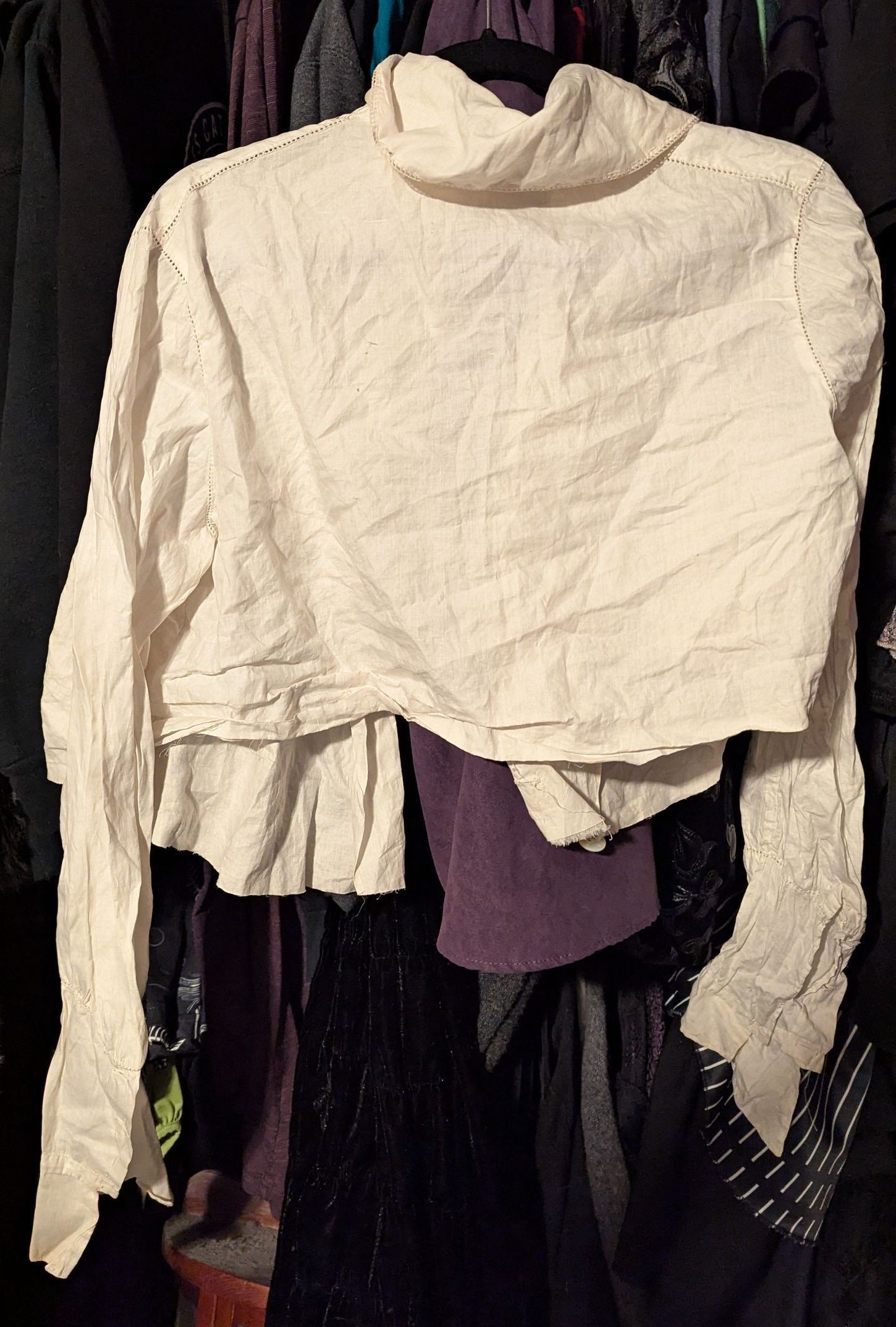
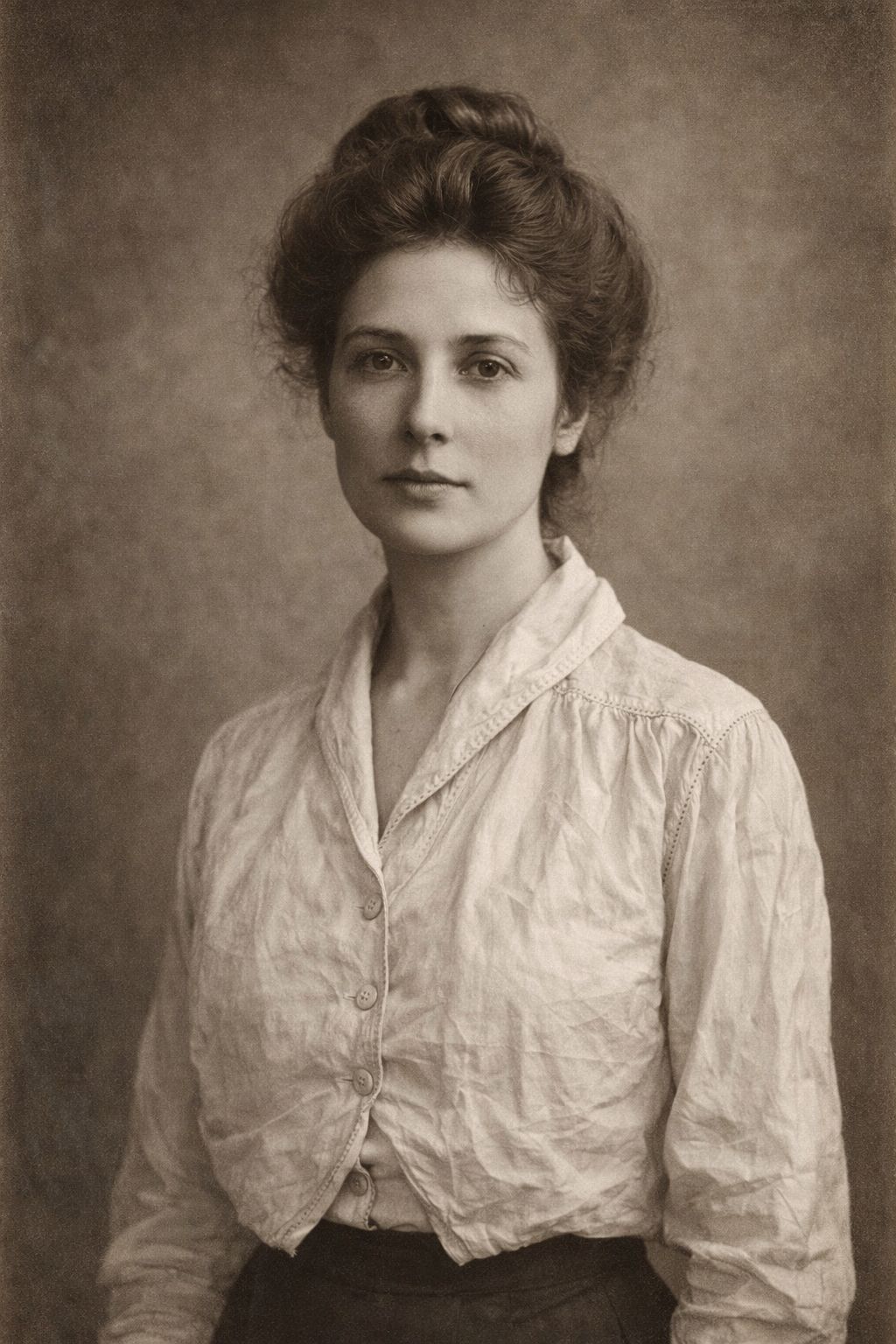
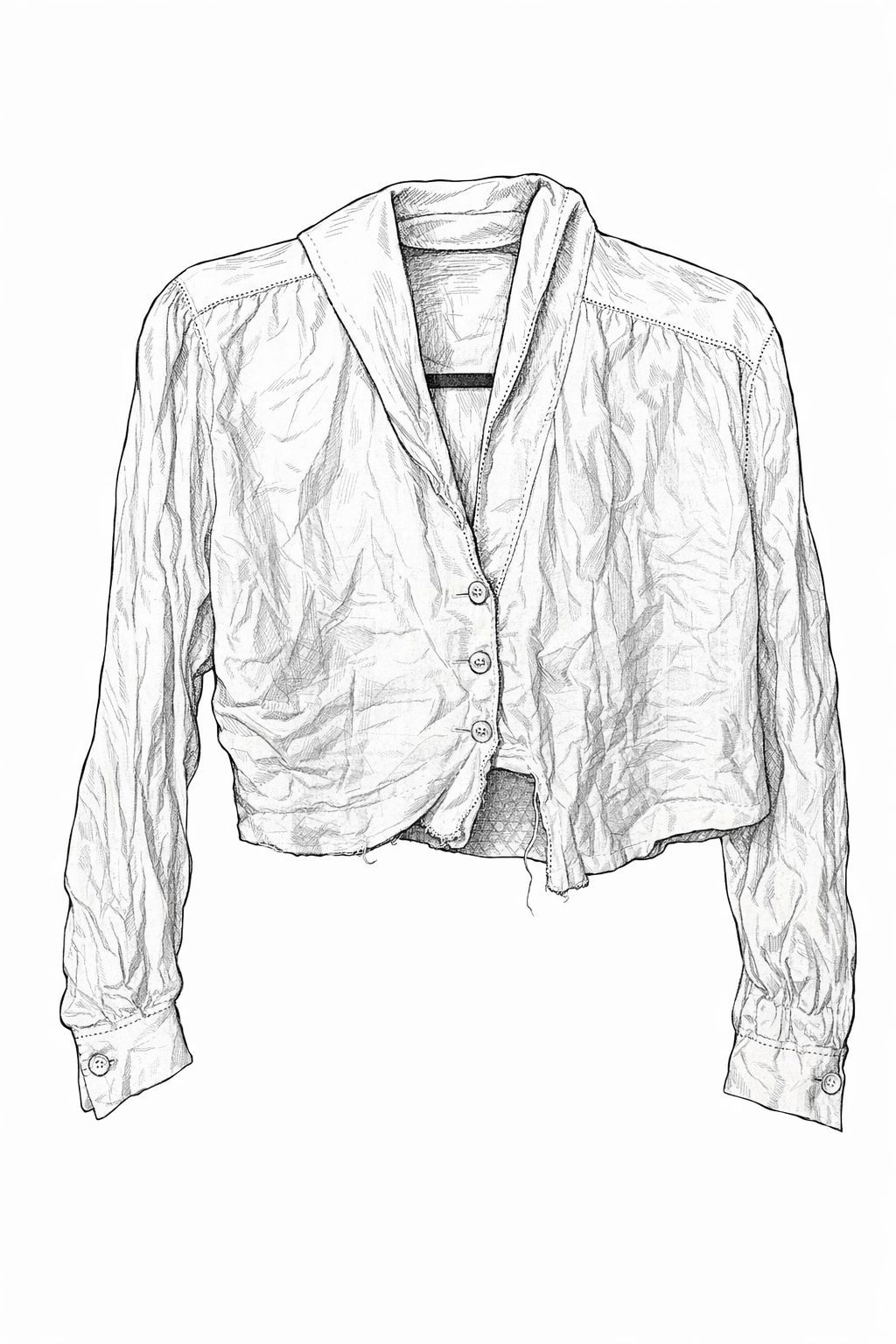
A white cotton Edwardian shirtwaist featuring long sleeves, plain cuffs, a soft fold-over collar, front button closure, and delicate insertion stitching along shoulder seams. Circa 1900–1915.
RE-CL-2026-0016
Shirt
Edwardian
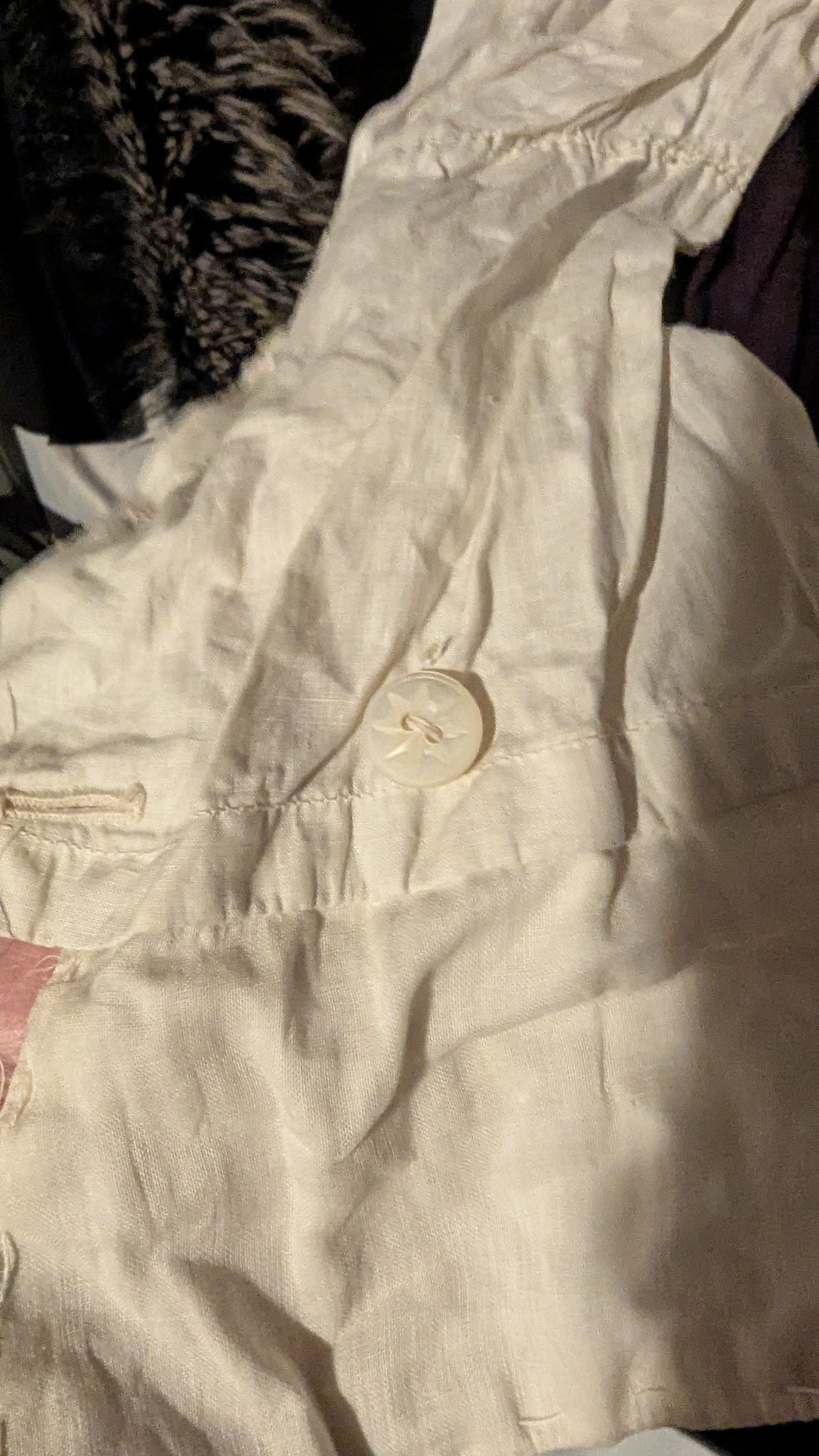
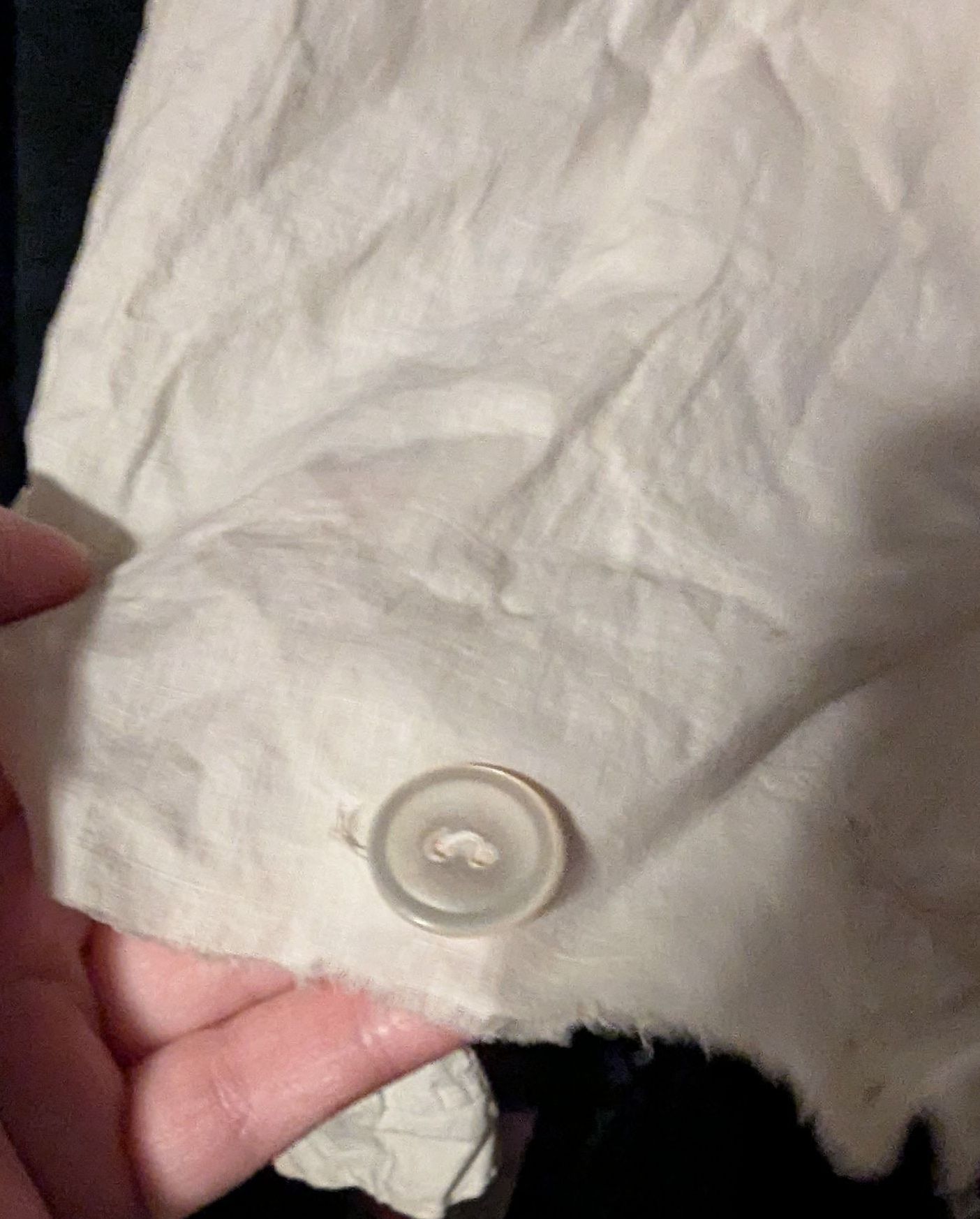
Textile & Construction Details Fabric: Lightweight white cotton (likely lawn or fine muslin) Weave: Plain weave Closure: Front button closure (translucent celluloid or early composition buttons) Collar: Soft fold-over collar (possibly once worn with detachable collar support) Sleeves: Long sleeves with narrow cuffs, lightly gathered at wrist Seam Treatment: Fine machine stitching Insertion stitching (decorative openwork seam) at shoulder Hand-finished interior seams likely present (common in this era) Hem: Straight hem; appears shortened or unfinished at lower edge (possibly altered) Manufacturing Notes This garment shows characteristics of early 20th-century machine production, but with finishing techniques typical of transitional domestic dressmaking. The button style suggests: Early celluloid (introduced late 19th century) Or mother-of-pearl imitation composition The clean tailoring and minimal embellishment suggest: Practical daywear Possibly for middle-class urban wear Could also have been worn as a working blouse
circa 1900 – circa 1915
Edwardian Era (late transitional Victorian influence)
This blouse reflects the shift from late Victorian corseted bodices to the more relaxed Edwardian “shirtwaist” silhouette. Shirtwaists became: A symbol of the modern woman Associated with clerical workers, teachers, students Popular among suffrage-era women Widely worn between 1895–1915 The clean white cotton style indicates: Respectability Modesty Practicality Ease of laundering White blouses were extremely common in period photography — especially cabinet cards and studio portraits — making this garment highly relevant to your photographic archive context.
Very Good
Mar 3, 2026
Wrinkling from storage Slight fraying at hem Minor wear at cuff edges No obvious staining in photos Buttons intact
Historical Note
This white cotton shirtwaist represents the transitional dress reform period at the turn of the 20th century. Unlike heavily boned Victorian bodices, the Edwardian shirtwaist emphasized practicality and emerging female independence. Constructed from lightweight cotton with subtle decorative insertion stitching at the shoulders, the garment reflects early machine sewing combined with traditional finishing methods. Such blouses were foundational garments of the Edwardian wardrobe and frequently appear in studio portraiture from 1900–1915. The simplicity of design underscores its function as a daily-wear garment, yet its crisp tailoring conveys the aesthetic ideals of modesty and refinement associated with the era. This example survives with original buttons and intact structure, offering a tangible connection to early modern womanhood at the dawn of the 20th century.