
Late Victorian women’s bodice
Clothing/Dress/Costume
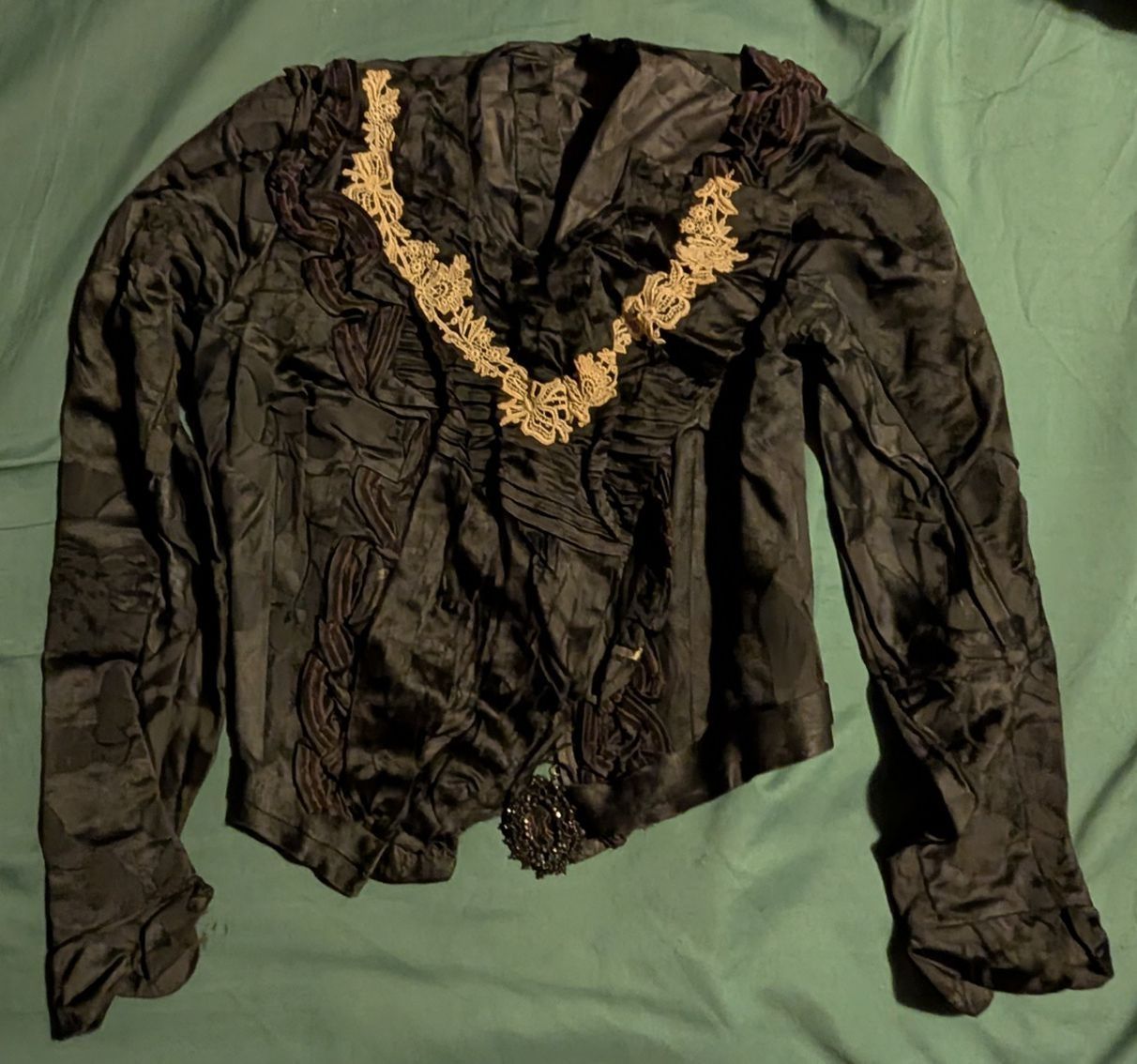
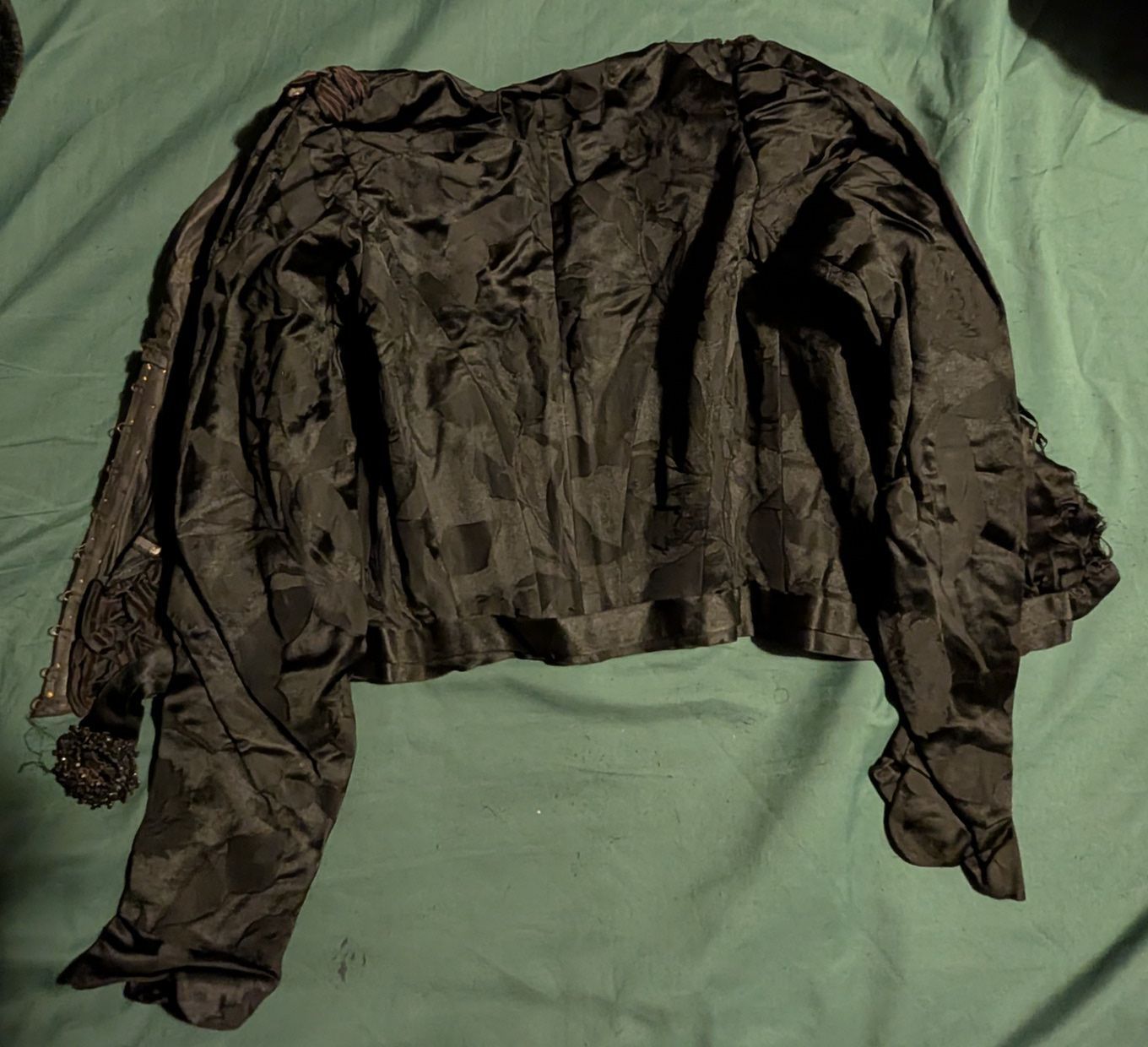
This is a late Victorian women’s bodice, most likely dating to c. 1895–1905, designed to be worn as part of a structured outfit (skirt worn separately). It sits right at the transition from true Victorian into early Edwardian styling.
 Late Victorian women’s bodice
 Late Victorian women’s bodice – Image 2
 Late Victorian women’s bodice – Image 3
 Late Victorian women’s bodice – Image 4
 Late Victorian women’s bodice – Image 5
 Late Victorian women’s bodice – Image 6
 Late Victorian women’s bodice – Image 7
 Late Victorian women’s bodice – Image 8
 Late Victorian women’s bodice – Image 9
RE-CL-2026-002
Bodice
1900’s
Late Victorian
Woman
Lace Bodice
Mourning
Bodice
Female
Taffeta
Cotton
Silk
Beads
Cotton
Black
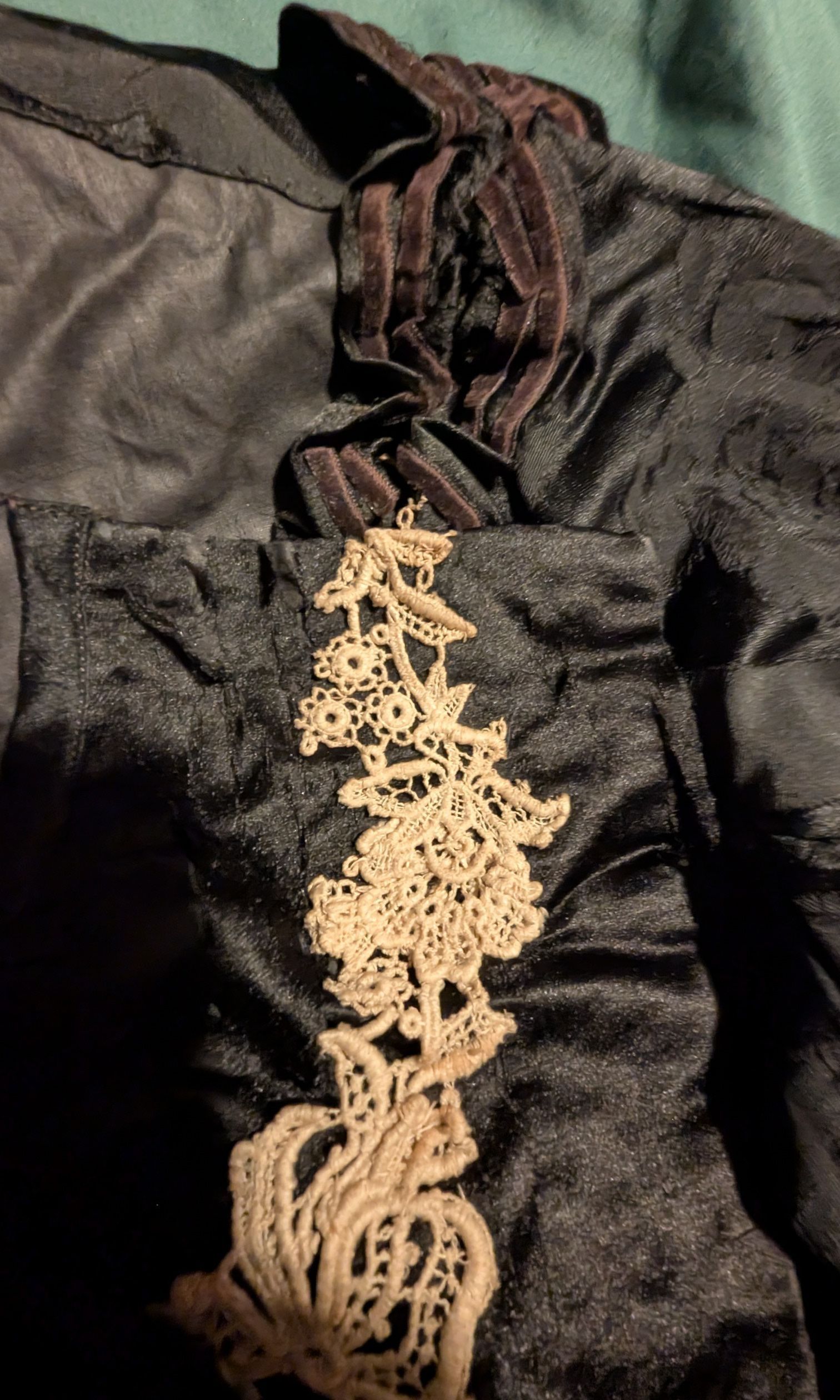
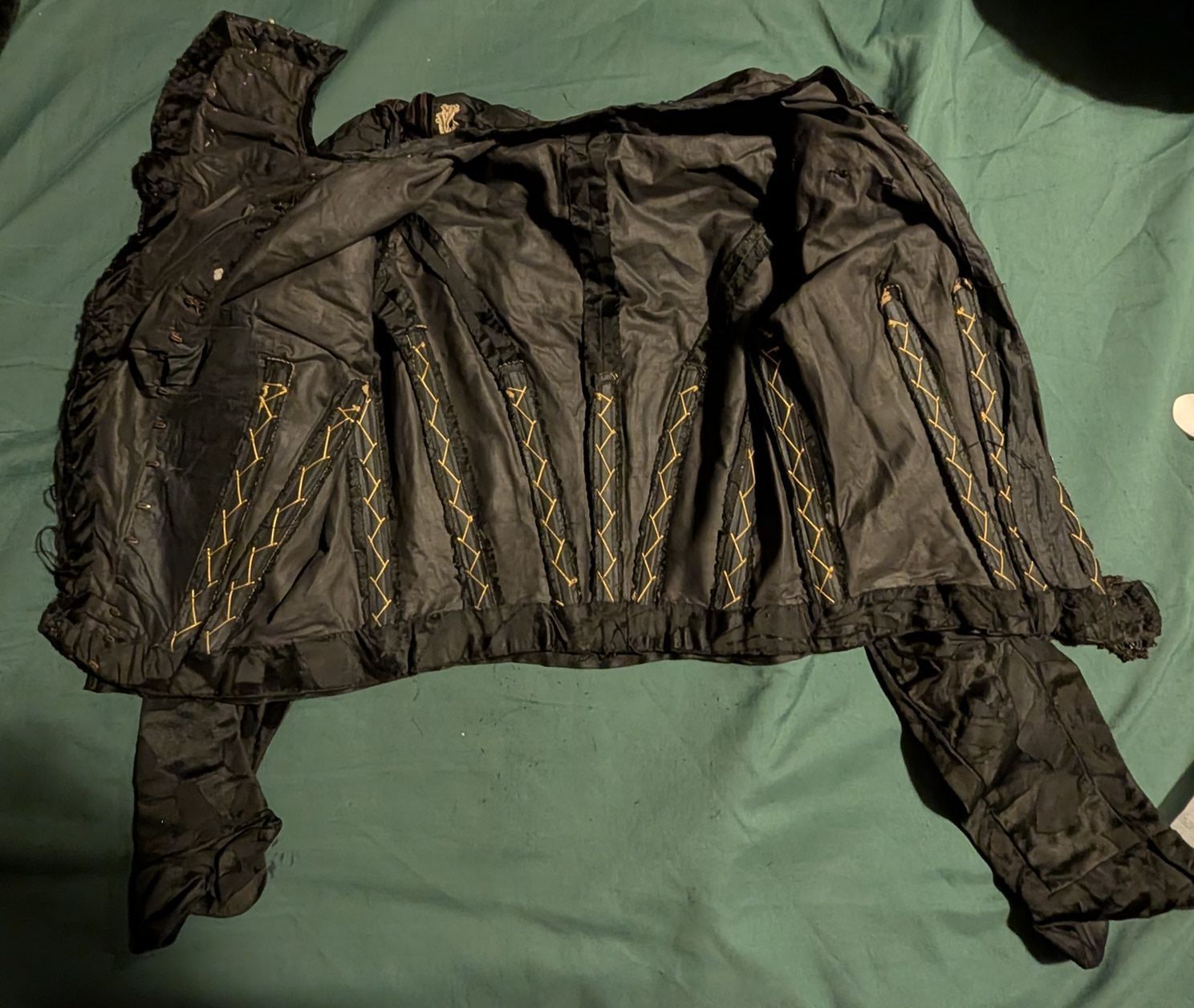
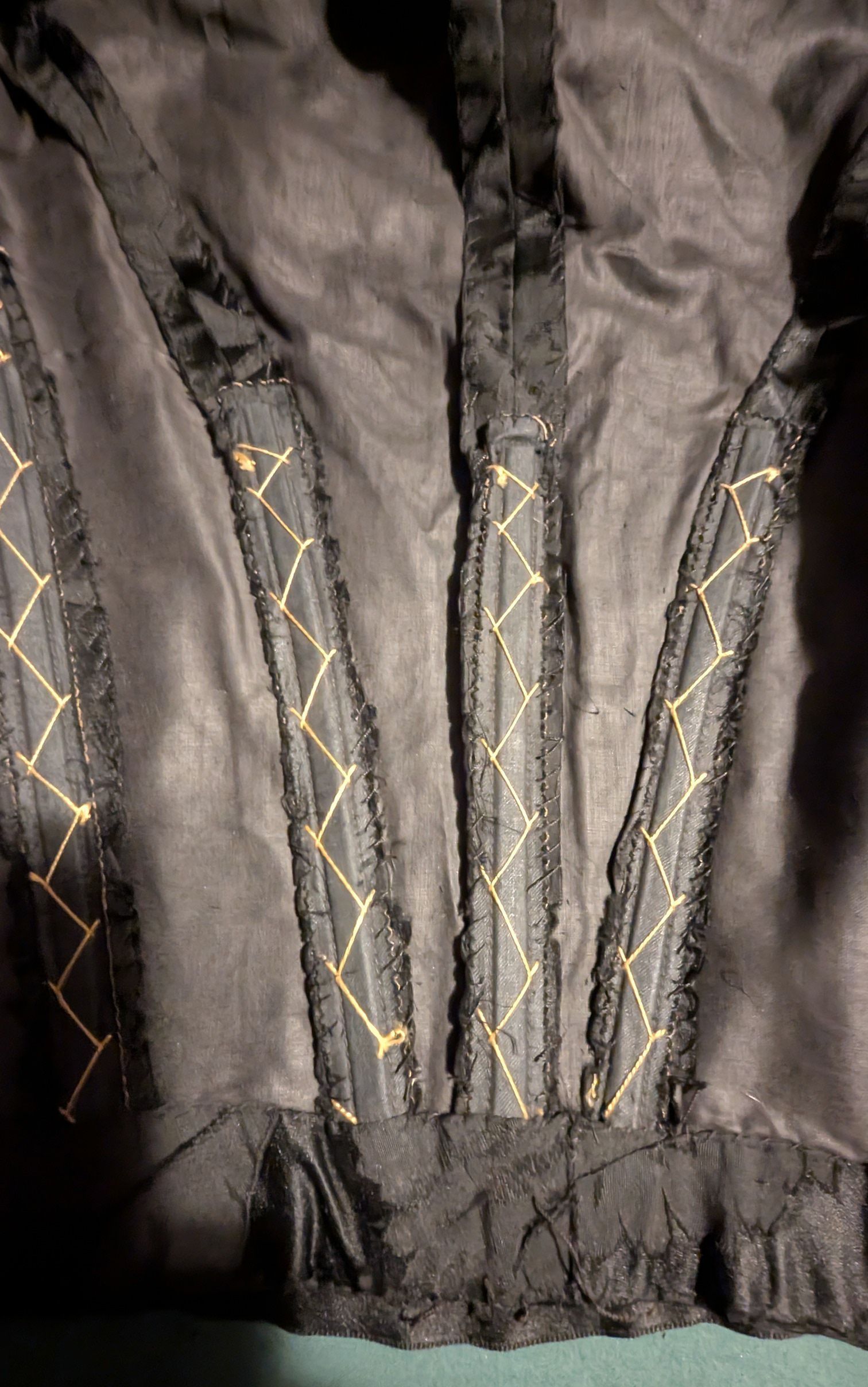
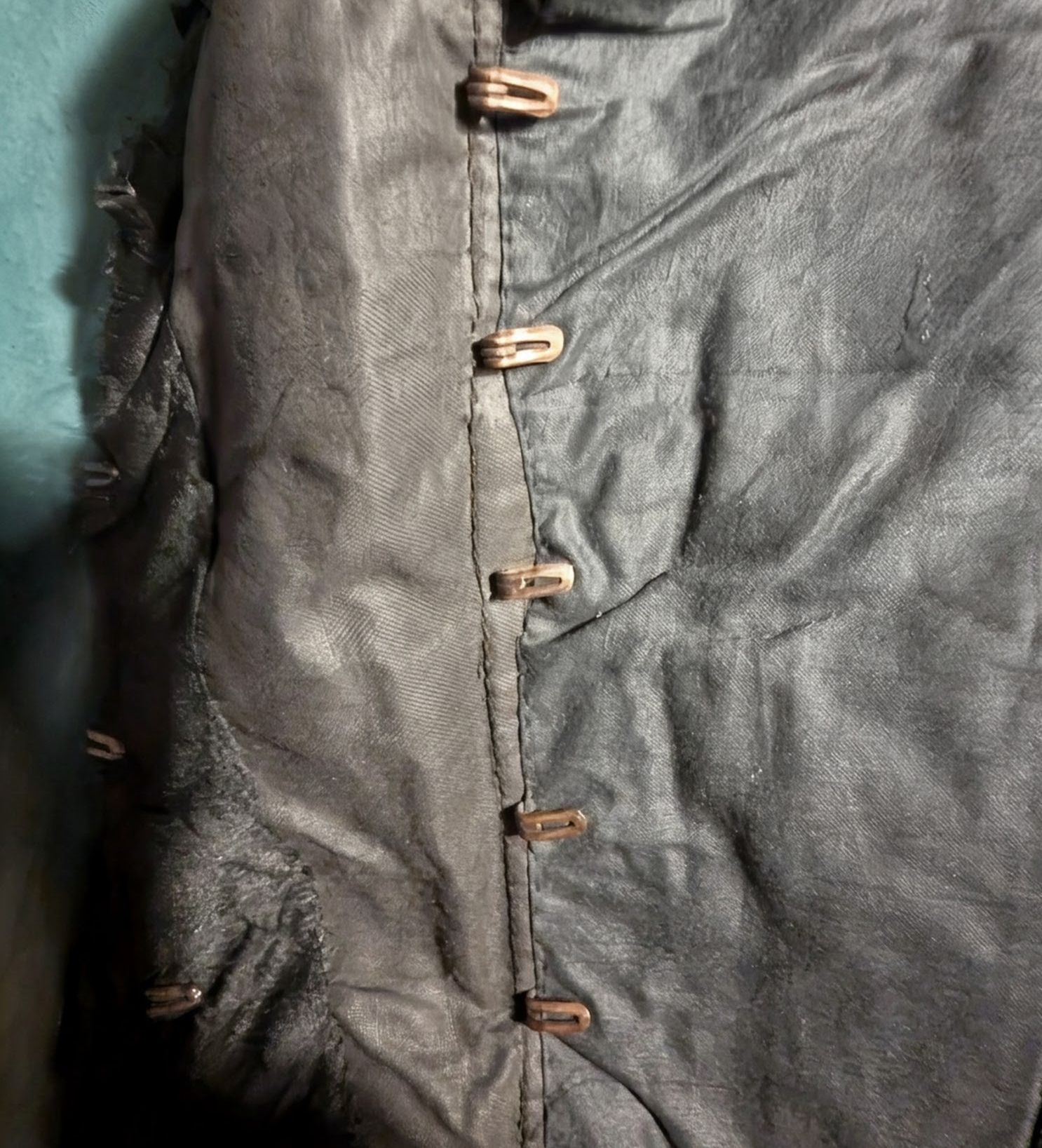
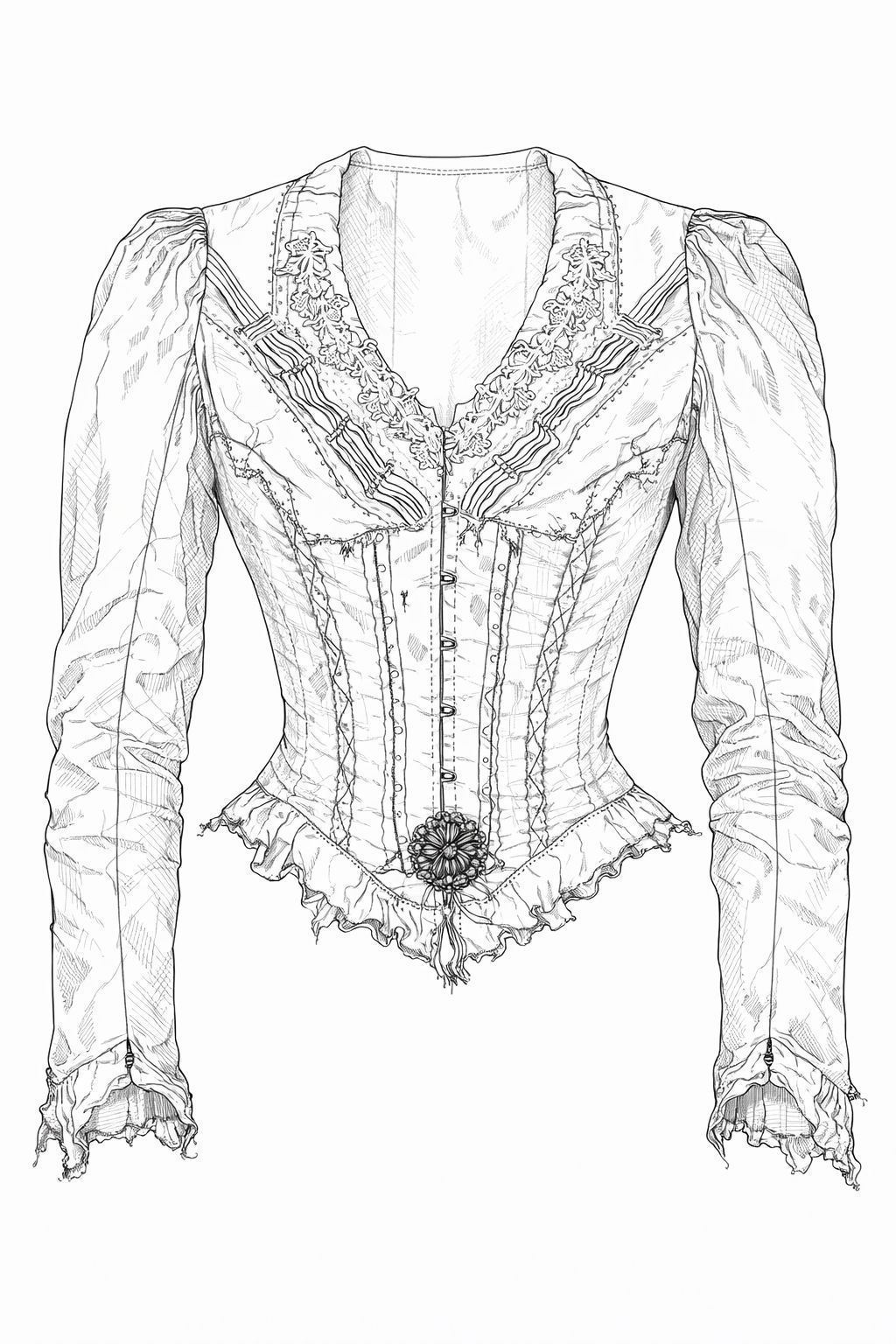
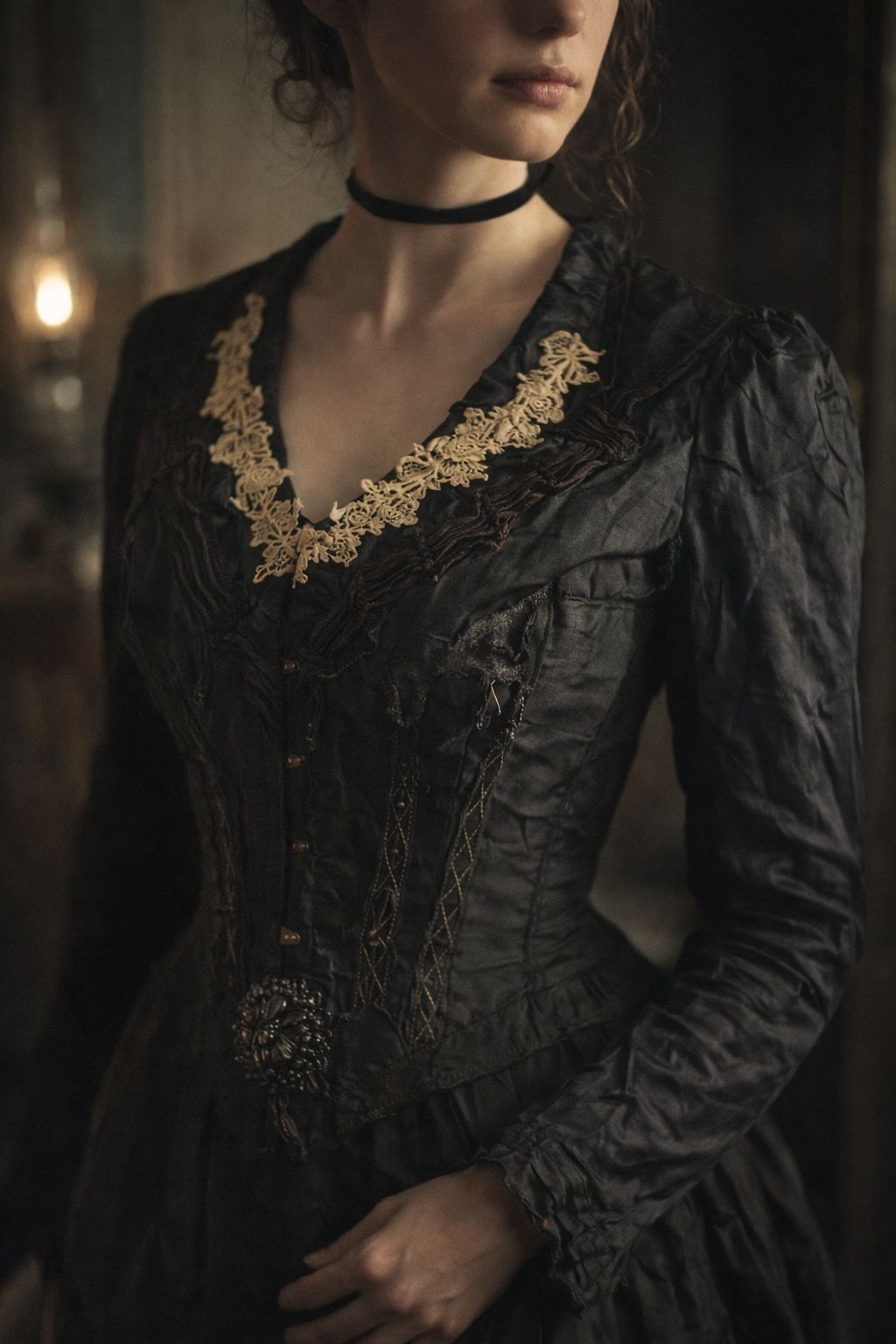
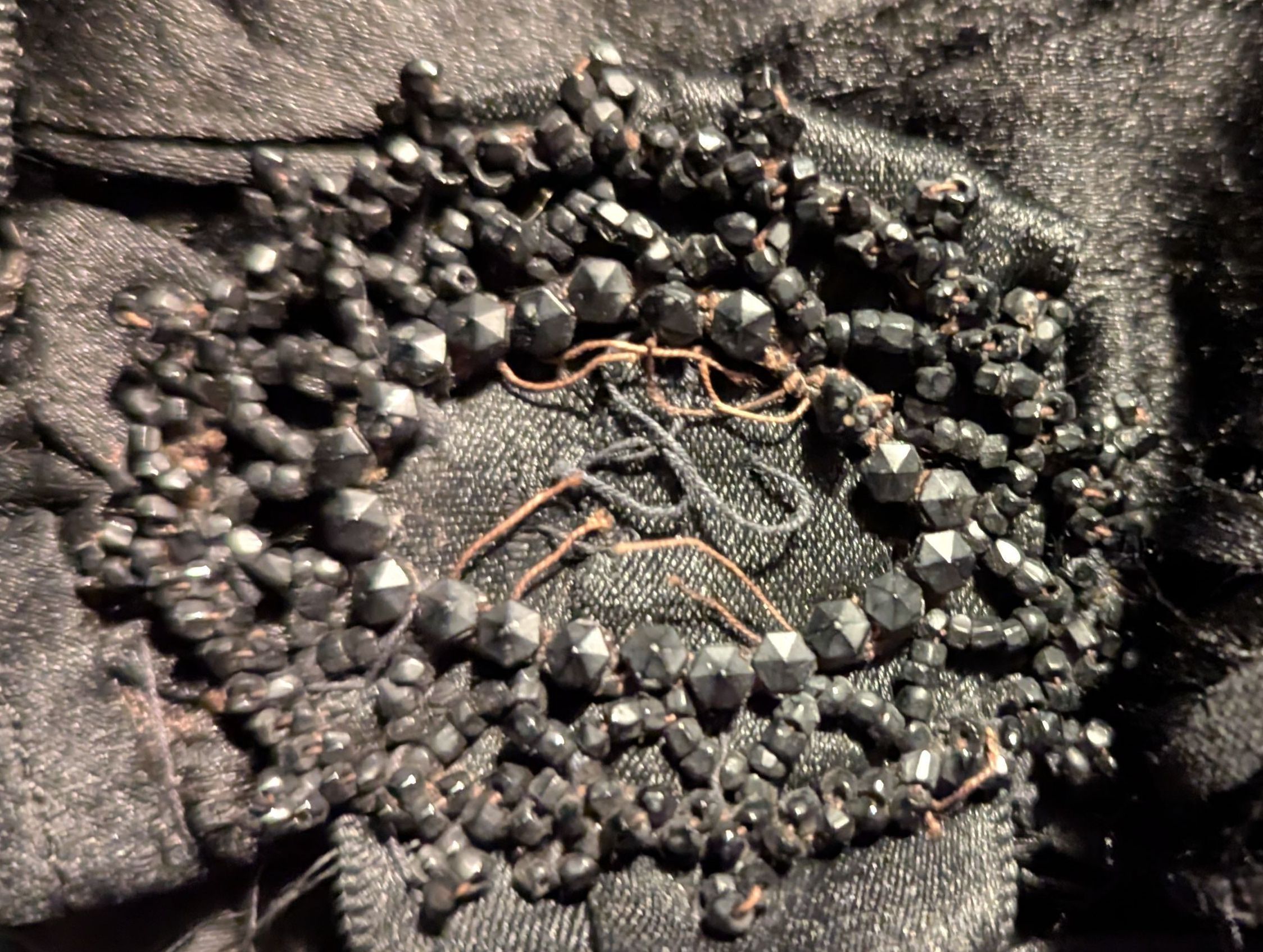
Black silk taffeta or silk faille (now heavily shattered and creased) Cotton or linen interlining Vertical boning channels at the front and sides Hand-applied lace trim at the neckline (cream-colored, likely cotton lace) Velvet trim / applied motifs (possibly silk velvet) Steel hook-and-eye closure down the front Decorative beaded or jet rosette at the lower front (mourning-adjacent styling) The narrow, closely spaced vertical boning with visible cross-stitching suggests late Victorian corsetry techniques, often used to support the fashionable “monobosom” or smooth-front silhouette emerging around 1900.
circa 1895 – circa 1905
Victorian
✔ Sleeve shape Long sleeves with slight fullness at the upper arm (but not full leg-of-mutton) suggest post-1895 By ~1900, sleeves slim down again — which fits this bodice well ✔ Front closure Front hook-and-eye closures were increasingly common for bodices after ~1890 Earlier Victorian bodices often closed at the back ✔ Color & decoration Black silk + lace + jet/beading strongly hints at mourning or half-mourning wear This could also be formal evening or visiting wear, but mourning is very plausible
Good
Feb 5, 2026
Silk shattering is extensive — visible cracking, brittleness, and loss Structural integrity is compromised in stress areas (waist, closures, sleeves) Decorative elements (lace, velvet, beading) are in better condition than the silk ground This is now a display-only garment, not wearable
Description
Black silk, cotton lace, velvet trim, steel boning, metal hook-and-eye fastenings Possibly European or American manufacture This finely constructed late Victorian bodice exemplifies the tailored elegance and structural complexity of women’s fashion at the turn of the twentieth century. Made primarily of black silk, the garment features a softly contoured V-shaped neckline trimmed with delicate cream-colored lace, along with applied velvet decoration and a beaded ornamental element at the lower front. Vertical boning channels, reinforced with hand-worked stitching, provided support and shaped the fashionable silhouette of the period while accommodating wear over a corset. The bodice fastens at the front with metal hook-and-eye closures, a practical innovation increasingly favored in the 1890s. Long fitted sleeves and a closely tailored waist reflect the transitional aesthetic between the late Victorian era and the emerging Edwardian style. The restrained use of decoration and the choice of black silk suggest the garment may have been intended for mourning or half-mourning wear, a common practice governed by strict social conventions. The silk fabric now exhibits extensive shattering, a form of deterioration caused by the weighted silks widely used during this period. While no longer wearable, the bodice remains an important study piece, offering valuable insight into historical textile technologies, garment construction, and the lived realities of women’s dress. Its survival preserves both the artistry and the inherent fragility of late nineteenth-century fashion.