
Purple Silk Evening Bodice with Ecru Lace Appliqué
Clothing/Dress/Costume
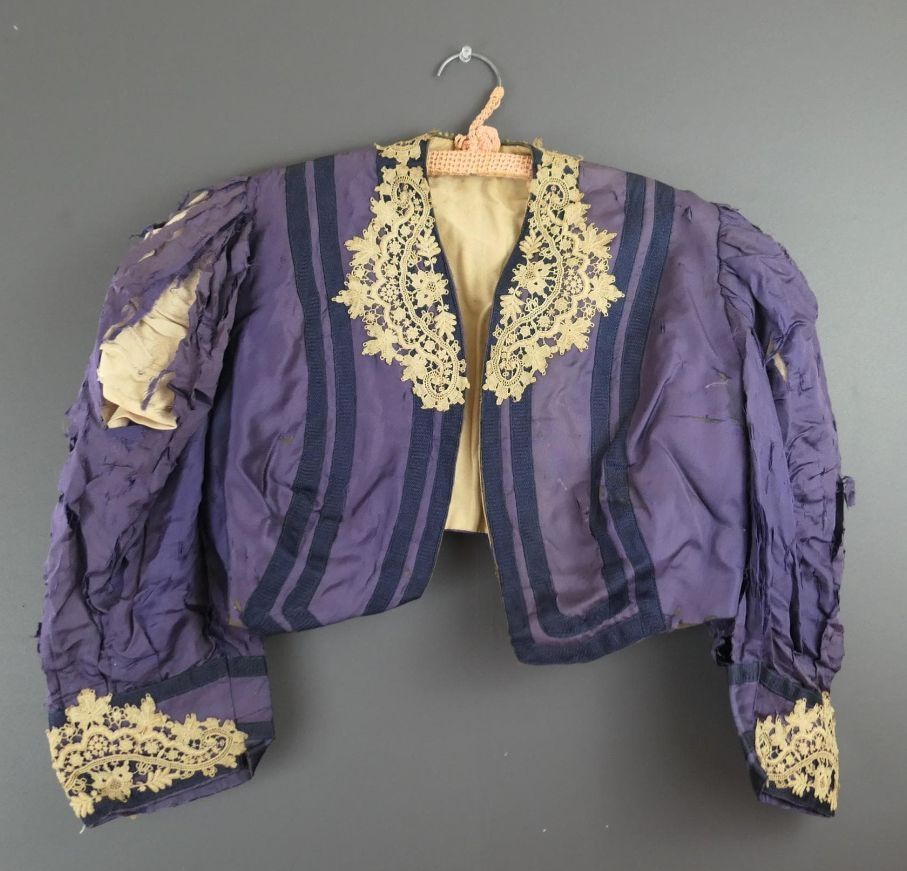
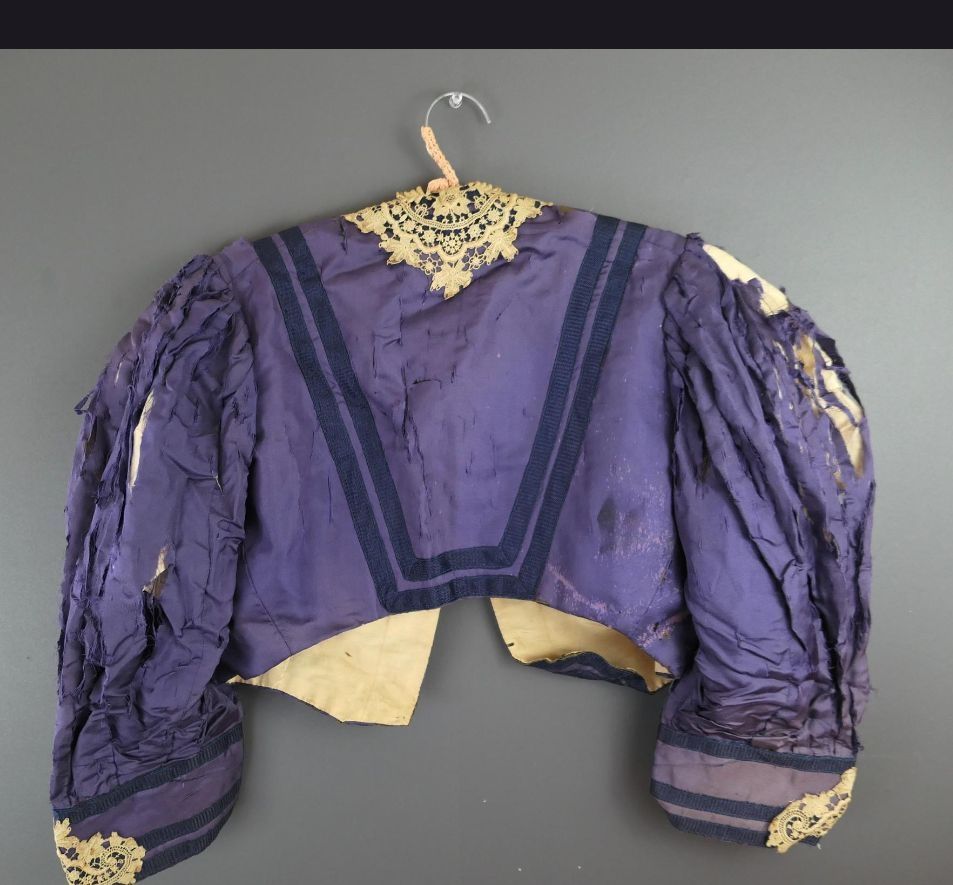
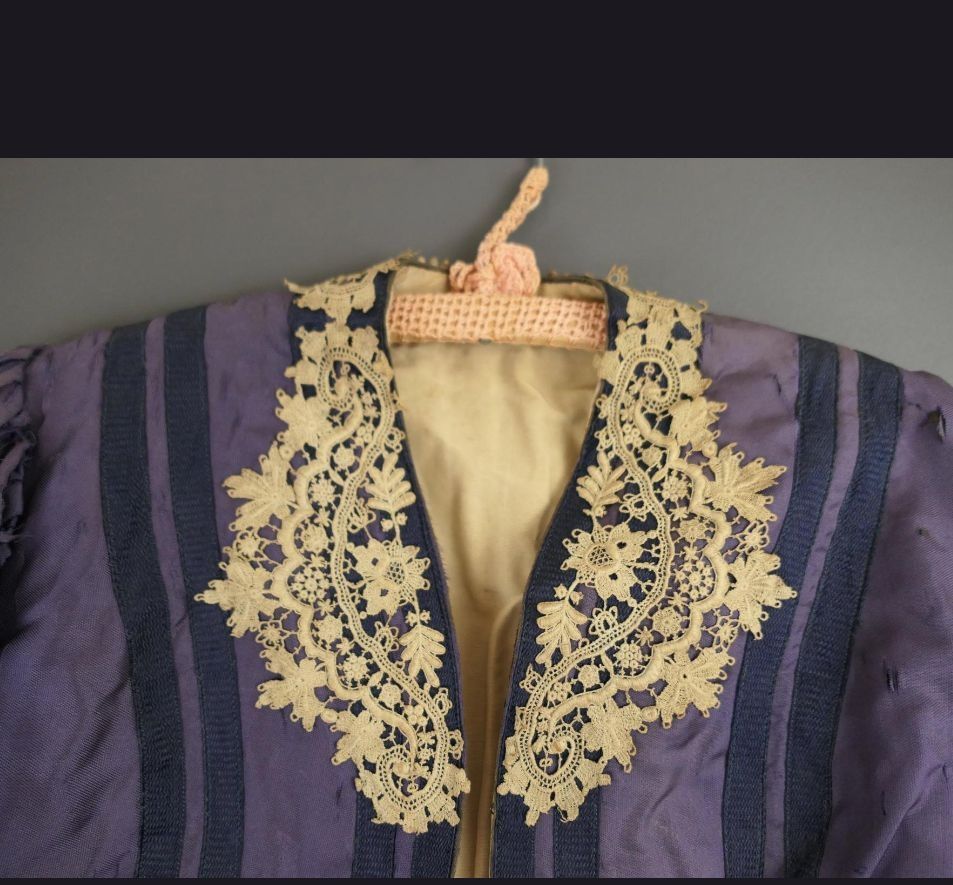
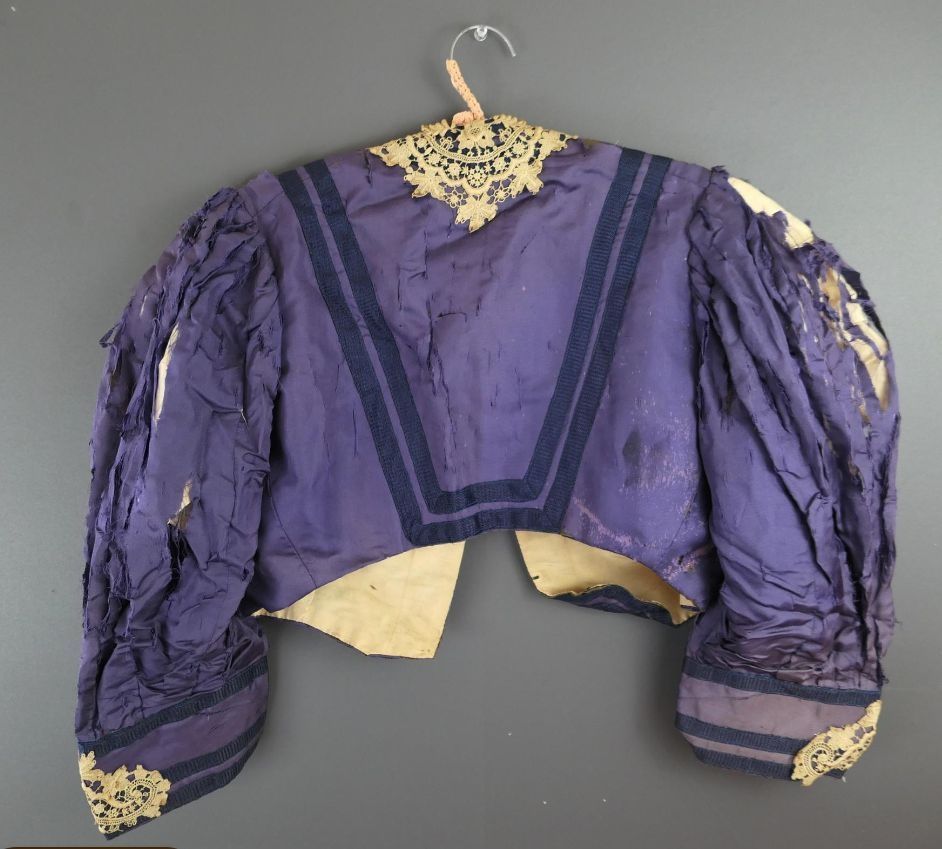
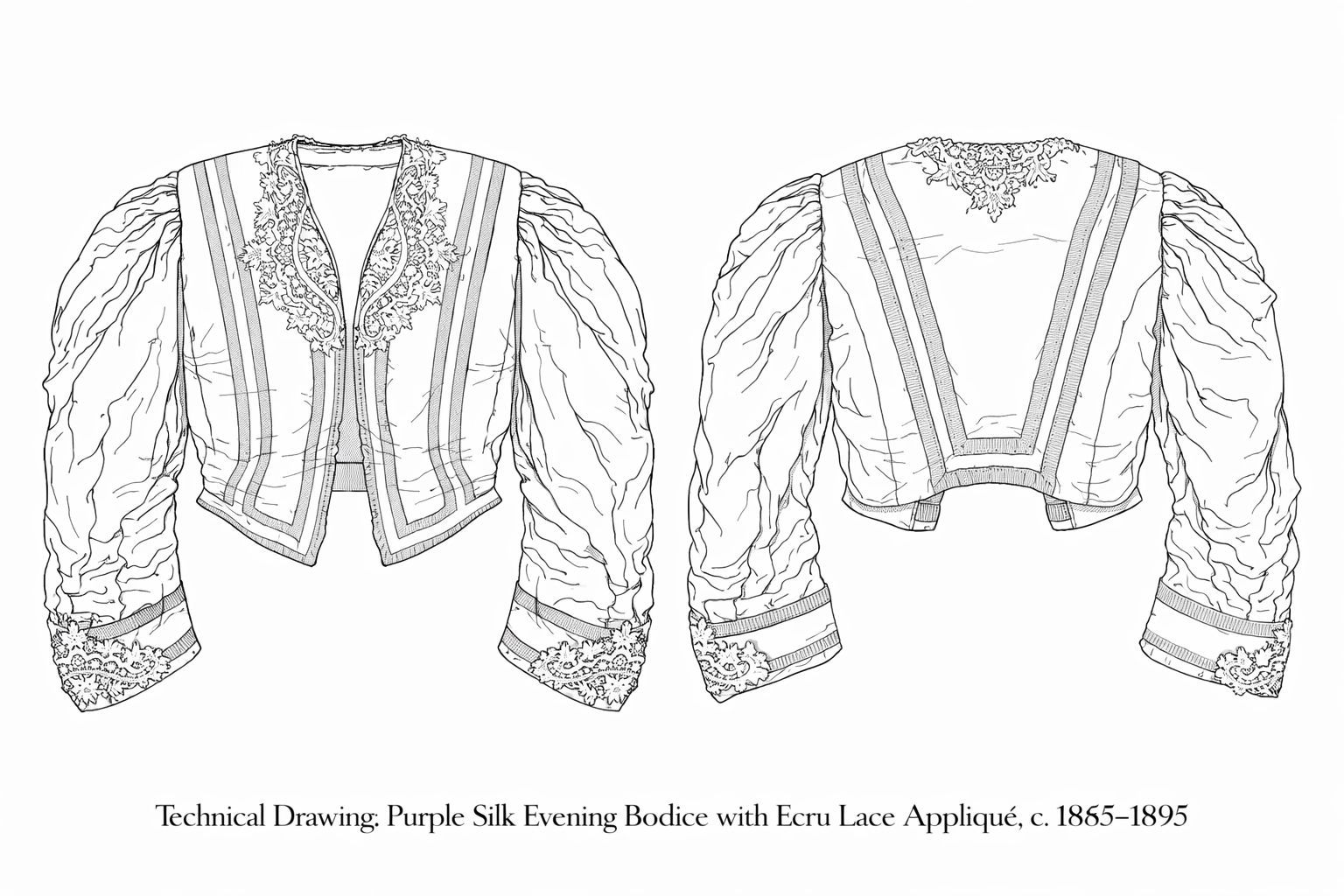
A cropped purple silk bodice featuring applied ecru floral lace at the neckline and cuffs, dark blue woven trim bands, and voluminous sleeves. Likely intended as an evening or semi-formal bodice worn over a coordinating skirt. The garment reflects late Victorian decorative taste emphasizing surface embellishment and structured shaping.
 Purple Silk Evening Bodice with Ecru Lace Appliqué
 Purple Silk Evening Bodice with Ecru Lace Appliqué – Image 2
 Purple Silk Evening Bodice with Ecru Lace Appliqué – Image 3
 Purple Silk Evening Bodice with Ecru Lace Appliqué – Image 4
 Purple Silk Evening Bodice with Ecru Lace Appliqué – Image 5
 Purple Silk Evening Bodice with Ecru Lace Appliqué – Image 6
 Purple Silk Evening Bodice with Ecru Lace Appliqué – Image 7
RE-CL-2026-0011
Bodice
Victorian
Lace Bodice
Bodice
Female
Silk
Purple
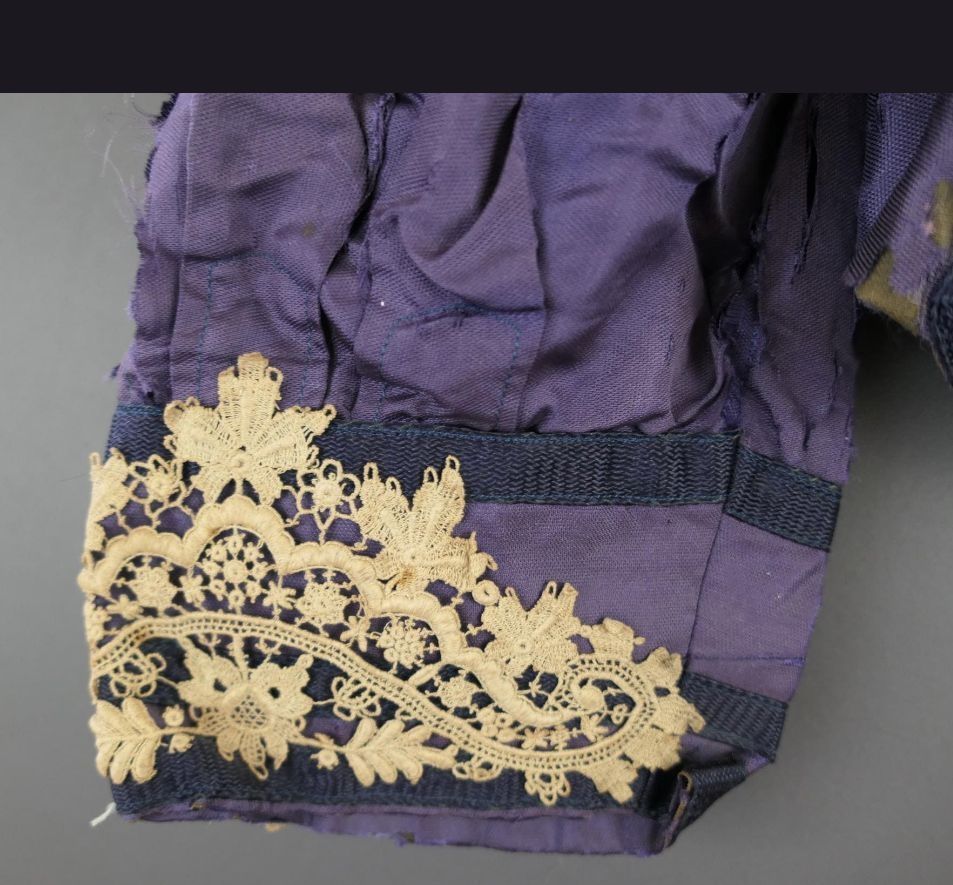
Fabric & Materials Outer Fabric: Purple silk (likely silk taffeta or lightweight silk faille). The surface shows the crispness and fine rib structure consistent with silk taffeta of the 1880s–1890s. Trim: Dark blue woven braid or tape trim applied in vertical and geometric bands across the bodice and sleeves. Lace: Ecru needle or machine-made lace appliqué (likely cotton), featuring scrolling floral motifs with small blossoms and foliage. Lining: Cream or pale beige cotton lining visible at interior and hem edge. Interfacing/Structure: Likely lightly boned originally (though boning not visible in the photos), with shaping seams suggesting tailored construction. Construction Notes Cropped waist length typical of late bustle-era bodices. Sleeves are moderately full with gathered heads — transitional between the tighter 1870s sleeve and the fuller 1890s leg-of-mutton style. Applied lace appears hand-stitched onto the silk ground. Vertical trim bands create elongation of the torso, a common Victorian visual strategy. Open front construction (likely hook-and-eye closure originally; not visible but typical).
circa 1885 – circa 1895
North America
The sleeve volume and cropped proportion suggest late bustle era (Second Bustle Period, 1883–1889) or very early 1890s before sleeves reached extreme puff proportions.
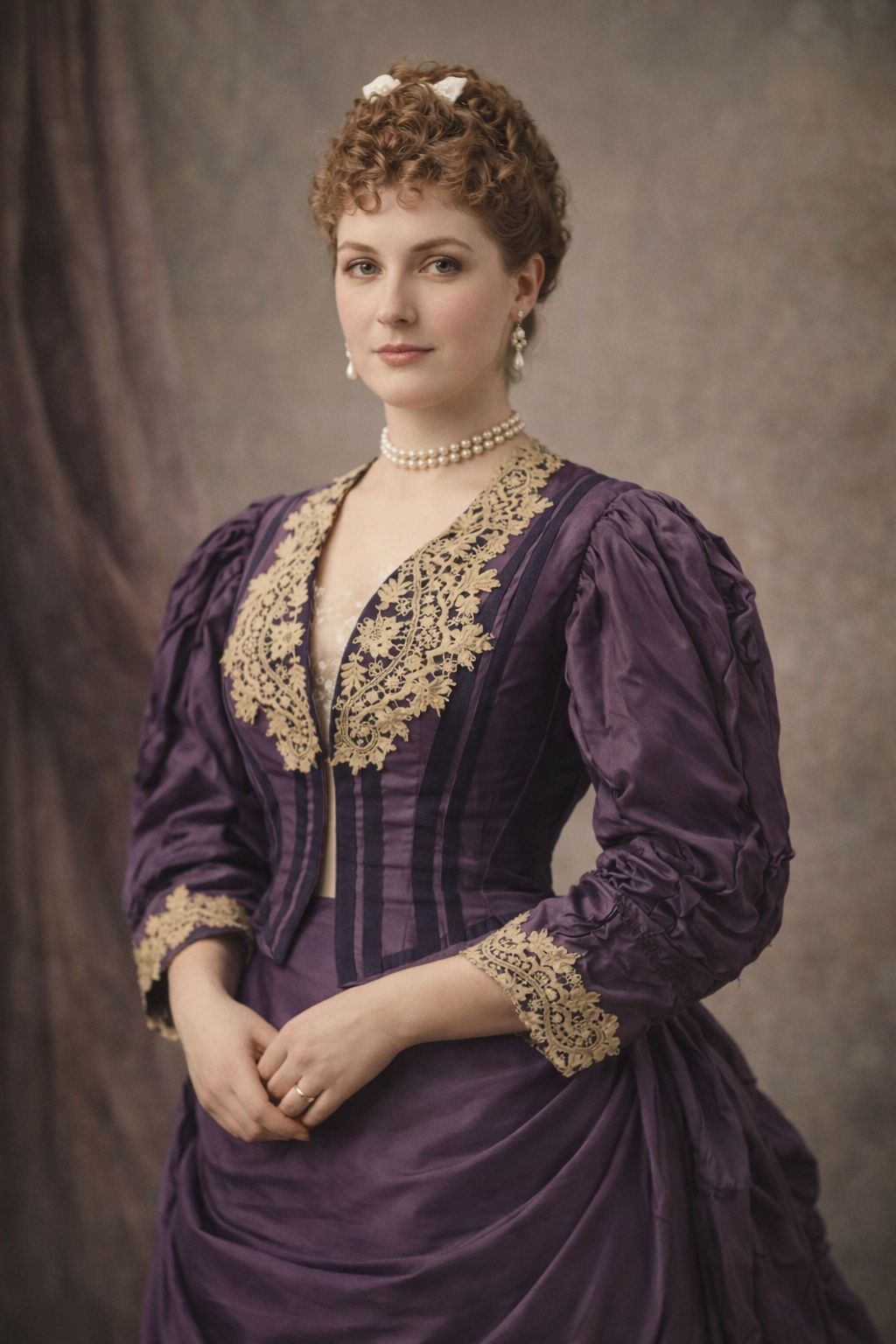
This bodice reflects: The Victorian emphasis on structured femininity and corseted silhouette. Decorative surface embellishment popular in the Aesthetic and late Bustle eras. Use of contrasting applied lace to suggest luxury without full lace construction (a more economical but visually rich technique). The deep purple coloration is notable. By the 1880s, aniline dyes had made rich purples widely available. Purple carried connotations of refinement and modernity, no longer exclusively associated with aristocratic privilege as in earlier centuries. The lace appliqué neckline evokes evening wear or reception attire rather than day dress. Such bodices would typically be worn over: A matching silk skirt Possibly with bustle support High collar accessories (detachable lace fichu or collar insert may have once been present) The dark blue tape trim provides geometric contrast against the floral lace, reflecting Victorian love of combining organic and architectural elements.
Fair
Feb 17, 2026
This garment is in fragile condition: Significant silk shattering (common in weighted late 19th-century silks). Splitting and tearing at sleeves. Areas of loss along sleeve seams. Fading and discoloration in localized areas. Lining remains visible and relatively intact compared to exterior silk. Lace appears structurally stronger than the silk ground. The degradation is consistent with: Weighted silk deterioration (metal salts used in finishing). Age-related fiber breakdown. Possible exposure to light and fluctuating humidity. This is a preservation piece rather than wearable condition.
Description
This cropped late Victorian bodice exemplifies the richly ornamented surface decoration of the second bustle era. Constructed of deep purple silk and embellished with ecru floral lace appliqué at the neckline and cuffs, the garment reflects the interplay of structure and embellishment characteristic of the period. Vertical dark blue trim bands emphasize the corseted silhouette while gathered sleeves suggest the emerging sleeve fullness that would define the 1890s. The silk exhibits significant shattering, a common condition issue in weighted nineteenth-century silks. Despite deterioration, the decorative lace and trim retain strong visual presence, preserving the aesthetic impact of the original design.