
Textile Fragment – Beaded Appliqué Bodice Panel
Clothing/Dress/Costume
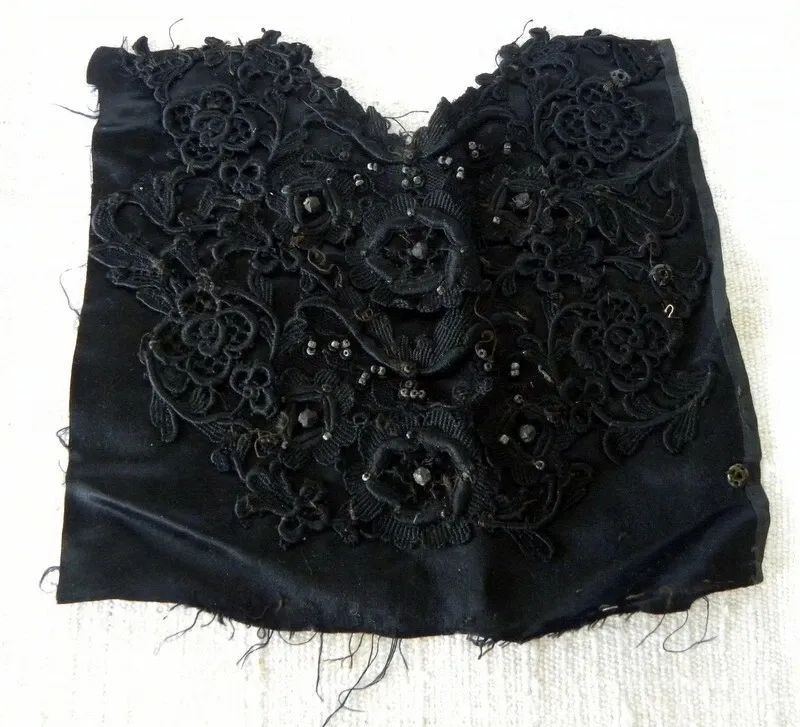
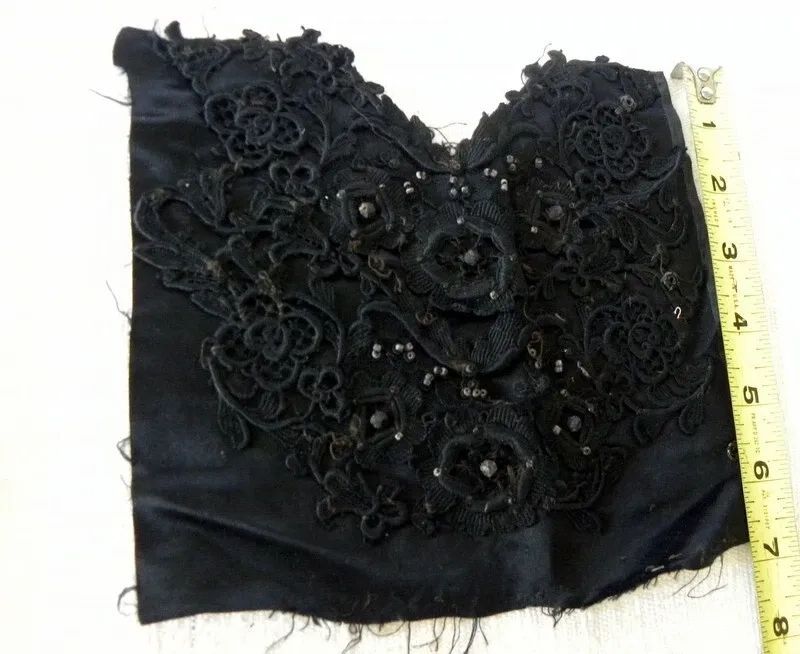
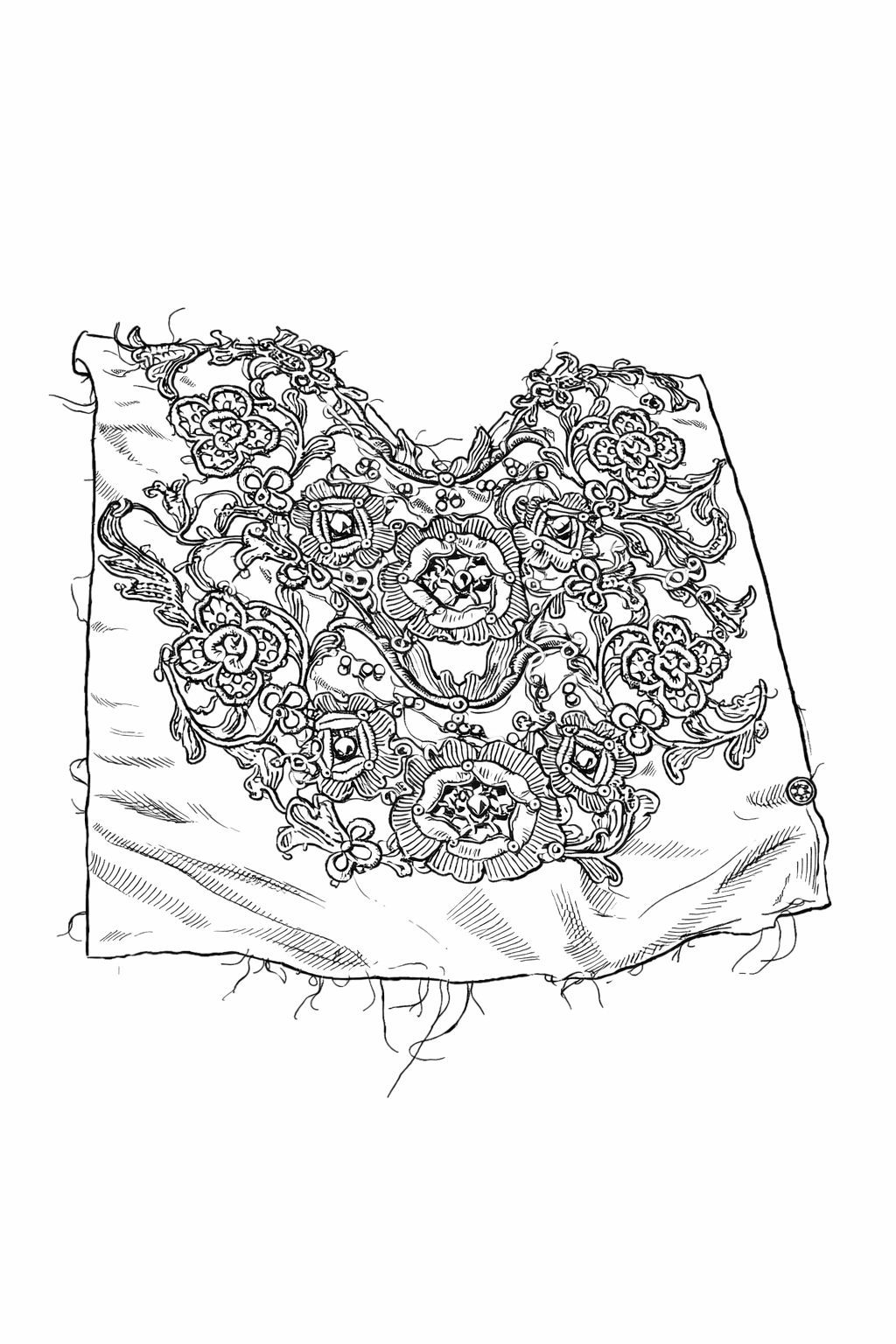
Rectangular silk satin fragment (approx. 7–8 inches in height based on tape reference), originally cut in a shallow V configuration at the upper edge, suggesting it formed the center front of a bodice. The ground fabric appears to be black silk satin, now softened and slightly dulled with age. The lower edge is raw and frayed, indicating removal from a larger garment. The surface is densely decorated with: Raised corded floral motifs (soutache-style looping cord) Dimensional rosette forms at center Faceted jet or jet-glass beads Small round seed beads Layered floral appliqué construction The design is symmetrical and vertically oriented — typical of center-front bodice ornamentation.
RE-CL-2026-0005
Bodice
1890’s
1900’s
Late Victorian
Bodice
Female
Satin
Silk
Black
This fragment shows hallmarks of turn-of-the-century decorative bodice panels: Ground Fabric: Likely silk satin, possibly silk faille. The sheen and drape suggest late Victorian production. Appliqué Structure: Corded trim (possibly cotton or silk soutache) machine applied in scrolling floral motifs. Larger dimensional rosettes constructed from layered loops and stitched in place. Beads hand-sewn individually through the ground fabric. Beading Type: The faceted beads appear consistent with: French jet (black glass) Or possibly early pressed jet-glass Not true Whitby jet (which would be carved and more matte). Attachment Evidence: The top V-shape suggests neckline placement. The sides are straight, implying insertion into a bodice front rather than a collar.
circa 1895 – circa 1910
Victorian
Europe
Very Good
Feb 12, 2026
Lower edge fraying (cut from garment) Minor bead loss visible Thread tension relaxed in some areas Ground silk showing early weakening No severe silk shattering visible in photographs, but satin likely fragile due to age.
Historical Note
This fragment represents the central decorative panel of a late Victorian or early Edwardian bodice. Executed in black silk satin and densely ornamented with corded floral appliqué and hand-sewn jet glass beads, the design exemplifies the dramatic surface embellishment characteristic of turn-of-the-century formal dress. The symmetrical arrangement and shallow V neckline shaping suggest placement at the center front of a fitted bodice. Such ornamented panels were common in evening or mourning attire during the period.