
Decorative Cape / Mantle
Clothing/Dress/Costume
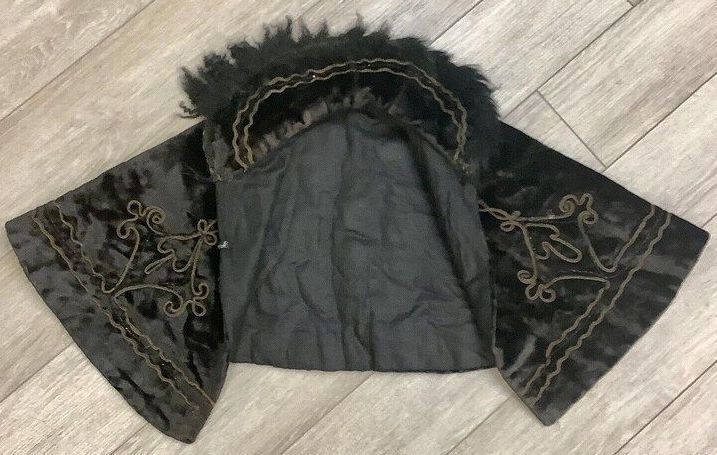
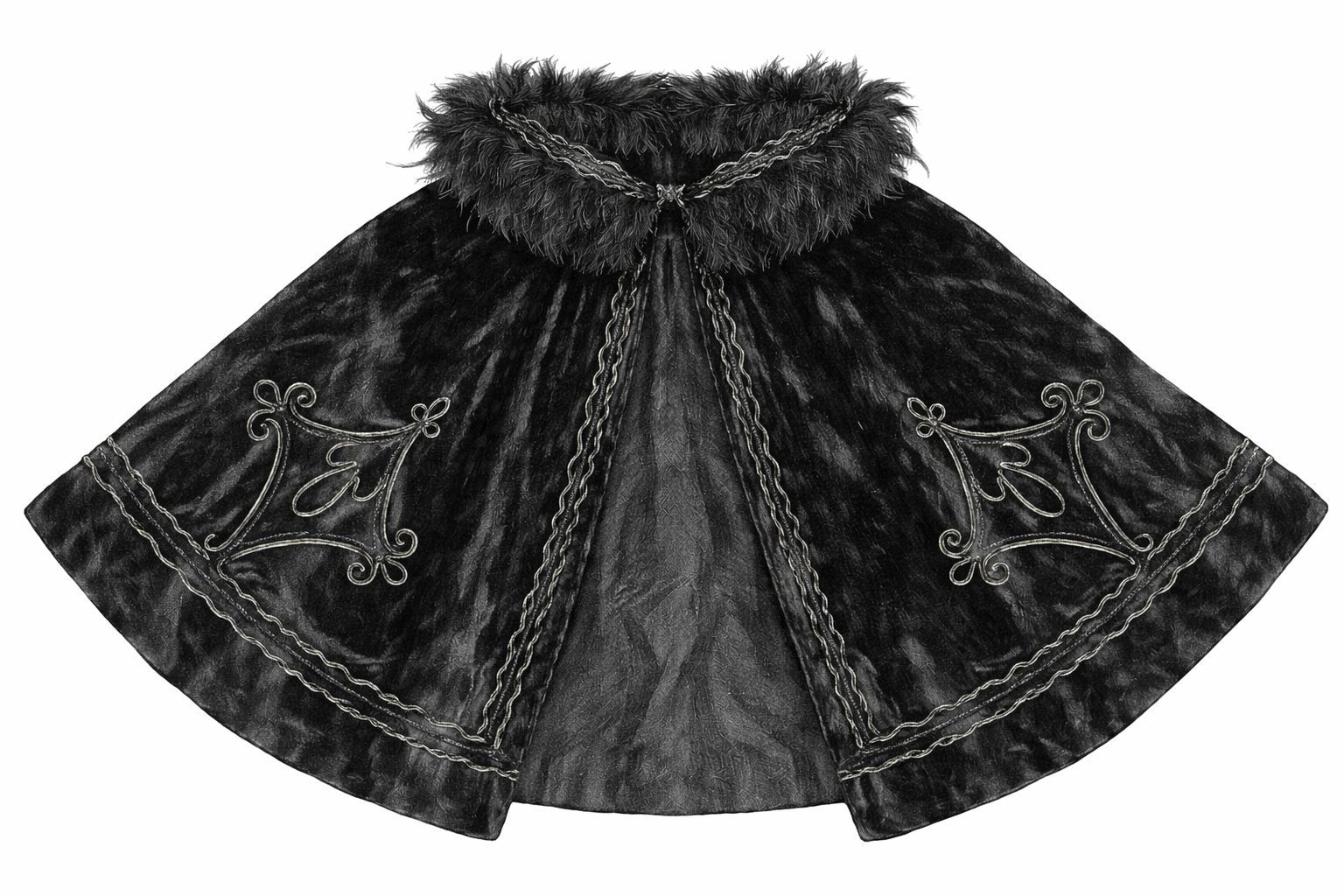
This richly ornamented Victorian mantle exemplifies the decorative outerwear fashionable in the late nineteenth century, when capes and mantles served both functional and aesthetic roles in women’s dress. Cut in a short, flared form, the garment is designed to rest over the shoulders and upper arms, complementing the fitted bodices and structured skirts of the period.
RE-CL-2026-0004
Cape
Cape
Mantle
Cape
Mantle
Female
Velvet
Beads
Black
Corded passementerie embroidery
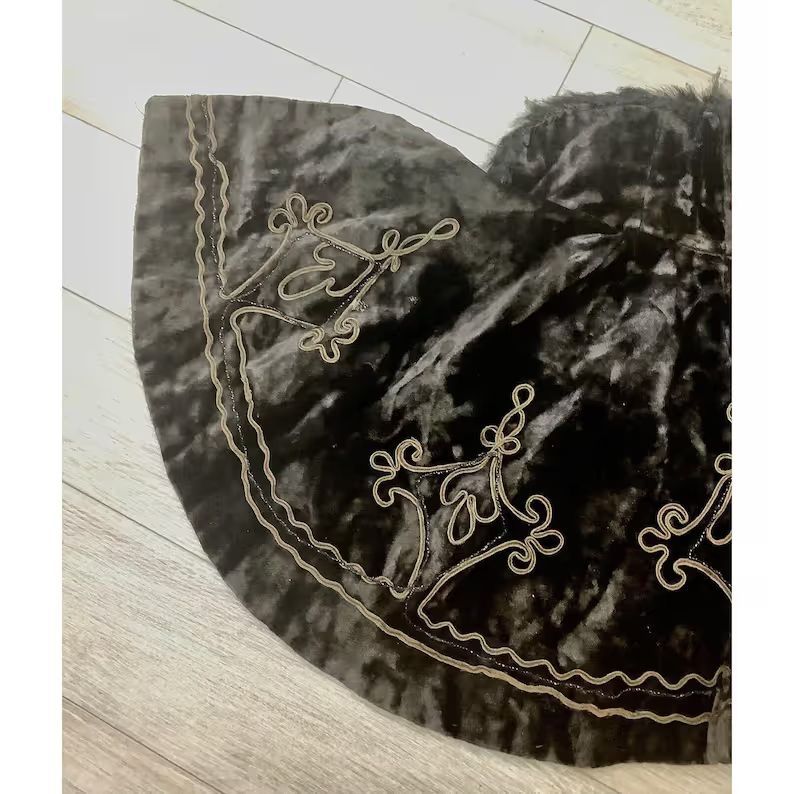
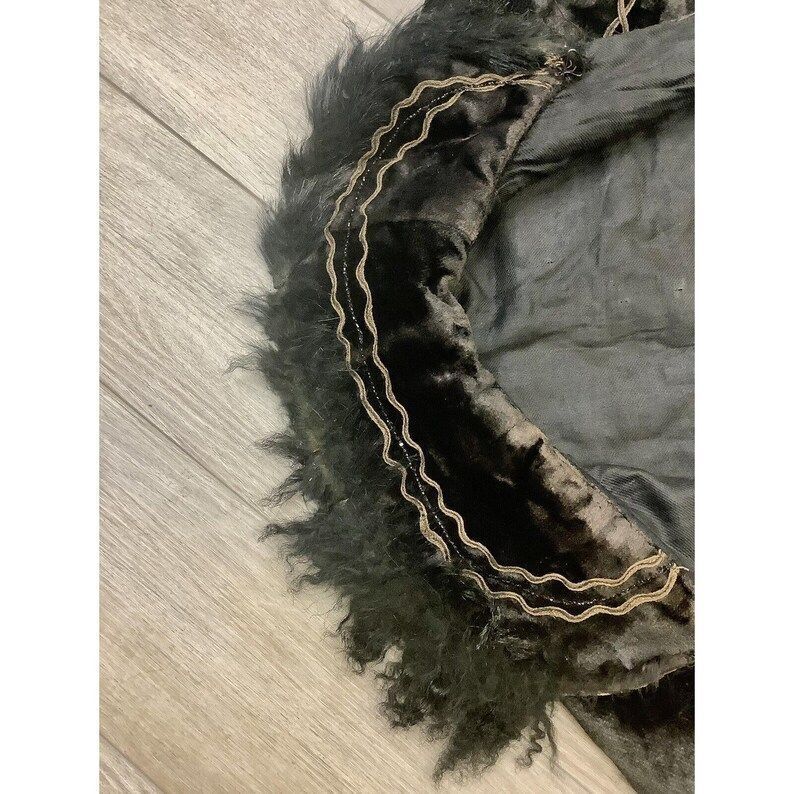
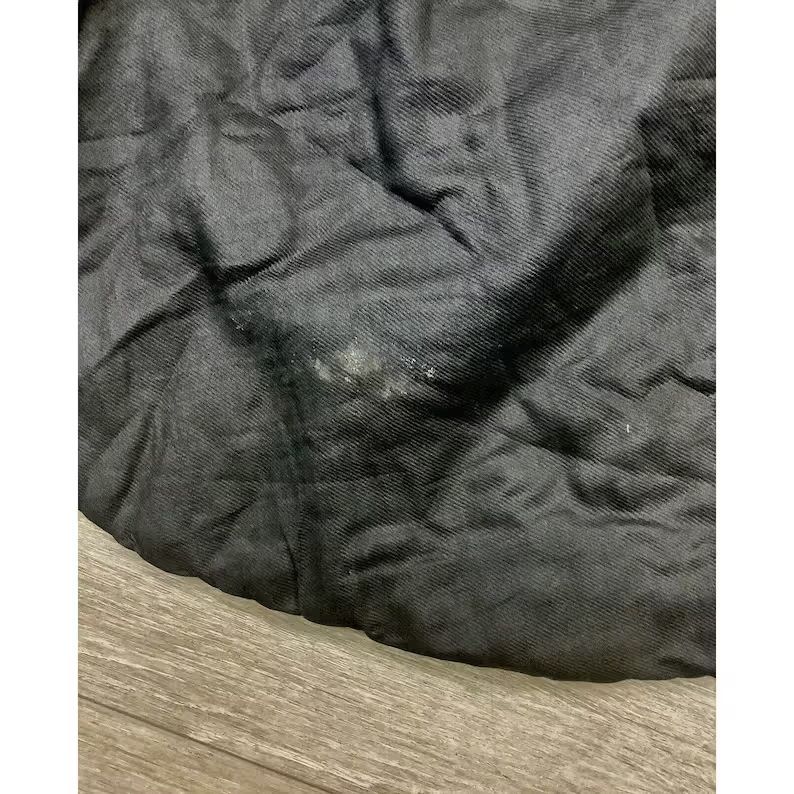
Pattern & Cut: The mantle is cut in a shallow circular or semi-circular pattern, creating a flared silhouette that drapes evenly over the shoulders. The body appears to be composed of multiple shaped panels joined with vertical seams, allowing the fabric to accommodate curvature without excessive bulk. Outer Fabric Assembly: The exterior silk velvet is cut with careful attention to nap direction to ensure uniform sheen across the surface. Seams are narrowly turned and hand-stitched, minimizing disruption to the velvet pile. Embellishment Application: Decorative metallic cord is applied to the velvet surface using couching stitches, likely worked by hand. The cord follows pre-marked symmetrical designs, indicating planned ornament rather than freehand decoration. Parallel rows of metallic trim are applied along the hem, reinforcing the circular outline of the garment. Neckline Construction: The neckline is shaped with controlled gathering and reinforced with a narrow facing or neckband. Feather trim is hand-applied along the neckline edge, likely stitched through a tape or binding to distribute stress and reduce strain on the velvet. Closure System: The mantle fastens at the center front beneath the feather trim, likely using hooks and eyes or narrow ties. The placement allows the closure to remain visually discreet while maintaining stability when worn. Lining: The interior is fully lined with silk, cut to mirror the outer shape. The lining is hand-set into the garment, with seams offset from the exterior seams to reduce bulk. Minor wear and discoloration suggest prolonged contact with the wearer’s clothing. Edge Finishing: The hem is finished with a narrow turned edge, stabilized by the applied metallic trim. This method provides both decorative emphasis and structural support, helping prevent distortion over time. Stitching & Techniques: Stitching throughout appears to be predominantly hand-worked, with small, even stitches visible along seams, trims, and lining attachment points. No evidence of modern machine stitching is present.
circa 1885 – circa 1895
Victorian
19th Century
England
Very Good
Jan 16, 2026
Velvet pile appears intact. Fur/feather trim present and full. Embroidery stable. Lining shows age wrinkling but no obvious loss
Silk velvet, silk lining, metallic cord embroidery, feather trim Possibly European or American manufacture This decorative Victorian mantle reflects the opulent outerwear fashions of the late nineteenth century, when short capes were worn to complement the era’s fitted bodices and structured silhouettes. Designed to drape over the shoulders and upper arms, the mantle combines rich materials with elaborate surface ornamentation, emphasizing visual impact as much as function. The exterior is constructed of black silk velvet, a luxury textile valued for its dense pile and light-absorbing surface. The velvet is embellished with scrolling motifs formed from applied metallic cord, likely secured by hand using couching techniques. Additional parallel bands of metallic trim follow the curve of the hem, reinforcing the circular form of the garment and visually framing its silhouette. The neckline is finished with a soft feather trim, adding texture and movement while framing the face when worn. Beneath the trim, the mantle fastens at the front with a concealed closure, maintaining a seamless appearance. The interior is fully lined with black silk, providing structure and comfort while protecting the velvet exterior from direct contact with the underlying dress. Areas of wear and discoloration are visible on the lining, consistent with age and prolonged use, while the velvet and decorative elements exhibit expected signs of material fatigue. Despite these condition issues, the mantle remains a significant example of late Victorian craftsmanship, illustrating the period’s emphasis on luxurious textiles, ornamental detail, and carefully controlled drape in women’s outerwear.