
Victorian Revival Bodice
Clothing/Dress/Costume
Victorian Revival / Edwardian Fantasy
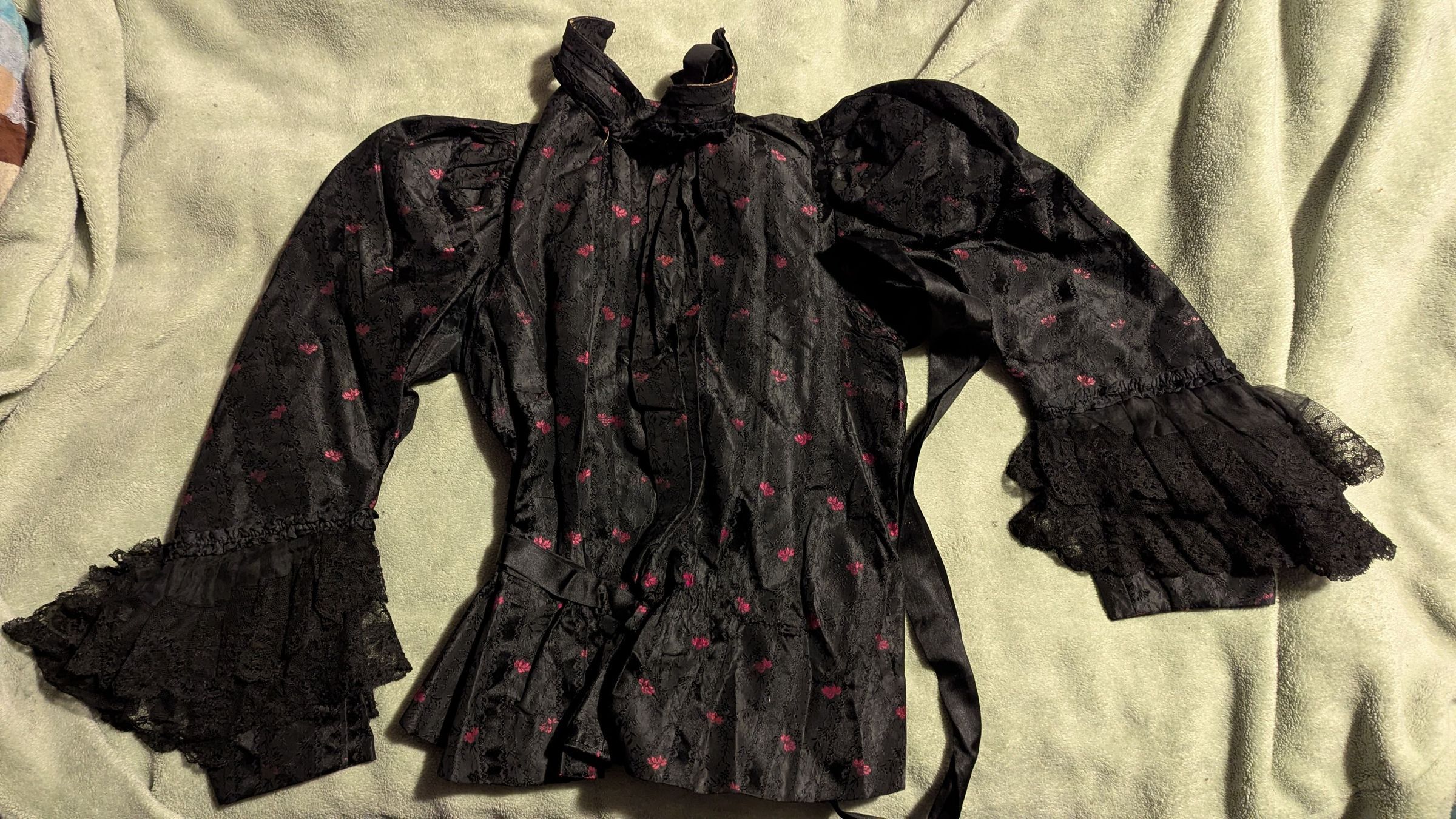 Victorian Revival Bodice
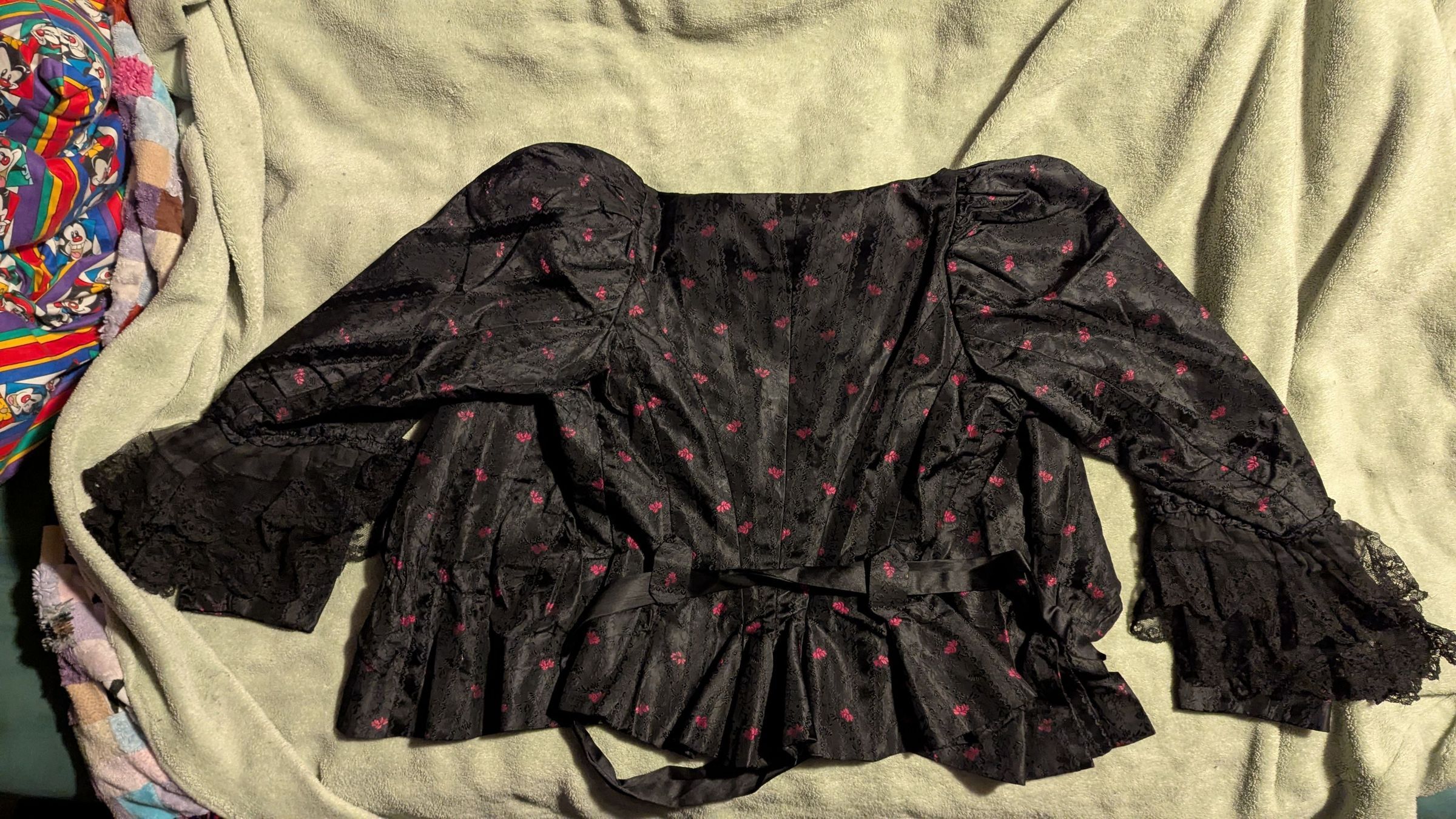 Victorian Revival Bodice – Image 2
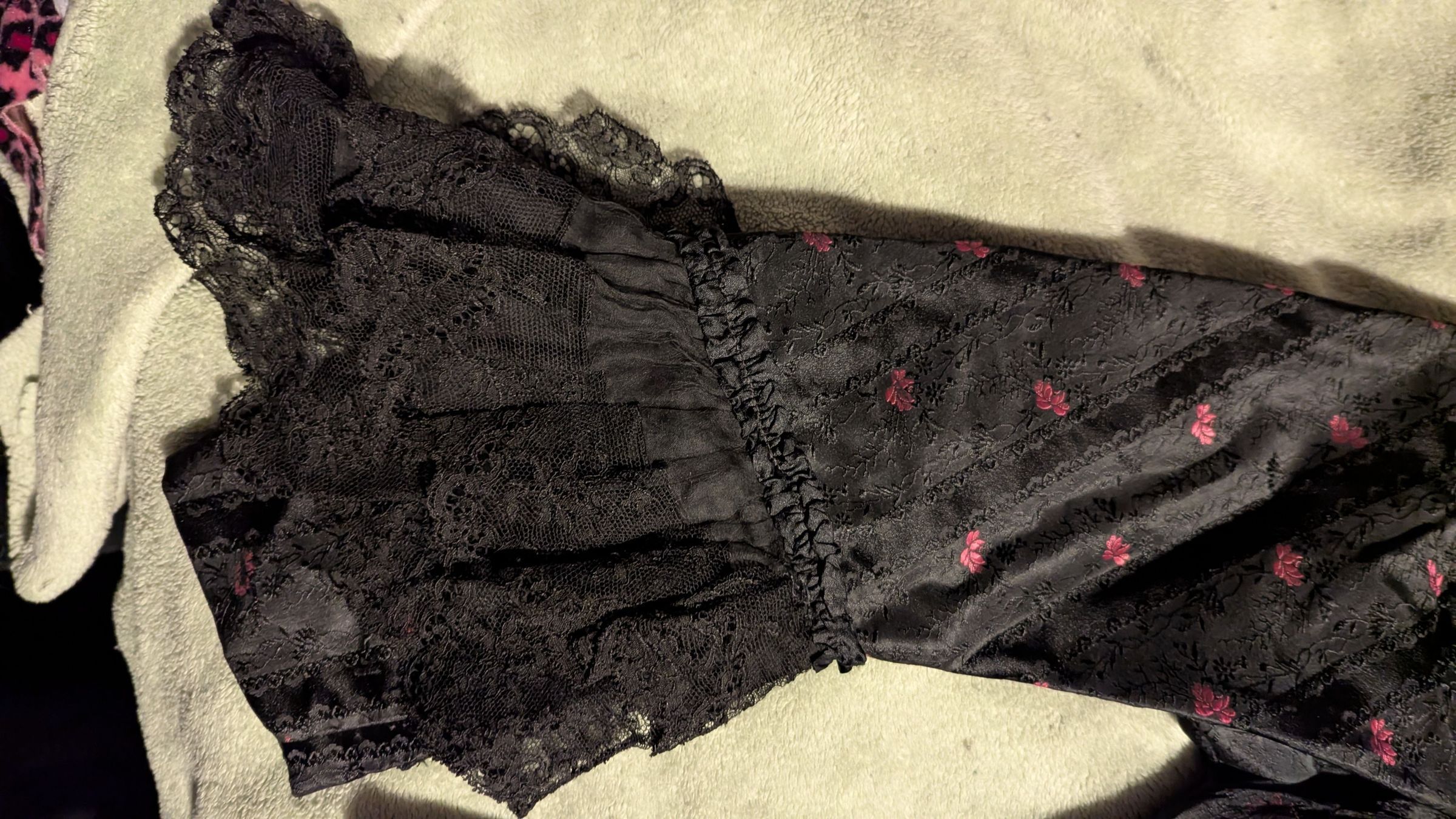 Victorian Revival Bodice – Image 3
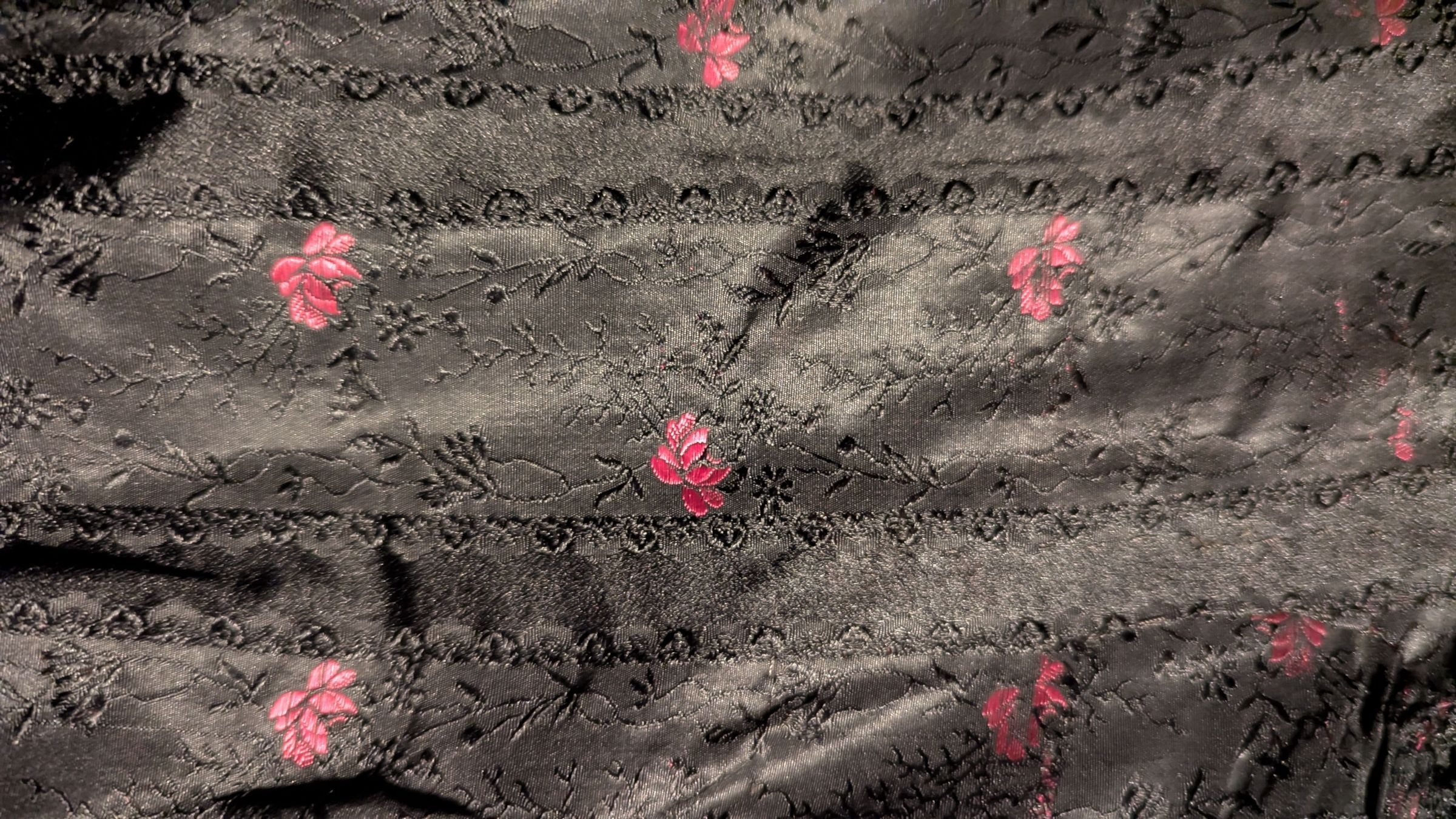 Victorian Revival Bodice – Image 4
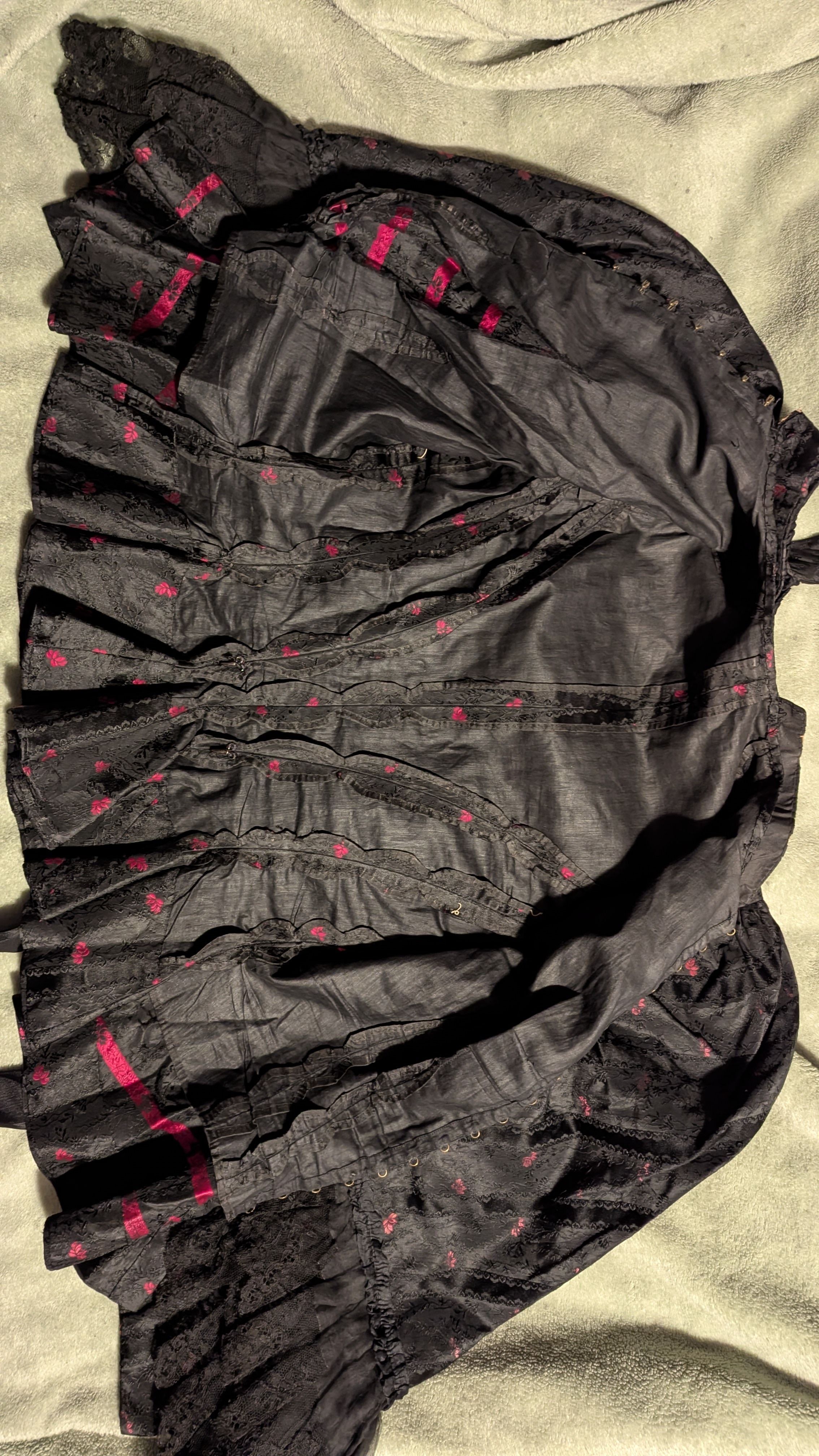 Victorian Revival Bodice – Image 5
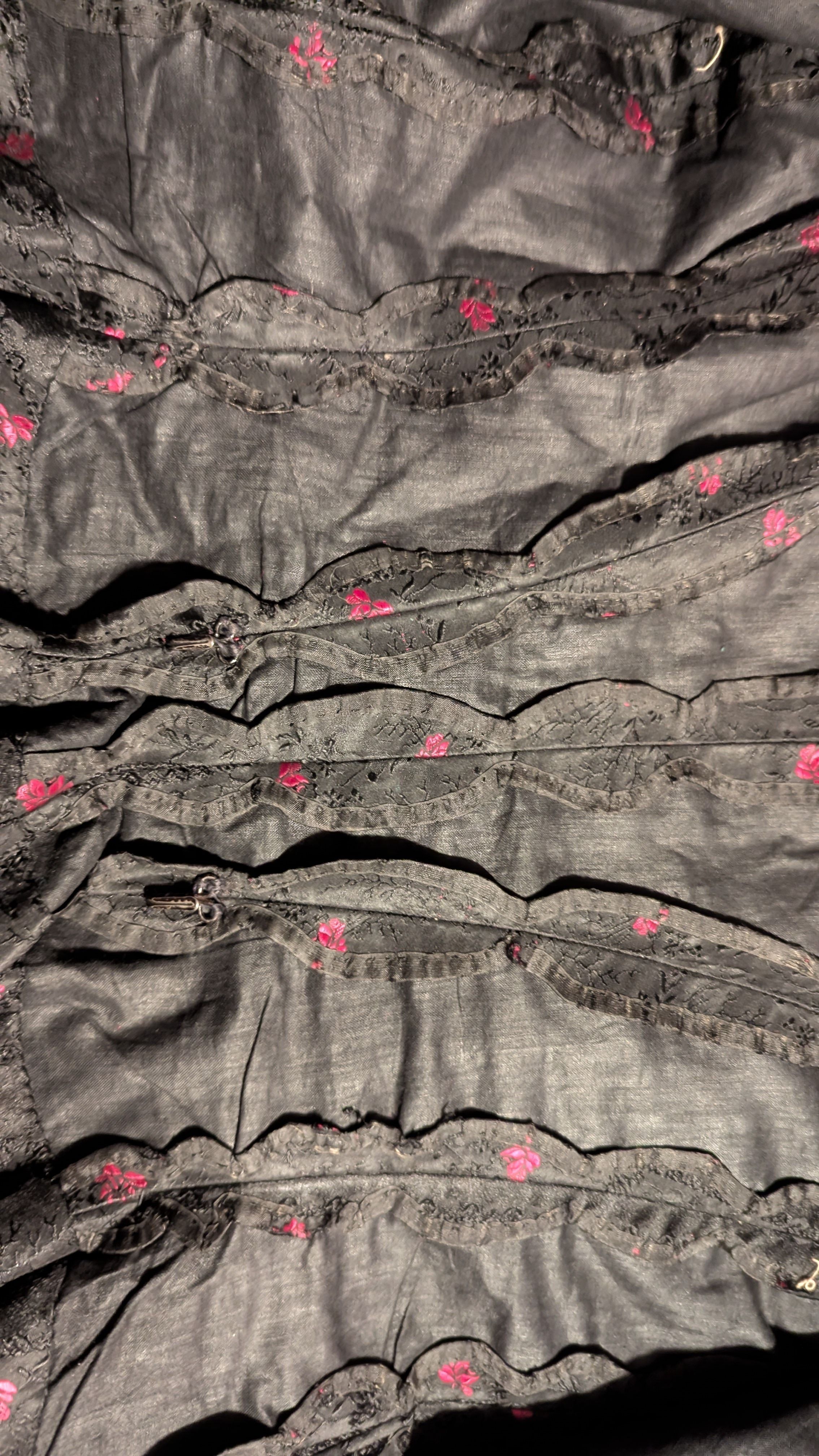 Victorian Revival Bodice – Image 6
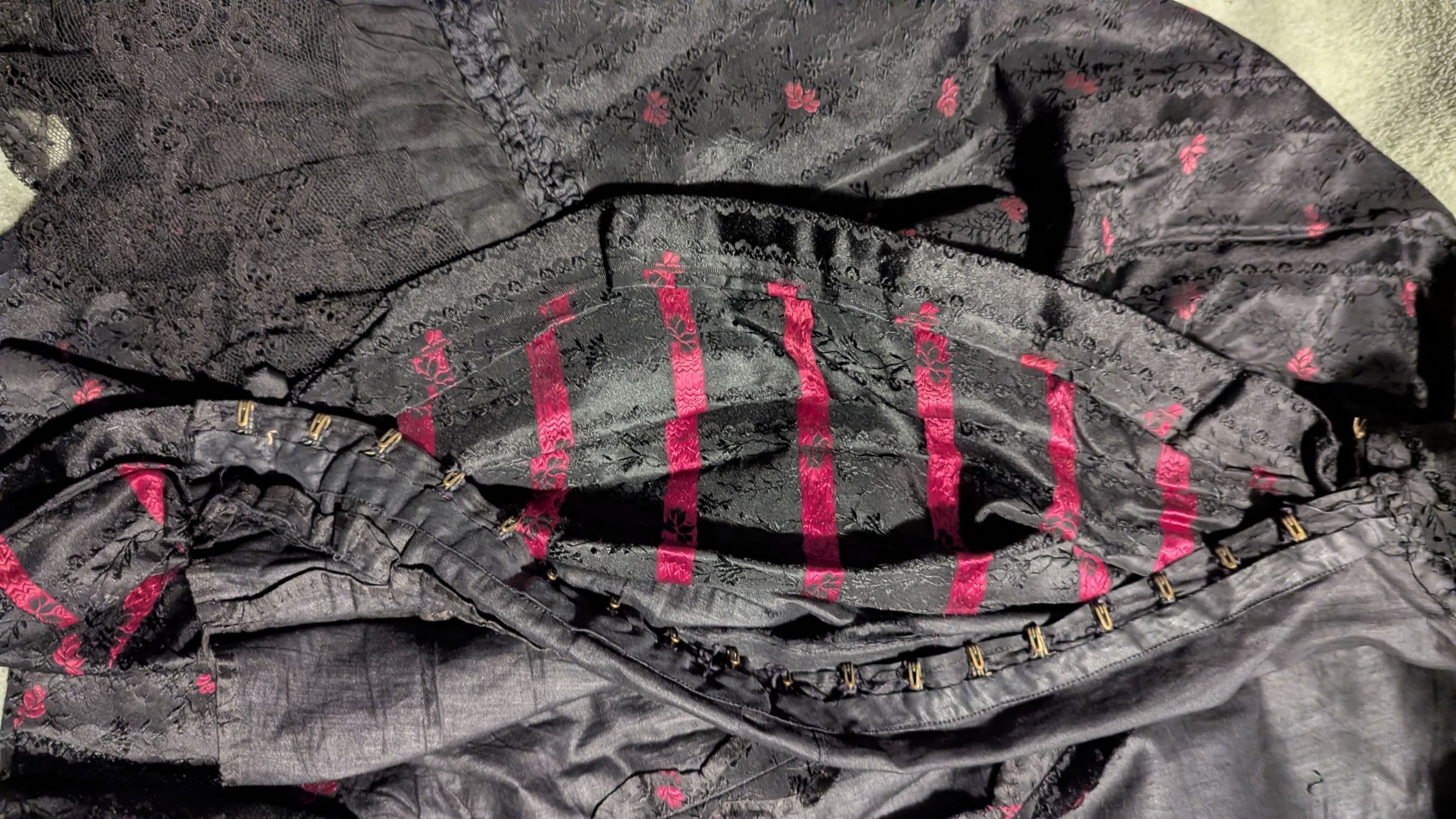 Victorian Revival Bodice – Image 7
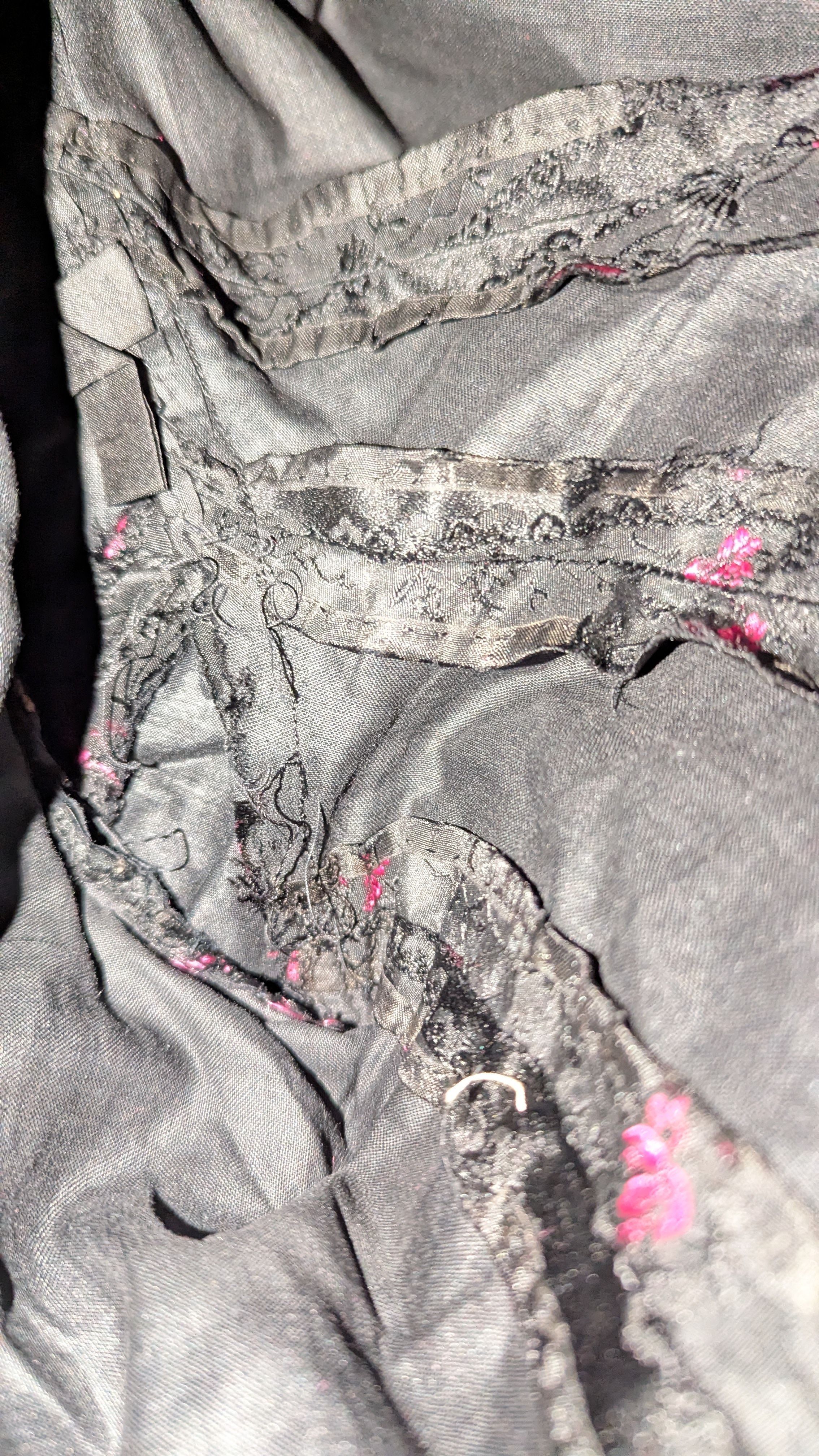 Victorian Revival Bodice – Image 8
 Victorian Revival Bodice – Image 9
 Victorian Revival Bodice – Image 10
 Victorian Revival Bodice – Image 11
 Victorian Revival Bodice – Image 12
RE-CL-2026-0012
Possibly costume for amateur performance or private masquerade
19th Century
Bodice
Female
Rayon
Cotton
Black
Pink
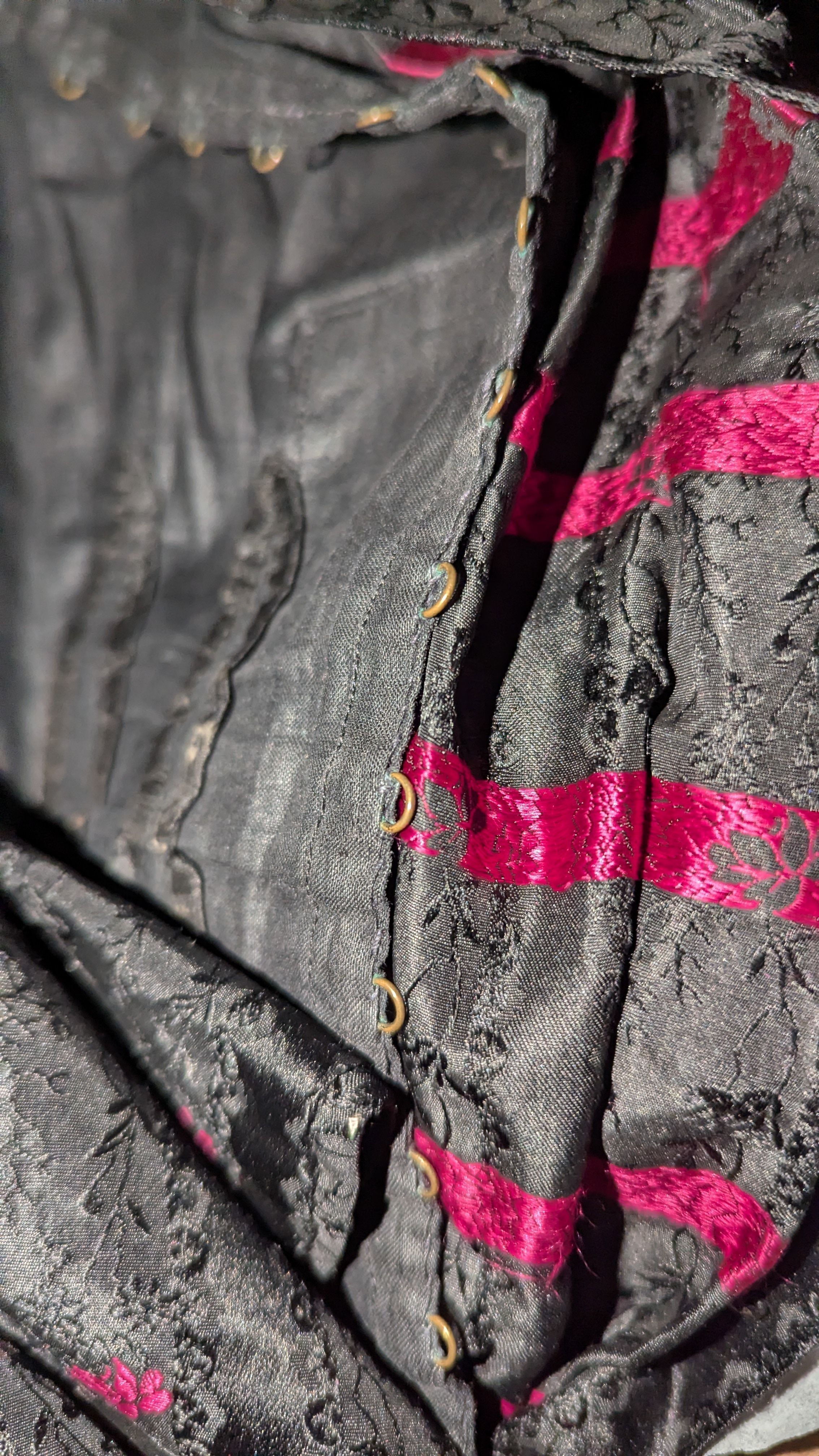
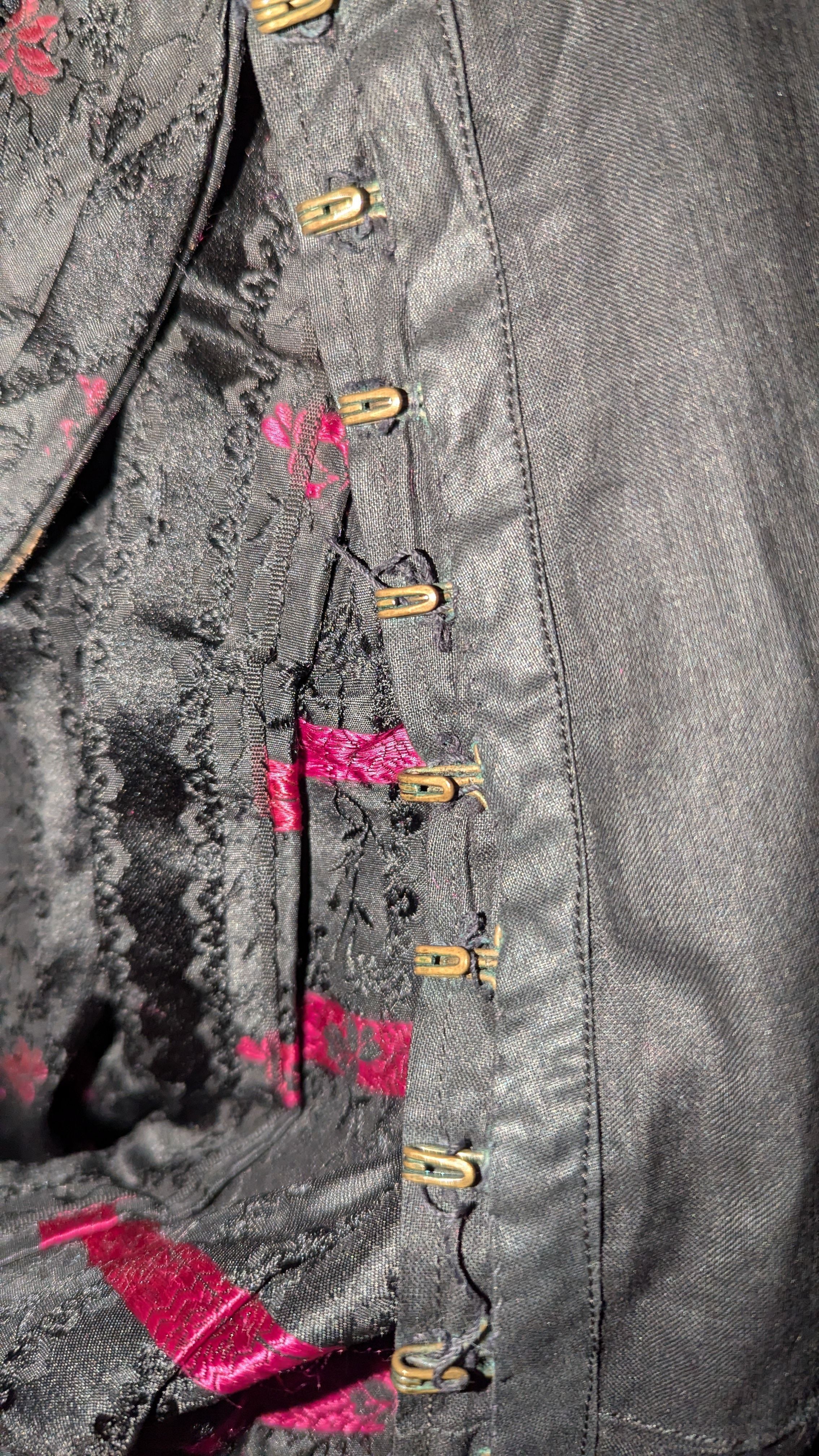
Peplum & Waist Treatment Short peplum with cartridge-style gathering Waist is stabilized with an internal grosgrain or silk waist stay, visible in the interior Original self-fabric waist ties survive This waist stay is a transitional feature — used heavily 1905–1920. Materials & Textiles Outer Fabric Black jacquard or brocade, most likely: Rayon (art silk) or rayon/silk blend Woven small floral motifs in deep rose/magenta The sheen and slight fiber breakdown visible in close-ups strongly support rayon ⚠️ Rayon was not available in the Victorian period — this alone places the garment post-1905. Lining Plain-weave cotton or cotton-rayon blend Machine stitched Shows stress and fraying consistent with age and wear, not modern distressing Lace Machine-made lace, applied at cuffs and possibly neckline Likely cotton lace rather than silk Pattern and finish are consistent with 1910s–1920s commercial lace
circa 1910 – circa 1925
Description
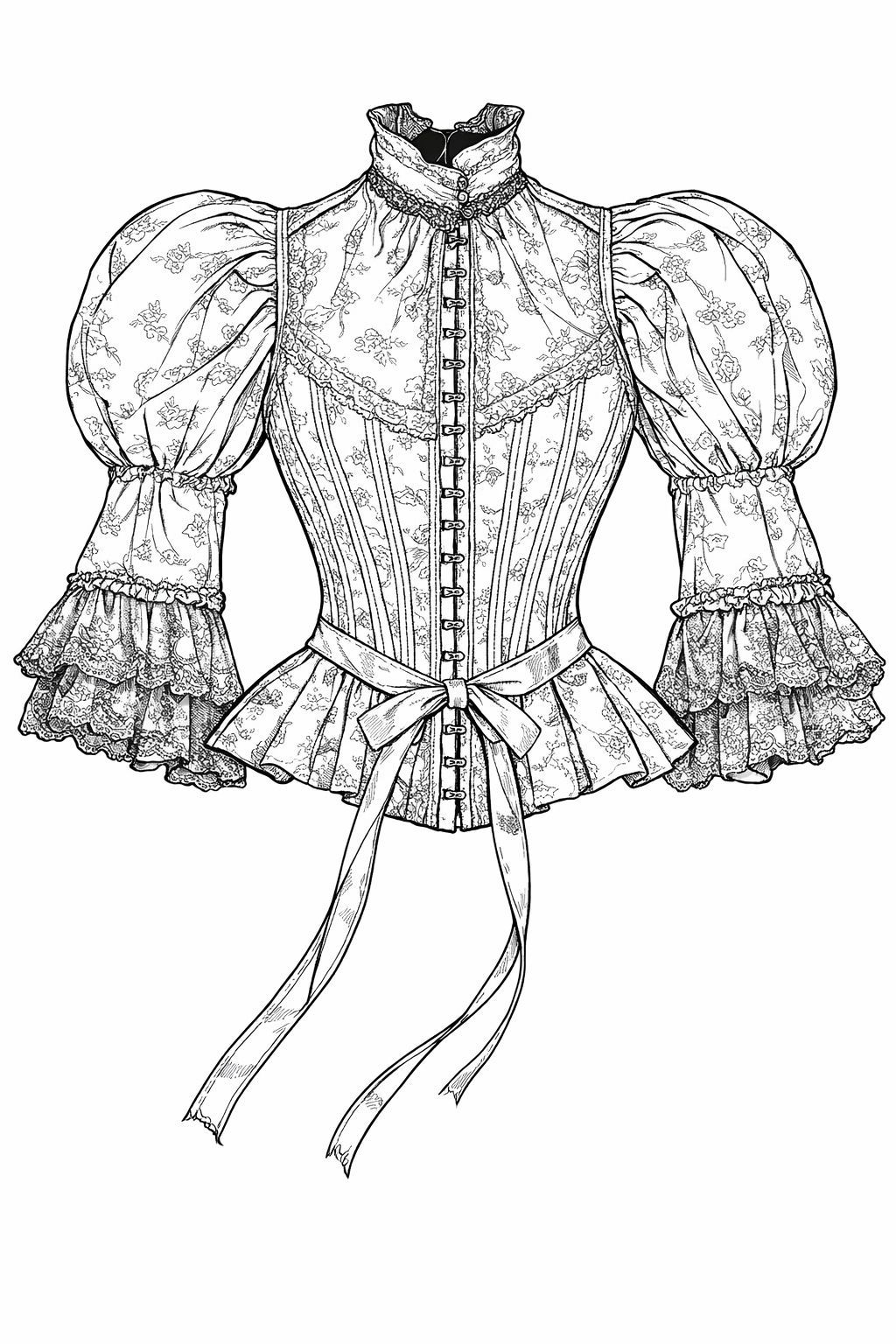
This fitted woman’s bodice exemplifies early twentieth-century fascination with Victorian dress forms, reinterpreted through modern materials and construction techniques. Executed in black jacquard woven with small rose-colored floral motifs, the garment features a boned torso, pronounced peplum, and voluminous sleeves inspired by late nineteenth-century fashion. The bodice is structured with applied boning channels sewn to the lining, creating a long, tapered silhouette without the use of lacing. A front opening with brass hook-and-eye closures reflects early twentieth-century mass-produced garment hardware. Lace-trimmed cuffs and a high neckline heighten the garment’s theatrical character. Though evocative of Victorian styles, the use of rayon fabric, machine-made lace, and exposed boning techniques firmly date the bodice to the early twentieth century. Such garments were commonly worn for evening occasions, fancy dress, or performance, embodying a romanticized vision of the past rather than historical accuracy.