
White Shirtwaist / Lingerie Blouse
Clothing/Dress/Costume
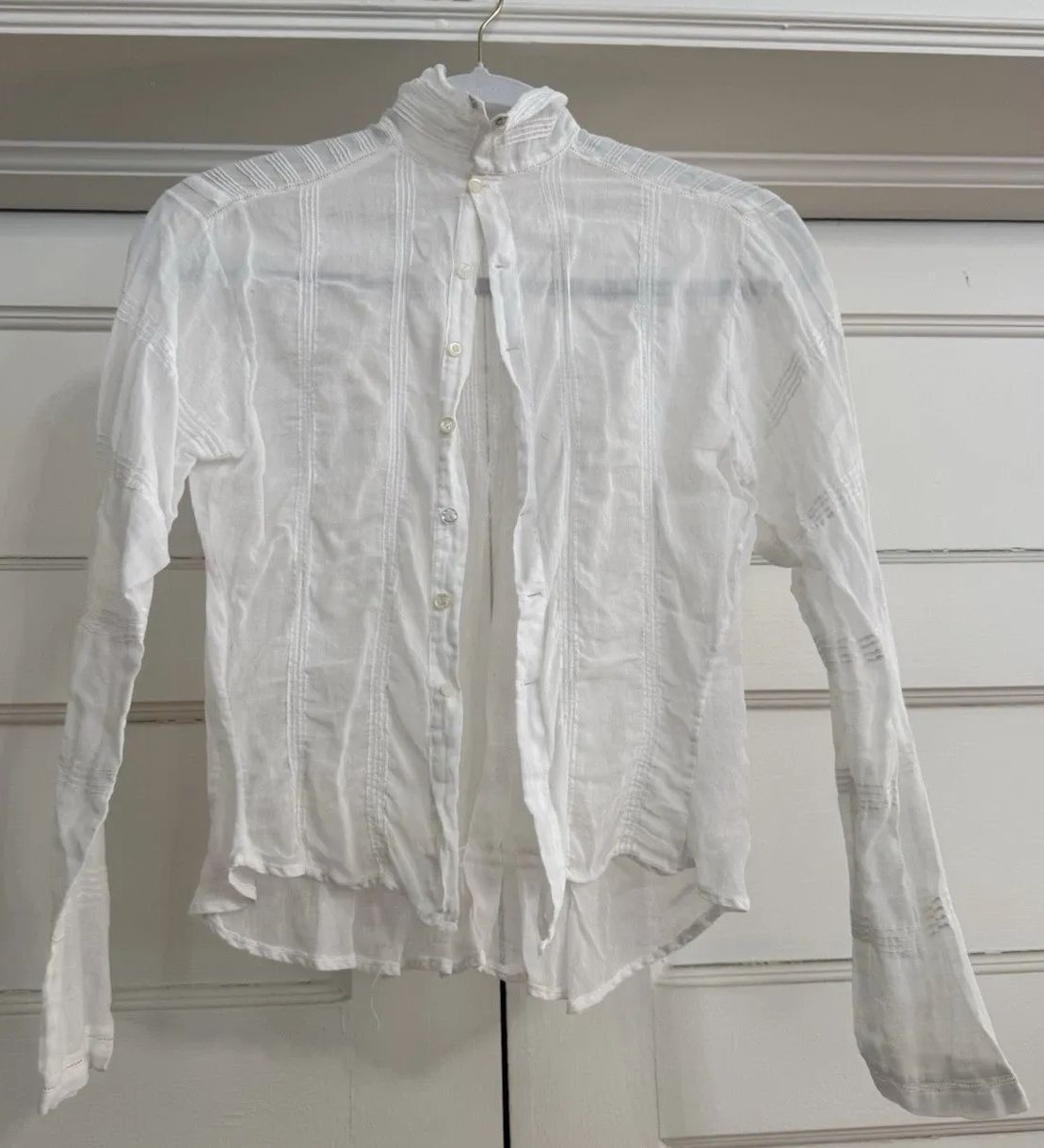
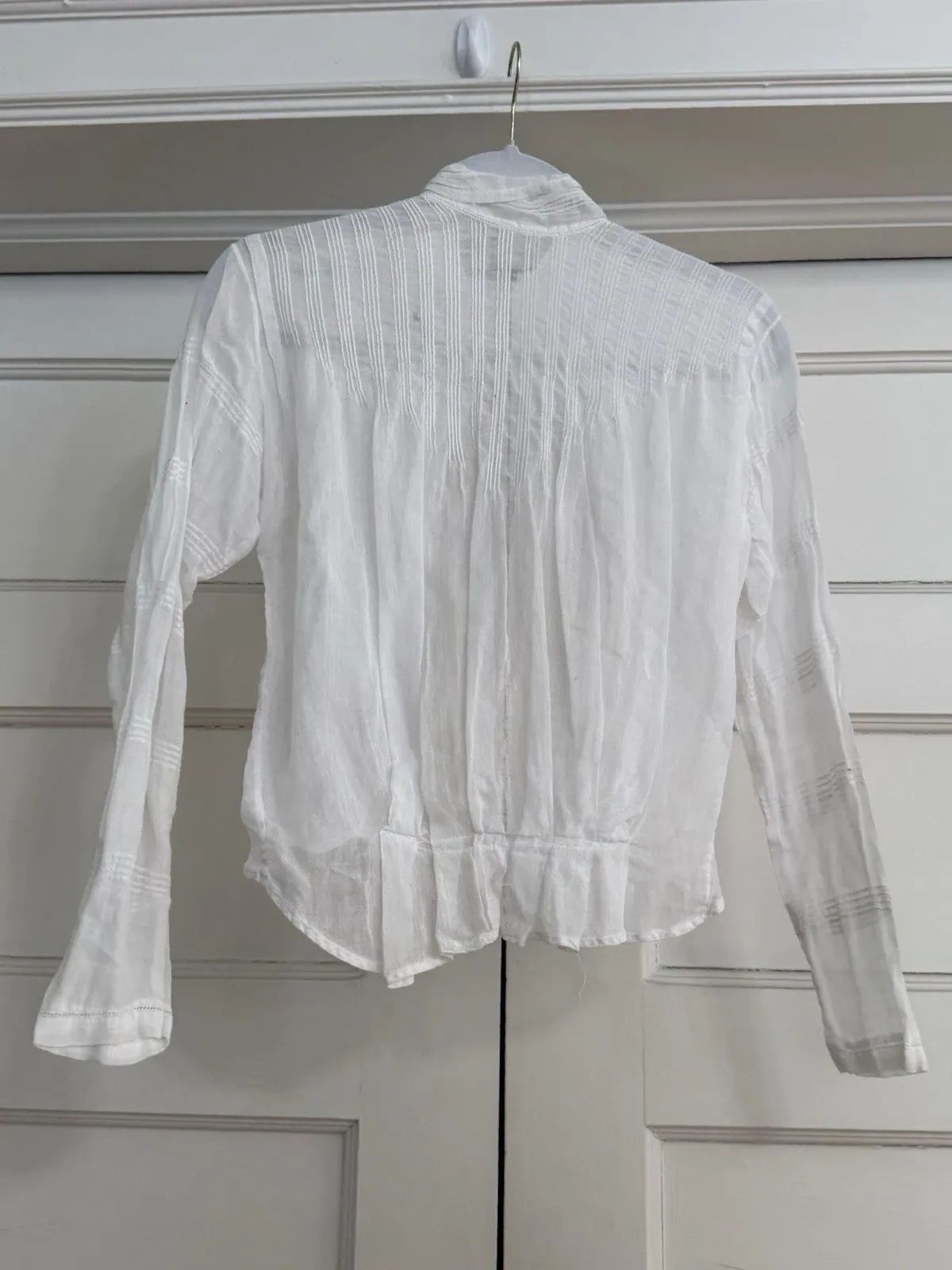
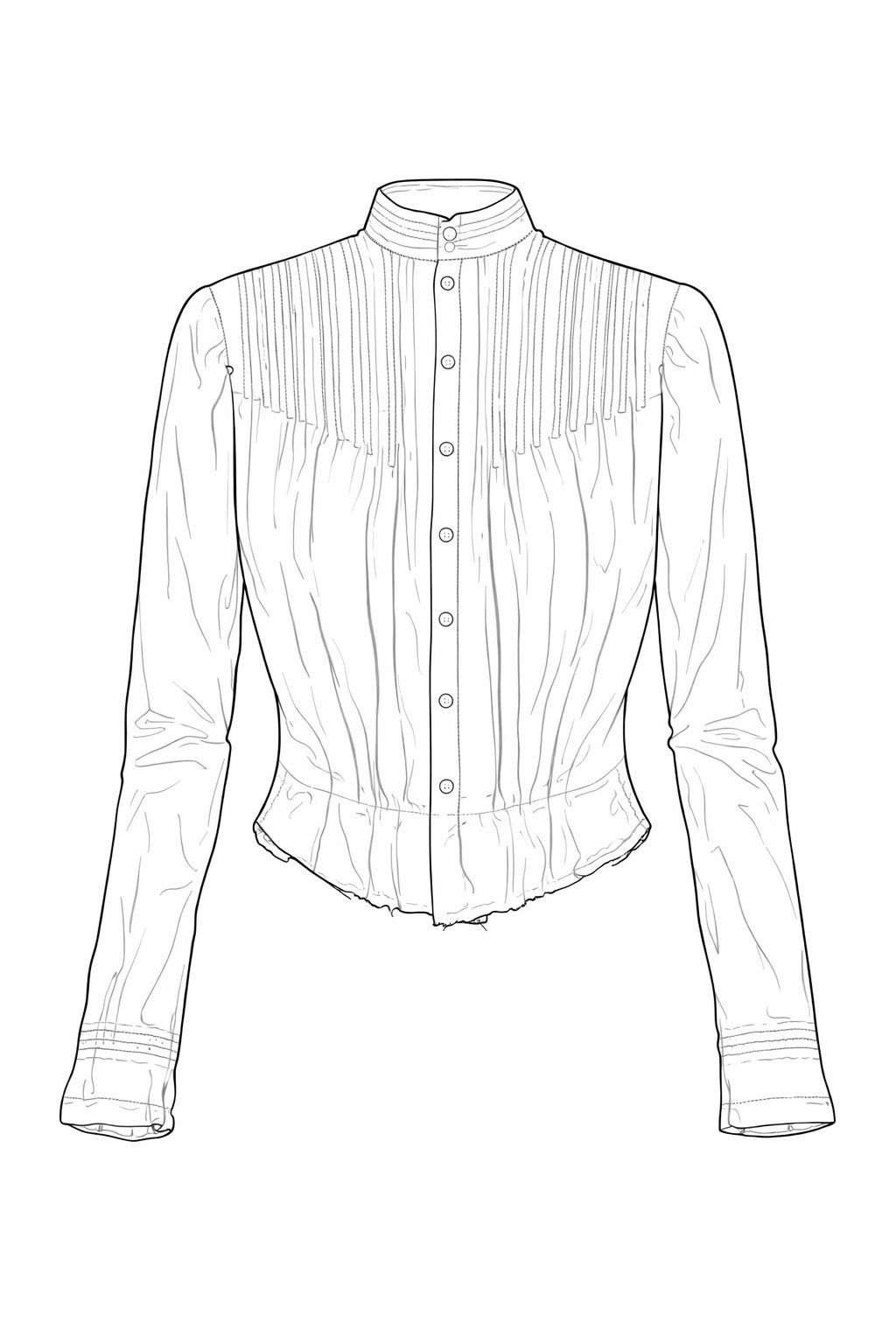
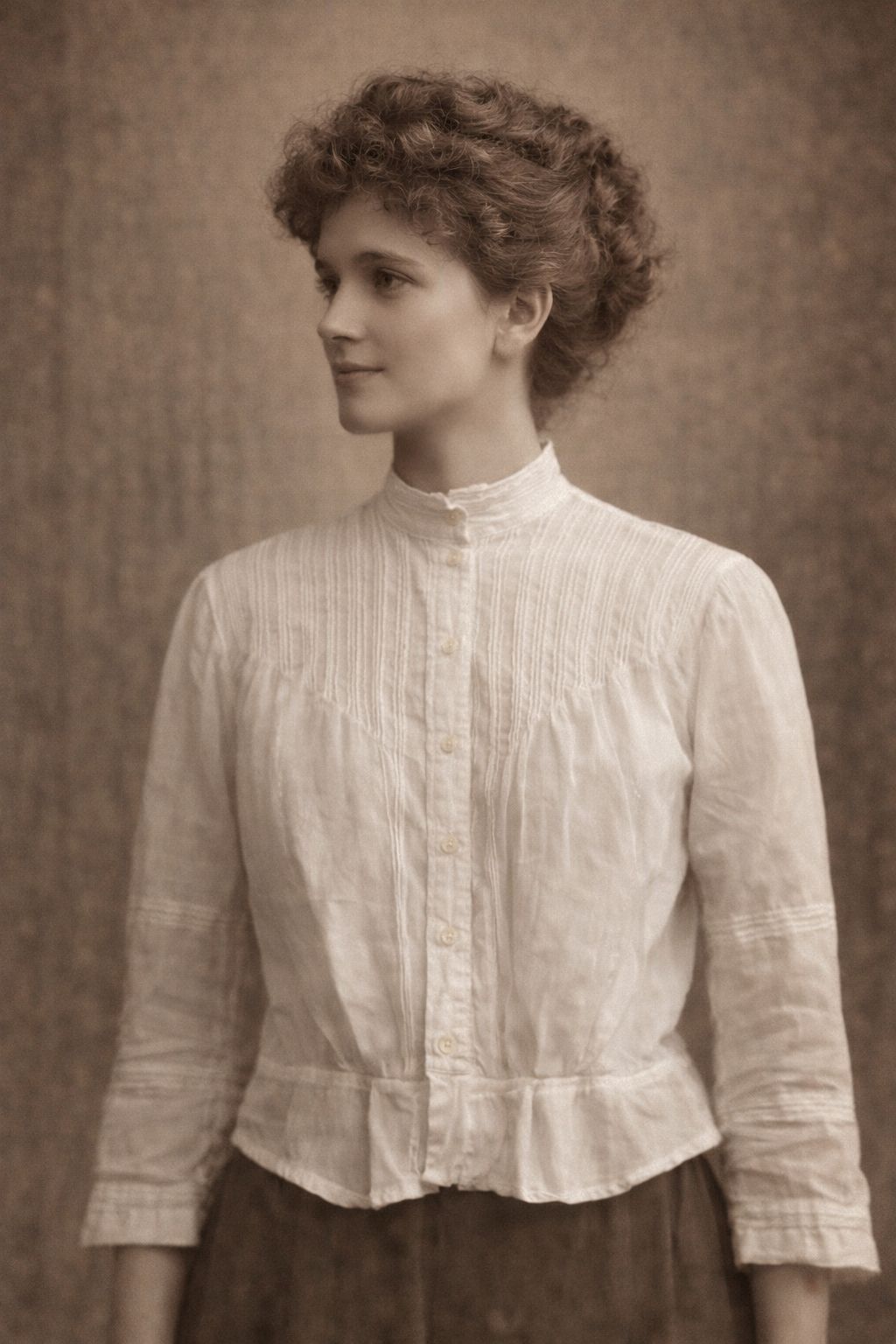
This lightweight white blouse represents the emergence of the tailored “shirtwaist” and lingerie blouse that became foundational to women’s dress at the turn of the twentieth century. Unlike heavily structured Victorian bodices, this garment is soft, washable, and designed to be worn separately from a skirt. The silhouette suggests wear over a corset and likely tucked into a gored skirt. The slight flare at the lower hem indicates it may have been worn loosely over the waistband rather than tightly fitted.
RE-CL-2026-0008
Blouse
1900’s
1890’s
Early Edwardian
Late Victorian
Blouse
Female
Cotton
White
Fabric Likely fine cotton lawn or possibly lightweight linen. Indicators: Sheer but structured weave Crisp hand Visible fine grain Slight translucency consistent with washable underblouses White cotton blouses became popular because they could be laundered frequently — a major shift from silk bodices that required delicate care. Pintucks The vertical decorative lines are: Machine-stitched narrow pintucks Evenly spaced Likely sewn using a tuck foot attachment (widely available by 1890s) Pintucks served both decorative and structural purposes, adding subtle shaping while reinforcing thin fabric. The pintucks appear on both front and back yoke area — indicating care in construction. Collar High band collar Slight curve to accommodate neck Buttoned closure at throat Possibly designed to hold detachable collar or lace collar overlay This was worn either alone or under a decorative collar, fichu, or brooch. Sleeves Moderately fitted Slight ease at upper arm Narrow cuff Subtle horizontal pintuck bands at lower sleeve The absence of extreme sleeve fullness suggests post-1897 dating. Closure Center-front placket Small mother-of-pearl buttons Likely machine-set buttonholes Pearl buttons were extremely common for lingerie blouses of this period.
circa 1895 – circa 1908
Edwardian
North America
American or European
Very Good
Feb 12, 2026
Minor discoloration visible Some stress along lower hem Slight wrinkling from hanging storage No visible major tears White cotton survives better than silk from this period.
Historical Note
The shirtwaist revolutionized women’s dress: Allowed mix-and-match wardrobes More affordable than full dress bodices Associated with the “New Woman” and increasing female workforce Became symbolic of middle-class modernity These blouses were worn: For daywear For office or teaching positions For bicycling and active movement Under tailored jackets They represent the democratization of fashion at the turn of the century.