
Woman’s Evening Cape (Mantle)
Clothing/Dress/Costume
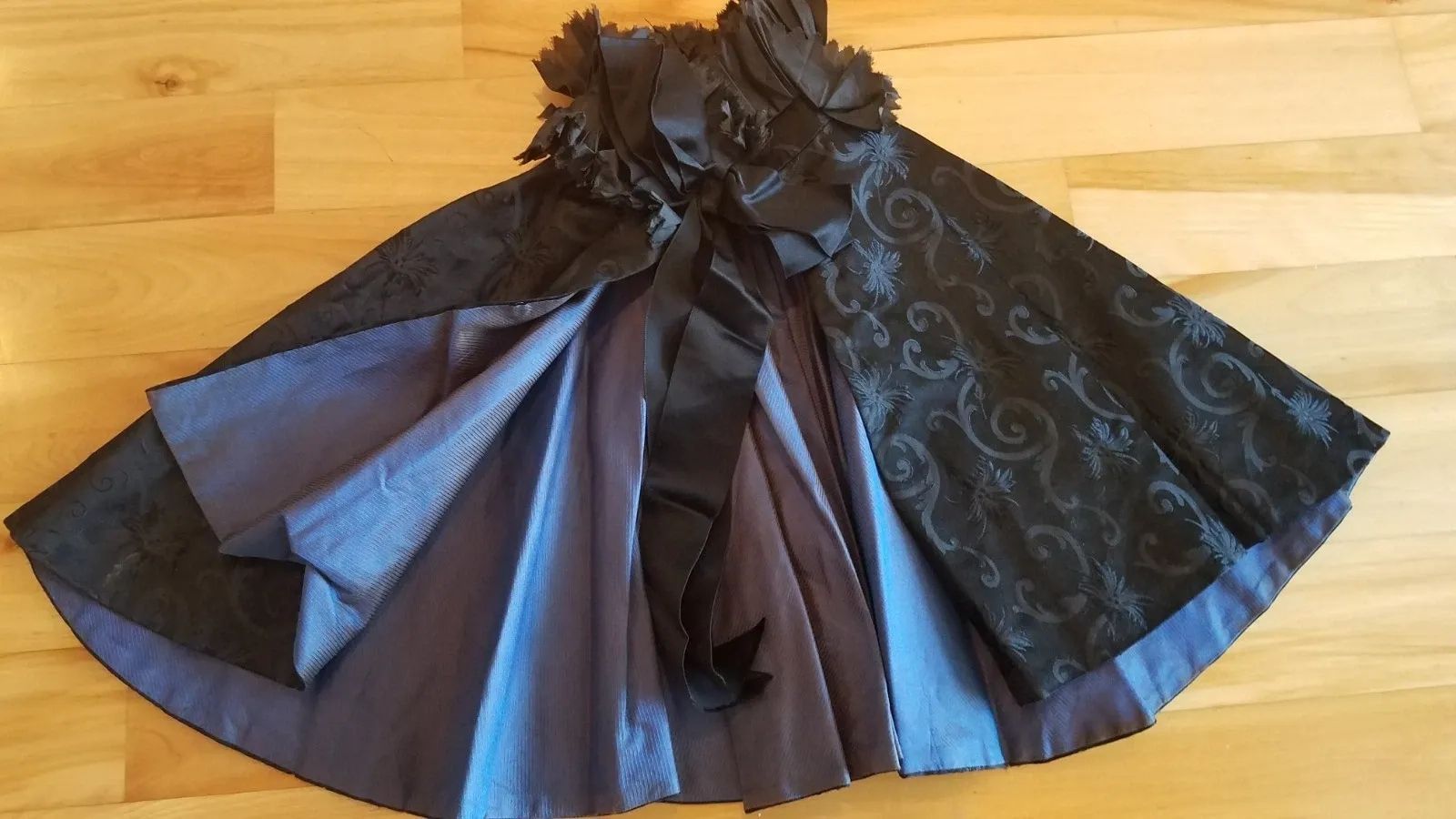
This Victorian mantle is a short, structured shoulder cape designed to be worn over a fitted bodice, characteristic of late 19th-century outerwear intended for formal or semi-formal use. The garment combines contrasting silk textiles, complex pleating, and decorative neck treatment, reflecting the period’s emphasis on layered texture and controlled volume.
RE-CL-2026-003
Cape/Mantle
Cape
Mantle
Woman
Victorian
Cape
Mantle
Female
Taffeta
Silk
Black
Blue
Corded passementerie embroidery
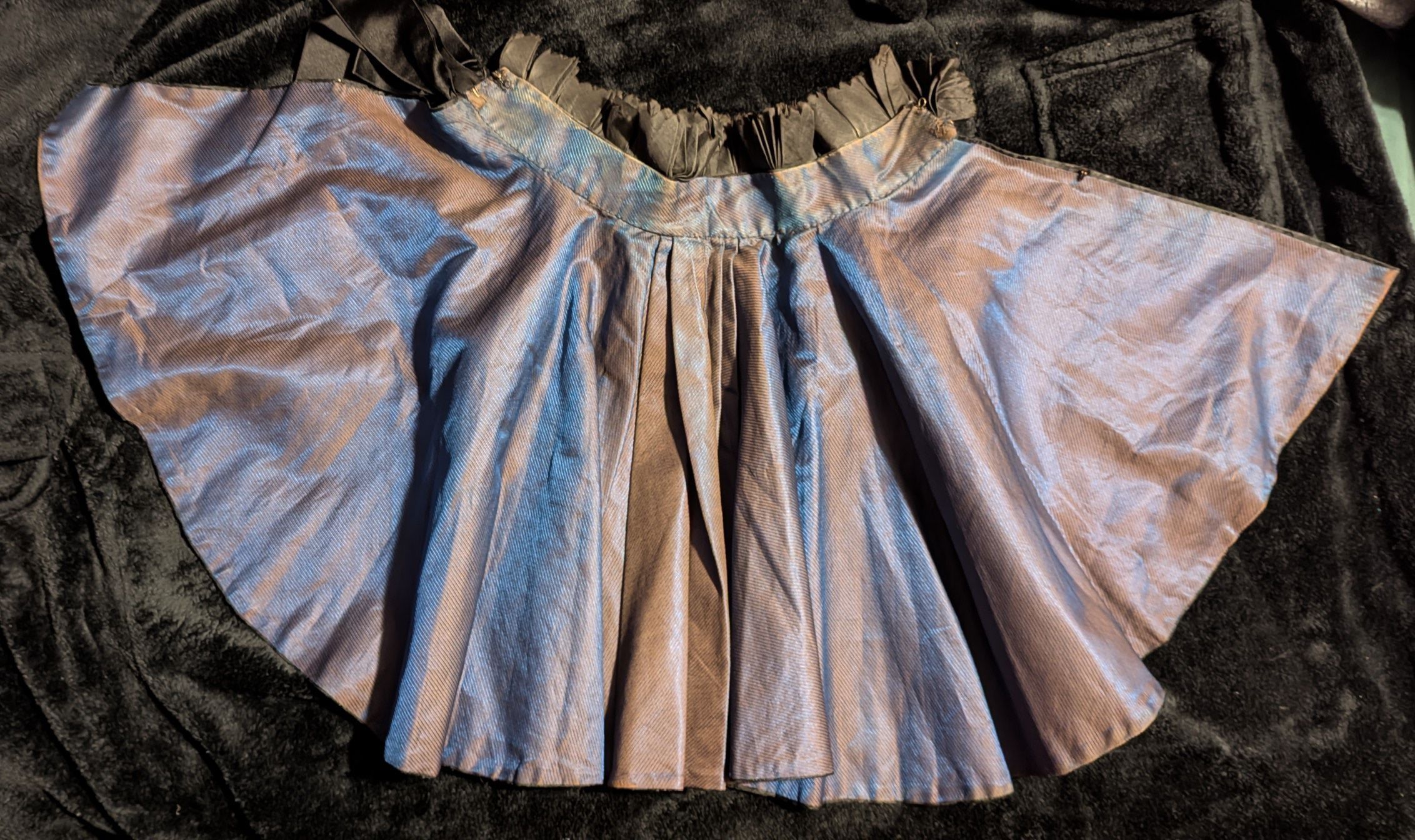
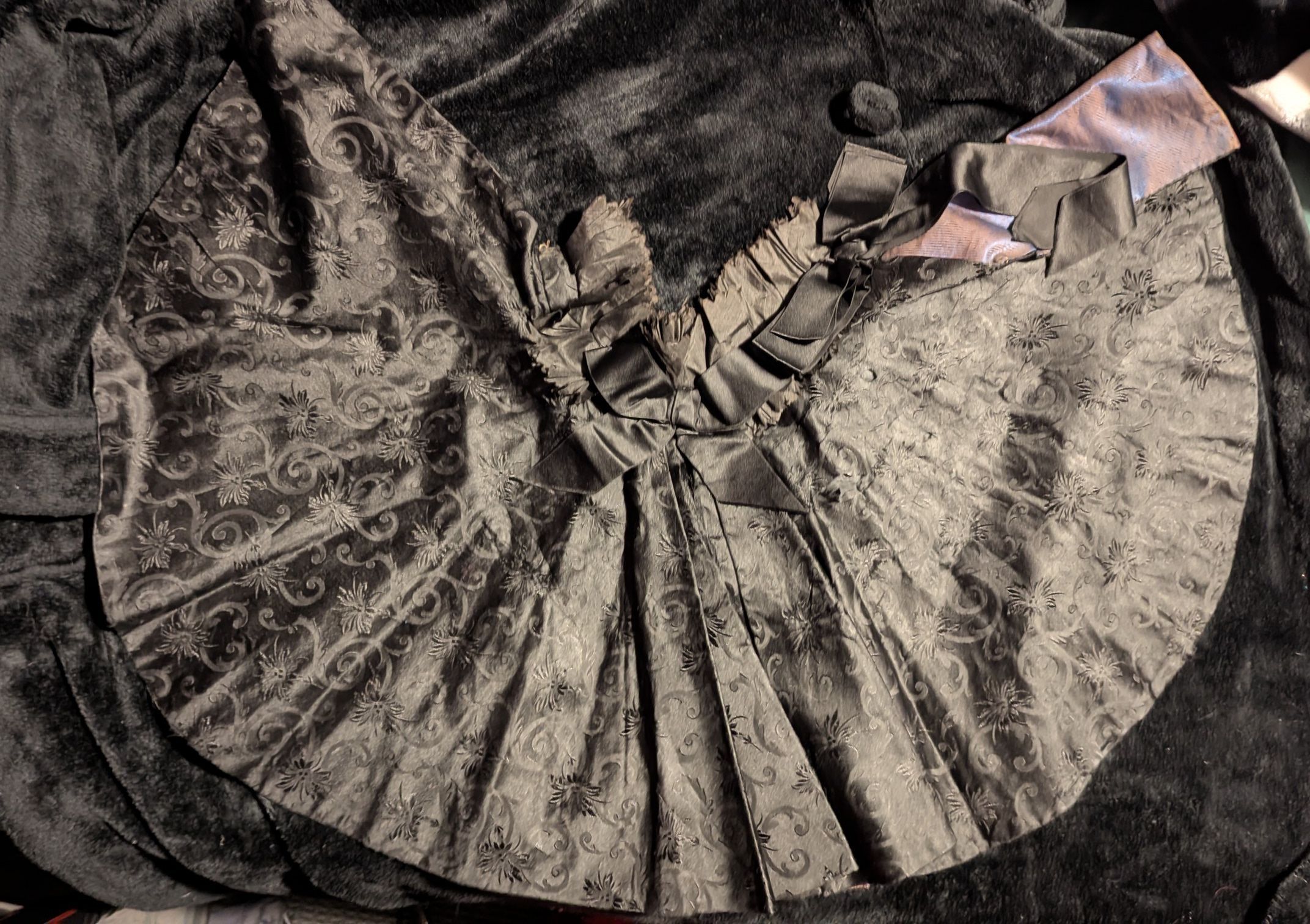
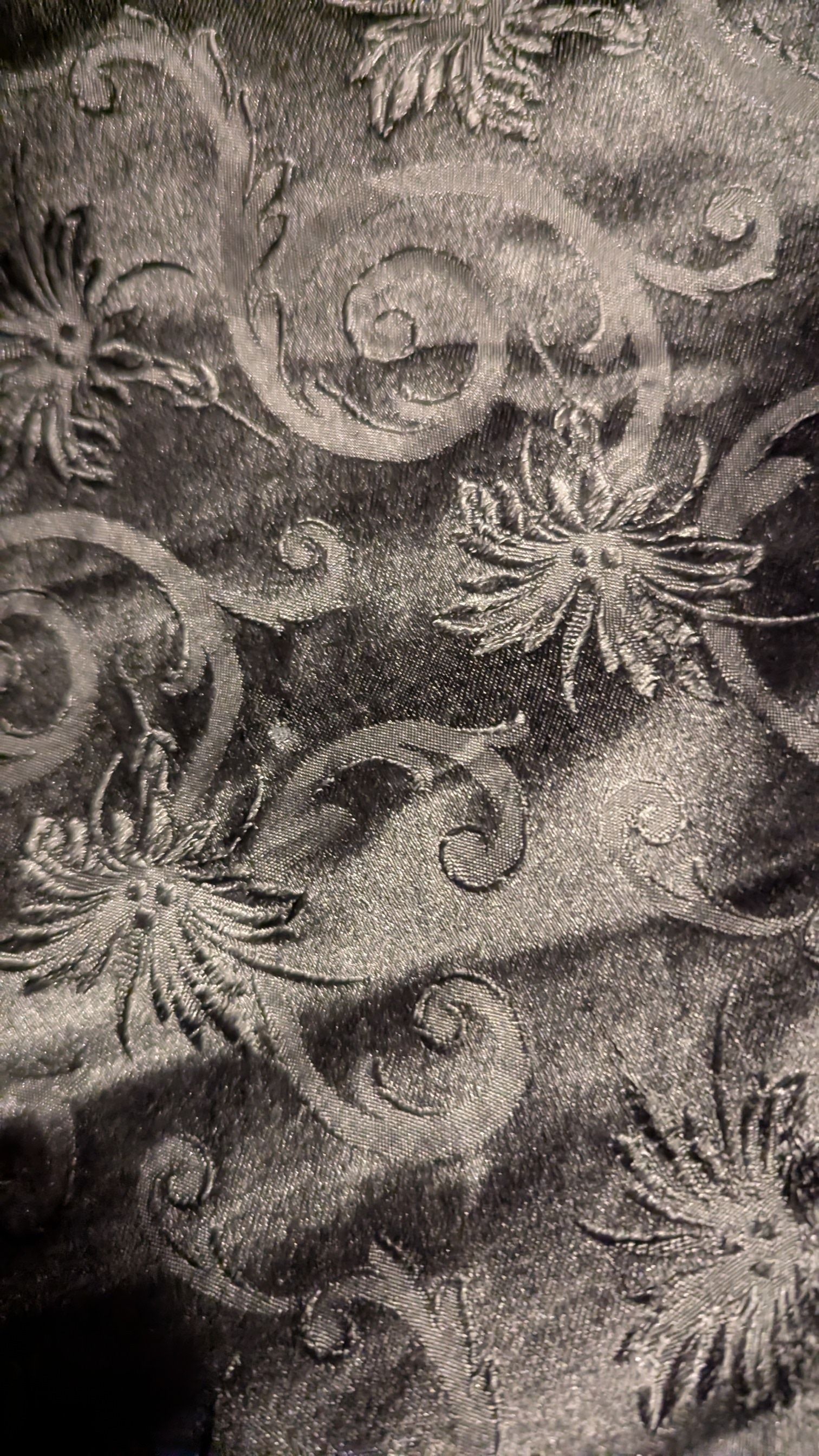
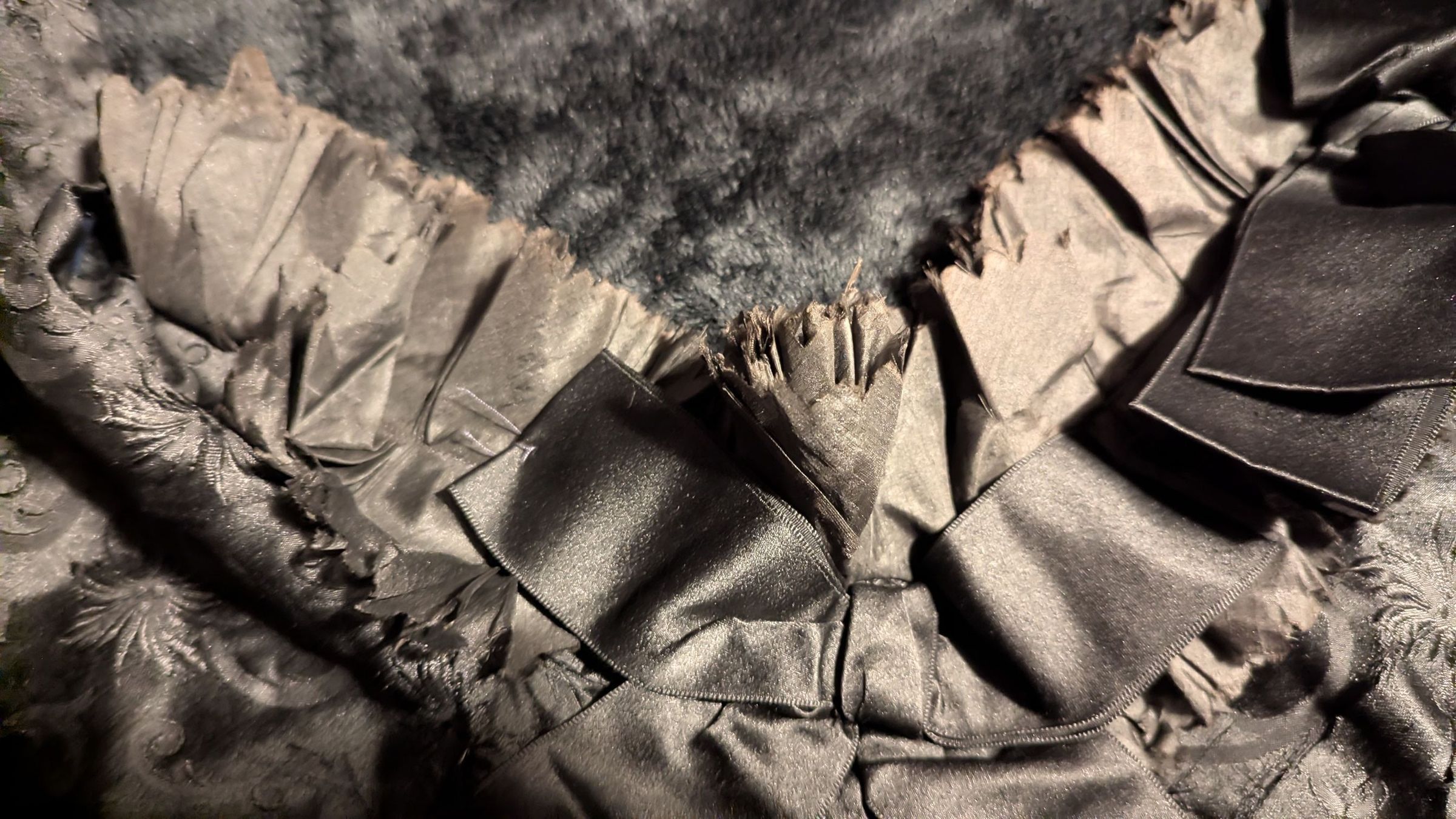
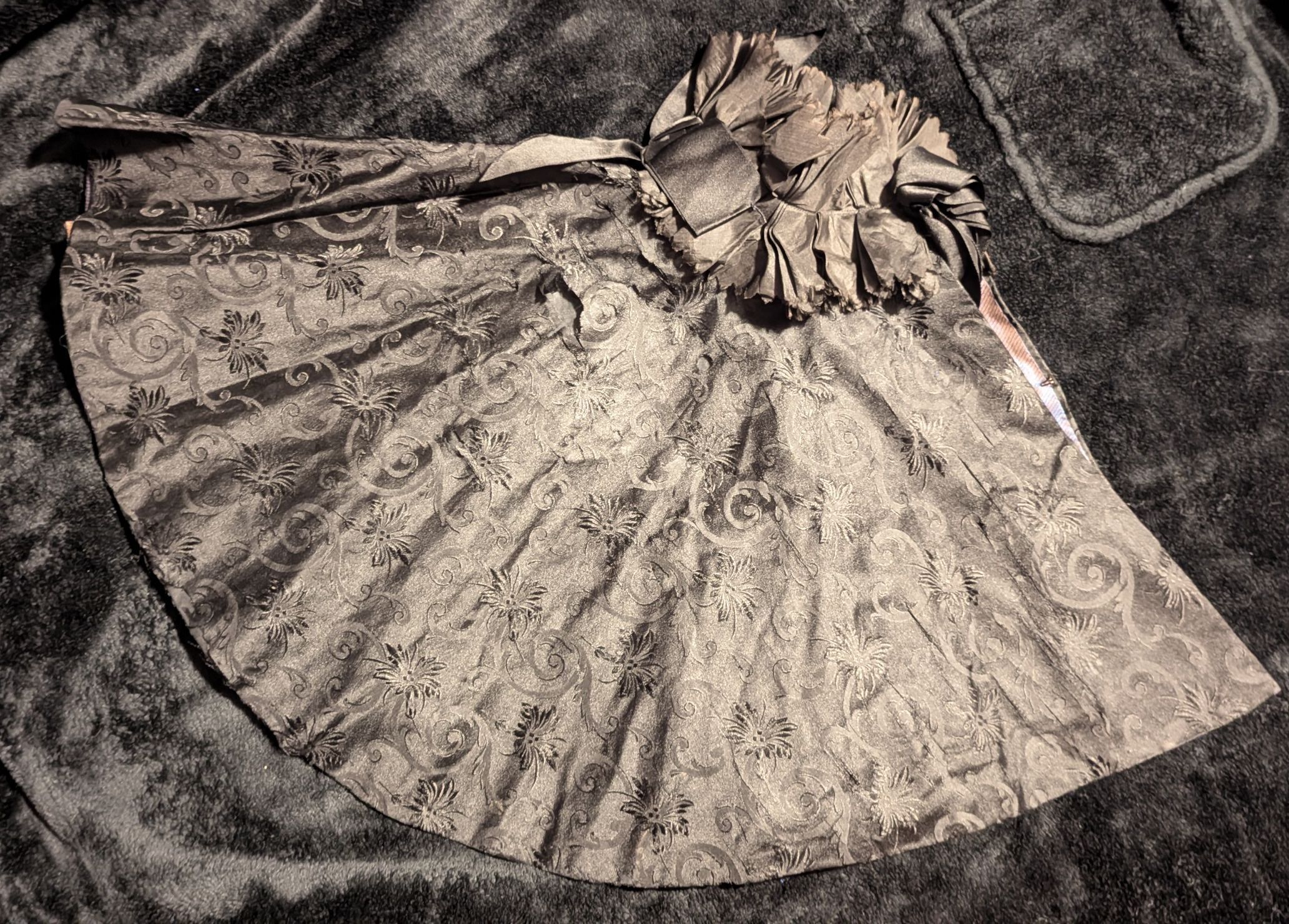
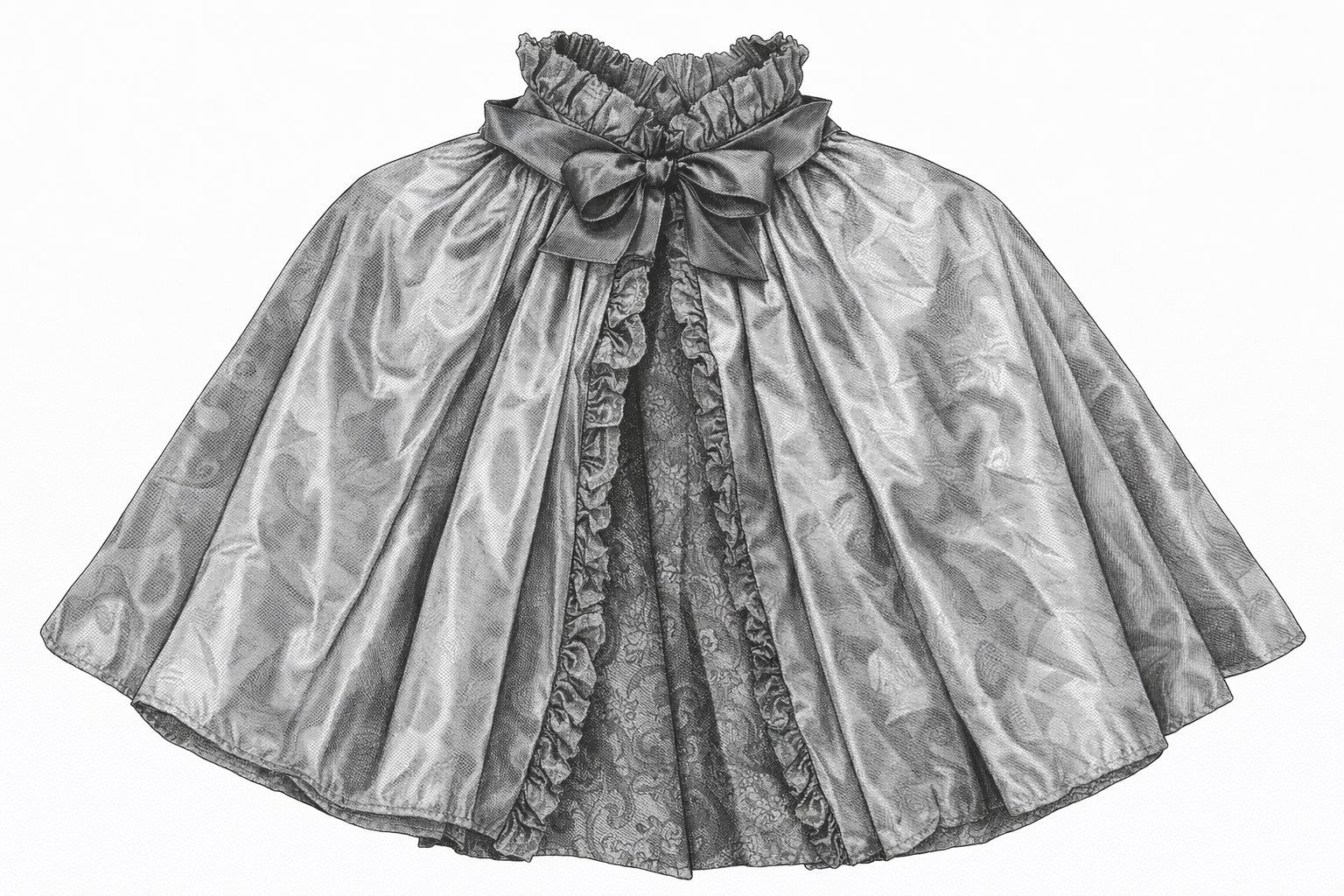
The mantle is cut in a shallow semicircular shape, forming a cropped cape that drapes smoothly over the shoulders and upper arms. The silhouette is achieved through knife pleating and controlled gathering at the neckline, allowing fullness at the hem while maintaining a structured collar area. The interior appears lightly structured but not boned, relying instead on pleat engineering and textile weight for shape. The neckline is finished with a ruched silk collar, composed of finely pleated strips of silk arranged vertically and secured to a narrow neckband. This collar both frames the neck and conceals the functional closure beneath. Exterior Fabric: The outer layer appears to be a silk jacquard or figured silk satin, woven with a repeating floral and scroll motif. The raised pattern catches light subtly, creating tonal variation across the surface—an effect favored in late Victorian fashion for its richness without excessive color contrast. Interior / Lining Fabric: The lining is a contrasting silk—likely a taffeta or faille—with a visible ribbed texture and lighter tone. In several images, the lining is visible beneath the outer layer, suggesting intentional contrast rather than purely hidden construction. This interplay of dark patterned exterior and lighter interior adds depth when the mantle is in motion. Decorative Elements At the center neckline, the mantle is adorned with layered silk bows, constructed from wide satin ribbon. These bows serve both decorative and functional purposes, likely concealing a hook-and-eye or tie closure beneath. The bows are asymmetrically layered, adding softness and visual interest to the otherwise structured neckline. The ruched collar extends partially around the neckline, framing the bows and continuing into gathered fabric panels that enhance the sense of vertical texture. Stitching & Techniques Fine hand stitching is visible along the collar gathers and bow attachment points. The pleats are evenly spaced and sharply defined, indicating careful pressing and skilled tailoring.
circa 1870 – circa 1880
Victorian
19th Century
England
Function & Wear This mantle would have been worn over an evening bodice or day dress, providing modest warmth while enhancing the silhouette. Its length and decorative emphasis suggest use for social occasions rather than practical outdoor wear, aligning it with parlour visits, theatre attendance, or formal outings.
This piece is an excellent example of late Victorian outerwear craftsmanship, illustrating: Transitional fashion between heavier cloaks and lighter decorative capes The Victorian preference for layered textures and tonal contrast Skilled use of pleating and silk manipulation to create form without rigid structure
Good
Jan 30, 2026
The mantle shows expected age-related wear, particularly: Minor fraying and fragmentation at the edges of the ruched silk collar, consistent with silk degradation. Light creasing and surface wear to the jacquard weave. Overall structural integrity remains intact, with pleats, lining, and decorative elements largely preserved. These signs of wear are typical for silk garments of this era and do not detract from its historical or display value.
Description
Silk jacquard, silk taffeta lining, silk ribbon Possibly American or European manufacture This short Victorian mantle exemplifies the refined outerwear worn by women during the late nineteenth century, when layered garments played a crucial role in both fashion and social presentation. Cut in a shallow semicircular form, the mantle is designed to rest over the shoulders and upper arms, providing warmth while complementing the fitted bodices and structured silhouettes fashionable at the time. The exterior is constructed of black silk jacquard woven with a repeating floral and scrolling motif, creating subtle tonal variation as the fabric catches the light. The interior is lined with a contrasting silk, visible at the hem and within the pleated construction, adding depth and visual interest when worn. Fullness is achieved through carefully arranged knife pleats and gathering at the neckline, allowing the garment to drape fluidly while maintaining a controlled shape. The neckline is finished with a ruched silk collar composed of finely pleated strips, framing the neck and concealing the functional closure beneath. Layered silk ribbon bows at the center front serve both decorative and practical purposes, emphasizing the garment’s ornamental character while securing it at the throat. The mantle exhibits areas of silk degradation and wear, particularly at the collar and edges, consistent with the aging of weighted silks commonly used during this period. Although no longer suitable for wear, the garment remains a valuable study object, illustrating Victorian textile choices, construction techniques, and the aesthetic balance between structure and embellishment in late nineteenth-century women’s fashion.