
Woman's Brown Wool and Velvet Bodice (Six-Button Front)
Clothing/Dress/Costume
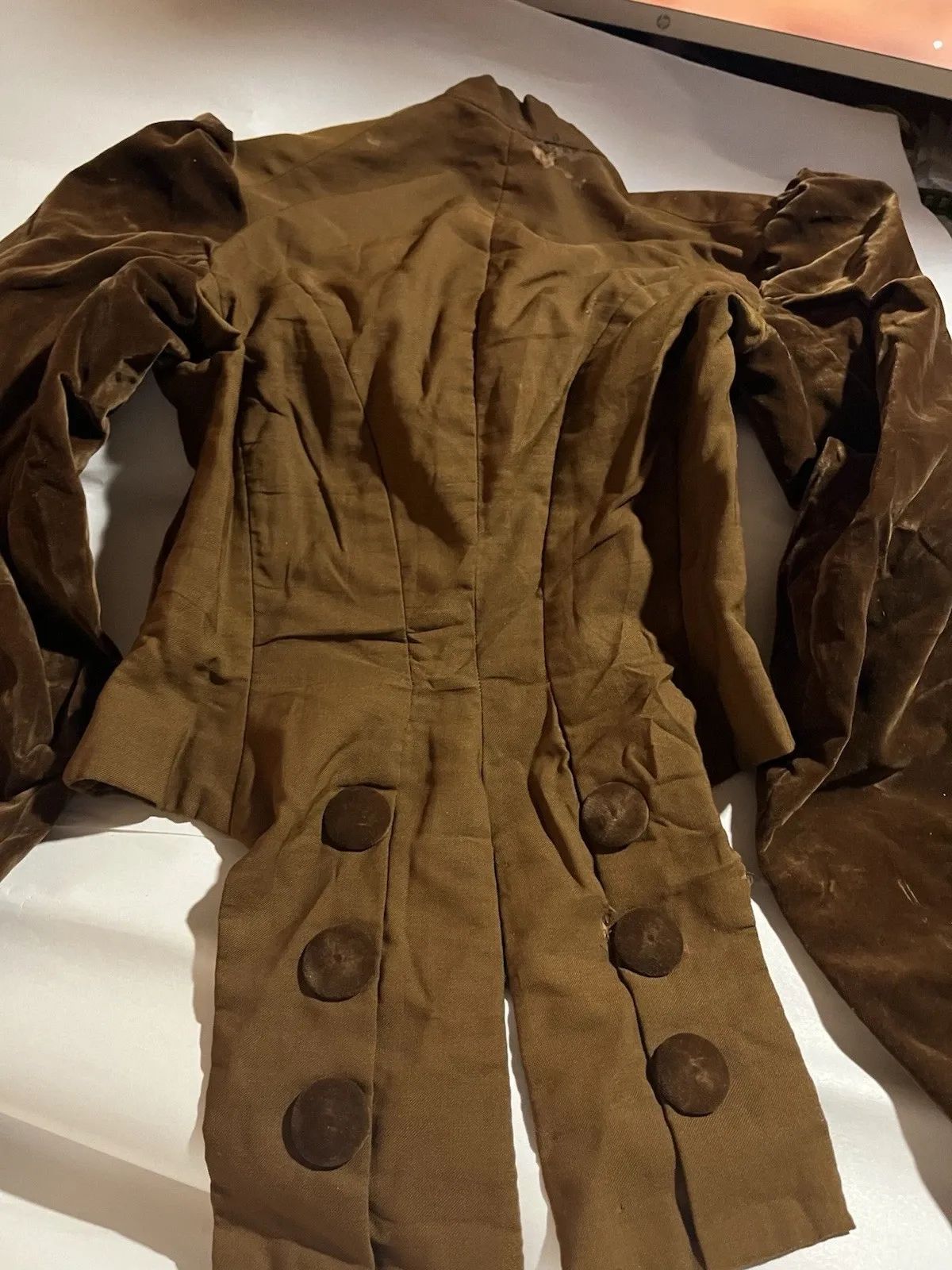
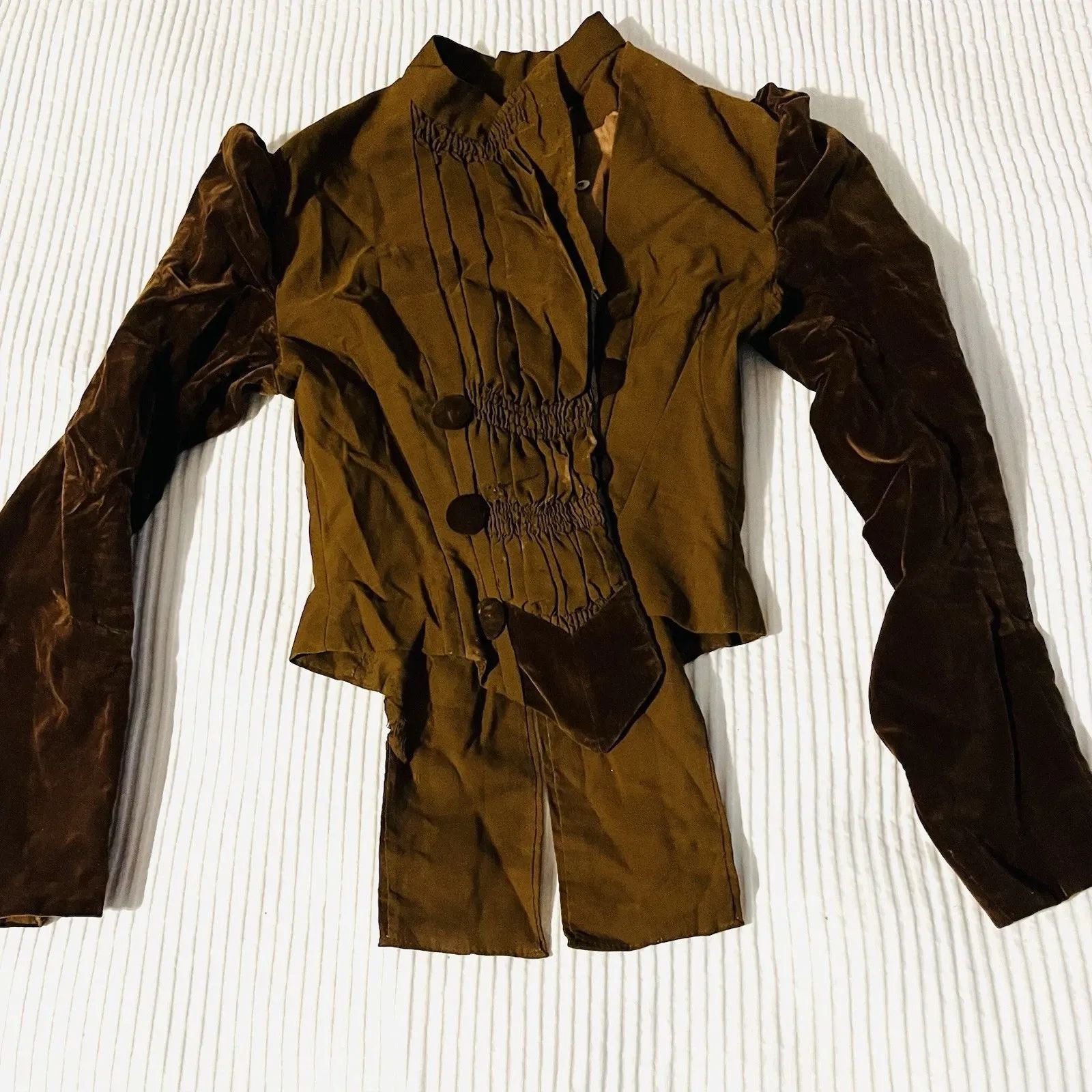
Fashionable late Victorian fitted bodice constructed of brown wool with luxurious silk velvet sleeves, decorative shirred front panel, and six oversized velvet-covered buttons. Designed to be worn over a corset with a matching skirt, the bodice represents the tailored daywear popular during the mid-1890s.
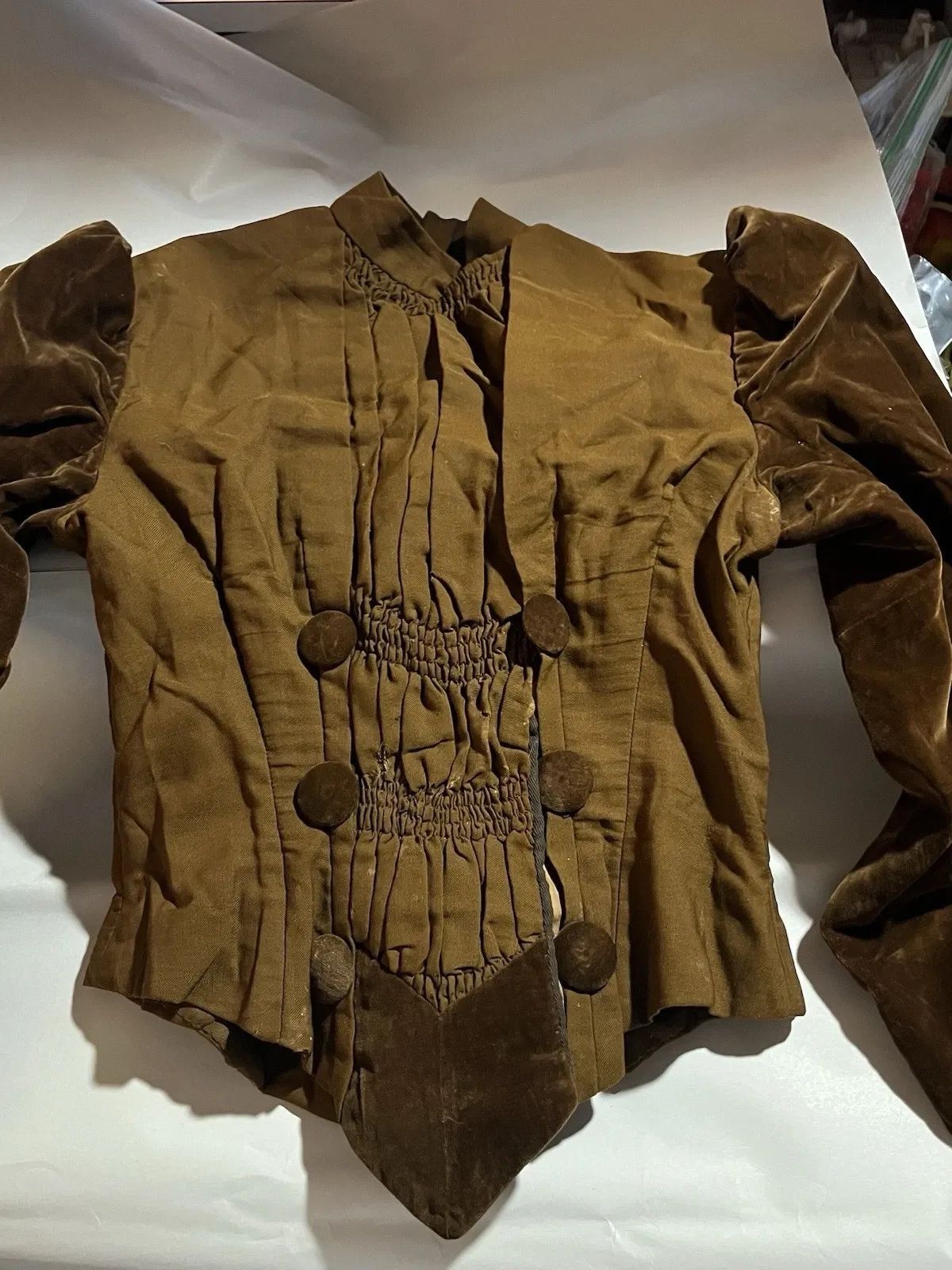 Woman's Brown Wool and Velvet Bodice (Six-Button Front)
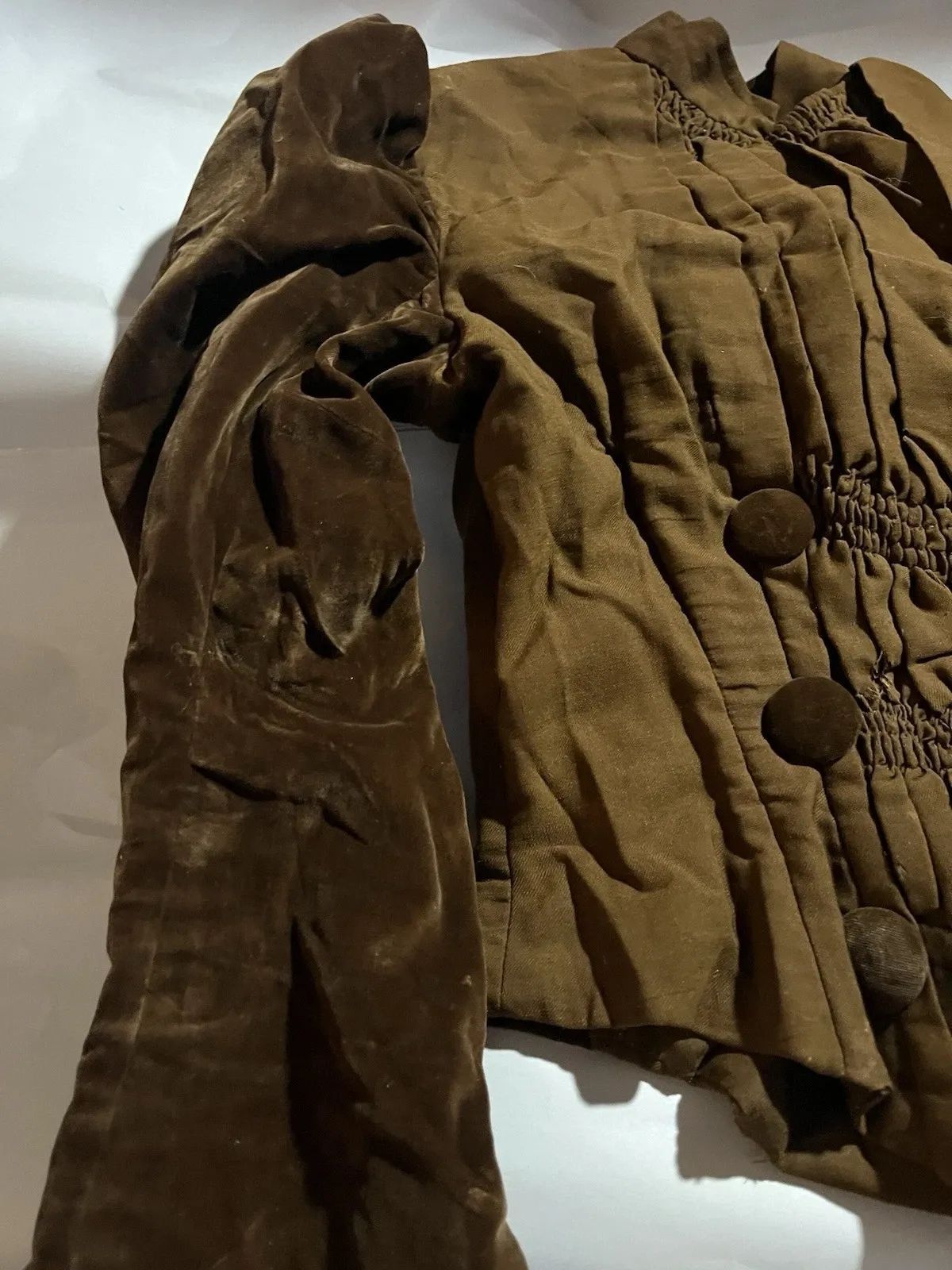 Woman's Brown Wool and Velvet Bodice (Six-Button Front) – Image 2
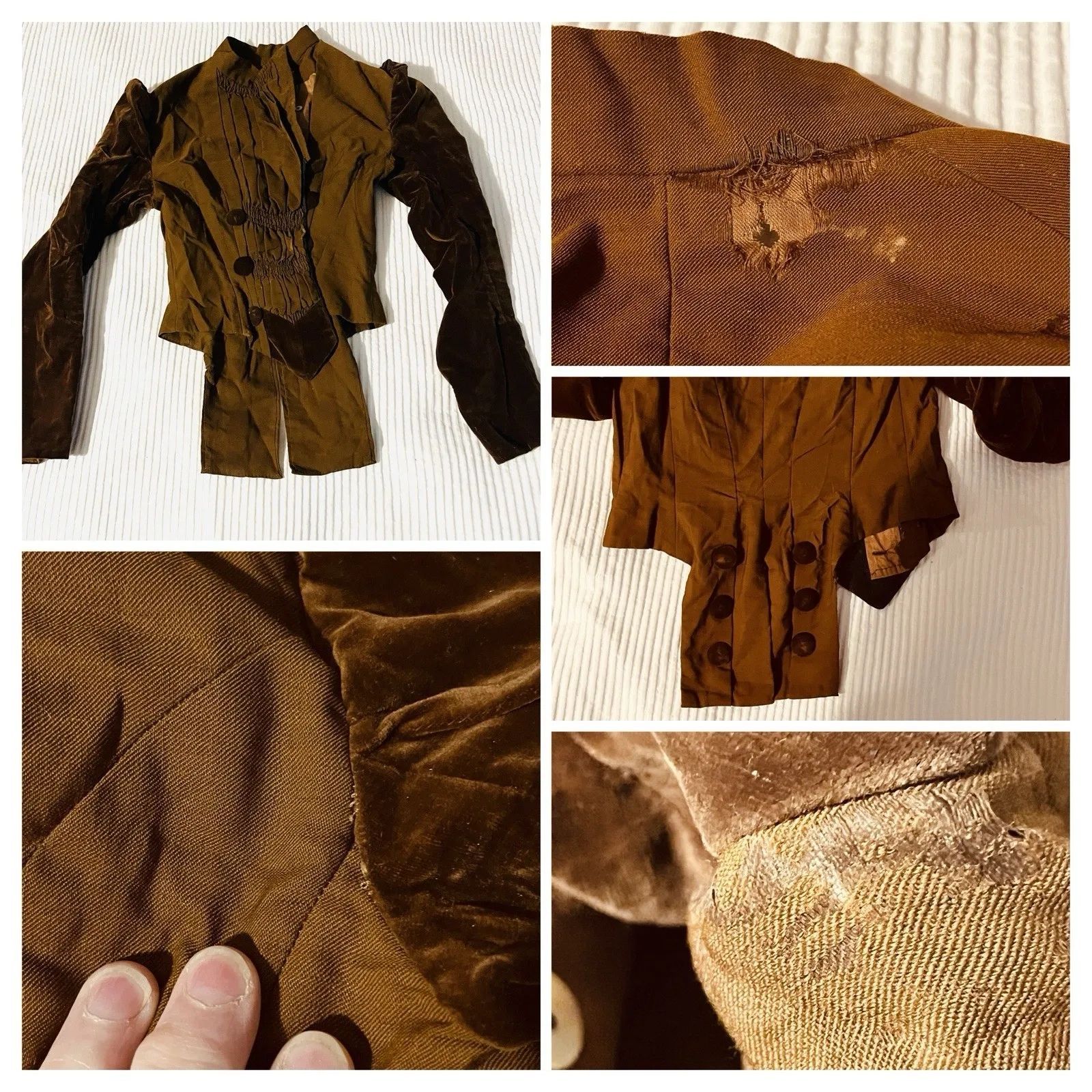 Woman's Brown Wool and Velvet Bodice (Six-Button Front) – Image 3
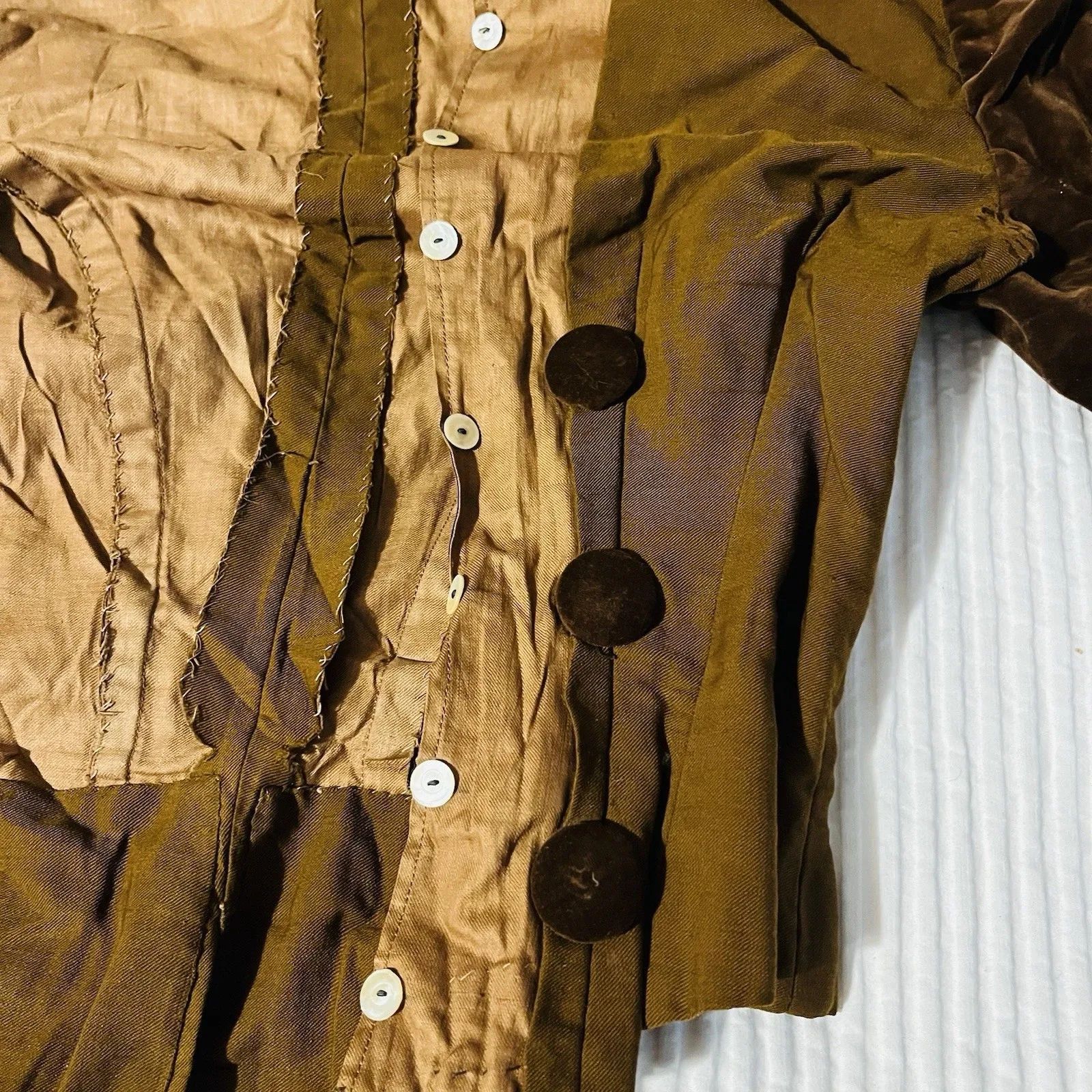 Woman's Brown Wool and Velvet Bodice (Six-Button Front) – Image 4
 Woman's Brown Wool and Velvet Bodice (Six-Button Front) – Image 5
 Woman's Brown Wool and Velvet Bodice (Six-Button Front) – Image 6
 Woman's Brown Wool and Velvet Bodice (Six-Button Front) – Image 7
 Woman's Brown Wool and Velvet Bodice (Six-Button Front) – Image 8
 Woman's Brown Wool and Velvet Bodice (Six-Button Front) – Image 9
 Woman's Brown Wool and Velvet Bodice (Six-Button Front) – Image 10
RE-CL-2026-0017
Late Victorian
Buttoned Bodice
Bodice
Female
Wool
Silk
Canvas
Cotton
Brown
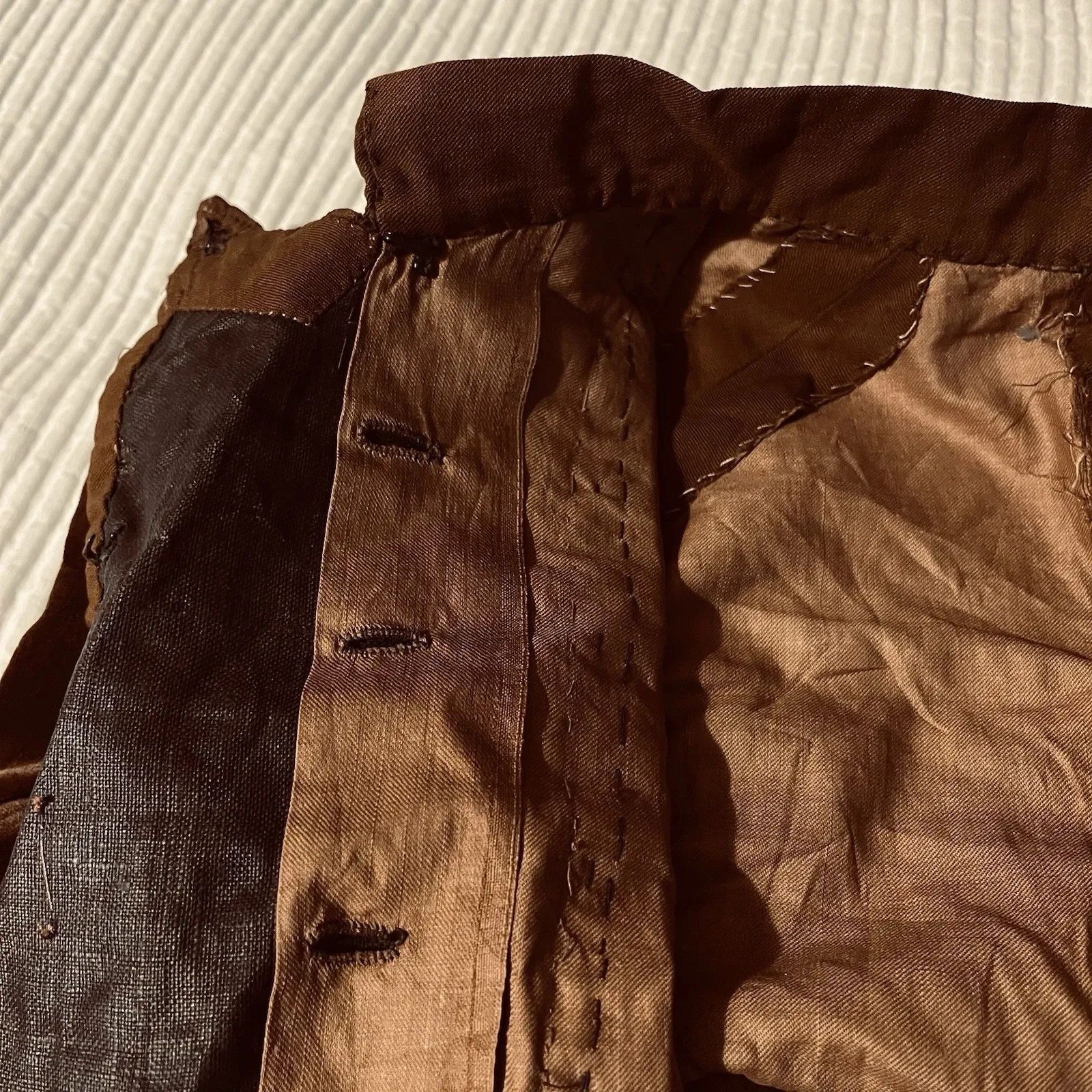
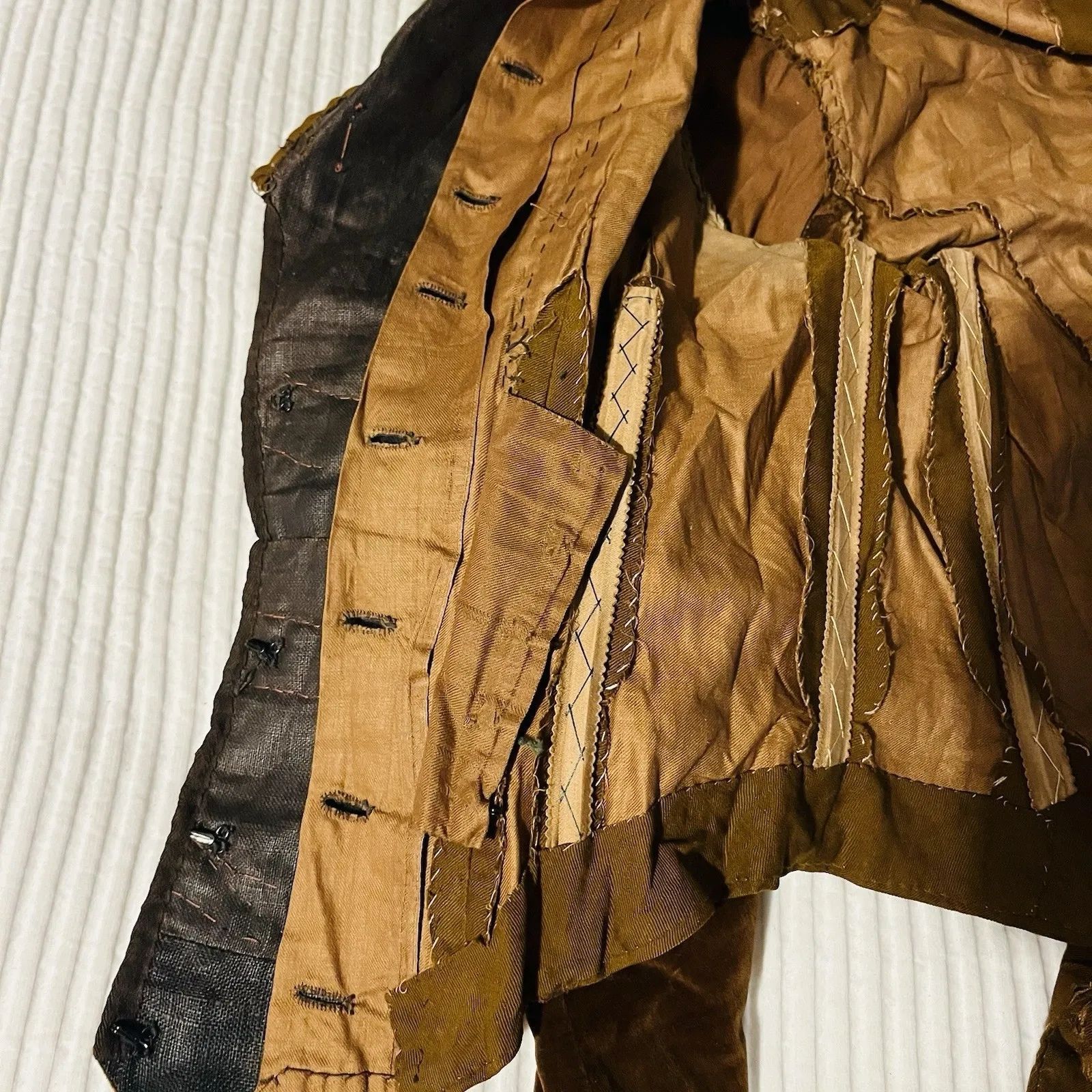
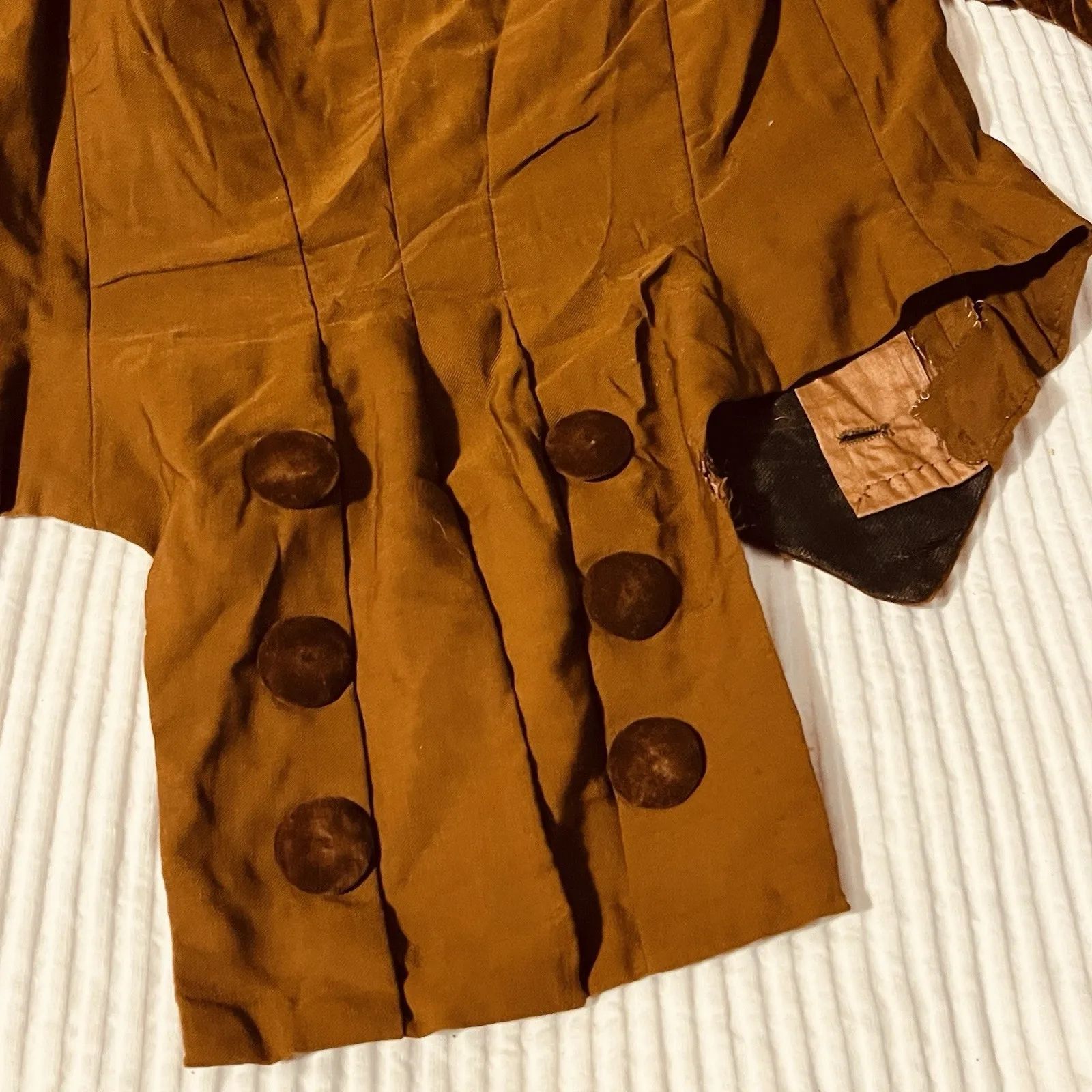
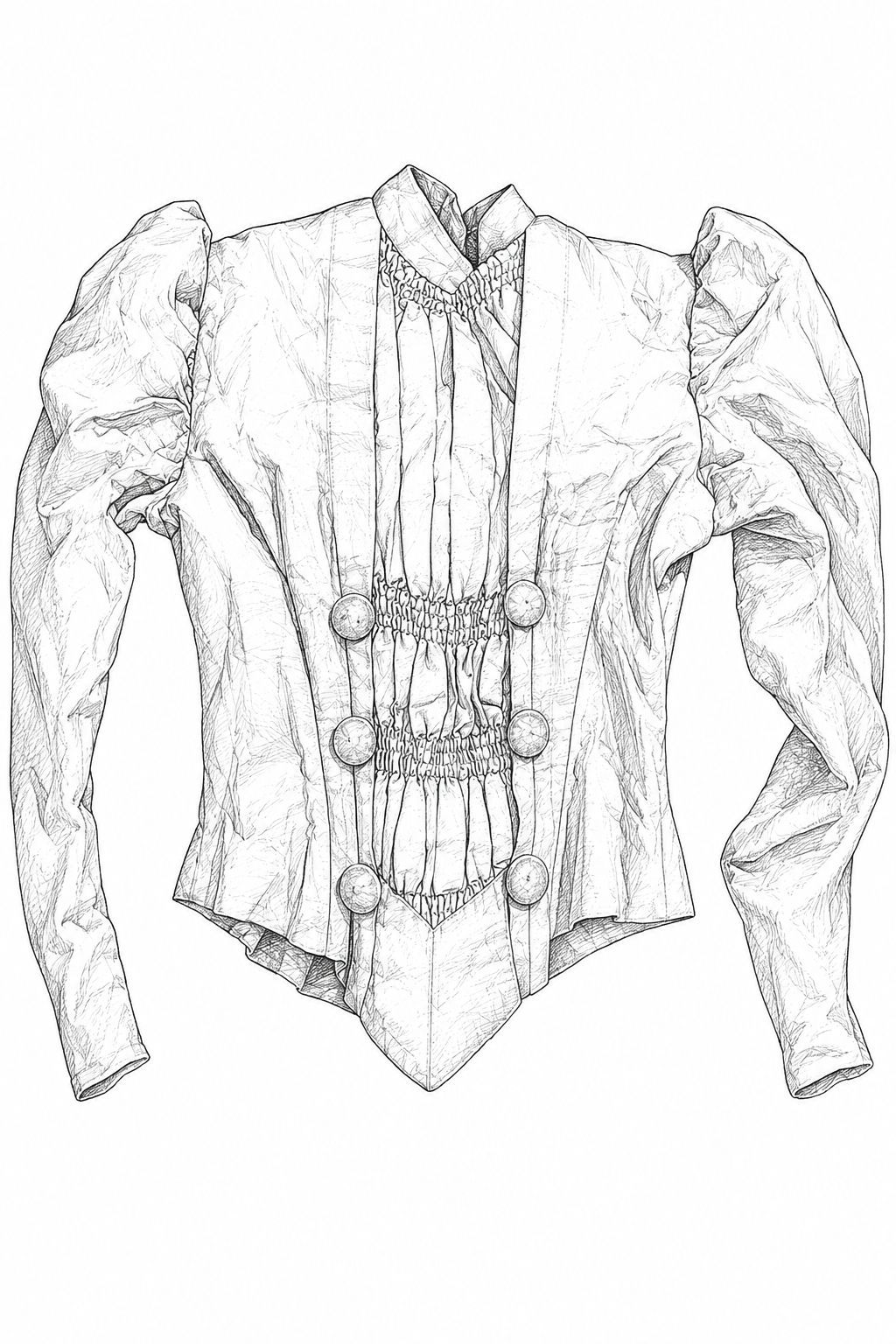
This bodice illustrates the sophisticated tailoring techniques of the mid-1890s. Although constructed largely by sewing machine, numerous finishing details—including seam binding, lining attachment, and structural reinforcement—were completed by hand. The bodice features: Fine vertical knife pleats Decorative shirring across the center front Six velvet-covered buttons arranged in two vertical rows (three per side) Separate velvet-covered pointed waist extension Professionally tailored princess seams Extensive internal boning for support The luxurious silk velvet sleeves provided visual contrast to the matte wool body, a fashionable design trend during the 1890s. The oversized covered buttons are primarily decorative, while the actual closure is achieved with hidden hooks and eyes along the center front. Interior construction demonstrates the complexity of Victorian tailoring, including multiple boning channels, waist stay supports, reinforced facings, and carefully distributed seam allowances intended to withstand the stresses of tight corseting.
1894 – 1896
Western Europe or North America, likely American or British manufacture. This bodice represents fashionable middle- to upper-middle-class women’s daywear during the height of the late Victorian period. It would have been worn with a coordinating floor-length skirt over a corset and likely accessorized with gloves, a hat, and high-button boots for social visits, shopping, church attendance, or afternoon engagements.
Good
Jul 2, 2026
Overall structure survives remarkably well despite significant age-related deterioration to the interior silk. Condition observations include: Original silhouette retained Six original velvet-covered buttons remain Velvet sleeves largely intact with expected pile wear and abrasion Interior silk lining exhibits widespread shattering Small tear at upper back neckline Minor seam separations Evidence of historic repairs Boning channels remain, though some boning appears missing or damaged Hook-and-eye closure largely intact Wrinkling from long-term storage The wool exterior remains considerably stronger than the silk lining, a common preservation pattern in garments of this period.
Description
This bodice is an excellent example of the highly engineered tailoring of the late Victorian era. The extensive interior structure demonstrates how fashionable women’s clothing relied on hidden supports—including boning, waist stays, reinforced facings, and corsetry—to achieve the desired silhouette. Unlike many surviving Victorian bodices, this example retains all six original velvet-covered buttons, the decorative velvet waist extension, and much of its internal tailoring, making it especially valuable for the study of nineteenth-century dress construction. The contrast between the durable wool exterior and the deteriorated silk lining also illustrates one of the most common conservation challenges faced by museums. During the late nineteenth century, silk was frequently “weighted” with metallic salts to increase its weight and improve drape. While fashionable at the time, this process accelerated the long-term degradation of silk fibers, leading to the characteristic shattering visible today. Although the matching skirt has not survived (or has not yet been identified), this bodice would originally have formed part of an elegant daytime ensemble worn over a corset with a coordinating trained skirt, gloves, and a fashionable hat. Its combination of knife pleating, shirring, velvet trim, and oversized covered buttons places it firmly among the refined tailored fashions of the mid-1890s.