
Madame Carlier Astrakhan Winter Toque, Rue de la Paix, Paris
Clothing/Dress/Costume
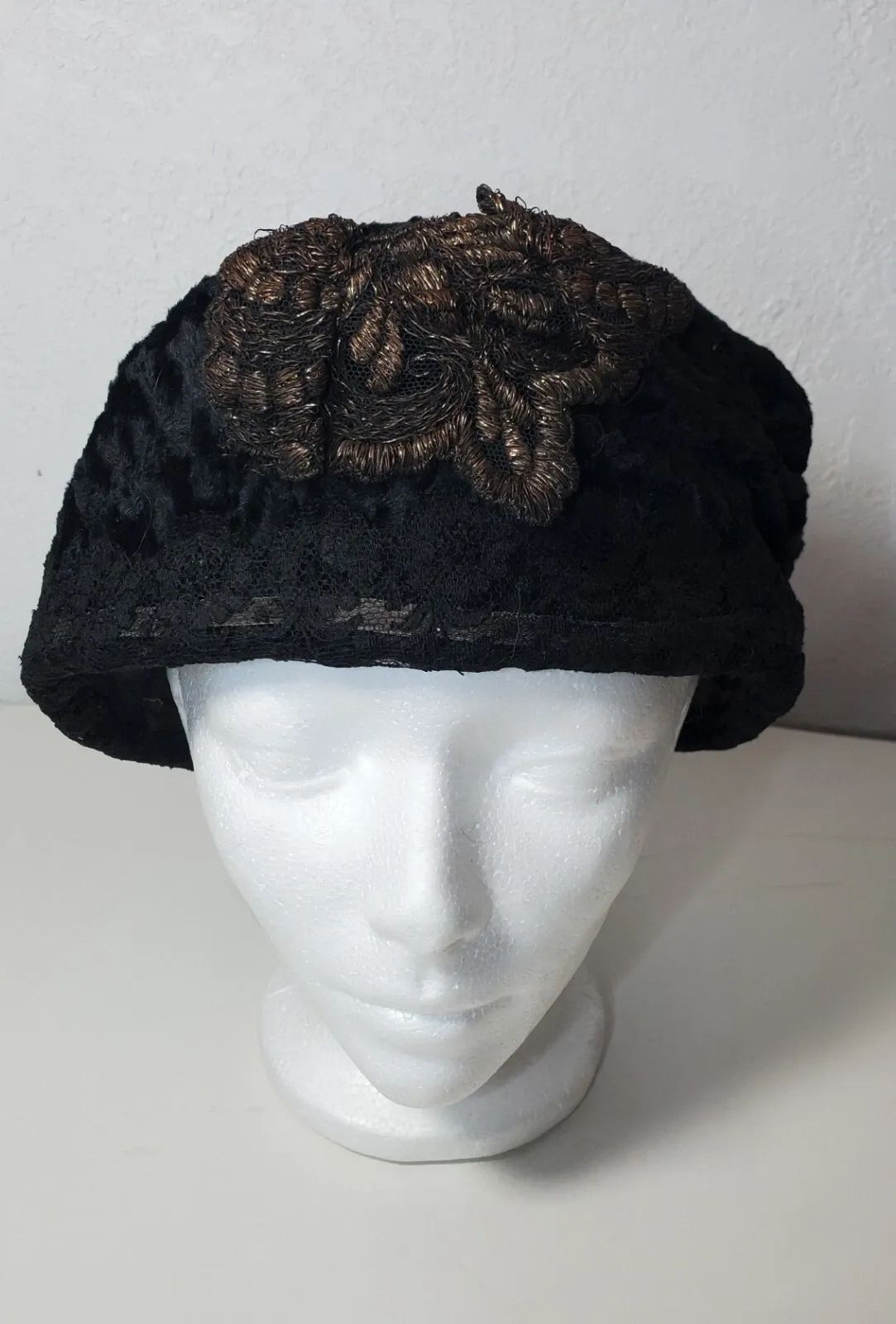
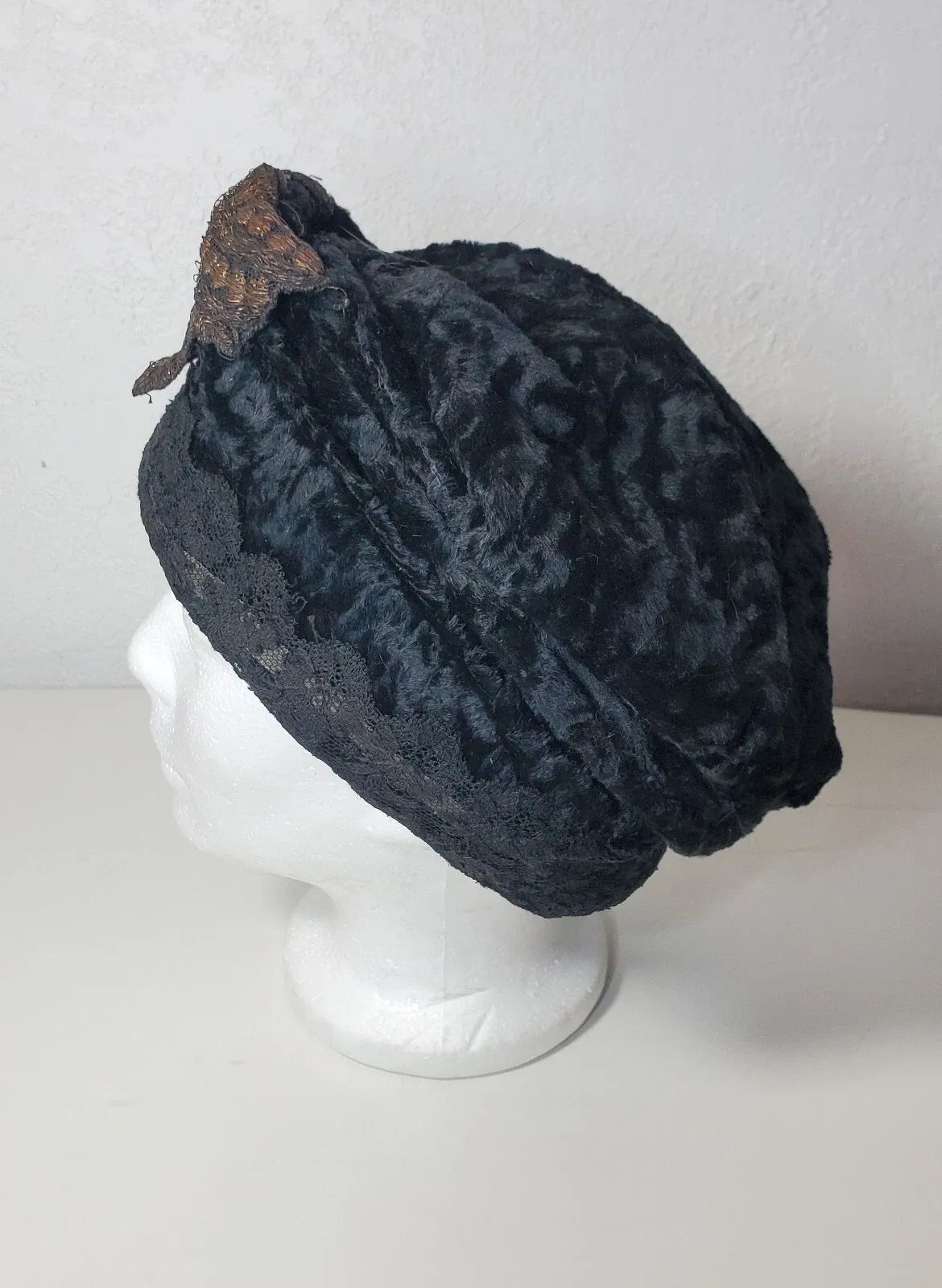
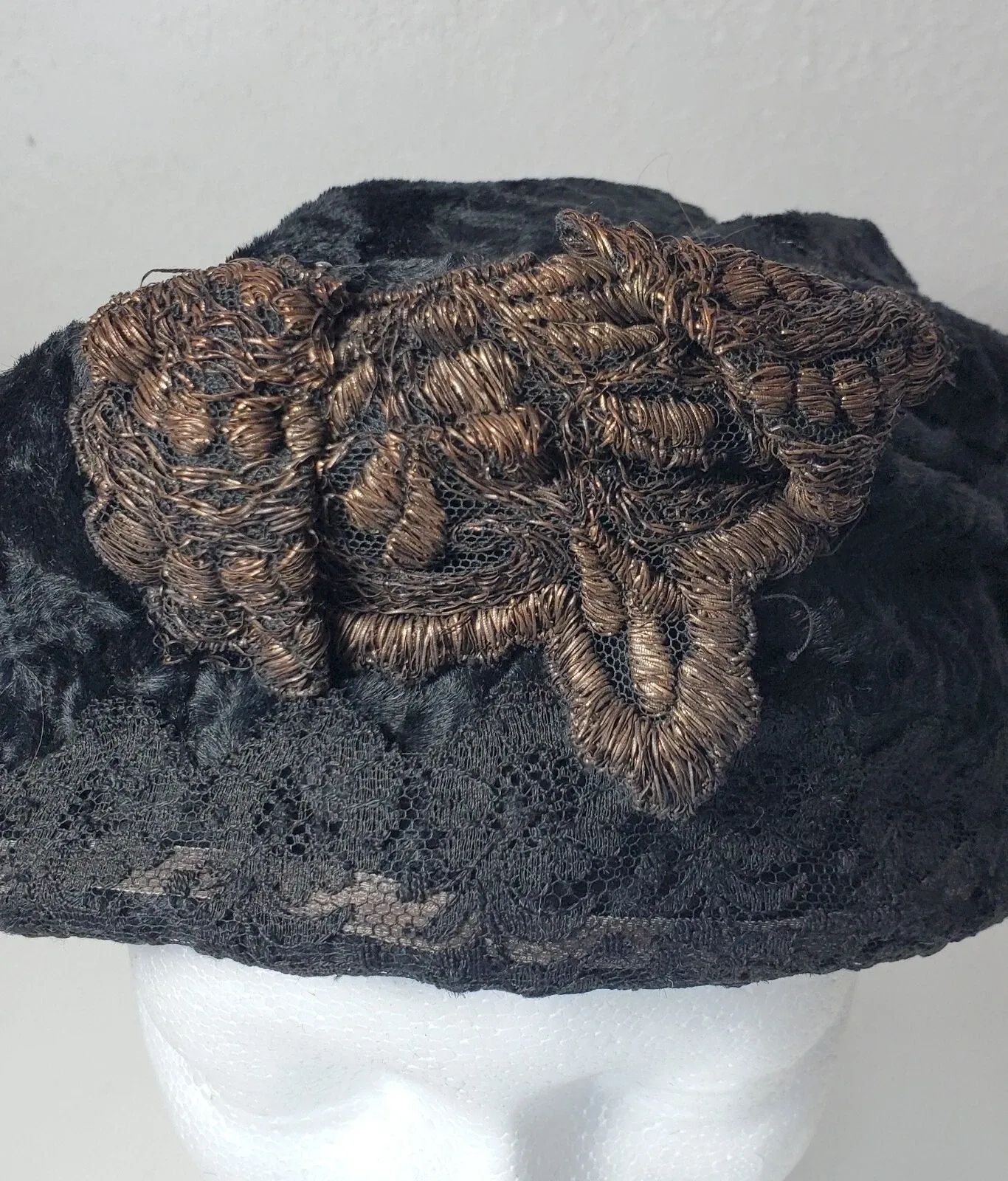
Late Victorian / early Edwardian black astrakhan (Persian lamb) winter toque by Madame Carlier, 16 Rue de la Paix, Paris, trimmed with metallic passementerie and black lace edging.
 Madame Carlier Astrakhan Winter Toque, Rue de la Paix, Paris
 Madame Carlier Astrakhan Winter Toque, Rue de la Paix, Paris – Image 2
 Madame Carlier Astrakhan Winter Toque, Rue de la Paix, Paris – Image 3
 Madame Carlier Astrakhan Winter Toque, Rue de la Paix, Paris – Image 4
 Madame Carlier Astrakhan Winter Toque, Rue de la Paix, Paris – Image 5
 Madame Carlier Astrakhan Winter Toque, Rue de la Paix, Paris – Image 6
 Madame Carlier Astrakhan Winter Toque, Rue de la Paix, Paris – Image 7
 Madame Carlier Astrakhan Winter Toque, Rue de la Paix, Paris – Image 8
Hat
Hat
victorian
Black
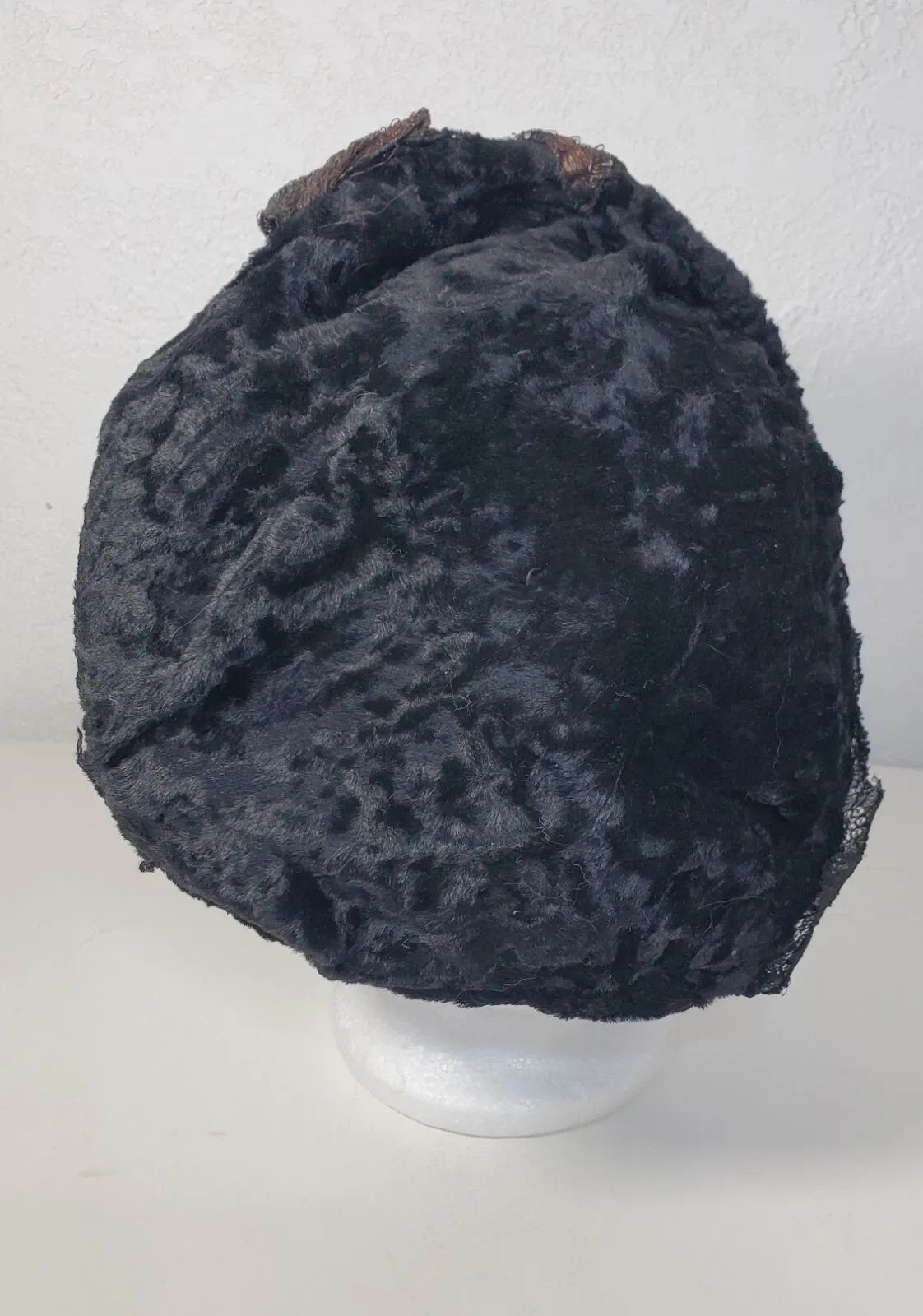
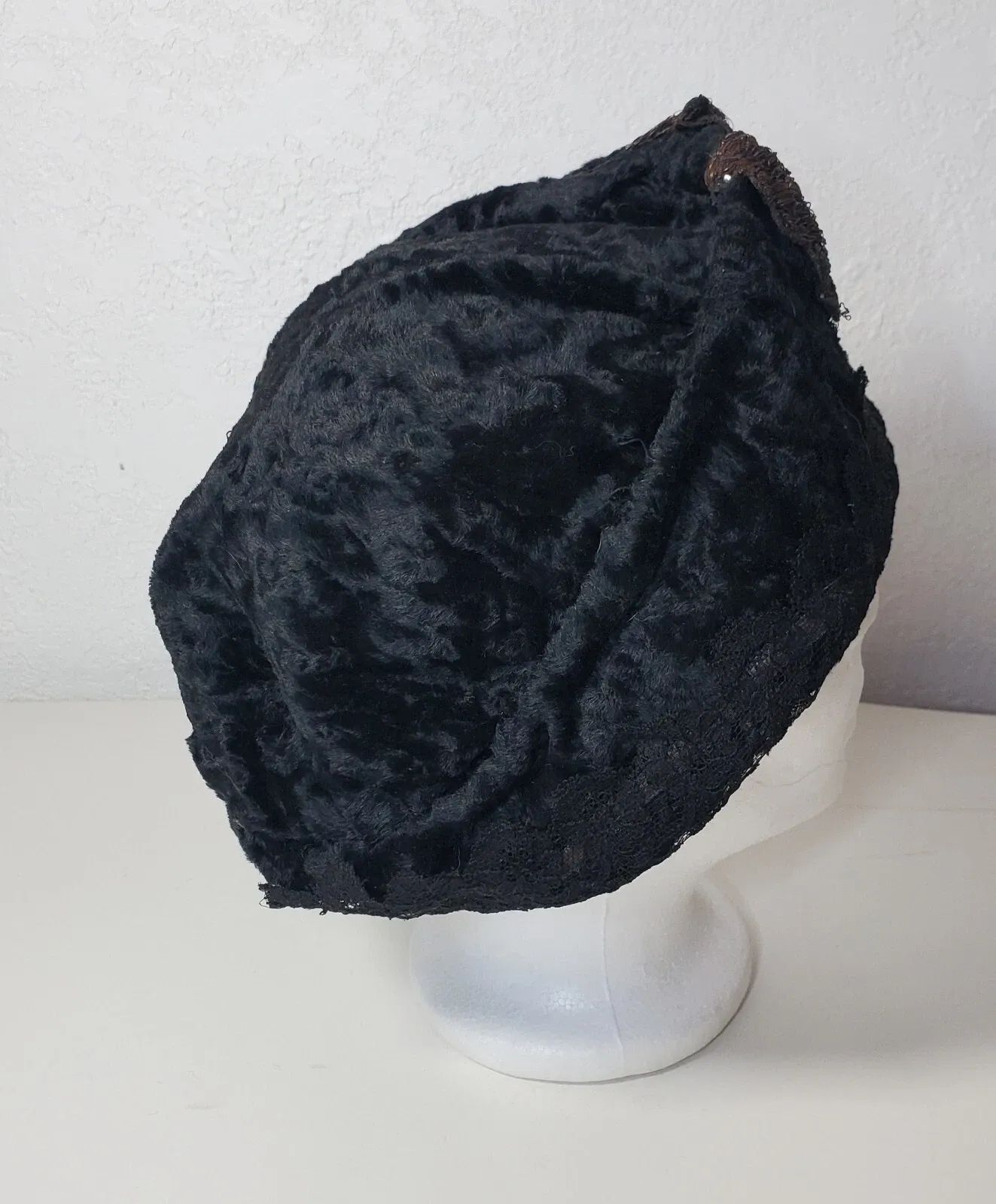
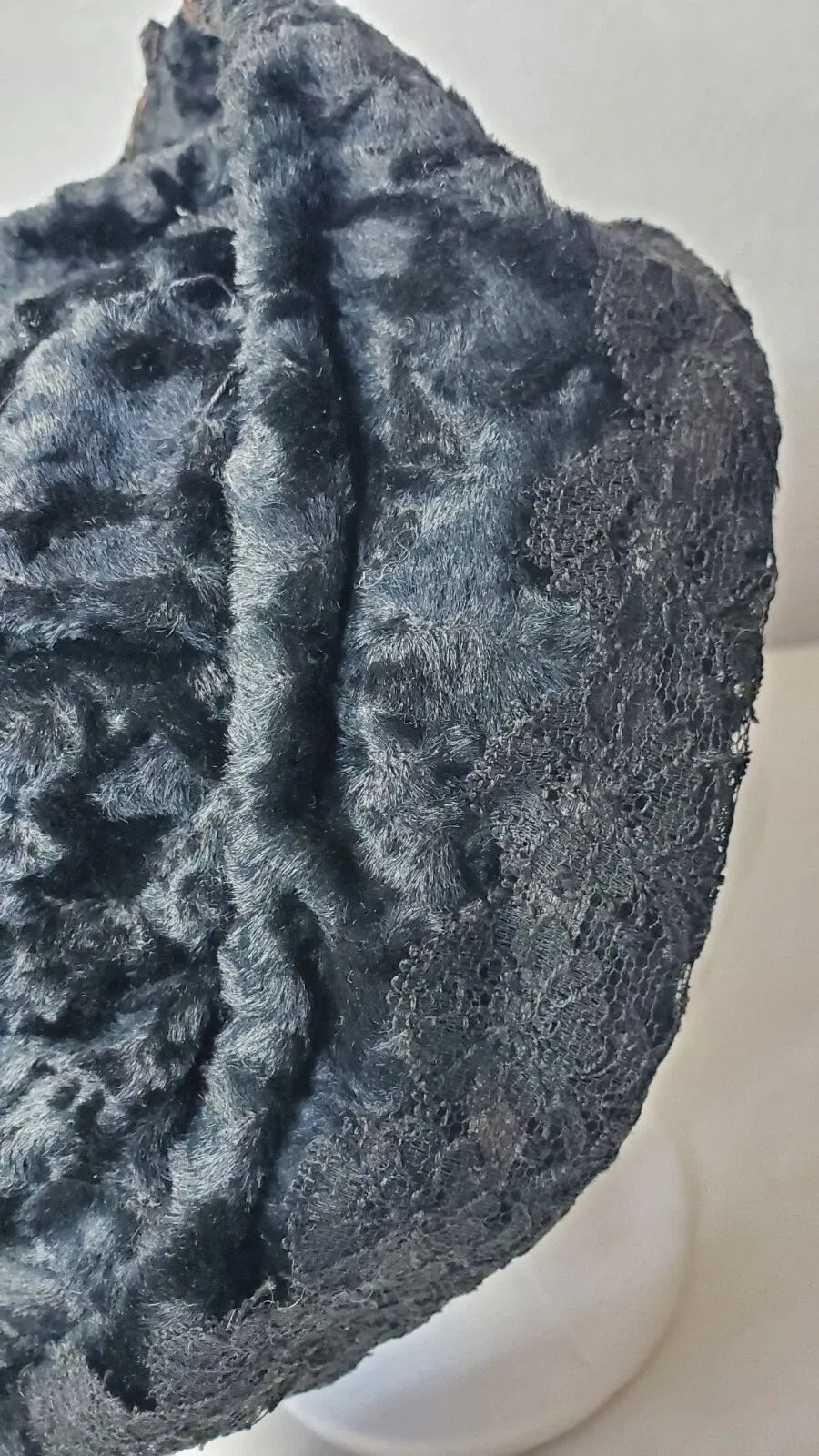
Exterior Fabric Material: Astrakhan (Persian lamb) fur Texture/Pattern: Natural tight curled “moiré” ribbed pelt pattern Color: Black Construction: Gored panel construction forming a softly domed crown Astrakhan was prized for its dense, glossy curls and was considered a luxury winter fur in the late 19th century. Trim Material: Metallic passementerie (likely copper alloy thread over net ground) Color: Bronze/copper tone with natural patination Placement: Applied at crown Technique: Coiled metal thread embroidery over mesh support This type of ornamental trim was fashionable in Parisian millinery c. 1895–1910. Lower Edge Black lace edging (possibly silk or cotton bobbin/mechanical lace) Likely remnants of a veil attachment Interior Lining: Black silk lining
Madame Carlier, 16 Rue de la Paix, Paris
1895 – 1908
Victorian
Edwardian
Europe
Rue de la Paix was one of the most prestigious fashion streets in Paris during the late 19th and early 20th centuries. Couture houses, jewelers, and milliners catering to elite clientele were located there. A milliner operating from this address would have: Served upper-class and fashionable Parisian women Produced high-quality, couture-level millinery Participated in seasonal Paris fashion cycles Madame Carlier hats are documented in major museum collections, indicating recognized historical significance.
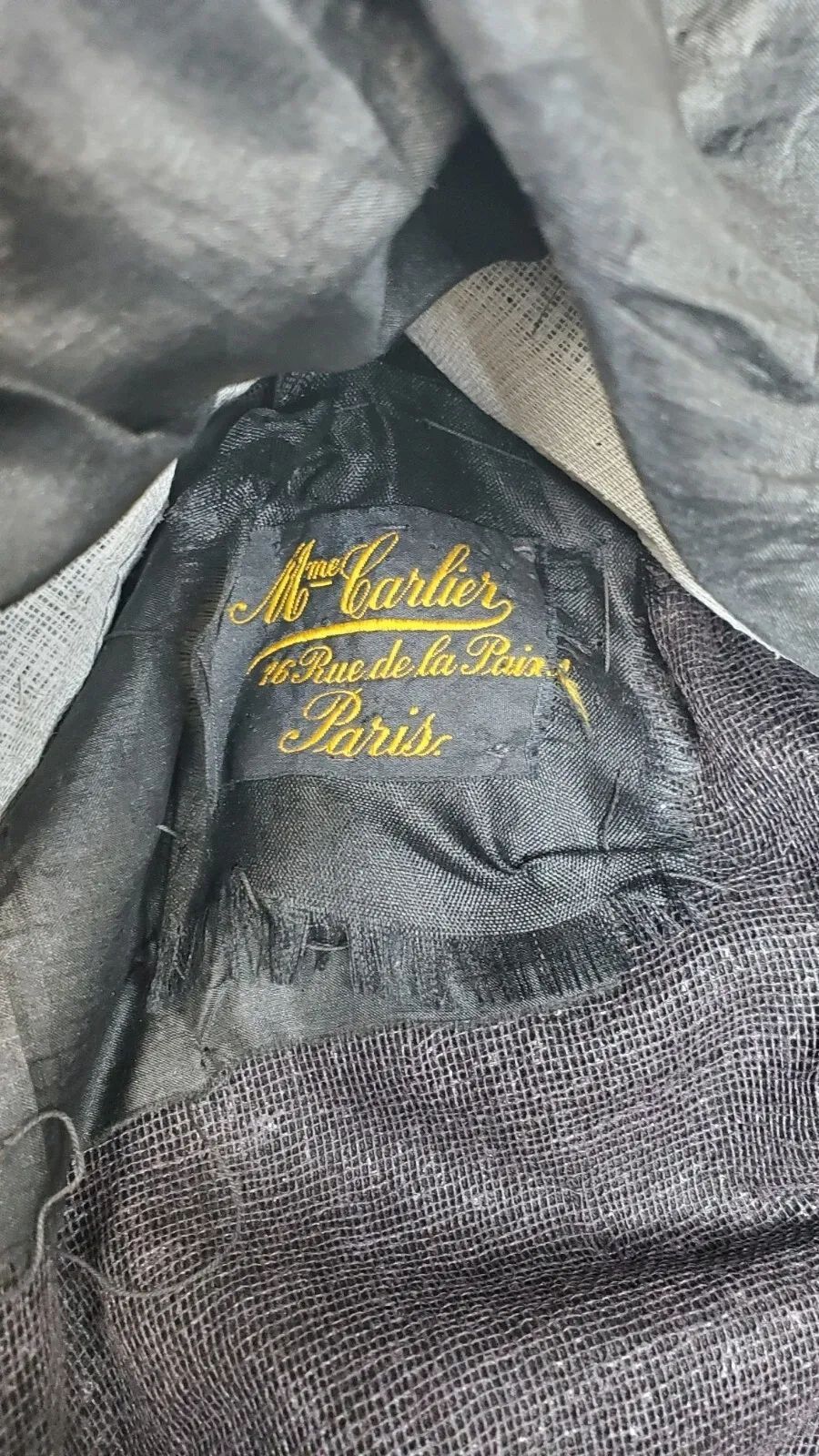
Label: Embroidered gold silk thread label reading: Mme. Carlier 16 Rue de la Paix Paris
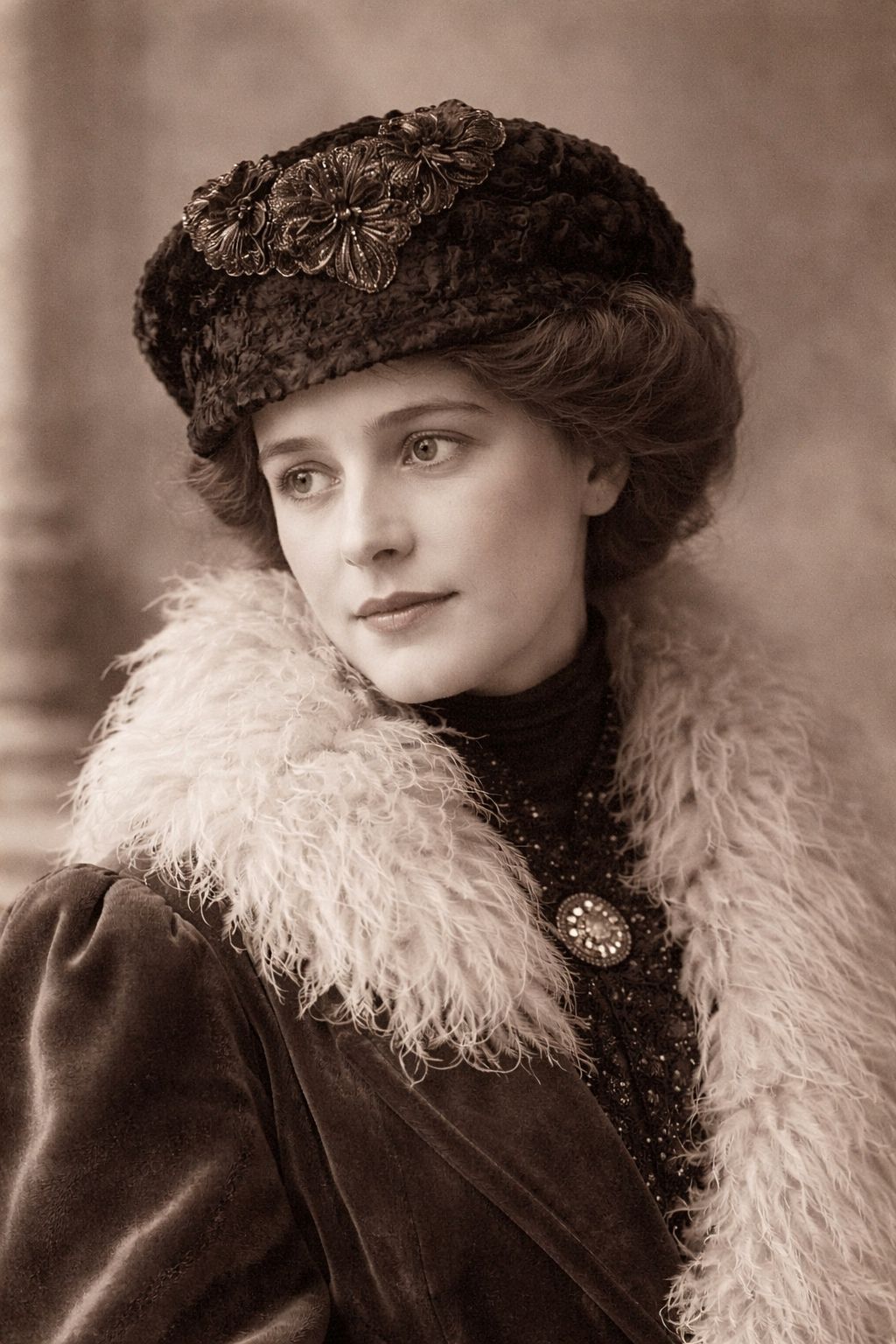
This toque represents urban, upper-class winter fashion during the Belle Époque. Astrakhan toques were: Worn during winter promenade and carriage outings Paired with tailored wool walking suits or velvet jackets Often styled slightly forward or to the side Associated with sophisticated metropolitan women Unlike rural or utilitarian headwear, this style reflects urban Parisian refinement and access to luxury materials.
Very Good
Feb 18, 2026
Fur remains supple with visible natural curl pattern Metallic trim shows age-related patina and minor distortion Lace edging present with some fragility Silk lining intact but shows minor wear and fraying Label remains legible and securely attached Overall condition consistent with age (120+ years) and appropriate for a textile of this era.
Private collection (prior details unknown). Label confirms original Parisian couture origin.
Description
This black astrakhan toque, produced by Madame Carlier of 16 Rue de la Paix, Paris, exemplifies late 19th-century Parisian winter millinery. Constructed from tightly curled Persian lamb fur arranged in gored panels, the hat forms a softly domed silhouette characteristic of Belle Époque fashion. The crown is adorned with metallic passementerie embroidery in bronze-toned coiled thread applied over a net foundation, reflecting contemporary interest in rich surface ornamentation. The Rue de la Paix address situates the piece within one of the most prestigious fashion districts of turn-of-the-century Paris. Astrakhan fur was considered a luxury material and signaled urban sophistication. The toque would have been worn by a fashionable woman during winter outings, paired with tailored wool ensembles and veiling. The survival of the original embroidered maker’s label enhances the historical significance of the piece, linking it directly to a documented Parisian millinery house active during the Belle Époque.