
Victorian Child’s Fur-Lined Winter Mittens with Button Closure
Clothing/Dress/Costume
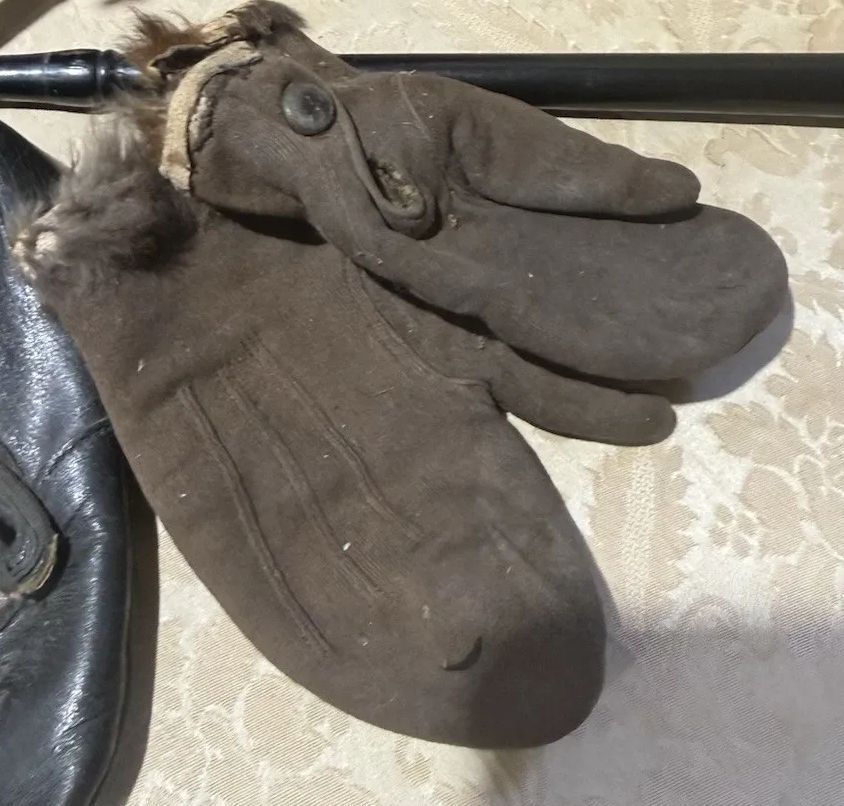
Pair of small brown cloth winter mittens lined with fur and secured by wrist flap with button fastening, late Victorian period.
RE-GL-2026-0001
Late Victorian
Gloves
Unisex
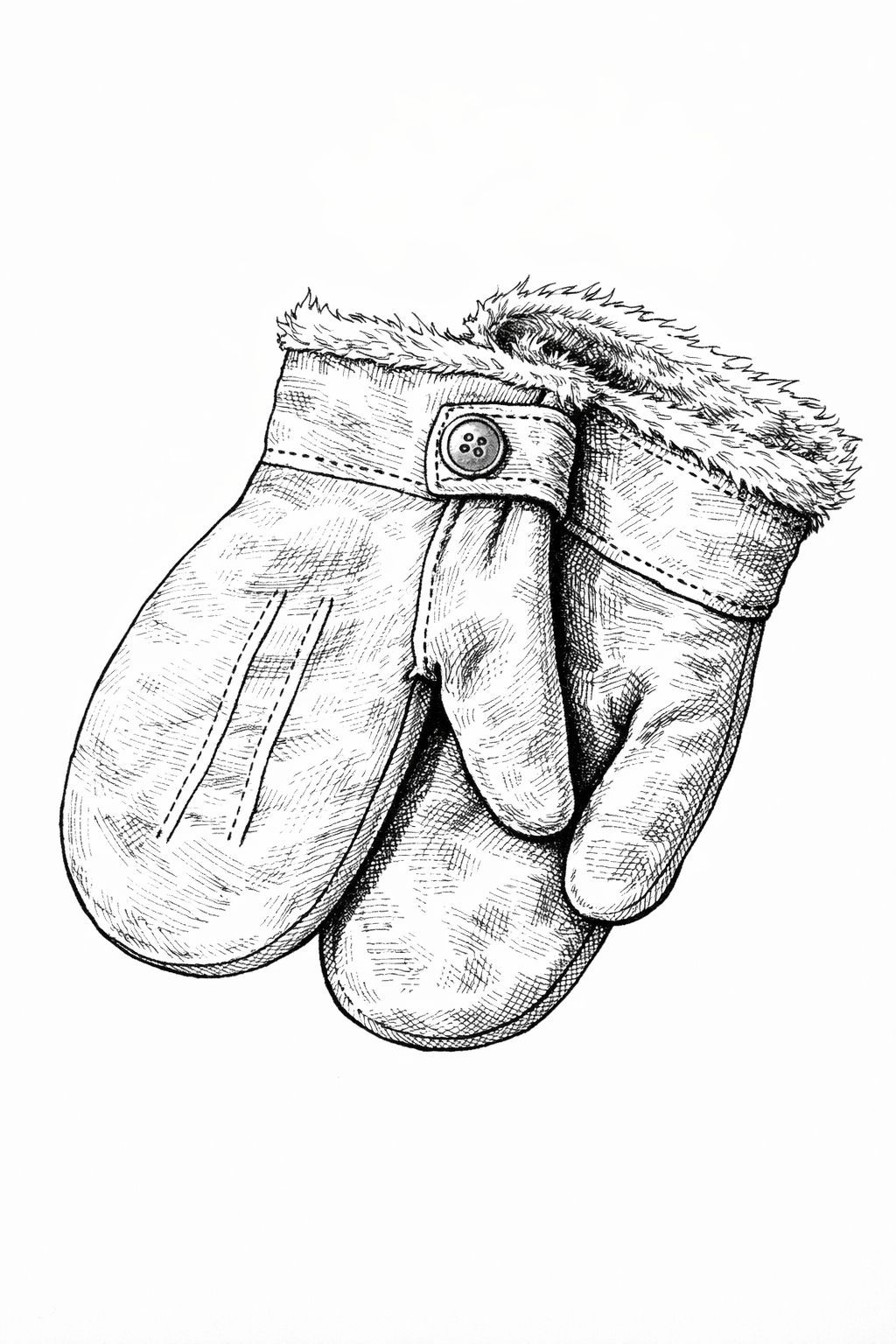
Materials Wool or heavy cotton twill exterior (brown) Natural fur lining (likely rabbit or hare) Metal or composition button Linen or cotton internal stitching thread Method of Manufacture Machine-sewn body panels Hand-finished seams and closures Applied wrist tab with button fastening Fur lining hand-set into shell These appear semi-domestic manufacture — possibly purchased unfinished and completed at home, which was common for children’s winterwear. Clothing & Design Notes Key identifying features: Three-finger mitten form (separate thumb, shared finger chamber) Extended wrist cuff for warmth Buttoned flap closure to secure mitten at wrist Thick insulating lining Soft, flexible construction for young child mobility The practical construction suggests everyday winter wear rather than ceremonial clothing.
circa 1880 – circa 1905
Victorian
Late Victorian to Early Edwardian Manufacturer Unknown (likely home-produced or small regional maker)
Western European / American Cold-weather child’s clothing, likely rural or small-town usage
Very Good
Feb 26, 2026
Surface wear and fading consistent with age Fur lining partially visible and worn Button intact (important survival detail) Minor seam fatigue Overall stable but delicate textile condition The survival of both mittens together is notable — children’s gloves are often separated or lost.
Historical Note
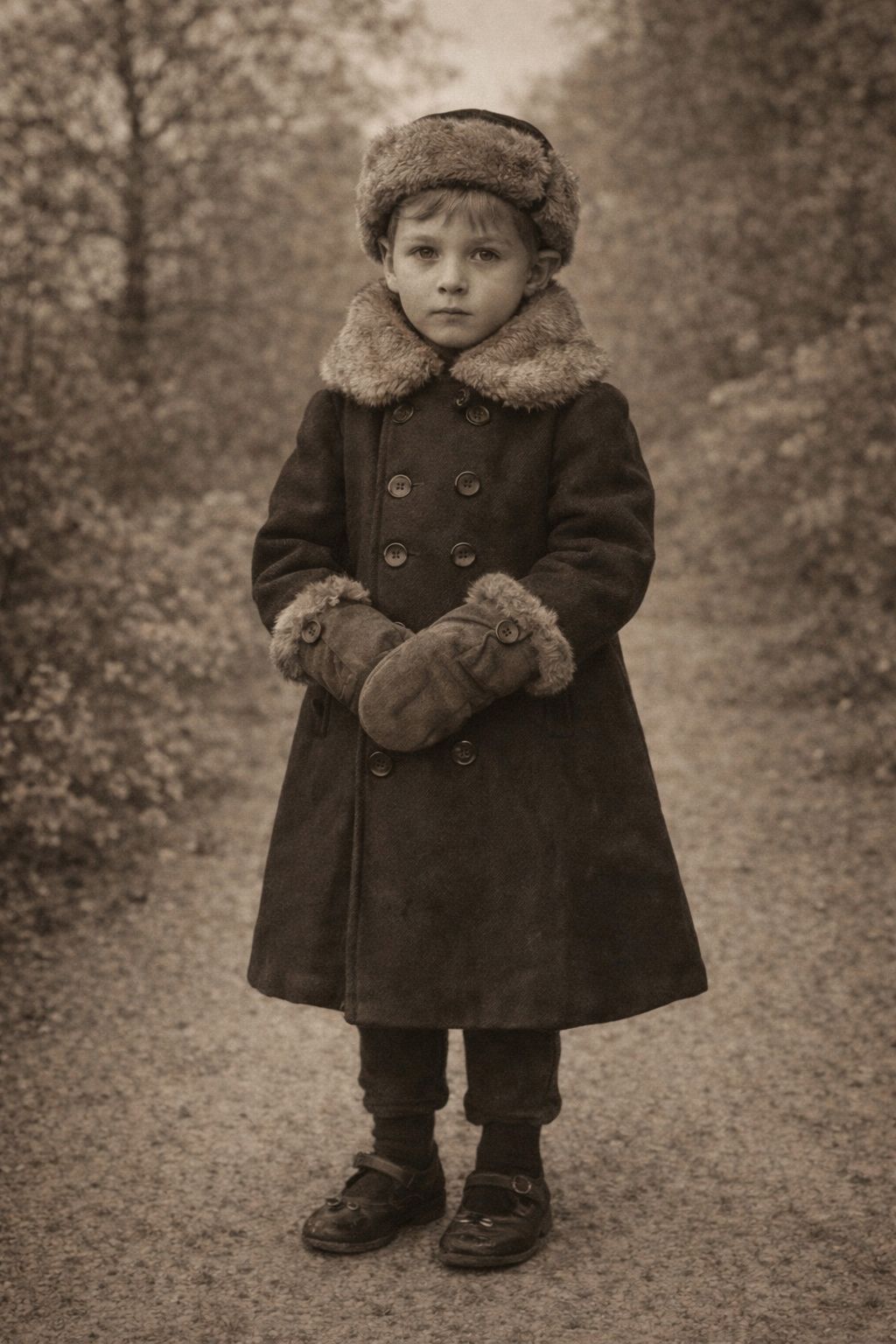
Historical Context Late Victorian childhood clothing increasingly emphasized protection and comfort alongside propriety. Winter accessories like these mittens were essential for: Walking to school Outdoor play Carriage travel Rural winter environments Unlike adult gloves, children’s mittens prioritized warmth over dexterity. The buttoned wrist closure helped prevent loss — a constant concern noted even in period parenting manuals. Fur-lined examples indicate concern for warmth and suggest a family of moderate means rather than extreme poverty. This pair of small fur-lined mittens dates to the late Victorian era and represents practical winter clothing made for a young child. Constructed from brown wool or heavy cotton fabric and lined with natural fur, the mittens were designed to retain warmth while allowing freedom of movement. A buttoned wrist tab secures the mitten at the cuff, preventing cold air entry and reducing the likelihood of loss during active wear. Children’s winter garments from the late nineteenth century reflect evolving attitudes toward childhood as a protected stage of life requiring specialized clothing. Durable yet modestly made, such mittens were everyday necessities rather than luxury items, frequently worn during travel, school attendance, and outdoor play. Their survival offers a rare and intimate glimpse into the lived experience of Victorian childhood, preserving evidence of care, climate, and domestic life.