
Victorian Mourning Parasol (Collapsible, Black Silk)
Clothing/Dress/Costume
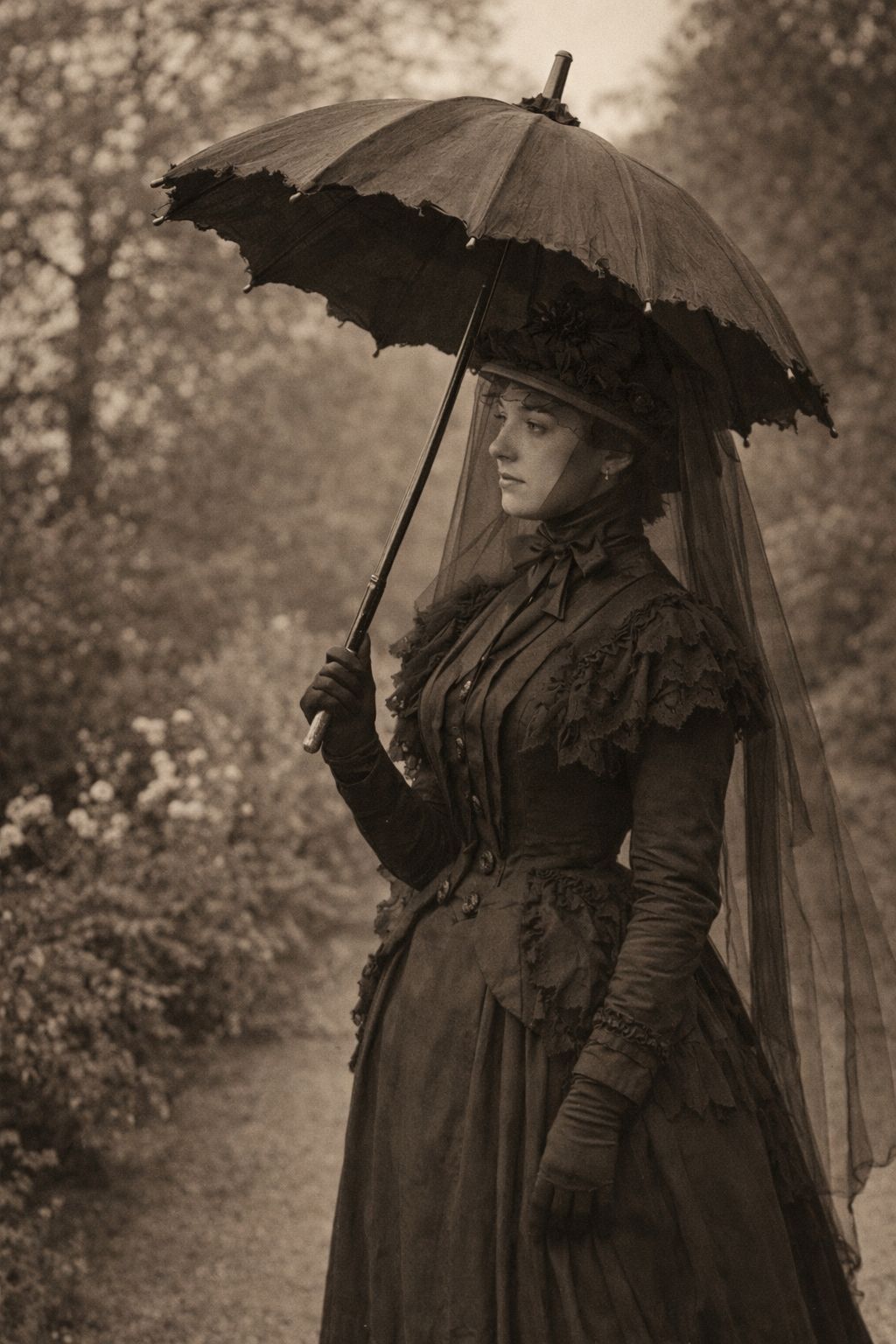
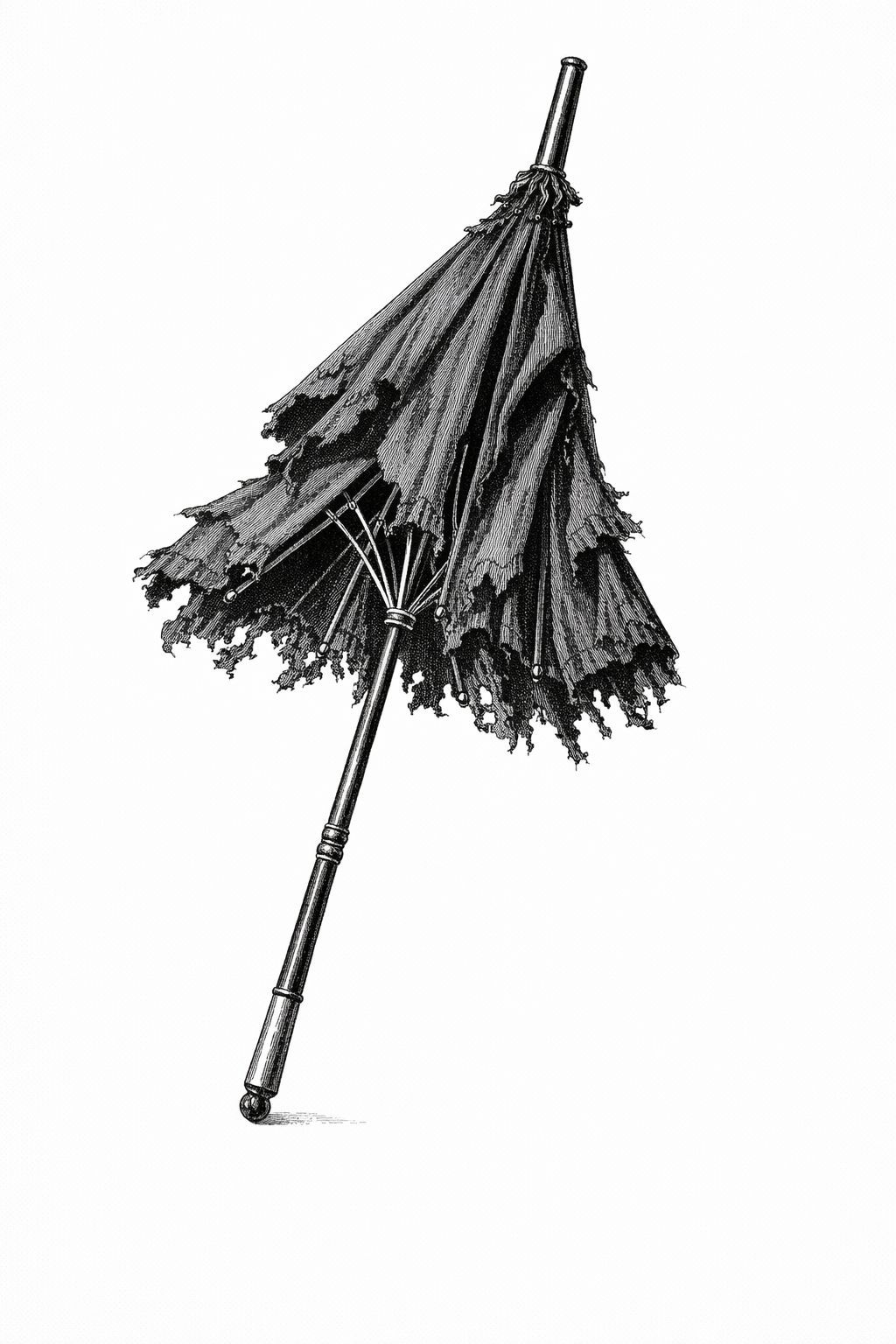
A late 19th-century black silk mourning parasol with wooden shaft and rib structure, now in fragile, shattered condition consistent with age and weighted silk deterioration.
RE-PA-2026-0001
Parasol
victorian
Silk
Black silk canopy (likely silk taffeta or lightweight silk twill) Wooden shaft and handle Metal ribs and stretcher system Silk thread binding at ferrule and rib joins
circa 1885 – circa 1900
Victorian
Machine-woven silk canopy Hand-stitched rib casings Turned wooden shaft (likely ebonized or dark-stained hardwood) Machine-made metal rib system Collapsible sliding mechanism typical of late Victorian parasols
Western European / American Associated with urban middle- and upper-class women’s dress
Good
Feb 26, 2026
Severe silk shattering and fragmentation (consistent with weighted silk decay) Rib structure appears intact Wooden shaft and ferrule in stable condition Fabric loss at hem and panel joins Structurally present but not operable without conservation The silk deterioration strongly suggests weighted black silk, which was common in mourning textiles from the 1870s onward.
Historical Note
This late Victorian black silk parasol reflects the aesthetic and social codes of mourning dress in the final decades of the 19th century. Constructed with a slender turned wooden shaft and metal rib assembly, the canopy was originally formed of black silk—likely a weighted silk taffeta or twill—chosen for its deep, light-absorbing tone appropriate to mourning etiquette. The severe shattering of the silk canopy is characteristic of late 19th-century weighted black silk. During this period, silk manufacturers commonly treated black silk with metallic salts to increase weight and improve drape. While visually luxurious when new, this process chemically destabilized the fibers, leading to fragmentation over time. Parasol use during this era served both practical and symbolic purposes. While protecting the complexion from sun exposure, the parasol also functioned as a marker of refinement, femininity, and social standing. In mourning contexts, black parasols completed the prescribed ensemble of widow’s attire, often paired with crepe trim, jet jewelry, and matte black gloves. Despite its fragile textile condition, the surviving wooden shaft and metal framework offer important insight into late Victorian accessory construction. The piece represents the intersection of industrial manufacturing and highly codified social dress practices at the close of the 19th century.