
Victorian Purse Frame
Clothing/Dress/Costume
1870-1895
Needs object ID
Purse
1890’s
Late Victorian
1870’s
Purse
Female
Metal
Blue
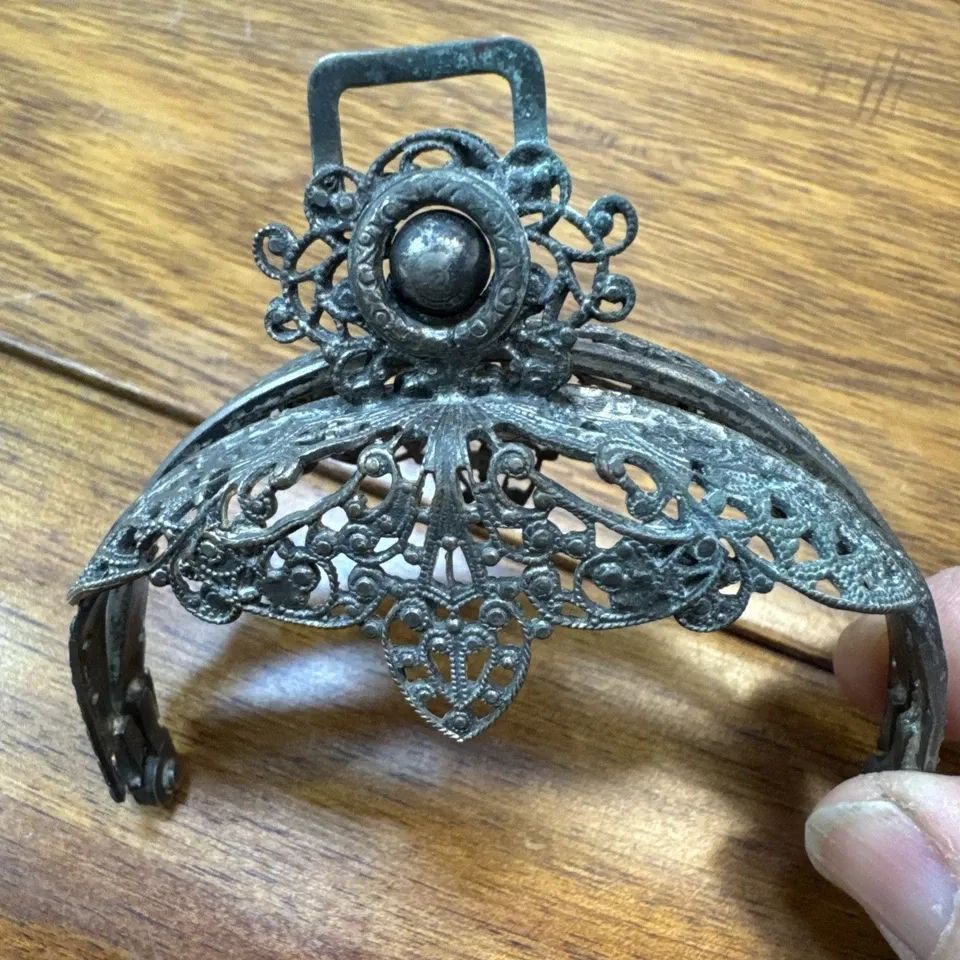
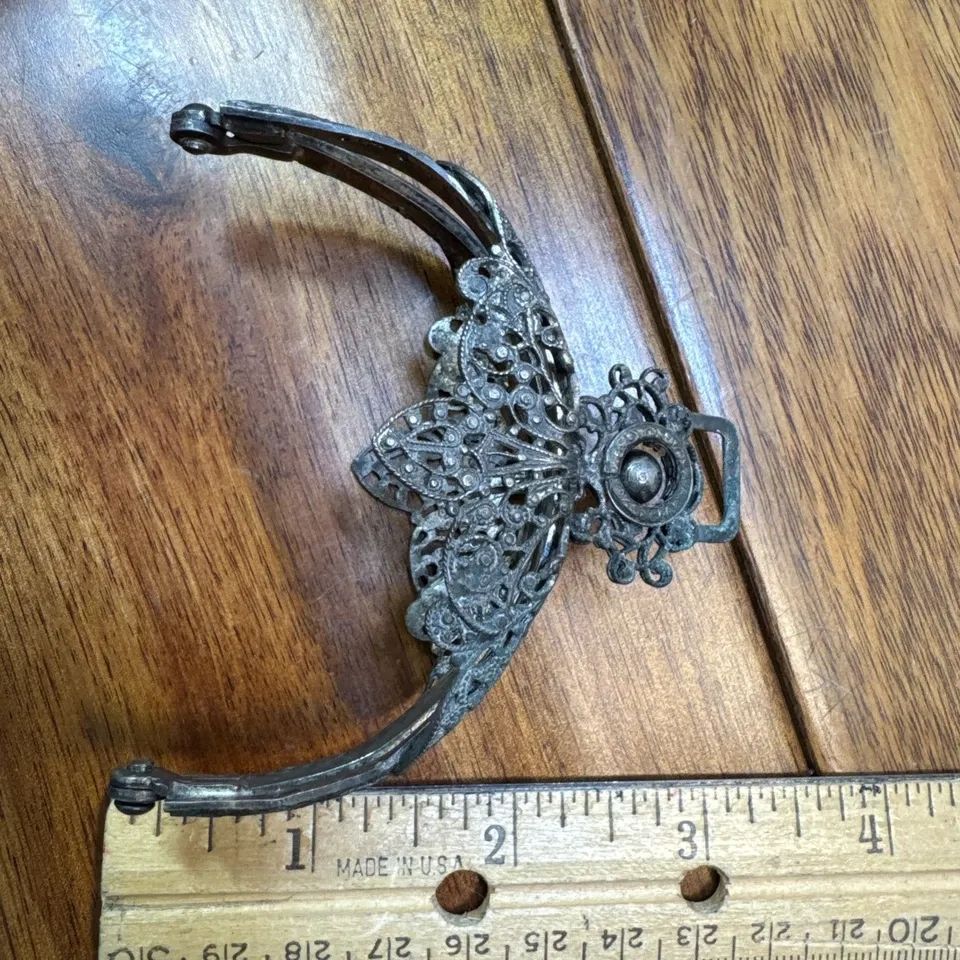
Material: cast white metal / German silver (nickel alloy), possibly silver-washed originally Function: Top closure frame for a fabric, beaded, or crocheted purse
circa 1870 – circa 1895
Victorian
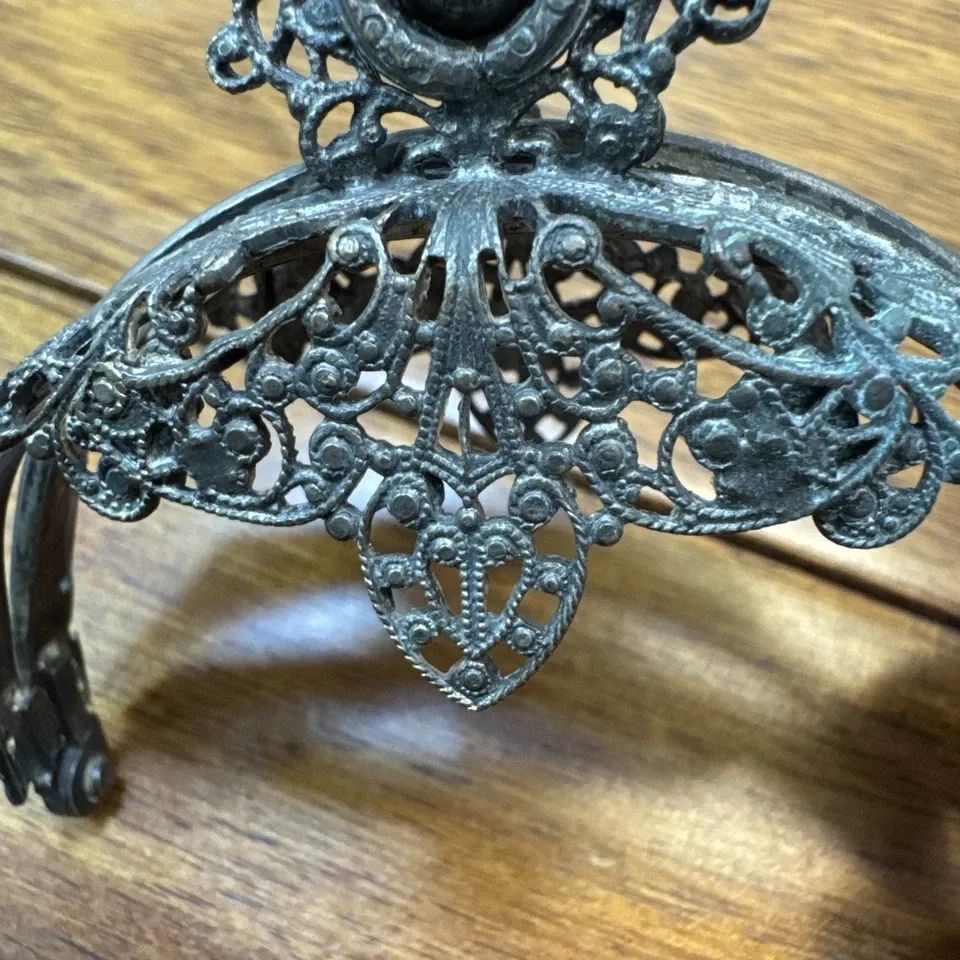
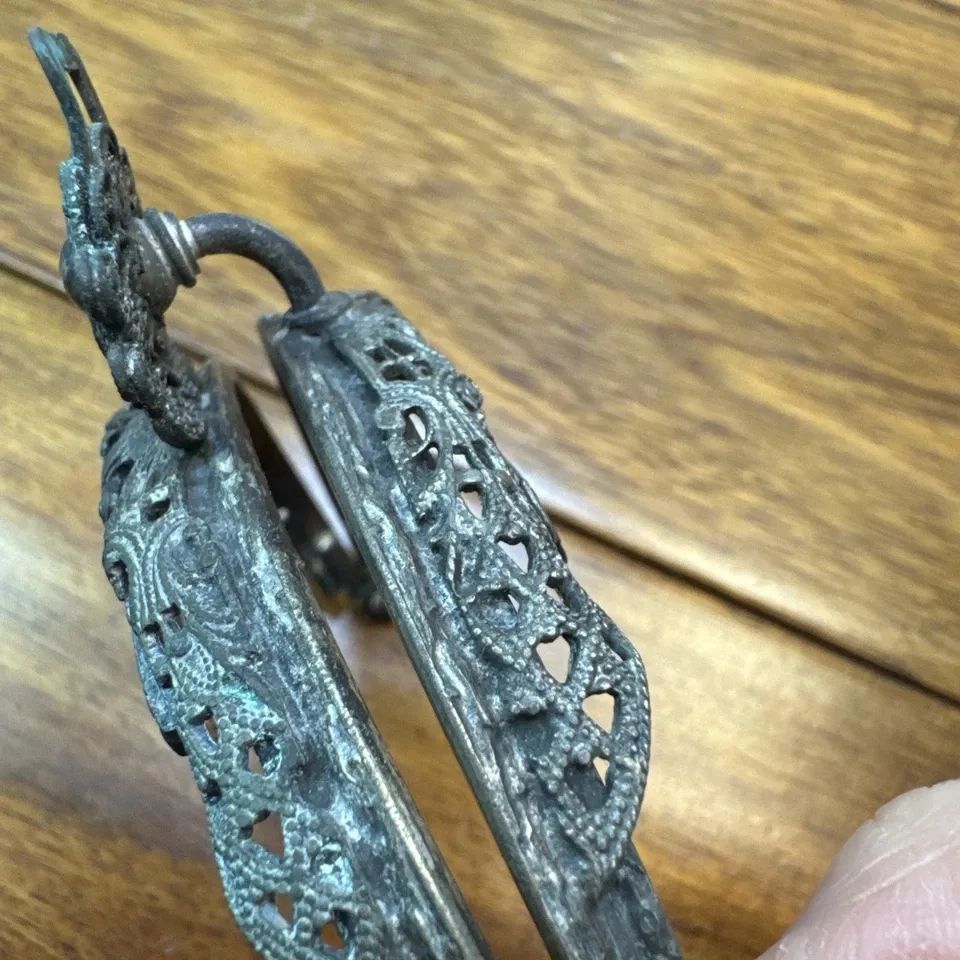
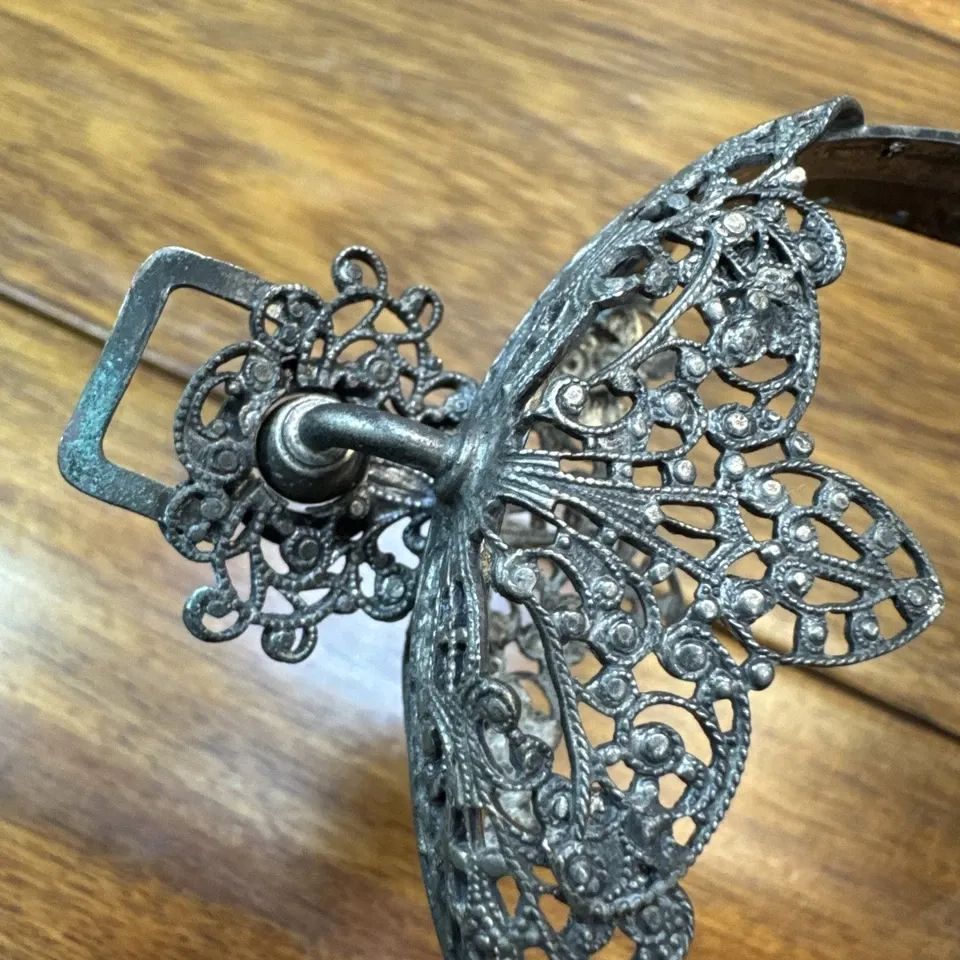
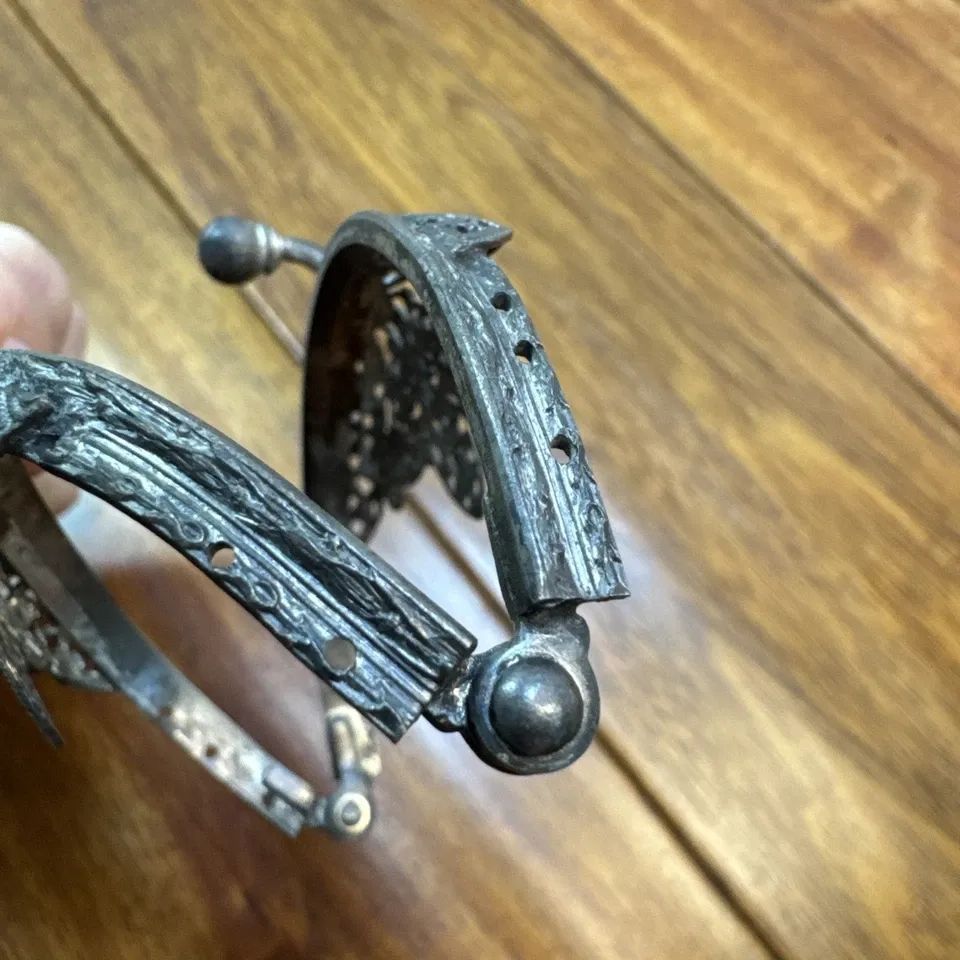
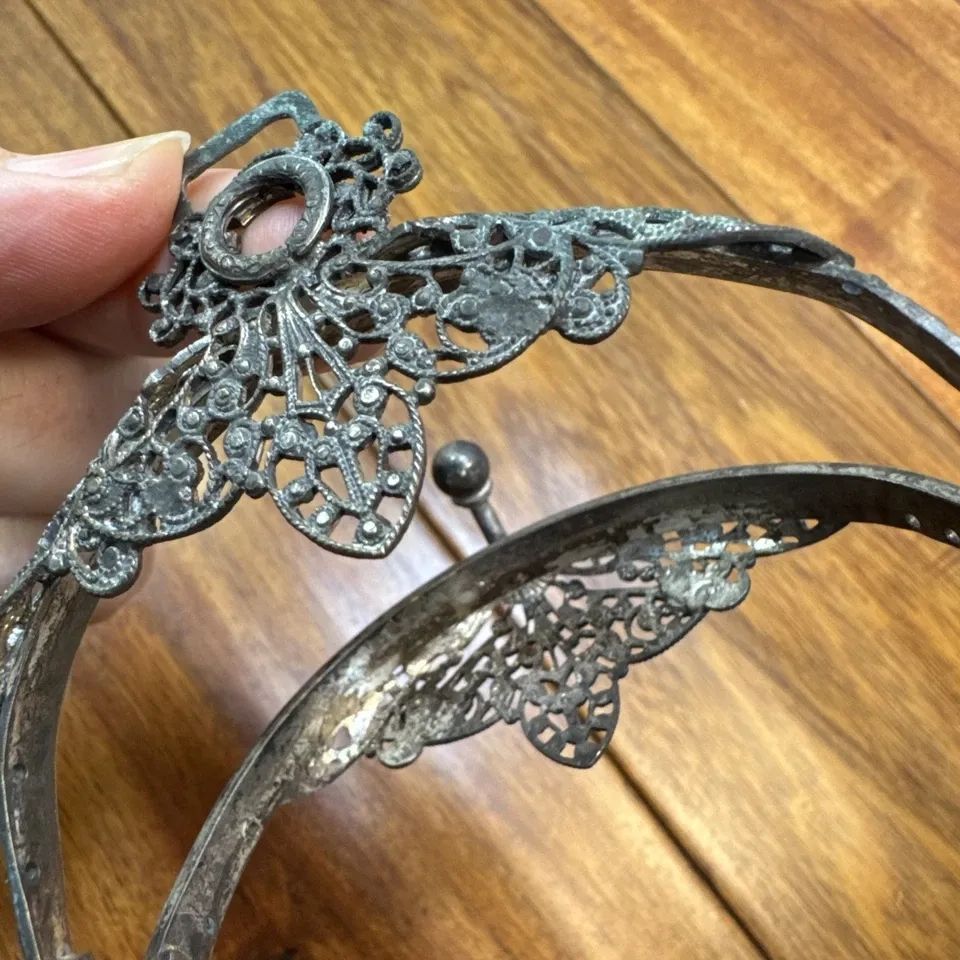
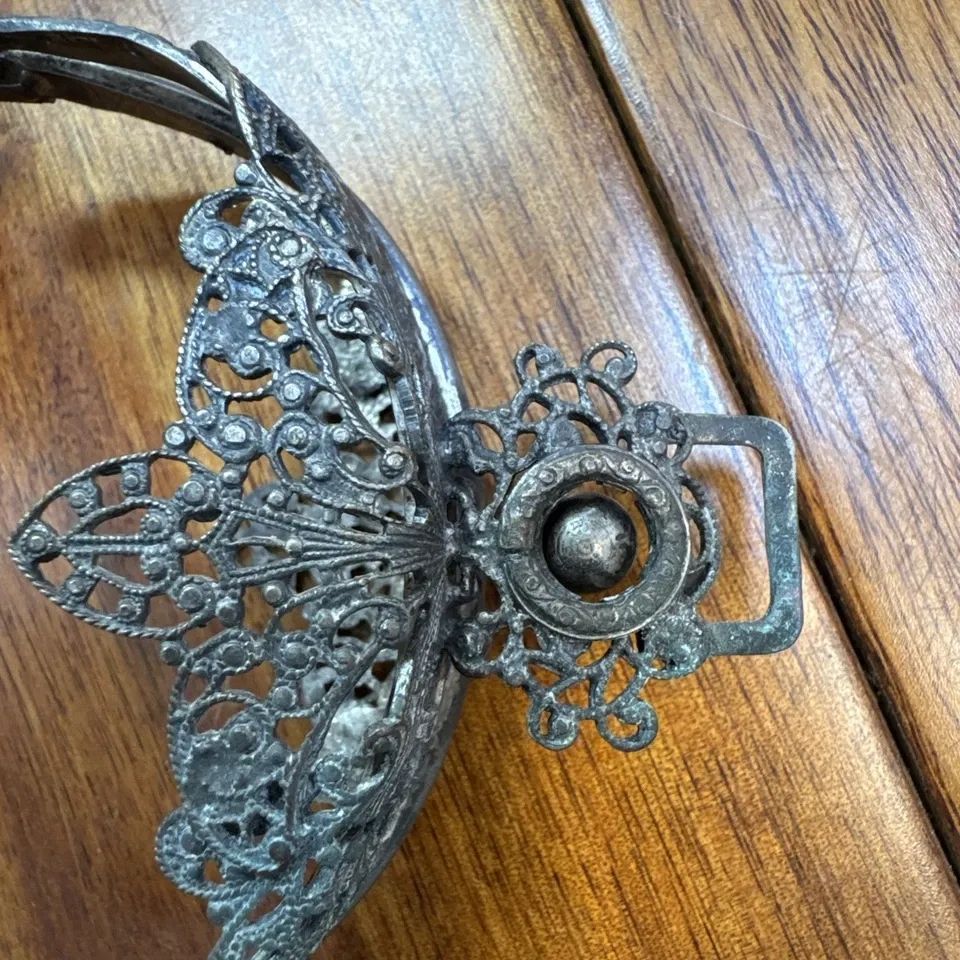
Elaborate pierced filigree The lace-like openwork with beaded dots, scrolling vines, and symmetrical panels is classic late-Victorian decorative metalwork. This level of detail was achieved by casting, then hand-finished—not stamped (important). Butterfly / winged motif The central design reads as a stylized butterfly or winged fan, very popular in the Aesthetic Movement period (1870s–1890s). Nature-inspired forms (insects, leaves, fans) were extremely fashionable in women’s accessories. Ball-ended kiss clasp The rounded ball finials and central pivot match Victorian kiss-lock mechanisms. Earlier Georgian pieces use simpler hooks; later Edwardian frames become lighter and more linear. Attachment holes along the inner rim Those evenly spaced holes are for sewing the textile purse body directly to the frame. This is correct for the era—Victorian purses were often silk, velvet, beaded, or crocheted and custom-fitted to the frame.
Description
This finely pierced purse frame once formed the decorative top of a lady’s evening reticule. The symmetrical filigree design, centered on a butterfly motif, reflects late-Victorian taste for naturalistic ornament inspired by the Aesthetic Movement. Sewing holes along the interior rim indicate where a textile or beaded purse body was attached. Though the original fabric is lost, the frame remains intact, preserving the craftsmanship and elegance of women’s accessories from the late nineteenth century.