
Art Nouveau Floral Locket Pendant with Engraved Initial “G” and Chain
Jewelry
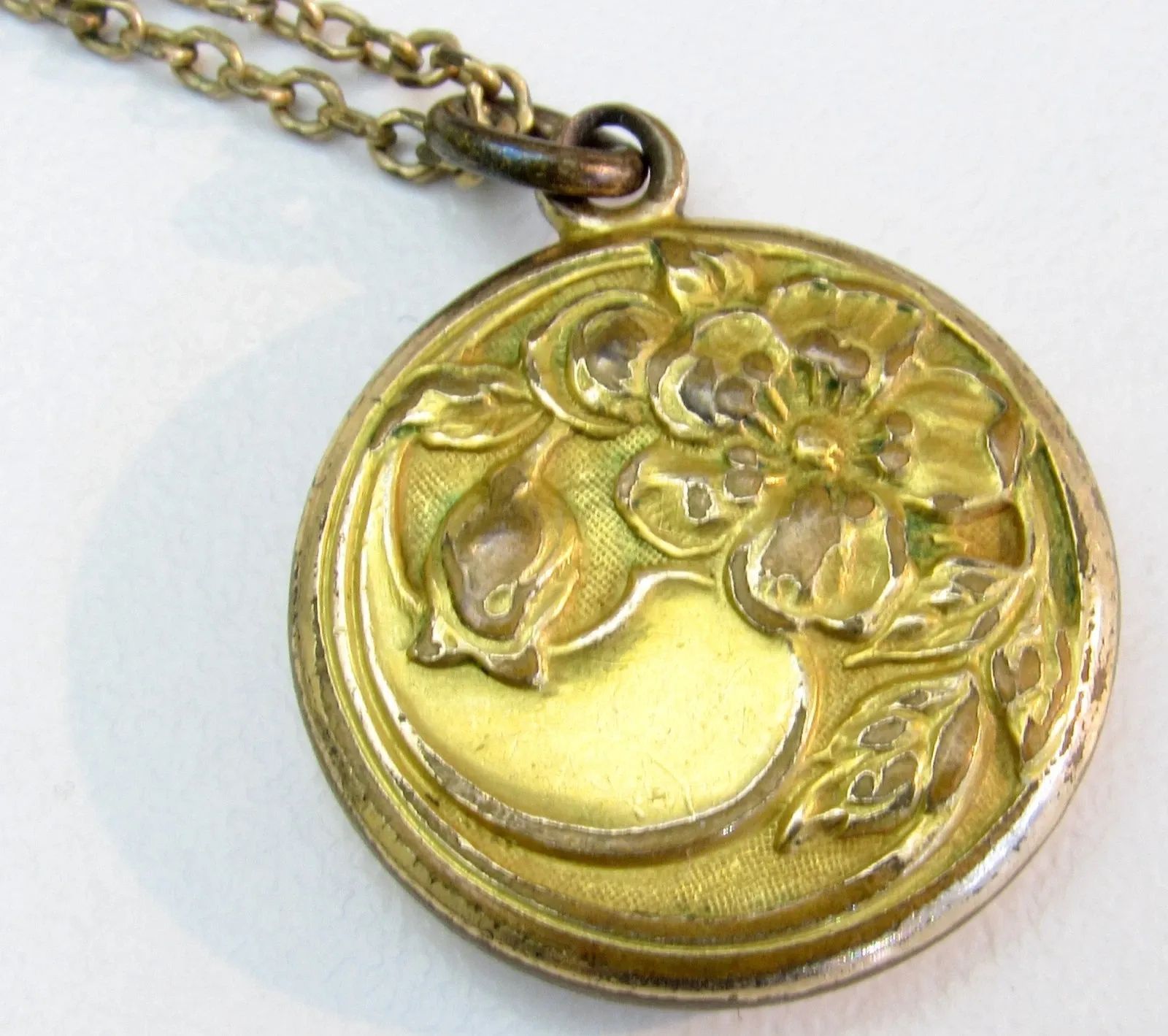
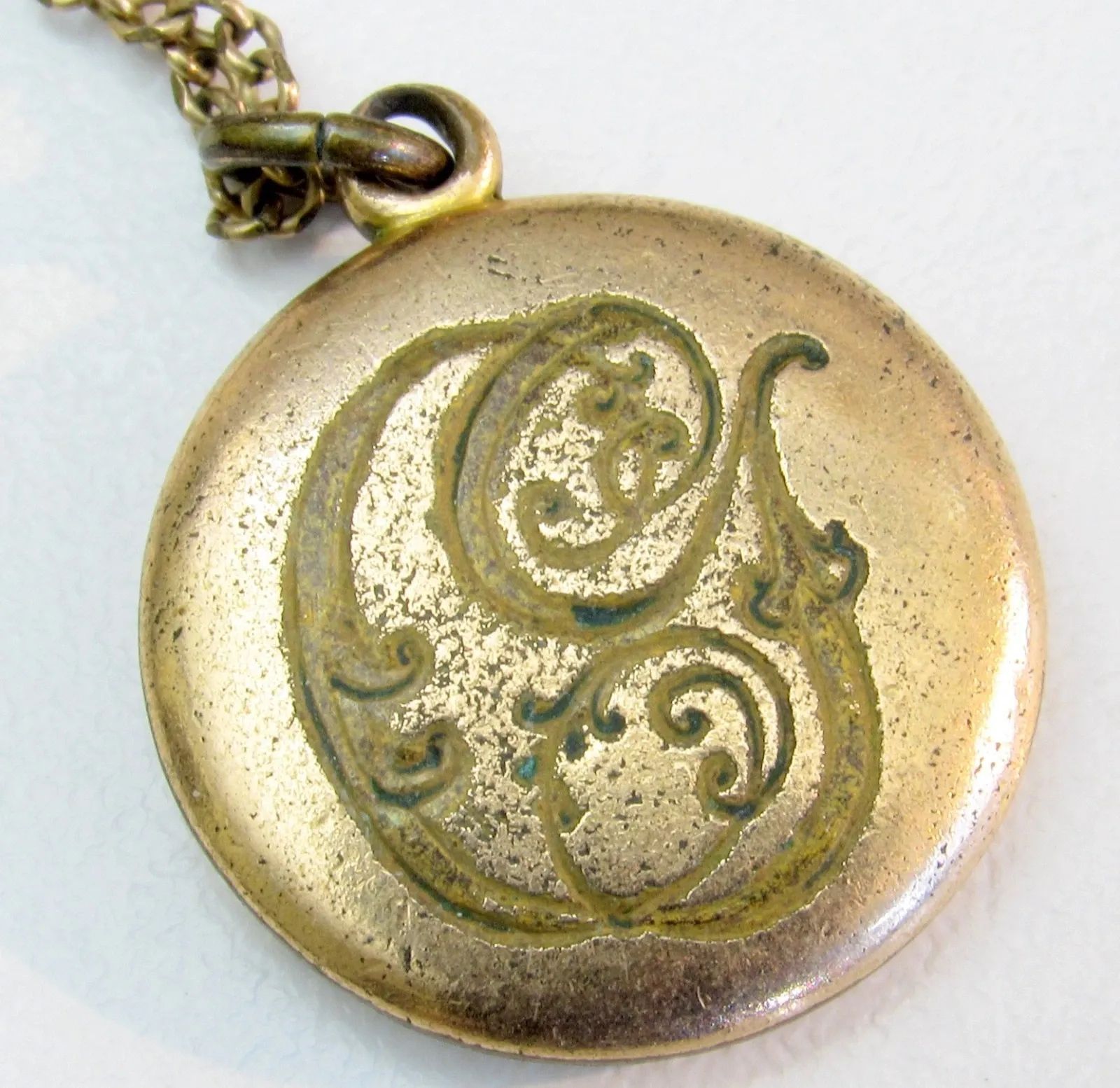
Round gilt metal locket pendant decorated with raised floral repoussé ornament in the Art Nouveau style, suspended from an original chain and engraved with the monogram “G” on the reverse.
Pendant
Art Nouveau
1890’s
1900’s
Victorian
Early Edwardian
circa 1895 – circa 1910
No maker’s hallmark visible. Hand-engraved monogram on reverse: “G” Likely the original owner’s initial, added either at purchase or shortly thereafter.
Die-struck metal locket halves Repoussé and chased floral decoration Machine-textured background field Hinged locket construction Hand engraving for monogram Soldered suspension loop Machine-made link chain with spring-ring clasp Represents industrial jewelry enhanced by individualized personalization.
Brass
This locket reflects the transition from Victorian symbolism to the flowing naturalism of the Art Nouveau movement, which emphasized: organic plant forms asymmetry feminine natural beauty emotional symbolism tied to nature Floral motifs symbolized renewal, memory, and affection, making lockets ideal gifts marking: courtship marriage coming-of-age remembrance of loved ones The personalized monogram transforms the object from decorative jewelry into a biographical artifact — a wearable identity marker. Lockets allowed private images or mementos to remain physically close to the wearer, reinforcing late-19th-century ideals of sentimental attachment.
Good
Feb 25, 2026
Moderate wear to gilt surface with age patina Areas of finish thinning consistent with long-term wear Engraving softened but legible Chain appears period and compatible Minor oxidation in recessed decorative areas Structure intact
Originally owned by an individual identified only by the monogram “G.” Likely retained as personal jewelry before entering the antique market through estate dispersal. Survival with chain suggests continuous ownership rather than later assembly.
Historical Note
This floral locket exemplifies the aesthetic transformation occurring at the turn of the twentieth century, when Art Nouveau designers rejected rigid Victorian ornament in favor of fluid natural forms inspired by plants and organic growth. The raised floral decoration flows across the surface in softly modeled relief, emphasizing movement and vitality rather than symmetry. Lockets such as this functioned as intimate containers of memory, often holding photographic portraits, locks of hair, or written sentiments. The engraved monogram personalizes the object, anchoring it to a specific—though now anonymous—individual whose identity survives only through this initial. Mass production allowed such deeply personal objects to become widely accessible, reflecting the democratization of sentiment in modern consumer culture. Jewelry no longer served solely as display of wealth but as an emotional artifact encoding relationships, identity, and remembrance. Today, the locket stands as both decorative object and silent biography, embodying the intersection of industrial manufacture, artistic design, and personal memory at the dawn of the twentieth century.