
Victorian Portrait Photograph Brooch with Twisted Rope Border
Jewelry
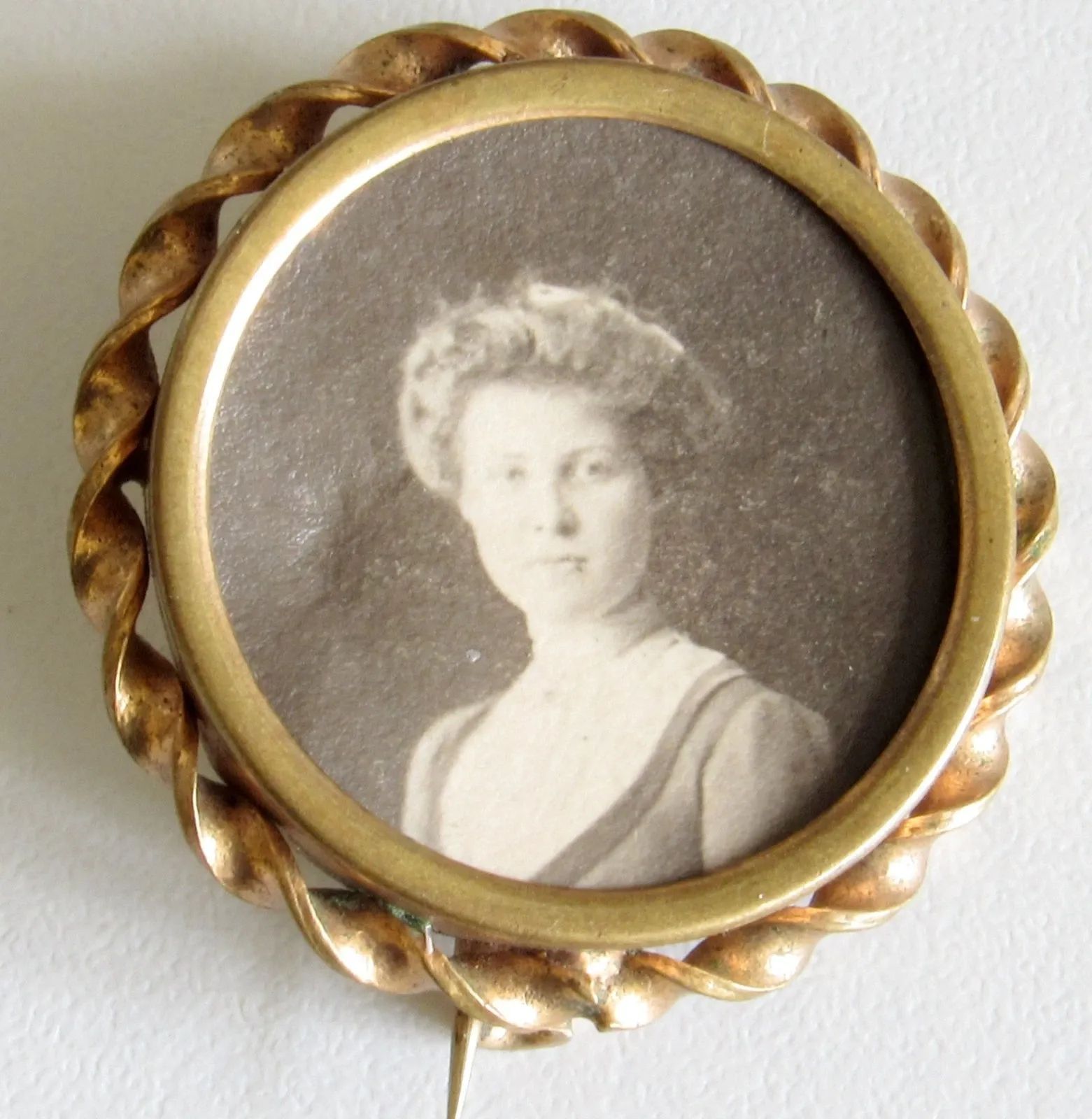
Circular gilt metal portrait brooch containing a studio photographic image of a young woman, set within a decorative twisted rope-style frame typical of late Victorian sentimental jewelry.
Brooch
Victorian
Late Victorian
1890 – 1905
Victorian
Unknown manufacturer; likely American or British commercial jewelry workshop. Comparable brooches were widely produced in Providence, Rhode Island, Birmingham, and continental European jewelry centers between the 1880s and early 1900s.
Die-stamped metal brooch frame Cast or pressed twisted-rope decorative border Glass-covered photographic insert Mechanical pin-back assembly with hinged clasp Studio portrait photograph mounted behind protective glass The object reflects late 19th-century industrial jewelry production paired with commercial photography.
Portrait brooches became highly popular after photography became affordable in the late nineteenth century. These wearable photographs allowed individuals—especially women—to carry images of loved ones publicly yet intimately. Unlike mourning jewelry of earlier decades, by the 1890s portrait brooches increasingly celebrated: courtship relationships family identity friendship tokens personal self-representation The twisted rope border symbolizes connection and continuity, a motif frequently used in Victorian decorative arts to suggest emotional bonds. Such brooches were often worn at the collar, bodice center, or lapel and functioned as both adornment and personal narrative object. The sitter’s hairstyle and dress neckline align with transitional fashions moving from structured Victorian dress toward softer Edwardian silhouettes.
Metal
Metal: Almost certainly silver or silver alloy (possibly low-grade or continental silver) Darkened patina consistent with aged silver, not blackened brass No bright yellow tones typical of gilt brass
Silver
Good
Feb 25, 2026
Moderate surface wear to gilt finish Minor oxidation visible in recessed areas Photograph slightly faded but legible Glass intact with light age scratching Pin assembly appears complete
Likely preserved as a personal keepsake and later separated from family ownership through estate dispersal. Survival of the original photograph within the brooch suggests continuous preservation rather than later replacement.
Historical Note
This portrait brooch illustrates the profound cultural shift brought about by photography in the late nineteenth century. As photographic studios proliferated, portraiture moved from elite painted miniatures to widely accessible photographic likenesses, allowing individuals of modest means to participate in traditions of commemorative jewelry. The circular brooch frame, finished with a sculptural twisted-rope border, reflects Victorian fascination with symbolic ornamentation and textured metalwork. Within the frame rests a studio portrait of a young woman whose softly arranged hair and modest bodice represent the changing aesthetic of the fin-de-siècle period, bridging Victorian formality and emerging Edwardian naturalism. Objects such as this blurred distinctions between jewelry, photograph, and biography. Worn close to the heart, portrait brooches functioned as intimate expressions of identity and affection, transforming personal memory into visible adornment. Today, the brooch survives not only as decorative jewelry but as a preserved human presence—an anonymous yet enduring witness to everyday life at the turn of the twentieth century.