
Victorian Child Portrait Locket Pendant with Blue Enamel Greek Key Border
Jewelry
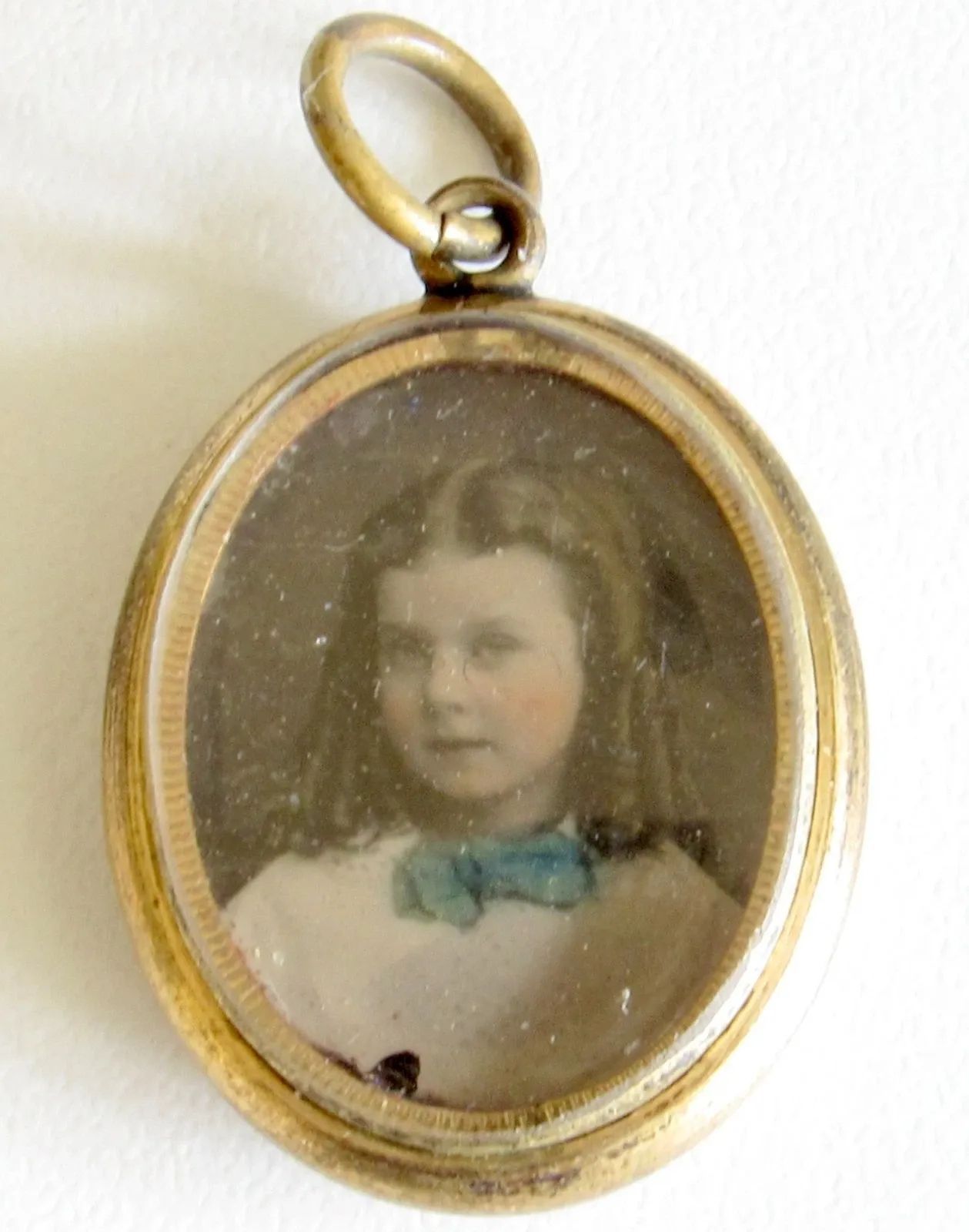
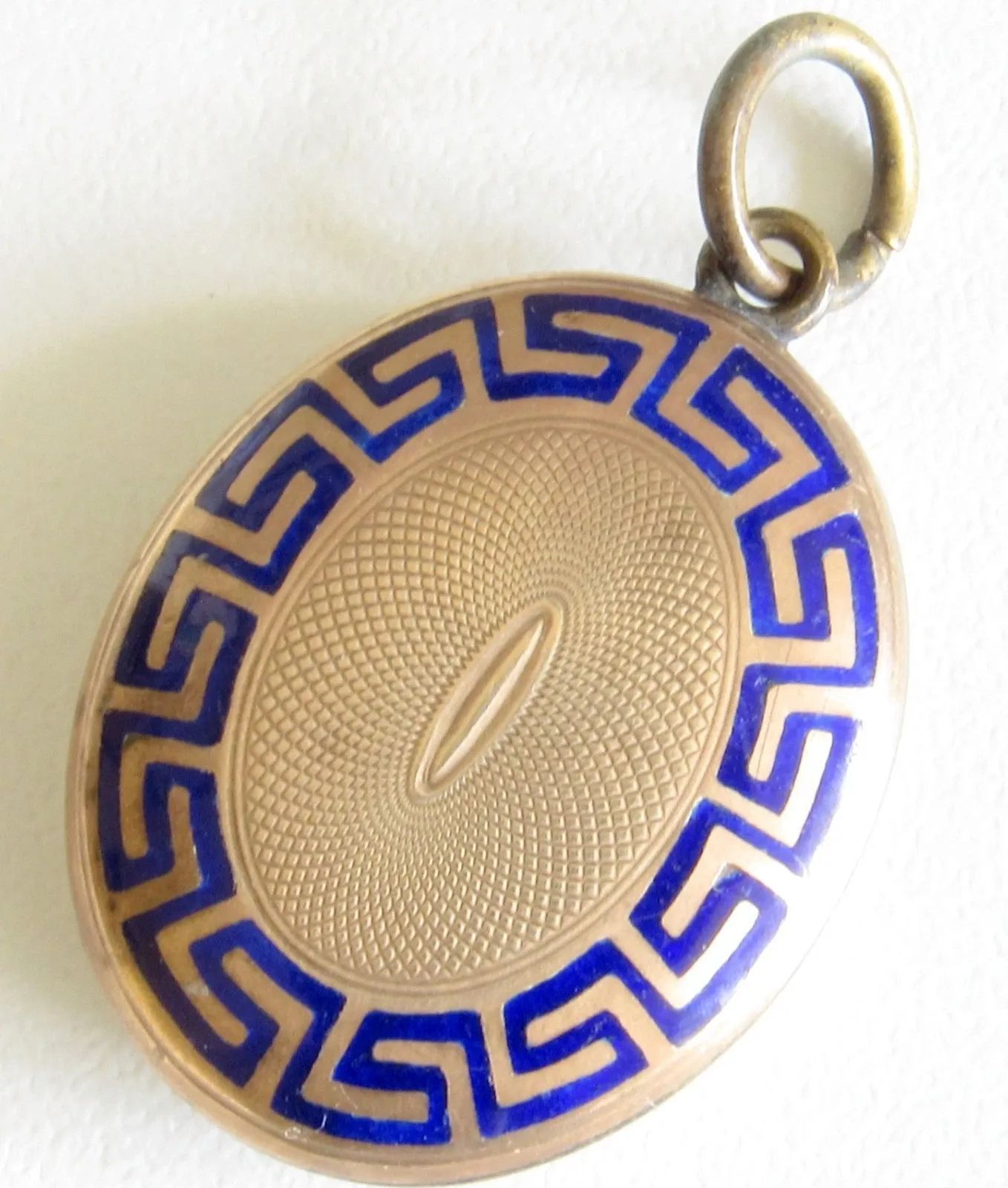
Oval gilt metal locket containing a hand-tinted photographic portrait of a young child, framed by a blue enamel Greek key design on the reverse. Likely worn as a sentimental memorial or familial keepsake pendant during the late Victorian period.
circa 1885 – circa 1905
Edwardian
Victorian
Unknown manufacturer; likely American or European commercial jewelry workshop specializing in photographic lockets. (Comparable pieces were produced by firms in Providence, Rhode Island, Birmingham (England), and Pforzheim (Germany), all major centers of mass jewelry production.)
Unmarked lockets of this type were common in commercially produced sentimental jewelry.
Stamped
Machine-stamped metal locket body Engine-turned (guilloché-style) surface texturing Fired enamel decorative border Glass-covered photographic insert Hand-applied photographic tinting (cheeks and bow) Soldered suspension loop and jump ring This combination reflects late-19th-century industrial jewelry techniques tied to the rise of photographic keepsakes.
Brass
During the late Victorian period, photography transformed mourning practices and family remembrance. Small portrait lockets became deeply personal objects worn close to the body, often containing images of: children deceased relatives spouses or sweethearts absent family members Children’s portraits were especially popular, reflecting Victorian ideals of innocence, domestic affection, and sentimental attachment. The Greek key motif—derived from classical antiquity—symbolized eternity and continuity, making it appropriate for remembrance jewelry. Such lockets functioned simultaneously as: jewelry, portable photograph albums, emotional relics.
Good
Feb 25, 2026
Moderate surface wear consistent with age and wear Gilt finish softened through handling Minor scratching and particulate accumulation beneath glass Enamel border appears largely intact with minimal loss Photograph slightly faded but stable Overall: Good antique condition with authentic period patina.
Historical Note
This oval photographic locket represents the intersection of Victorian jewelry craftsmanship and the democratization of portrait photography in the late nineteenth century. As photographic studios became widespread, families increasingly commissioned miniature portraits intended for wearable objects rather than framed display. The locket houses a delicately hand-tinted portrait of a young child, the subtle coloring applied to cheeks and clothing reflecting common studio enhancement techniques used to animate otherwise monochrome photographs. The reverse features a bold cobalt enamel Greek key border surrounding an engine-turned ground, a decorative vocabulary rooted in neoclassical revival aesthetics popular throughout Victorian decorative arts. Jewelry of this type functioned as an intimate object of memory and identity, worn close to the heart and often associated with affection, mourning, or familial devotion. Unlike earlier miniature paintings, photographic lockets allowed middle-class families access to personalized memorial objects, marking a significant cultural shift toward modern visual remembrance. Today, the piece survives as both adornment and historical document—preserving not only decorative taste but also the likeness of an otherwise anonymous child whose image continues to embody Victorian ideals of sentiment, continuity, and family connection.