
Victorian Filigree Coral Brooch
Object/Artifact
1885-1910
Needs ID
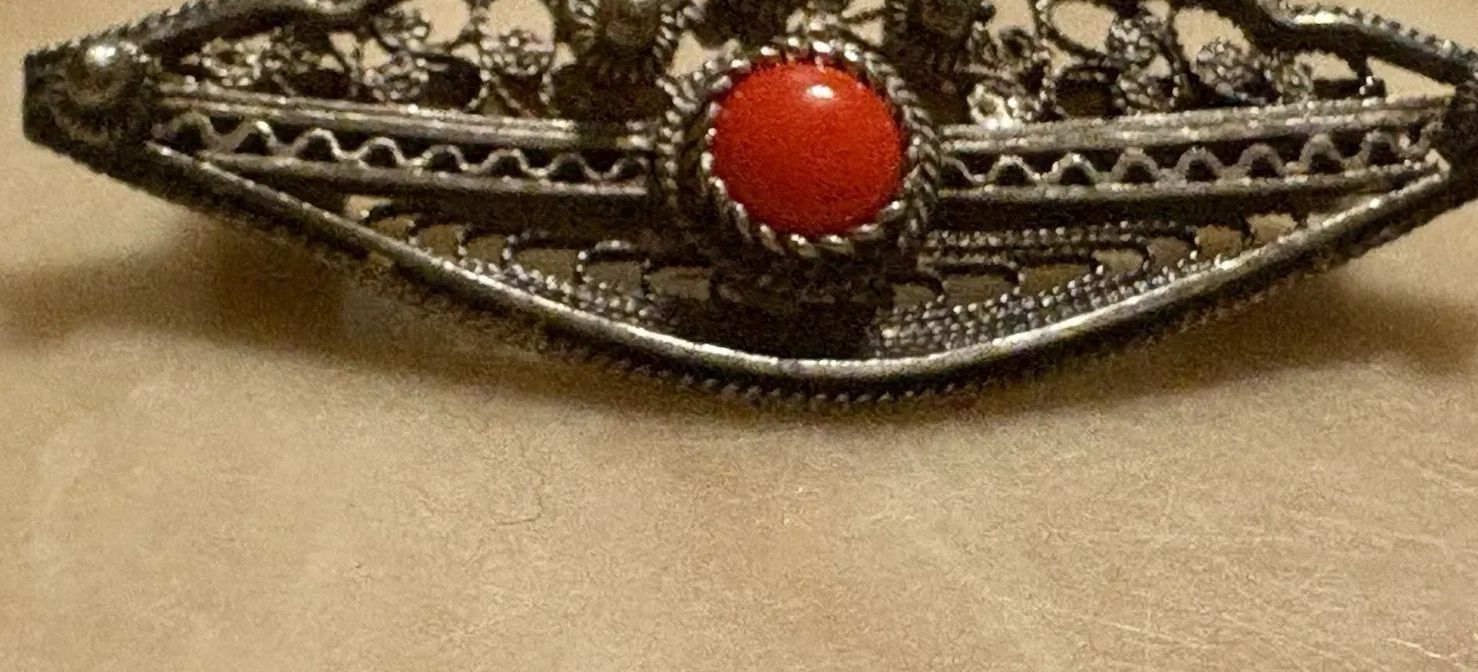
This is a late-Victorian to early-Edwardian filigree brooch, likely dating circa 1885–1910, and it’s a lovely, very collectible example.
19th Century
Jewelery
Victorian
1880’s
Early Edwardian
circa 1885 – circa 1910
Victorian
Edwardian
Central Europe
Europe
Possibly Italy or France
Metal
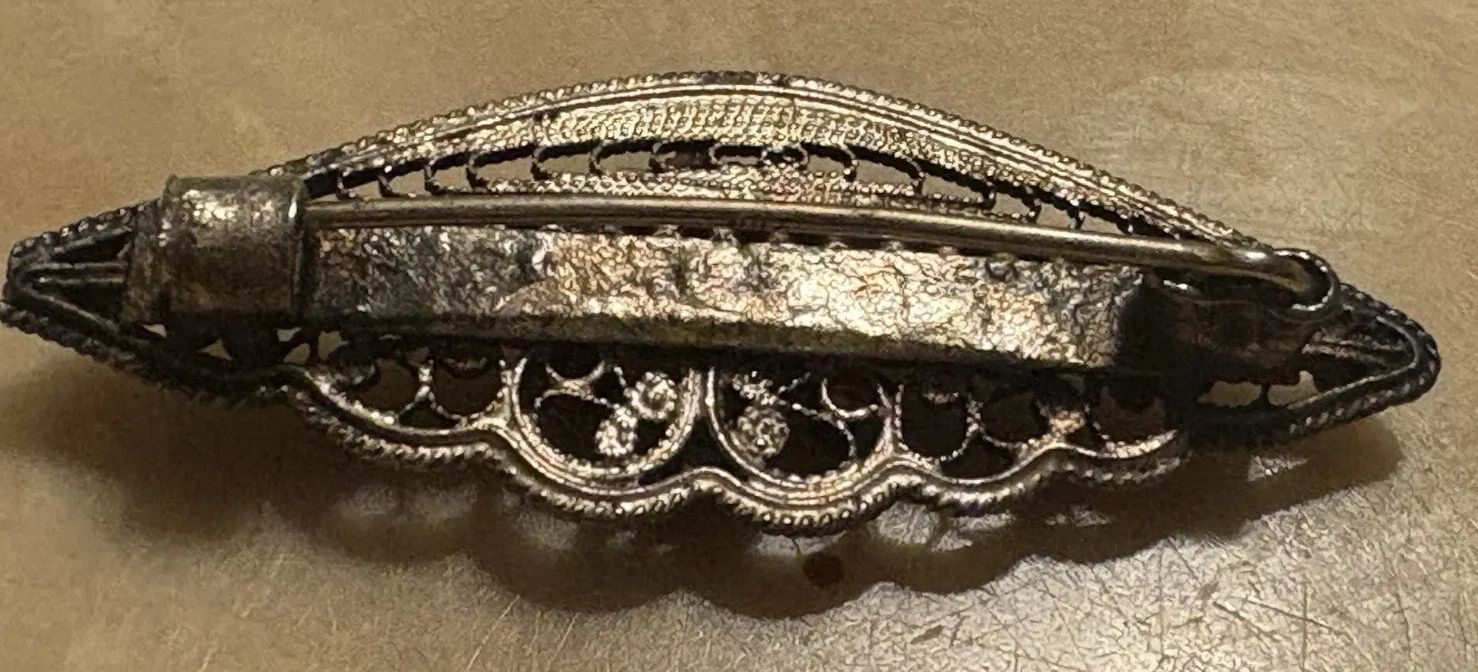
Construction: Fine openwork filigree with applied wire decoration. The crisp wirework and symmetry suggest hand fabrication rather than casting. Center stone: A coral cabochon (most likely Mediterranean red coral). Coral was widely used in Victorian jewelry and symbolized protection, vitality, and good fortune. Metal: Likely silver (possibly low-grade or silver-gilt originally). The darkened patina is consistent with age and oxidation rather than modern plating. Clasp: Early C-clasp with long pin, correct for the period and a strong authenticity indicator.
Good
Jan 30, 2026
Filigree appears intact (important—filigree damage is common). Coral cabochon looks original and well-set. Pin appears period-correct; even if slightly bent, that’s normal for age.
Description
This elegant late-Victorian brooch features an elongated navette form crafted in delicate openwork filigree, centered with a smooth red coral cabochon. The finely hand-worked silver filigree displays scrolling wire motifs and scalloped detailing typical of turn-of-the-century craftsmanship. Coral, prized in the Victorian era for its protective symbolism and vibrant color, provides a striking focal point against the softly aged metal. The reverse retains an early pin and C-clasp, consistent with period construction. Light patina and minor wear attest to its age and authenticity. Likely produced in Southern Europe—possibly Italy—this brooch reflects the refined ornamental taste and technical skill characteristic of late 19th-century jewelry.