
Victorian Gold-Filled Engraved Dress Clip or Collar Button (DEC PAT 1883)
Jewelry
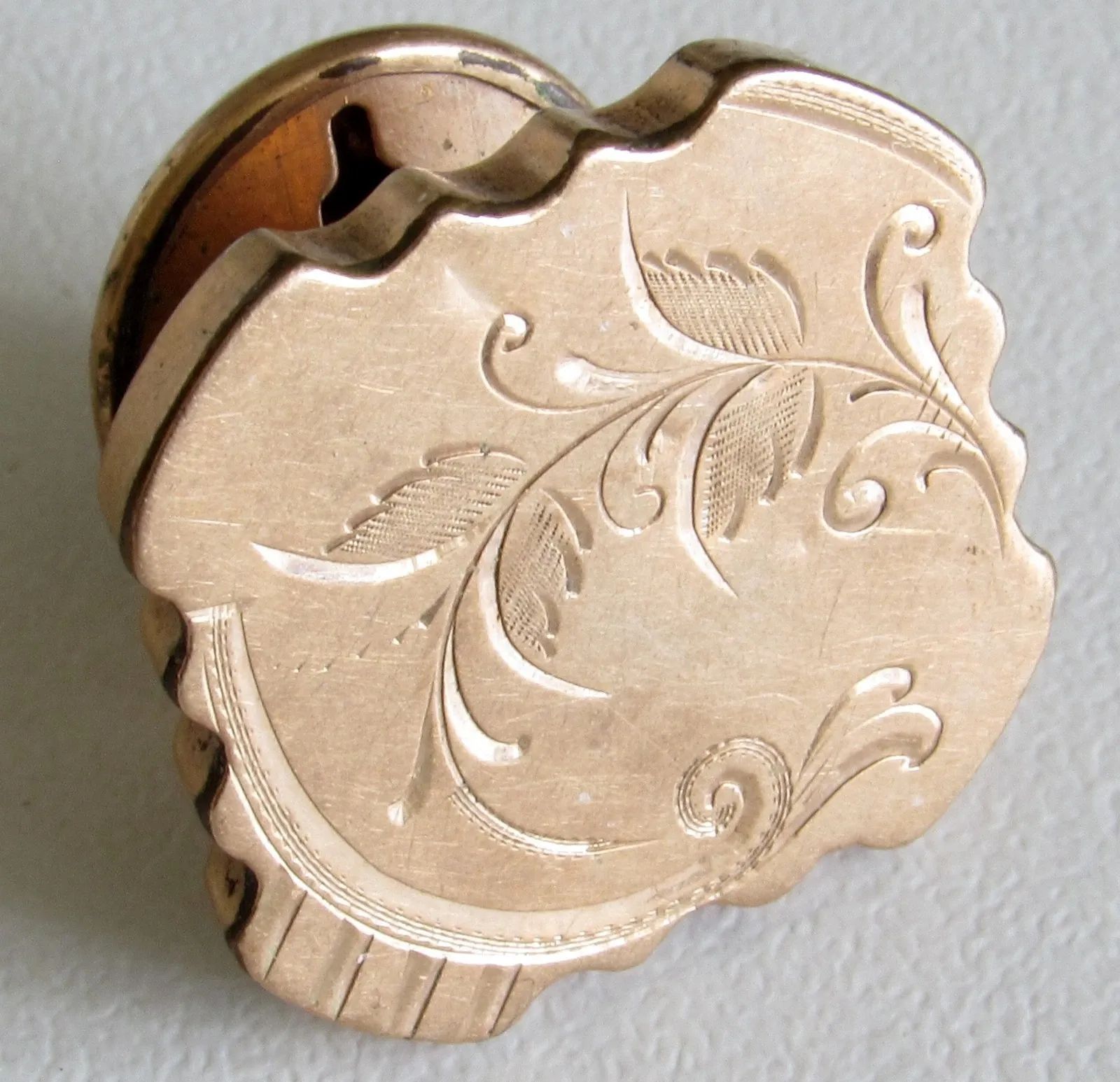
Decorative gold-filled fastening device featuring hand-engraved floral scrollwork and scalloped edges, patented in 1883. Designed as a dress, collar, or cuff fastening accessory typical of late Victorian clothing hardware.
Pin
1880’s
Late Victorian
circa 1883 – circa 1895
Victorian
Unknown manufacturer operating under U.S. patent protection.
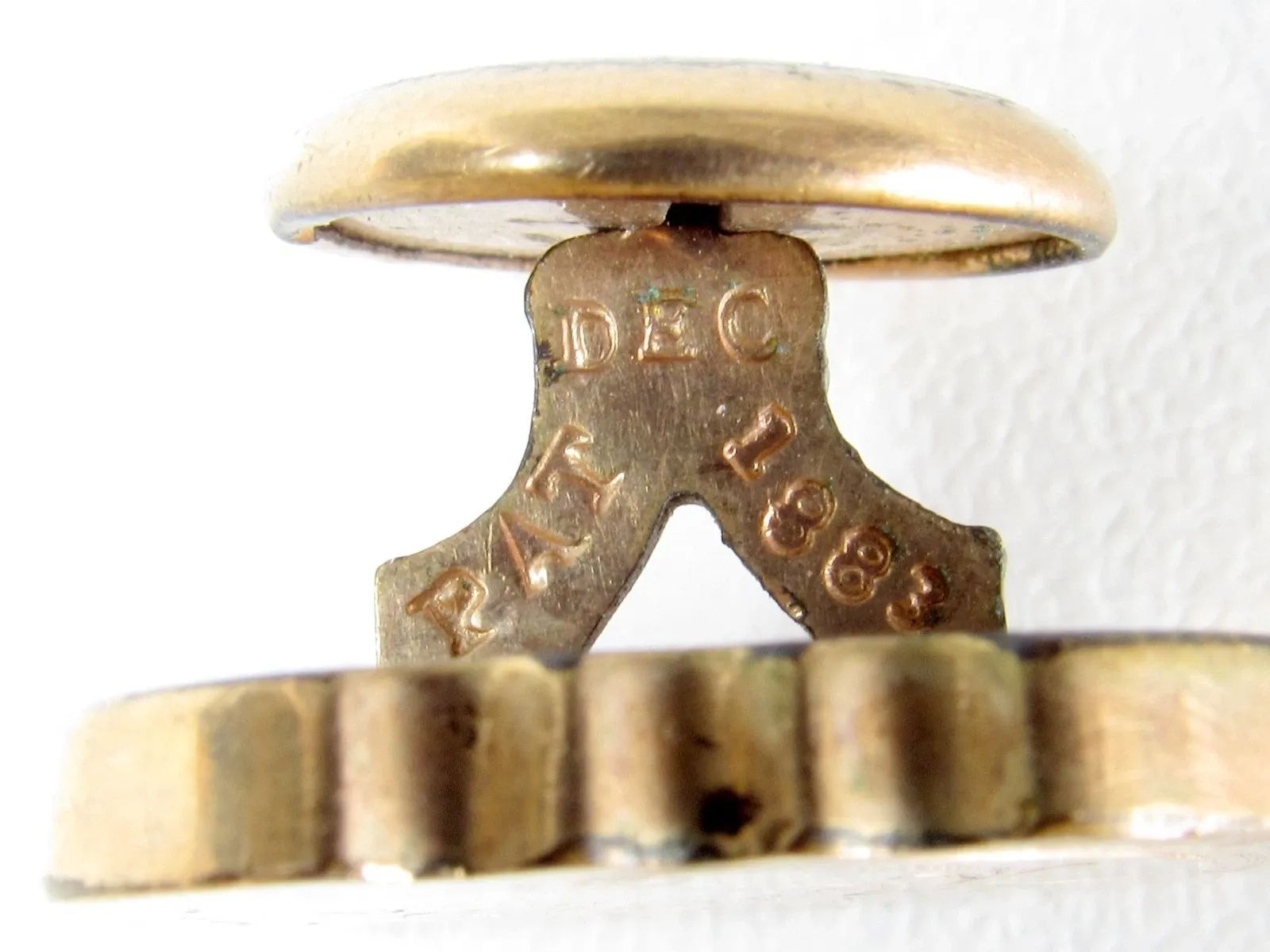
The stamped mark “DEC PAT 1883” indicates manufacture following a December 1883 design patent, likely produced by an American jewelry or clothing hardware firm. Similar patented fasteners were commonly made in Providence, Rhode Island — then the center of American jewelry production.
During the 1880s–1890s, women’s dress increasingly relied on removable decorative fasteners rather than permanently sewn closures. Accessories such as this served multiple purposes: securing collars or fichus fastening bodice openings adjusting cuffs or sleeves decorative dress ornamentation The scrolling botanical engraving reflects the Aesthetic Movement’s emphasis on natural forms and artistic surface decoration. Such items allowed middle-class women to update garments fashionably without purchasing entirely new clothing — an important aspect of Victorian domestic economy. These small fasteners were often sold alongside brooches and cufflinks and blurred the boundary between jewelry and functional dress hardware.
Brass
Method of Manufacture Machine-stamped brass or gold-filled body Die-formed scalloped shaping Hand or machine bright-cut engraving Spring tension clasp mechanism Soldered hinge and fastening assembly Represents transitional industrial jewelry production combining mechanization with decorative hand finishing. Material Gold-filled metal (likely rolled gold over brass core) Brass mechanical components
Very Good
Feb 25, 2026
Light surface wear consistent with age Engraving remains crisp and legible Minor oxidation visible in recesses Mechanism appears structurally intact Patina appropriate to late 19th-century gold-filled object
Historical Note
This engraved dress fastening represents a category of Victorian personal adornment that functioned simultaneously as jewelry and clothing technology. Patented in December 1883, the piece reflects the rapid innovation occurring in garment construction during the late nineteenth century, when industrial manufacturing introduced standardized closures designed for convenience, adjustability, and aesthetic appeal. The softly scalloped outline and flowing botanical engraving align with decorative trends of the Aesthetic Movement, which favored stylized natural motifs and refined surface ornamentation. While modest in scale, such accessories played a crucial role in shaping the silhouette and finish of Victorian dress, allowing garments to be secured discreetly while contributing visual refinement. Gold-filled construction made fashionable accessories accessible to a growing middle class, offering the appearance of fine jewelry at reduced cost. As garments themselves rarely survive intact, these durable fittings now provide valuable evidence of everyday dress practices and the technological evolution of clothing in the industrial age. Today, the object stands as both a decorative artifact and a material witness to Victorian ingenuity in wearable design.