
Late Art Deco Amber Bead and Sequin Cluster Earring with Textile Backing (Single)
Jewelry
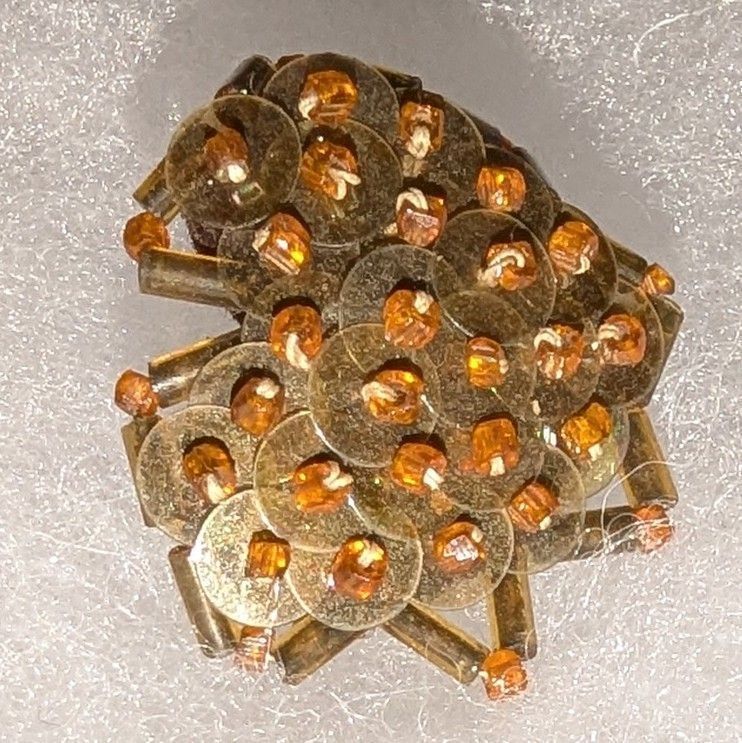
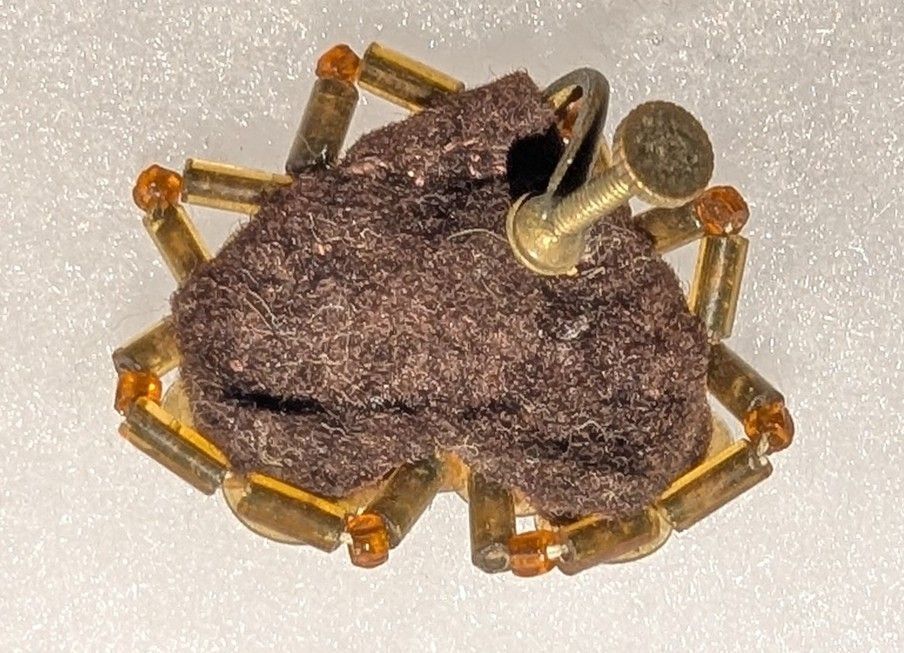
Single late Art Deco earring composed of layered metallic sequins, tubular bead elements, and faceted amber glass beads mounted on a padded textile backing with screw-back hardware.
Ear Clip – Singular
circa 1935 – circa 1945
Dating is supported by screw-back findings, textile-backed construction, geometric beading arrangement, and the use of tubular “bugle” beads characteristic of late Art Deco and wartime-era costume jewelry.
Method of Manufacture Hand-assembled mixed-media construction Layered metal sequins stitched or wired onto padded base Amber glass beads individually strung or wired into position Bugle beads arranged radially for starburst effect Screw-back mechanism mechanically attached through backing plate Setting & Construction Domed cluster built over textile-covered padding Central field composed of stacked circular sequins Faceted amber beads mounted through central perforations Outer perimeter framed with cylindrical bugle beads Felt or velvet rear covering concealing internal wiring Materials Brass or gold-tone metal sequins Amber-colored faceted glass beads Tubular glass bugle beads Textile substrate (likely felt or velvet over cotton padding) Brass screw-back earring fitting Technical Dating Indicators Screw-back hardware pre-dates clip dominance Heavy use of sequins and textile construction typical during WWII metal rationing Art Deco geometric radial layout Warm amber color palette fashionable in late 1930s eveningwear
This earring represents the hybridization of jewelry and textile embellishment common during the late Art Deco and wartime years. Material shortages during World War II limited access to cast metal components, encouraging designers to create dimensional effects using layered sequins, beads, and fabric bases. The amber and gold palette aligns with evening glamour aesthetics of the late 1930s, when warm metallic tones complemented satin gowns and structured silhouettes. The radial arrangement of bugle beads creates a subtle sunburst motif, echoing Deco fascination with geometry and symmetry. Such pieces were often sold in millinery or dress accessory departments rather than traditional jewelry counters, reinforcing their crossover identity between garment trim and personal adornment.
Fair
Mar 2, 2026
Textile backing shows significant wear and fiber compression Oxidation present on metal sequins Beads intact with good color retention Screw-back mechanism functional but aged Structural integrity stable though delicate Overall: Fair to Good antique condition (single example)
Description
This single cluster earring exemplifies late Art Deco experimentation with mixed materials and dimensional surface design. Constructed from layered metallic sequins interspersed with faceted amber glass beads, the piece is arranged in a compact radial composition that evokes a stylized sunburst. Tubular bugle beads frame the perimeter, adding architectural structure to the otherwise soft textile-supported form. During the late 1930s and World War II years, restrictions on metal usage encouraged jewelry makers to employ alternative materials such as sequins, glass beads, and padded fabric substrates. These hybrid constructions offered visual richness while conserving strategic metals for industrial use. The result is a piece that balances glamour with resourcefulness. The warm amber coloration reflects contemporary evening fashion trends, while the screw-back fitting situates the piece within pre-pierced ear conventions. The padded backing also suggests a focus on comfort, particularly important for larger decorative earrings. As a surviving single, the earring provides valuable insight into everyday adornment practices and the adaptive creativity of wartime fashion industries. It stands as both a decorative object and a material record of historical constraint and ingenuity.