
Mid-Century Black Sequin Cluster Earrings with Screw-Back Findings
Jewelry
Pair of mid-century cluster earrings composed of layered black sequins arranged in domed floral formations, mounted on metal bases with adjustable screw-back fittings.
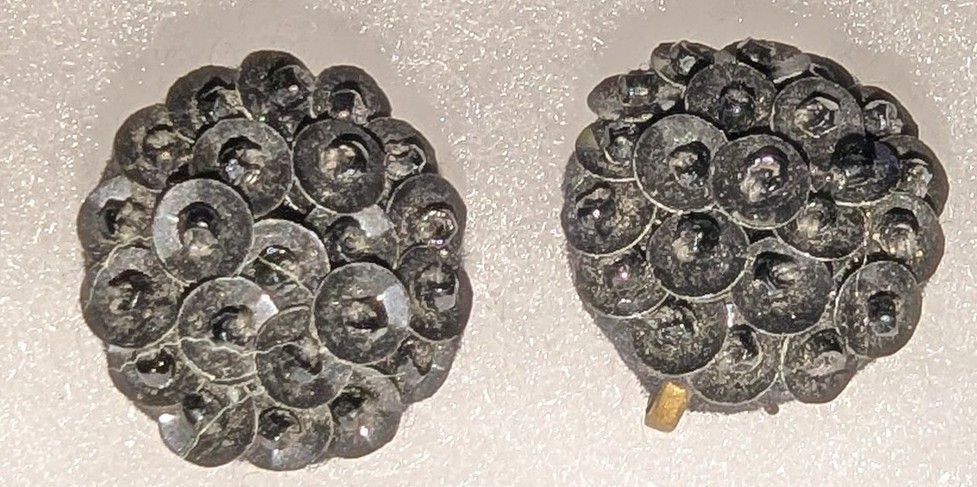
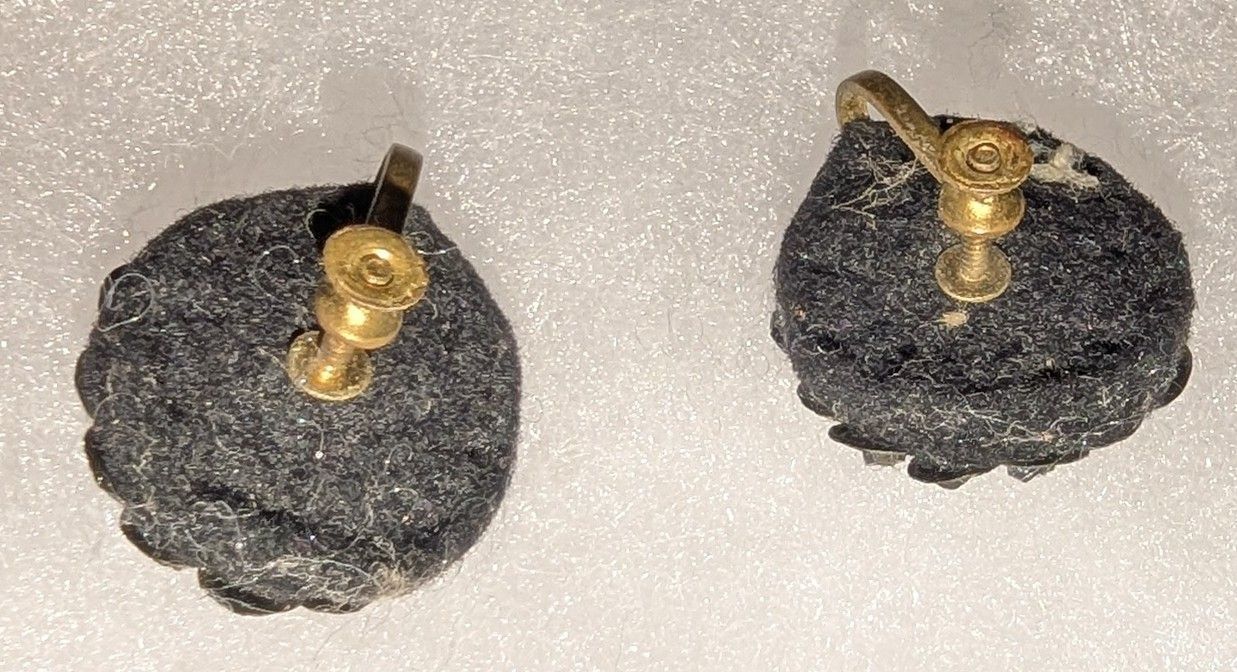
Ear Clips – Pair
circa 1935 – circa 1950
Dating is supported by screw-back ear hardware, textile-integrated jewelry construction, and the use of sequins as decorative jewelry elements common during late Art Deco and wartime-era fashion accessories.
Method of Manufacture Sequins individually stitched or wired onto a formed backing base Layered construction creating a dimensional domed surface Textile-meets-metal hybrid jewelry technique Hand-assembled rather than fully machine-produced Setting & Construction Circular domed arrangement formed by overlapping sequins Sequins attached through central perforations using thread or fine wire (likely now concealed beneath surface wear) Mounted onto rigid backing plate covered with fabric or felt support layer Adjustable screw-back findings, allowing tension customization for comfort Materials Black lacquered or celluloid sequins Fabric or felt substrate backing Gold-tone brass screw-back mechanisms Possibly early plastic or gelatin-based sequin material (common pre-1950) Technical Dating Indicators Screw-back fittings dominant before widespread clip mechanisms (pre-late 1940s) Textile jewelry popularity during WWII material shortages Matte black coloration associated with eveningwear and mourning-influenced fashion palettes Handmade assembly suggests small workshop or boutique production
These earrings reflect a fascinating intersection between jewelry and fashion ornamentation. During the late 1930s and World War II years, shortages of metals and gemstones encouraged designers to incorporate textile materials — sequins, beads, and fabric — into jewelry forms. Black accessories were especially versatile, worn for: Evening and cocktail attire Formal dresses Conservative daywear during wartime austerity Occasionally mourning or semi-mourning fashion traditions Such pieces were often marketed through millinery departments or dress accessory counters rather than traditional jewelry cases, reinforcing their connection to garment decoration traditions.
Good
Mar 2, 2026
Noticeable age wear to sequins including surface dulling and finish loss Fabric backing shows lint accumulation and age-related wear Screw-back mechanisms intact and functional Minor structural compression consistent with textile-based jewelry
Description
This pair of sequin cluster earrings represents an inventive period in twentieth-century adornment when jewelry design adapted to material limitations and evolving fashion aesthetics. Constructed from layered black sequins arranged into domed floral clusters, the earrings blur the boundary between jewelry and textile embellishment. During the late 1930s and 1940s, global economic pressures and wartime rationing limited access to traditional jewelry materials such as precious metals and gemstones. Designers responded creatively by incorporating materials more commonly associated with garments — sequins, beads, and fabrics — into wearable accessories. The resulting pieces offered glamour and visual richness while remaining affordable and resource-efficient. The screw-back fittings reflect pre-pierced ear fashion norms, allowing wearers to comfortably secure decorative earrings without permanent alteration. The subdued black coloration enhanced versatility, pairing easily with both daytime attire and evening ensembles under artificial lighting, where sequins would shimmer subtly with movement. Today, such earrings stand as artifacts of adaptive design and social resilience, illustrating how fashion maintained elegance even during periods of economic and material constraint.