
Wartime-Era Floral Cluster Earring with Faux Pearls and Textile Backing (Single)
Jewelry
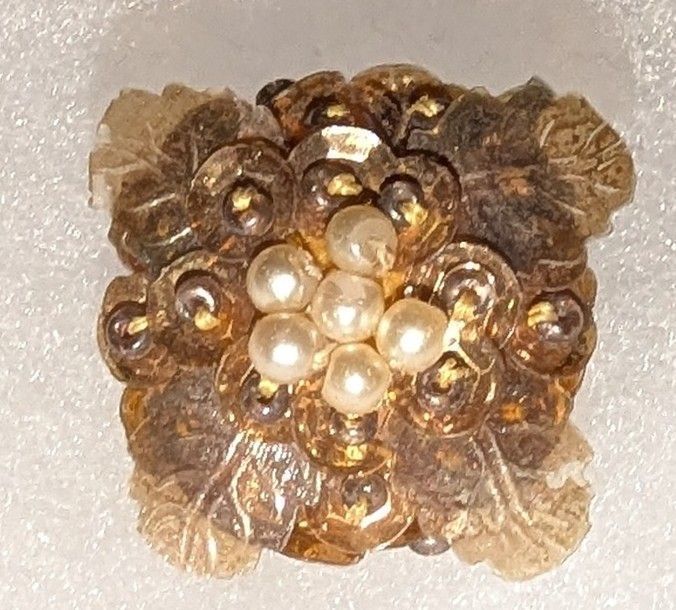
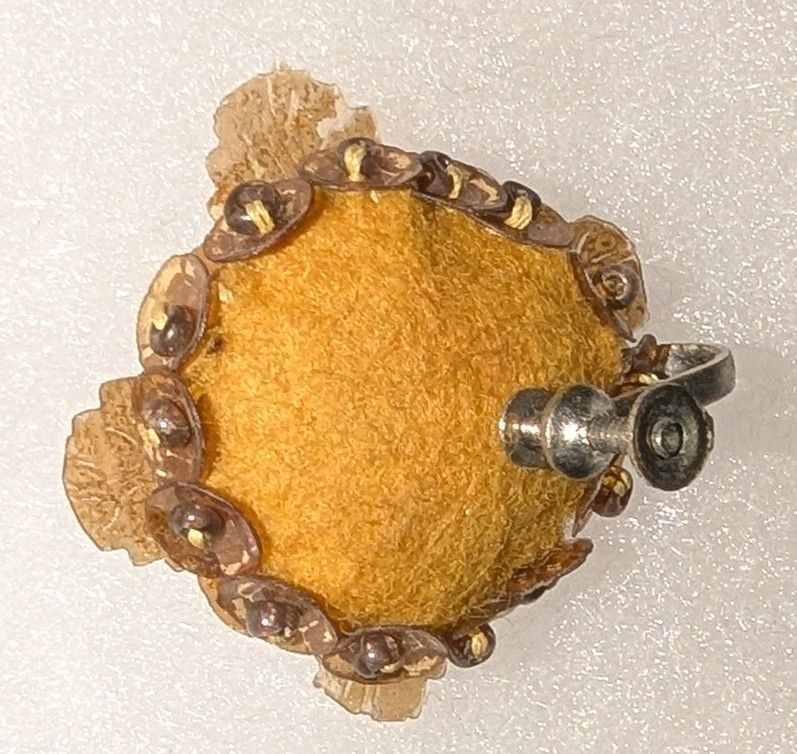
Single floral-form earring composed of molded decorative elements surrounding a cluster of faux pearls, mounted on a fabric-covered backing with screw-back hardware.
Ear Clip – Singular
Method of Manufacture Hand-assembled composite construction Molded decorative components attached to padded textile base Faux pearls individually wired or glued into central cluster Decorative elements secured around perimeter using small metal pins or adhesive Setting & Construction Domed floral composition built over cushioned backing Fabric-covered rear structure (likely velvet or felt over padding) Adjustable screw-back earring mechanism attached through backing plate Layered design creating dimensional relief rather than metal casting Materials Faux pearls (glass or early plastic with nacre coating) Molded celluloid or early plastic floral elements Textile substrate backing (fabric over padding) Brass or plated screw-back fitting Gold-tone painted or plated accents Technical Dating Indicators Textile-supported jewelry common during WWII material shortages Screw-back findings predate widespread clip mechanisms Faux pearl clusters fashionable late 1930s–early 1940s Hybrid jewelry–millinery construction linking jewelry and garment ornament traditions
This earring reflects wartime adaptation within fashion industries, when shortages of metals encouraged designers to incorporate textiles and lightweight materials into jewelry production. Accessories often blurred boundaries between jewelry, dress trims, and millinery decoration. Floral and pearl motifs conveyed refinement and femininity during a period marked by austerity. Faux pearls allowed women to maintain fashionable appearance despite economic constraints, echoing luxury styles associated with Hollywood and European couture. Such earrings were commonly worn for: Church and social gatherings Formal daywear Evening attire during wartime and immediate postwar years The padded backing also improved comfort, an important consideration for heavier screw-back earrings.
Fair
Mar 2, 2026
Textile backing shows significant age wear and fiber loss Surface oxidation present on metal components Faux pearls intact with moderate finish wear Structural stability maintained despite material aging Overall: Fair to Good antique condition (single surviving example)
Description
This floral cluster earring represents an adaptive moment in twentieth-century adornment when jewelry design responded directly to material limitations imposed by global conflict. Constructed from molded decorative elements arranged around a central cluster of faux pearls, the piece is built upon a padded textile backing rather than a fully metal framework. During the late 1930s and World War II years, restrictions on metal usage encouraged jewelry makers to experiment with alternative materials, including fabrics, early plastics, and lightweight composites. The resulting accessories maintained visual richness while conserving scarce resources. The combination of pearls and floral imagery reinforced ideals of elegance and continuity during uncertain times. The screw-back mechanism reflects prevailing wearing practices before ear piercing became widespread, while the soft backing suggests attention to comfort and wearability. Today, surviving examples illustrate the ingenuity of wartime fashion industries and reveal how everyday adornment adapted to broader historical conditions. Even as a single remaining piece, the earring preserves evidence of hybrid jewelry construction bridging traditional ornament and textile craftsmanship.